%20%20--%3E%0A%3Csvg%20version%3D%221.1%22%20id%3D%22Layer_1%22%20xmlns%3D%22http%3A%2F%2Fwww.w3.org%2F2000%2Fsvg%22%20xmlns%3Axlink%3D%22http%3A%2F%2Fwww.w3.org%2F1999%2Fxlink%22%20x%3D%220px%22%20y%3D%220px%22%0A%09%20width%3D%2239px%22%20height%3D%2240px%22%20viewBox%3D%220%200%2039%2040%22%20enable-background%3D%22new%200%200%2039%2040%22%20xml%3Aspace%3D%22preserve%22%3E%0A%3Cpath%20fill%3D%22%23FFFFFF%22%20d%3D%22M38.5%2C7H28.2v26h10.3V7z%22%2F%3E%0A%3Cpath%20fill-rule%3D%22evenodd%22%20clip-rule%3D%22evenodd%22%20fill%3D%22%23FFFFFF%22%20d%3D%22M26.1%2C25.5c0%2C5.8-4.1%2C7.5-12.9%2C7.5C3.9%2C33%2C0%2C31.2%2C0%2C25.2v-1.1h11.6%0A%09v2.4c0%2C0.7%2C0.1%2C1.4%2C1.2%2C1.4c1%2C0%2C1.2-0.4%2C1.2-1.3v-0.9c0-1.6-0.9-1.6-3.5-2.2C2.2%2C21.7%2C0%2C19.7%2C0%2C15.3v-0.9C0%2C9.3%2C5.5%2C7%2C12.9%2C7%0A%09c10.2%2C0%2C12.8%2C2.6%2C12.8%2C7.4v1.8h-11v-2.9c0-0.6-0.4-1.1-1.2-1.1c-0.6%2C0-1.2%2C0.4-1.2%2C1.1v0.9c0%2C1.5%2C0.9%2C2%2C3.3%2C2.5%0A%09c8%2C1.6%2C10.5%2C3.3%2C10.5%2C7.5V25.5z%22%2F%3E%0A%3C%2Fsvg%3E%0A)
Every Premier League Club Under American Ownership
Prior to the Glazer family’s takeover of Manchester United in 2005, there had never been an American owner of a Premier League football club.
Today, however, American investors are everywhere you look, with wealthy US ownership groups now controlling clubs across the breadth of English football’s top division.
Here, we take a closer look at every Premier League club with American ownership, examining how they arrived, who is in charge and the impact they have had on their respective clubs.
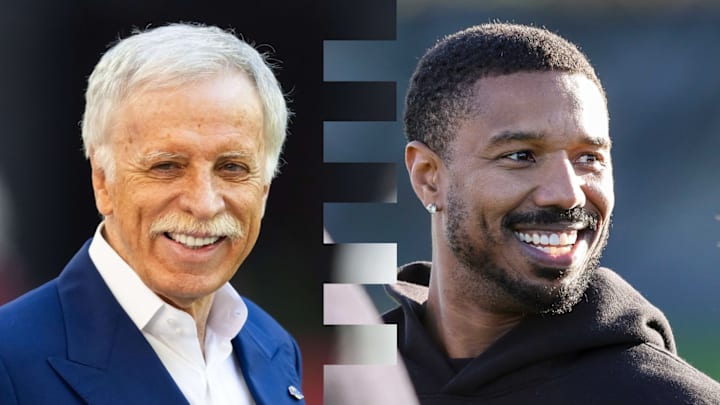
Arsenal (Stan Kroenke)

After initially becoming a minority shareholder in 2007, Stan Kroenke—through his sports and entertainment conglomerate Kroenke Sports & Entertainment (KSE)—eventually took majority control of Arsenal in 2011.
He then steadily increased his stake before completing a full takeover in 2018, buying out the remaining shares held by Russian billionaire Alisher Usmanov.
While the Gunners have not enjoyed the same level of on-pitch success under Kroenke as they did under previous ownership, the American has invested heavily both on and off the field. However, many supporters are still waiting for that investment to consistently translate into silverware.
Beyond Arsenal, Kroenke owns an extensive sports portfolio, including the NBA’s Denver Nuggets, NHL side Colorado Avalanche, MLS club Colorado Rapids, and the NFL’s Los Angeles Rams
Aston Villa (V Sports)

V Sports (then known as the NSWE Group)—a consortium led by Egyptian billionaire Nassef Sawiris and American financier Wes Edens—purchased a controlling 55% stake in Aston Villa in 2018, with Sawiris assuming the role of club chairman.
The following year, the group completed a full takeover by buying out the remaining shares from previous owner Tony Xia, although Comcast-backed American investment firm Atairos has since acquired a 20% minority stake in the club.
Under V Sports’ ownership, Villa have not only returned to the Premier League but re-established themselves as one of the division’s strongest sides. Significant investment has been made both on the pitch and behind the scenes, particularly in player recruitment and the club’s youth academy.
V Sports also holds a minority stake in Vitória S.C. of Portugal’s Primeira Liga.
Bournemouth (Black Knight Football Club)

Bournemouth are 100% owned by Black Knight Football Club (BKFC), a group led by American businessman Bill Foley, who completed a full takeover in December 2022 after acquiring the club from former owner Maxim Demin.
Foley’s BKFC also owns A-League side Auckland FC, Primeira Liga outfit Moreirense, and holds a minority stake in Ligue 1 club Lorient.
Notably, Hollywood actor Michael B. Jordan is part of the ownership group. Since the takeover, BKFC have invested significantly on the pitch and have also unveiled phased plans to redevelop the Vitality Stadium, with the aim of increasing its capacity to around 20,000 by 2027.
Burnley (Velocity Sports Limited)

In December 2020, Velocity Sports Partners—the sports investment arm of American management firm ALK Capital—acquired an 84 per cent stake in Burnley for $228 million (£170 million), with ALK’s managing partner Alan Pace subsequently installed as chairman.
The leveraged buyout proved highly controversial, plunging the club into significant debt—a situation Burnley remain in today—despite Pace’s repeated assurances that the finances are under control.
On the pitch, the period under ALK has been turbulent: Burnley have been promoted from the Championship twice, only to suffer immediate relegation from the Premier League on both occasions.
Chelsea (BlueCo Group)

There has been no shortage of confusion over who actually owns Chelsea since the club’s high-profile takeover in 2022, following Roman Abramovich’s forced sale amid UK government sanctions after Russia’s invasion of Ukraine.
Is it Todd Boehly? Clearlake Capital? Hansjörg Wyss? Mark Walter? Behdad Eghbali? The short answer is: All of them—under the umbrella of BlueCo Group.
While Boehly is the public face of the ownership and serves as chairman, he only holds a minority stake. A combined 38.46% is split between Boehly, Walter and Wyss, with the controlling share owned by Clearlake Capital, led by Behdad Eghbali.
Confusing? Yes—and that confusion has largely mirrored Chelsea’s direction on the pitch.
Since the takeover, more than $1.35 billion (£1 billion) has been spent on players, managers have come and gone at alarming speed, reports of internal disagreements between shareholders have surfaced, and results have failed to justify the outlay. Add to that the controversial relationship with Strasbourg, the other club owned by BlueCo—where players have been moved between the two sides for eye-catching fees—and it has been a chaotic, experimental and often baffling period.
“Interesting” might be the politest way to describe it.
Crystal Palace (Woody Johnson)

Previously majority-owned by American investor John Textor, Crystal Palace saw his controlling stake purchased by Woody Johnson—owner of the NFL’s New York Jets and former U.S. ambassador to the UK—in June 2025.
Under Textor’s ownership, the club enjoyed the most successful period in its history, winning the FA Cup—their first major trophy—and qualifying for the Europa League for the first time.
However, they were subsequently demoted to the Europa Conference League due to UEFA’s multi-club ownership rules, with Textor also holding a controlling stake in Lyon, who were competing in the Europa League as well.
Steve Parish, David Blitzer and Josh Harris also hold minority stakes.
Everton (The Friedkin Group)

Back in September 2024, The Friedkin Group announced plans to purchase Farhad Moshiri’s majority stake in Everton. Led by American businessman Dan Friedkin, the group already owns Serie A side AS Roma and added the Premier League club to its growing portfolio of investments.
Since the takeover, Everton have undergone significant change. The club has moved stadiums, bidding farewell to their iconic Goodison Park and relocating to the Hill Dickinson Stadium ahead of the 2025–26 season.
Fulham (Shahid Khan)

Fulham are owned by American billionaire Shahid Khan, who bought the club from Mohamed Al-Fayed in July 2013 and serves as chairman, with his son Tony Khan acting as director of football operations.
Khan is also the owner of the NFL’s Jacksonville Jaguars and a lead investor in All Elite Wrestling (AEW), the US-based promotion run by his son.
Under Khan’s stewardship, Fulham have established themselves as a solid Premier League outfit. Off the pitch, his ownership has been marked by significant investment in the redevelopment of Craven Cottage’s Riverside Stand, as well as the removal of Al-Fayed’s infamously bad Michael Jackson statue from outside the ground.
Leeds United (49ers Enterprises)

Leeds United came under the ownership of 49ers Enterprises in 2023 after the English Football League formally approved the San Francisco 49ers’ investment arm’s $228 million (£170 million) takeover of the club.
49ers Enterprises—the investment arm of the York family, headed by businessman Paraag Marathe—first acquired a 15% stake in Leeds in 2018. That holding was increased to 44% in 2021, before the group eventually took full control by purchasing Andrea Radrizzani’s remaining shares.
Since the takeover, Leeds have returned to the Premier League, suggesting that—at least on the pitch—the transition in ownership has gone largely to plan.
Liverpool (Fenway Sports Group)

Liverpool were sold to John W. Henry and Tom Werner’s Fenway Sports Group (FSG) in October 2010, with the American owners acquiring the club from George Gillett and Tom Hicks. The previous regime had been forced into a sale after being taken to the High Court by their creditors, including the Royal Bank of Scotland, which had helped finance their leveraged takeover in 2007—one that left Liverpool burdened with around $470 million (£350 million) in debt.
FSG—who also own Major League Baseball’s Boston Red Sox and the NHL’s Pittsburgh Penguins, among other sporting ventures—have overseen what has largely been a period of stability at Anfield. Aside from a failed attempt to trademark the club’s name and their involvement in the highly controversial European Super League proposal, their ownership has been relatively smooth.
Under FSG’s stewardship, Liverpool have won two Premier League titles and lifted the Champions League, restoring the club to the elite of European football.
Manchester United (Glazer Family)

Where to even begin?
The Glazer family, led by brothers Malcolm and Avram, became the first American owners in the Premier League when they acquired a controlling stake in Manchester United in late 2004. Crucially, the takeover was largely financed through loans, most of which were secured against the club’s own assets, resulting in interest payments exceeding $81 million (£60 million) per year.
Of the $1.06 billion (£790 million) takeover of England’s most successful club, the Glazers invested just $362 million (£270 million) of their own money—the rest was borrowed against United—instantly saddling the club with an enormous amount of debt. Until that point, Manchester United had been debt-free.
Two decades on, the club is a shadow of its former self both on and off the pitch. Old Trafford has deteriorated, Premier League titles have eluded them since 2012, and a revolving door of managers and high-cost players has failed to restore former glory. The Glazers’ ownership has been met with widespread fan protests and enduring resentment.
More recently, Sir Jim Ratcliffe’s minority acquisition of a 25% stake—including full sporting control—has offered a glimmer of hope, with plans for a new stadium and debt relief. Yet, even this partial takeover has so far been turbulent, with success remaining elusive.
Every Premier League Club With American Majority Owners
Premier League Club | Majority Owner |
|---|---|
Arsenal | Stan Kroenke |
Aston Villa | V Sports |
Bournemouth | Black Knight Football Club |
Burnley | Velocity Sports Limited |
Chelsea | BlueCo Group |
Crystal Palace | Woody Johnson |
Everton | The Friedkin Group |
Fulham | Shahid Khan |
Leeds United | 49ers Enterprises |
Liverpool | Fenway Sports Group |
Manchester United | Glazer Family |
READ THE LATEST PREMIER LEAGUE NEWS, PREVIEWS, PREDICTIONS, TRANSFER RUMORS AND MORE
 Add us as a preferred source on Google
Barnaby Lane, better known as Barney, is a soccer writer for SI FC. With nearly a decade of experience in the industry, he has worked for a range of household-name publications in both the United States and the United Kingdom, and has interviewed some of the world’s biggest athletes—from Usain Bolt and Rafael Nadal to Christian Pulisic (though his favorite interview remains Adebayo Akinfenwa). Barney specializes in Premier League soccer, covering everything from the nostalgia of years gone by to the modern, vastly different landscape of today’s game. He also has experience reporting on La Liga and Major League Soccer, the latter of which he developed a particular affinity for during his university days at Virginia Commonwealth University in Richmond.