%20%20--%3E%0A%3Csvg%20version%3D%221.1%22%20id%3D%22Layer_1%22%20xmlns%3D%22http%3A%2F%2Fwww.w3.org%2F2000%2Fsvg%22%20xmlns%3Axlink%3D%22http%3A%2F%2Fwww.w3.org%2F1999%2Fxlink%22%20x%3D%220px%22%20y%3D%220px%22%0A%09%20width%3D%2239px%22%20height%3D%2240px%22%20viewBox%3D%220%200%2039%2040%22%20enable-background%3D%22new%200%200%2039%2040%22%20xml%3Aspace%3D%22preserve%22%3E%0A%3Cpath%20fill%3D%22%23FFFFFF%22%20d%3D%22M38.5%2C7H28.2v26h10.3V7z%22%2F%3E%0A%3Cpath%20fill-rule%3D%22evenodd%22%20clip-rule%3D%22evenodd%22%20fill%3D%22%23FFFFFF%22%20d%3D%22M26.1%2C25.5c0%2C5.8-4.1%2C7.5-12.9%2C7.5C3.9%2C33%2C0%2C31.2%2C0%2C25.2v-1.1h11.6%0A%09v2.4c0%2C0.7%2C0.1%2C1.4%2C1.2%2C1.4c1%2C0%2C1.2-0.4%2C1.2-1.3v-0.9c0-1.6-0.9-1.6-3.5-2.2C2.2%2C21.7%2C0%2C19.7%2C0%2C15.3v-0.9C0%2C9.3%2C5.5%2C7%2C12.9%2C7%0A%09c10.2%2C0%2C12.8%2C2.6%2C12.8%2C7.4v1.8h-11v-2.9c0-0.6-0.4-1.1-1.2-1.1c-0.6%2C0-1.2%2C0.4-1.2%2C1.1v0.9c0%2C1.5%2C0.9%2C2%2C3.3%2C2.5%0A%09c8%2C1.6%2C10.5%2C3.3%2C10.5%2C7.5V25.5z%22%2F%3E%0A%3C%2Fsvg%3E%0A)
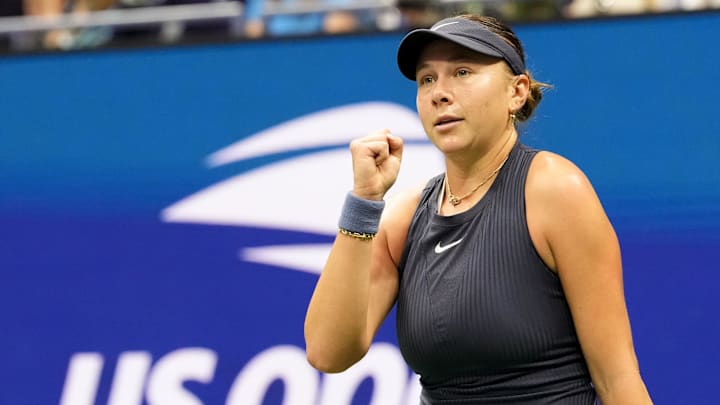
Amanda Anisimova on Breakout Year: ‘I Achieved Things That I’ve Always Dreamt About’
• Here’s this week’s Served podcast with special guest Frances Tiafoe.
• Thanks to those who wrote about the Franklin Meuli piece in the latest Sports Illustrated. Let the record reflect that a friend who is a longtime Warriors fan suggested that piece. Brad Gilbert is the guy’s name.
• Here’s a 60 Minutes segment on Swiss watches. (Next week, we can discuss how it relates to tennis.):
• Tiafoe will look to play on Final Sunday for the fourth consecutive year when he returns to River Oaks Country Club for the 2026 Fayez Sarofim & Co. U.S. Men’s Clay Court Championship.
• The Orange Bowl Committee, City of Fort Lauderdale and USTA will host a ribbon-cutting and dedication ceremony for Chris Evert Stadium Court to officially reopen the renovated Jimmy Evert Tennis Center at Holiday Park and kick off the 2025 Orange Bowl International Tennis Championships.
Onward …
Let’s do things a little differently this week. I was marooned at the office Friday afternoon, but Amanda Anisimova was kind enough (and sufficiently flexible) to break up the day with tennis talk. She was in town for the Newark exhibition on Sunday, and we talked about her season—one that saw her advance to the Wimbledon and U.S. Open finals and enter the top five—filled and unfilled goals and swelling confidence.
This interview has been lightly edited for brevity and clarity.
Sports Illustrated: Are you one of these people who thinks New York’s crazy? Or do you like coming here?
Amanda Anisimova: I love it. I always said that I would love to live here for a year or two. I would visit my sister a lot in New York. I just love how the city never sleeps. And it’s there’s always something to do when you walk outside. And my friends live here too. So that kind of association, hanging out with my friends and my sister here, I do love the city, and coming for the U.S. Open, I love it.
SI: When you come to an office and you see 24-year-olds, you’re thinking … what? That could be me, under fluorescent lights? I’m so lucky to be outdoors for my job.
AA: Yeah, I have a very unorthodox lifestyle. I set my own schedule, and it’s so different from, like, a day-to-day, nine-to-five. But yeah, I think that if I didn’t play tennis, I would never work in an office. I don’t think that would have ever been for me. I would have loved to be a doctor—maybe a surgeon—something different every day. The same routine every day would be so hard for me. I know a lot of people who have office jobs, and I just always say, that would be very difficult for me.
SI: Everyone talks about the tennis offseason. What is it actually like? You know we see the pictures from the Maldives. But no one actually—
AA: Yeah, I guess not many people post like what I do in a day, or training videos! My last offseason last year was very different to the one this year. I had a lot more time than I did this year. This year, I only ended in mid-November. I always want to start with a one- or two-week fitness block, where I don’t play tennis, and I'm just working on my fitness and trying to get a good base. Then I start playing for maybe six weeks. So that’s like an ideal preseason, but now that it’s so short, we kind of just went straight into both fitness and tennis. And I had my two weeks off as well.
SI: No, nothing?
AA: Yeah, just two weeks off. I would go on walks and jogs in the second week, just because I don’t like to go too long without any physical activity. But I went to New York for my one week off, and then the second week off I spent in Miami—it was great. I sleep in. And I don’t have a schedule. I can just do whatever I want. It’s amazing.
SI: How are you processing this year now that you’ve had a little detachment?
AA: I’m so happy with my year. Like, it’s been such a great year, and I think that I did more than I expected, for sure. I achieved things that I’ve always dreamt about. But then I also feel like there’s so much more room for improvement and a lot of big goals I’m still chasing for next year. And I think I can just take a lot of lessons, just a lot of takeaways from this year in terms of where I’ve grown as a player, and also what I need to do better next year. And I think a lot of the experiences I had this year are really beneficial for me going into next year.
SI: How old do you feel?
AA: As a tennis player, I have feelings, just because I’ve been on tour since I was 16, so in that sense, I feel like it’s been a long time. But at the same time, I don’t like feeling old and feeling Ohhh, there’s this new generation, and I’m not part of that anymore. It’s like a weird transition. So I like to think … I’m still part of the younger crew on tour, and I still have many more years left to play, which I hope I do. So, yeah, I try to, like, think about myself as, you know, not on the older side, but then when it comes to real life, I feel like I feel a lot older than I am.
SI: You feel older as a person than a tennis player?
AA: I don’t like feeling old in tennis. I don’t think anybody wants to.
SI: What makes you most proud of this year?
AA: I think my consistency, because I feel like I started the year off well. In February, I already won my first [Masters] 1000 and then did well in the middle of the year, and then also was able to win another [Masters] 1000 at the end of the year. And that was so huge for me, because in the past, that’s something I really struggled with—backing those results and showing up and competing week after week, like bringing a really high level. That’s the biggest thing that you know I've done to grow as a player.
SI: The U.S. Open match, the revenge match. Let’s discuss—
AA: Yeah, that is another one I’m really proud of. I think prior to that match, I told myself that it’s a new day and it’s a new match, new tournament, new everything, and to treat it as such, despite what had happened, like a month ago, and how difficult that was. So I just told myself, this is just a completely new experience. And kept, like, telling myself to focus on that. And then I had gotten to the gym to warm up for my match, and they were just like, playing the replay [of the Wimbledon final], but I didn’t look. I could see my peripheral, like, ESPN … I think that actually fueled me a little bit. I was like, O.K., we got this.
SI: Compare the feeling of winning that match to totally flipping the script to winning a tournament.
AA: Yeah, it was really cathartic, I think. And it kind of told a story, which I thought was cool.
SI: What was the story?
AA: That you can come back from something like that, which was all over the headlines, and not the greatest thing to experience, and that’s O.K. Like it happened, and then you can rewrite the story or the script. And I was really happy with the way I was able to show that, and even if I didn’t win that day. I mean, obviously, that’s out of my control, but just showing up and doing my best, and that’s what I did. I knew that wasn’t me that day anyway, so ...
SI: When a match tightens, what do you cling to? What do you grab on to?
AA: Oh gosh, all I can associate like that sentence with is the stress and, like, my heart rate at that moment. I think we all still experience it. It’s just like, it’s so stressful. And I think the match that I think about most when you say that is like when I played Naomi [Osaka] in the [U.S. Open] semifinal this year. That was just such a crazy match. And I think I’m really learning as I go. I keep learning more about myself, and I've had a lot of three-set wins this year. So I think in those moments, I'm like, Okay, like, let’s push it up a bit more. And I always kind of find that extra 10% in those really tight situations, which I think some players kind of get nervous and start missing more. And I think that I actually do better when I feel like the really high stress environment or situation, where there's more on the line and I need to kind of step up. And I think I'm really able to do that.
SI: Where does that come from?
AA: I’ve always kind of been like that, even as a kid in juniors. I just handled those moments so well. And I think it comes down to personality. I think everyone is just different with handling stress and pressure. And for sure, I think in some ways it doesn’t serve you. Obviously, it’s helpful in some ways, and then in some ways it sets your whole nervous system off, but I perform well under stress.
SI: Monica Seles always said ‘I got a tennis player [personality] and a totally different personality away from this.’ And other people are like, Oh yeah, that’s my personality. To what extent do you recognize yourself as a tennis player?
AA: Sure. It’s such a different circumstance you’re in when you’re in a tennis match, as opposed to just hanging out with a group of people. But yeah, I feel like I’m quite the opposite in those two situations. Like, if I’m just hanging out with friends, and in my day-to-day life, I’m very laid back and social, and I kind of don’t take anything too seriously, actually. And then the match is like the complete opposite, like it’s very serious, and what the hell is going wrong if it’s going wrong, and I’m very much a perfectionist. But then in my day-to-day life, I’m quite the opposite.
SI: When’s your offseason over?
AA: I leave [for Australia] the day after Christmas. Yeah, I haven’t done a New Year’s in probably, like, 10 years. This New Year’s is probably going to be fun, because I think I’m gonna play in Brisbane, and that’s where my best friend Priscilla [Hon] lives, and so I’ll probably be able to do something with her.
SI : You had a really good result in Australia when—
AA: Yeah, I got to the Round of 16, and I was 17. Yeah, that’s my first Australian Open. I never played juniors. My parents thought it was ridiculous to go so far for juniors.
SI: They were right.
AA: Which I agreed with even the first time flying there. I’m like, I don’t know how I’m gonna survive this flight. It’s so long, and now I don't even think of it as long. I’m so used to it.
SI: Would you want to coach you?
AA: I don’t know if I’m biased but I’m pretty easy to coach. Like, I feel like I’m a good listener. I don't really like to talk back. I mean, unless I have something important to say, or I think this needs to be done, and I also think it;s important, I think on my own. I’ll say stuff like, “O.K., this needs work.” Or, like, “I need to do this.” But I’d say I’m, like, pretty good to work with. I would want to work with me. I have my bad days–we all do.
SI: I feel like you’re a great advertisement for time off. Did you ever think, like, We’re good, you know what … ?
AA: If I were never to come back? Is that your question?
SI: Yeah, if you were like, You know what, we’re good, move on. Career 2.0.
AA: No, that didn’t really sit well with me when I took my break, and I was kind of thinking about that, like, what if I never came back and just kind of called it quits? And I didn’t really like the thought of that. I spent so much of my childhood and my life sacrificing so much for the sport, and I had, like, all these goals and ambitions, right? Like, winning the Grand Slam. I still had, like, so many things I wanted to achieve in my career. And also my family, like, sacrificed so much for my career. And obviously, that wasn’t a given that it was going to be easy and that I would even make it back to where I had stopped, because I was already in a really good position.
I mean, my ranking was still pretty decent. And, you know, I knew that in the back of my head, I knew I was going to have to work my ass off, but I was ready to do it. I just needed that time to reset. At that moment when I was making my decision, people said, Oh, just push through this. Or, like, it’ll get easier and just, like, try and get through it. But I think if I had done that, it would have set me back even further. Yeah, I think it was the best decision ever. And I think it also changed me as the person I am off the court. When I came back from my break, I’ve just been growing into this, into the person I am, and just becoming more comfortable and more free with myself. And I think in a way that kind of like lifted a weight off of my shoulders, because I had started my career off so young and had, you know, success, and I think I always struggled with finding a sense of identity, and just I didn’t know, should I, like, be completely myself, what’s appropriate? And now I’m like, oh, it’s totally fine to like, be completely myself and authentic to myself. And I’m just so happy I’m able to do that.
SI: What’s your relationship with time?
AA: I’m not really someone who, like, thinks so far into the future. Like I have my own goals and things I know I want to achieve, but life is so unpredictable. And I think there’s no point in saying, Oh, I’m just gonna play for another seven years, like end this year, and that’s it. Like, I don’t really think that way. But right now, I’m enjoying it, and I’m really excited for next year, and I feel like for everything that’s to come, I feel like my career has, like, kind of restarted in a way. So, yeah, I just feel like it’s really exciting.
More Tennis on Sports Illustrated
 Add us as a preferred source on Google
Jon Wertheim is a senior writer for Sports Illustrated and has been part of the full-time SI writing staff since 1997, largely focusing on the tennis beat, sports business and social issues, and enterprise journalism. In addition to his work at SI, he is a correspondent for “60 Minutes” and a commentator for The Tennis Channel. He has authored 11 books and has been honored with two Emmys, numerous writing and investigative journalism awards, and the Eugene Scott Award from the International Tennis Hall of Fame. Wertheim is a longtime member of the New York Bar Association (retired), the International Tennis Writers Association and the Writers Guild of America. He has a bachelor’s in history from Yale University and received a law degree from the University of Pennsylvania. He resides in New York City and Paris with his wife, who is a divorce mediator and adjunct law professor. They have two children.
Follow jon_wertheim