%20%20--%3E%0A%3Csvg%20version%3D%221.1%22%20id%3D%22Layer_1%22%20xmlns%3D%22http%3A%2F%2Fwww.w3.org%2F2000%2Fsvg%22%20xmlns%3Axlink%3D%22http%3A%2F%2Fwww.w3.org%2F1999%2Fxlink%22%20x%3D%220px%22%20y%3D%220px%22%0A%09%20width%3D%2239px%22%20height%3D%2240px%22%20viewBox%3D%220%200%2039%2040%22%20enable-background%3D%22new%200%200%2039%2040%22%20xml%3Aspace%3D%22preserve%22%3E%0A%3Cpath%20fill%3D%22%23FFFFFF%22%20d%3D%22M38.5%2C7H28.2v26h10.3V7z%22%2F%3E%0A%3Cpath%20fill-rule%3D%22evenodd%22%20clip-rule%3D%22evenodd%22%20fill%3D%22%23FFFFFF%22%20d%3D%22M26.1%2C25.5c0%2C5.8-4.1%2C7.5-12.9%2C7.5C3.9%2C33%2C0%2C31.2%2C0%2C25.2v-1.1h11.6%0A%09v2.4c0%2C0.7%2C0.1%2C1.4%2C1.2%2C1.4c1%2C0%2C1.2-0.4%2C1.2-1.3v-0.9c0-1.6-0.9-1.6-3.5-2.2C2.2%2C21.7%2C0%2C19.7%2C0%2C15.3v-0.9C0%2C9.3%2C5.5%2C7%2C12.9%2C7%0A%09c10.2%2C0%2C12.8%2C2.6%2C12.8%2C7.4v1.8h-11v-2.9c0-0.6-0.4-1.1-1.2-1.1c-0.6%2C0-1.2%2C0.4-1.2%2C1.1v0.9c0%2C1.5%2C0.9%2C2%2C3.3%2C2.5%0A%09c8%2C1.6%2C10.5%2C3.3%2C10.5%2C7.5V25.5z%22%2F%3E%0A%3C%2Fsvg%3E%0A)
The Mind-Boggling History Behind an Almost 50-Year Run of NCAA Titles
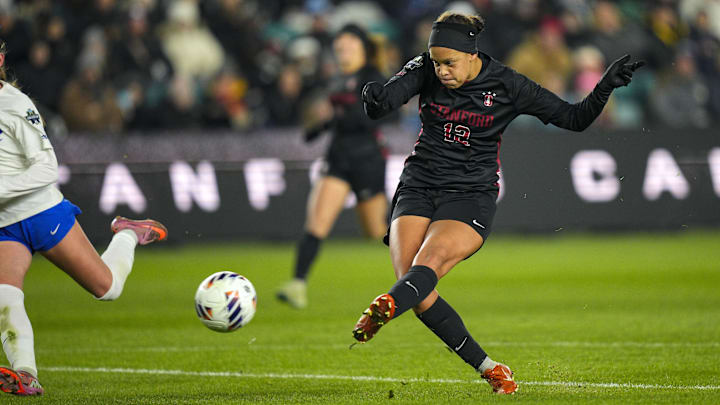
Monday night in Kansas City, the Stanford women’s soccer team plays Florida State for the NCAA championship. If the No. 1 seed Cardinal win, the most remarkable streak in college sports reaches a half-century milestone.
On Nov. 28, 1976, Stanford beat UCLA for the men’s water polo national title. Every school year since then, the Cardinal have won at least one natty. This year, 2025–26, they are trying to make it 50 straight on The Farm.
As you might imagine, this streak is completely without peer in college sports annals. The second-longest in history is 19 years by USC from 1959–60 through 1977–78. The second-longest active streak is North Carolina with seven straight years.
When Stanford won that water polo title, current NCAA president Charlie Baker was a sophomore on the junior varsity basketball team at Harvard and the Cardinal’s conference was the Pac-8. If you told anyone on campus then that the school would end up joining the Atlantic Coast Conference, you’d have been suspected of using psychedelics.
The championships have come like clockwork, and sometimes they come in bunches. Twice, in 1996–97 and 2018–19, Stanford won six titles in a single academic year. Three times—in 1996, 2003 and 2019—the Cardinal won championships in two different sports on the same day.
It’s just different there, where excellence is the expectation both academically and athletically, and in a vast array of different sports. Twenty different programs have won NCAA titles: women’s tennis (20 of them), men’s tennis (17), women’s swimming (11), men’s water polo (11), women’s water polo (10), men’s gymnastics (10), women’s volleyball (nine), men’s swimming (eight), men’s golf (eight), women’s cross country (five), men’s cross country (four), men’s outdoor track and field (four), women’s basketball (three), women’s golf (three), women’s rowing (three), women’s soccer (three), men’s soccer (three), men’s volleyball (two), baseball (two) and men’s basketball (one).
(The big-revenue, glamour sports are a bit of a different story. Stanford has been successful for long stretches in football and men’s basketball, but the only national championship for either of those programs came in men’s hoops in 1942.)
Some of the most famous names in American sports were part of team national titles at Stanford: John McEnroe in men’s tennis; Katie Ledecky in women’s swimming; Pablo Morales in men’s swimming; Jennifer Azzi in women’s basketball; Hall of Famer Mike Mussina and Cy Young winner Jack McDowell in baseball; water polo star Maggie Steffens; and so on. (Tiger Woods won an individual golf national title, but not a team championship.) The U.S. Olympic teams are routinely populated by Cardinal athletes.

The school’s 137 total NCAA titles are the most in history, outdistancing UCLA (124) and USC (115). From there it drops off to Texas at 60. Stanford has a wider distance in women’s natties over the competition with 67 to runner-up UCLA’s 45.
It’s true that Stanford casts a wider net than virtually anyone else, sponsoring 36 varsity sports (15 men, 19 women, two co-ed). But the ability to excel in so many of them over such a long period of time speaks to a school culture that embraces athletics as opposed to tolerating it, as some of the more high-powered academic schools do. With an undergraduate enrollment of about 8,000, the percentage of athletes in the student body is quite high.
Climate, facilities and the allure of graduating with a high-powered degree attract elite athletes across a broad spectrum. But the realities of modern college sports have challenged Stanford’s sustainability—this is not a school that works well in the transfer portal, given the academic strictures of gaining admission, and it has been playing from behind in the NIL market.
Nothing underscores Stanford’s struggles there more than two transfers to nouveau riche Texas Tech. Softball pitcher NiJaree Canady helped the Cardinal to the Women’s College World Series Final Four in 2023 and ’24, then made a big-money transfer to Tech and led the Red Raiders to a runner-up finish last spring. Then defensive end David Bailey was a dominant player at Stanford for three years before transferring to Texas Tech and helping the Red Raiders to the current College Football Playoff.
Along the way, Stanford has lost its forever grip on the Learfield Directors’ Cup, the annual all-sports championship for the best athletic department. From 1994–95 through 2018–19, the school won every year. The COVID-19 pandemic interrupted that run, and jarred Stanford’s primacy. Since then, Texas has won it four times and Stanford once. Last year the Cardinal finished third, their lowest finish in the Cup’s 31-year history.
New athletic director John Donahoe has been tasked with modernizing the department after replacing longtime AD Bernard Muir. Donahoe has a business background, having previously worked at Nike and elsewhere in the private sector. The football program is getting a makeover under general manager Andrew Luck, a former star quarterback at the school and in the NFL as well.
Yet even in changing times, Stanford’s title string has endured to this point.
The women’s soccer team has the best chance of extending it to 50 years among the fall sports, entering the NCAA tournament with a 16-1-2 record and reeling off five straight wins by a combined score of 22–5. Stanford defeated Florida State, 2–1, during the regular season in Tallahassee.
But if the Cardinal don’t get it done Monday night, there are more opportunities to come. The No. 2-seeded women’s volleyball team has advanced to the Sweet 16 of that tournament and will face Wisconsin on Friday. Winter and spring sports should have multiple national title contenders as well.
At most schools, a single national title at any point in time is a historic event. At Stanford, it has been an annual happening since shortly after Jimmy Carter won the 1976 presidential election. Nobody has ever done it better, for longer, with greater consistency.
More College Football from Sports Illustrated
Listen to SI’s new college sports podcast, Others Receiving Votes, below or on Apple and Spotify. Watch the show on SI’s YouTube channel.
 Add us as a preferred source on Google
Pat Forde is a senior writer for Sports Illustrated who covers college football and college basketball as well as the Olympics and horse racing. He cohosts the Others Receiving Votes podcast for SI and is a regular contributor to the Tony Kornheiser Show podcast. He previously worked for Yahoo Sports, ESPN and The (Louisville) Courier-Journal. Forde has won 28 Associated Press Sports Editors writing contest awards, has been published three times in the Best American Sports Writing book series, and was nominated for the 1990 Pulitzer Prize. A past president of the U.S. Basketball Writers Association and member of the Football Writers Association of America, he lives in Louisville with his wife. They have three children, all of whom were collegiate swimmers.
Follow ByPatForde