%20%20--%3E%0A%3Csvg%20version%3D%221.1%22%20id%3D%22Layer_1%22%20xmlns%3D%22http%3A%2F%2Fwww.w3.org%2F2000%2Fsvg%22%20xmlns%3Axlink%3D%22http%3A%2F%2Fwww.w3.org%2F1999%2Fxlink%22%20x%3D%220px%22%20y%3D%220px%22%0A%09%20width%3D%2239px%22%20height%3D%2240px%22%20viewBox%3D%220%200%2039%2040%22%20enable-background%3D%22new%200%200%2039%2040%22%20xml%3Aspace%3D%22preserve%22%3E%0A%3Cpath%20fill%3D%22%23FFFFFF%22%20d%3D%22M38.5%2C7H28.2v26h10.3V7z%22%2F%3E%0A%3Cpath%20fill-rule%3D%22evenodd%22%20clip-rule%3D%22evenodd%22%20fill%3D%22%23FFFFFF%22%20d%3D%22M26.1%2C25.5c0%2C5.8-4.1%2C7.5-12.9%2C7.5C3.9%2C33%2C0%2C31.2%2C0%2C25.2v-1.1h11.6%0A%09v2.4c0%2C0.7%2C0.1%2C1.4%2C1.2%2C1.4c1%2C0%2C1.2-0.4%2C1.2-1.3v-0.9c0-1.6-0.9-1.6-3.5-2.2C2.2%2C21.7%2C0%2C19.7%2C0%2C15.3v-0.9C0%2C9.3%2C5.5%2C7%2C12.9%2C7%0A%09c10.2%2C0%2C12.8%2C2.6%2C12.8%2C7.4v1.8h-11v-2.9c0-0.6-0.4-1.1-1.2-1.1c-0.6%2C0-1.2%2C0.4-1.2%2C1.1v0.9c0%2C1.5%2C0.9%2C2%2C3.3%2C2.5%0A%09c8%2C1.6%2C10.5%2C3.3%2C10.5%2C7.5V25.5z%22%2F%3E%0A%3C%2Fsvg%3E%0A)
Djokovic strong at season's end
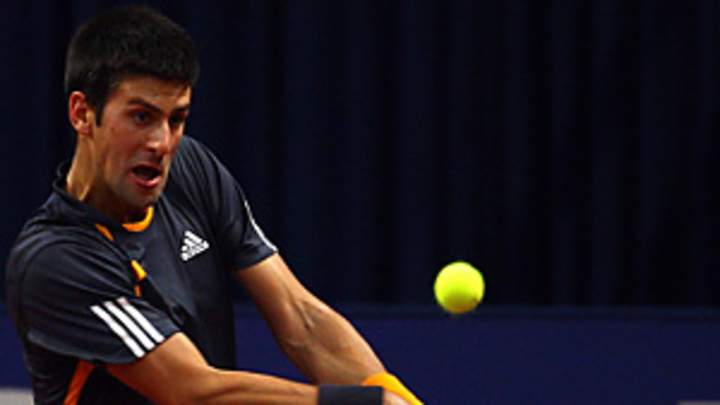
1. Some overdue props for Novak Djokovic. His fitness may have been called into question in past years, but here it is November of this interminable season and he's still going strong, playing as well as anyone.
Djokovic's latest triumph came Sunday when he beat Roger Federer in a three-set final for the Basel title. Which is a bit like beating the Florida Gators in Gainesville. His peer Andy Murray, meanwhile, won in Valencia. There are still a few weeks of tennis left to played. Nice to see at least a few top stars still in form.
2. If you thought Fed Cup was a piece of plastic the world's No. 1 player uses to protect himself, you'd be forgiven. The women's answer to Davis Cup, Fed Cup has gone through various iterations and formats. None has captured the public imagination. As with Davis Cup, the scheduling is screwy and the top stars often beg off. That includes Venus and Serena Williams, both of whom declined to play for the U.S. team. In their absence, Italy defeated the U.S. in Sunday's final. Brave to Flavia Pennetta (who capped a terrific year) and Francesca Schiavone.
3.Aravane Rezai took the title in Bali. It was somehow fitting that the final -- the last WTA match of the year -- ended with an injury retirement. (Marion Bartoli, the top seed, quit after a set on account of a thigh injury.)
4. In the span of a few days, we've seen two extremes in tennis' anti-doping policy. In 1997, the time of Andre Agassi's admitted drug use, the ATP essentially self-policed, testing players and then sending cases to an independent panel. This led to charges that the organization could whitewash players -- i.e. Agassi -- and dismiss charges that might cause the tour embarrassment and/or financial loss. Tennis being tennis, it went from one extreme to the other. As a condition for having tennis recognized as an Olympic sport, players agreed to abide by the World Anti-Doping Agency code, which is not only exceptionally strict but also essentially removed the tours from the equation.
This, too, is problematic. And it was thrown into sharp relief last Friday when, days after L'Affaire Andre became worldwide news (coincidence?), the Flemish Doping Tribunal announced that it was suspending Belgian players Yanina Wickmayer and Xavier Malisse for a year. Did they test positive for a banned drug? No. Was there a non-analytic positive, say a receipt from an online pharmacy for a banned drug? No. Their offense? They failed to keep doping officials notified of their whereabouts. (In Malisse's cases, he skipped a test altogether.) The International Tennis Federation, not surprisingly, rubber-stamped the absurdly stiff punishment.
In the individualistic, multilingual, itinerant, if-I-lose-tomorrow-I-fly-to-Asia world of tennis, it's easy to see how communications breakdowns can occur, especially in the case of Wickmayer, who is a teenager. But there was no mercy here. And you're within your rights to wonder how the WTA Tour feels when a Flemish tribunal unilaterally suspends one of its up-and-coming stars for an entire year. (Imagine an analog in another sport, the absurdity of, say, a regional German anti-doping tribunal telling the NBA that Dirk Nowitzki didn't notify testers of his whereabouts and thus cannot play in the NBA this season.)
Bottom line: As long as tennis players fail to form a legitimate players' association, this is what they get.
 Add us as a preferred source on Google
Jon Wertheim is a senior writer for Sports Illustrated and has been part of the full-time SI writing staff since 1997, largely focusing on the tennis beat, sports business and social issues, and enterprise journalism. In addition to his work at SI, he is a correspondent for “60 Minutes” and a commentator for The Tennis Channel. He has authored 11 books and has been honored with two Emmys, numerous writing and investigative journalism awards, and the Eugene Scott Award from the International Tennis Hall of Fame. Wertheim is a longtime member of the New York Bar Association (retired), the International Tennis Writers Association and the Writers Guild of America. He has a bachelor’s in history from Yale University and received a law degree from the University of Pennsylvania. He resides in New York City and Paris with his wife, who is a divorce mediator and adjunct law professor. They have two children.