%22%3E%0A%3Cpath%20d%3D%22M0%209H6.73992C13.734%209%2017.2358%2012.4453%2017.2358%2017.6508V17.6979C17.2358%2022.9034%2013.6681%2026.6029%206.54224%2026.6029H0V9ZM5.89273%2014.1302V21.4726H6.87171C9.56391%2021.4726%2011.296%2020.3619%2011.296%2017.8203V17.7732C11.296%2015.2316%209.56391%2014.1208%206.87171%2014.1208H5.89273V14.1302Z%22%20fill%3D%22white%22%2F%3E%0A%3Cpath%20d%3D%22M18.375%2019.8159V19.7688C18.375%2015.6646%2021.3214%2012.5488%2025.4444%2012.5488C30.3299%2012.5488%2032.5891%2015.947%2032.5891%2020.1171C32.5891%2020.4183%2032.5891%2020.7761%2032.5608%2021.0679H23.7312C24.1359%2022.2728%2025.0867%2022.9035%2026.3198%2022.9035C27.3553%2022.9035%2028.2025%2022.4234%2029.1156%2021.4915L32.1843%2023.9295C30.8288%2025.6898%2028.8897%2026.9229%2025.9245%2026.9229C21.4249%2026.9229%2018.375%2024.0801%2018.375%2019.8065V19.8159ZM27.3741%2018.5545C27.2517%2017.2461%2026.4704%2016.493%2025.4632%2016.493C24.456%2016.493%2023.8253%2017.3025%2023.6559%2018.5545H27.3835H27.3741Z%22%20fill%3D%22white%22%2F%3E%0A%3Cpath%20d%3D%22M33.944%2012.869H39.6579V14.7799C40.5427%2013.6503%2041.9265%2012.5396%2043.8562%2012.5396C46.7461%2012.5396%2048.5628%2014.4505%2048.5628%2017.5474V26.603H42.849V19.383C42.849%2018.1969%2042.143%2017.5192%2041.2864%2017.5192C40.4297%2017.5192%2039.6484%2018.1969%2039.6484%2019.383V26.603H33.9346V12.869H33.944Z%22%20fill%3D%22white%22%2F%3E%0A%3Cpath%20d%3D%22M48.9205%2012.8691H54.9074L57.1195%2019.7597L59.3599%2012.8691H65.2715L59.7082%2026.7067H54.4744L48.9111%2012.8691H48.9205Z%22%20fill%3D%22white%22%2F%3E%0A%3Cpath%20d%3D%22M64.9238%2019.8159V19.7688C64.9238%2015.6646%2067.8702%2012.5488%2071.9932%2012.5488C76.8787%2012.5488%2079.1379%2015.947%2079.1379%2020.1171C79.1379%2020.4183%2079.1379%2020.7761%2079.1097%2021.0679H70.28C70.6848%2022.2728%2071.6355%2022.9035%2072.8687%2022.9035C73.9041%2022.9035%2074.7513%2022.4234%2075.6644%2021.4915L78.7331%2023.9295C77.3776%2025.6898%2075.4385%2026.9229%2072.4733%2026.9229C67.9737%2026.9229%2064.9238%2024.0801%2064.9238%2019.8065V19.8159ZM73.9229%2018.5545C73.8006%2017.2461%2073.0193%2016.493%2072.012%2016.493C71.0048%2016.493%2070.3741%2017.3025%2070.2047%2018.5545H73.9324H73.9229Z%22%20fill%3D%22white%22%2F%3E%0A%3Cpath%20d%3D%22M80.4932%2012.8689H86.207V15.6364C86.9883%2013.7726%2088.2497%2012.5677%2090.5089%2012.6712V18.7334H89.9065C87.4872%2018.7334%2086.207%2020.0701%2086.207%2023.1106V26.6123H80.4932V12.8783V12.8689Z%22%20fill%3D%22white%22%2F%3E%0A%3Cpath%20d%3D%22M98.2373%209H108.102C110.54%209%20112.075%209.55538%20113.11%2010.5814C113.741%2011.2121%20114.193%2012.1158%20114.193%2013.3207V13.3678C114.193%2015.4575%20112.931%2016.7377%20111.049%2017.3967C113.317%2018.0556%20114.776%2019.2605%20114.776%2021.6703V21.7174C114.776%2024.5319%20112.461%2026.6029%20108.008%2026.6029H98.2467V9H98.2373ZM108.394%2014.6574C108.394%2013.8761%20107.764%2013.4525%20106.502%2013.4525H103.961V15.9188H106.53C107.792%2015.9188%20108.394%2015.4952%20108.394%2014.7139V14.6668V14.6574ZM106.935%2019.5429H103.97V22.1598H106.916C108.197%2022.1598%20108.856%2021.6326%20108.856%2020.8796V20.8325C108.856%2020.0795%20108.225%2019.5523%20106.945%2019.5523L106.935%2019.5429Z%22%20fill%3D%22white%22%2F%3E%0A%3Cpath%20d%3D%22M115.99%2012.8689H121.704V15.6364C122.485%2013.7726%20123.747%2012.5677%20126.006%2012.6712V18.7334H125.404C122.984%2018.7334%20121.704%2020.0701%20121.704%2023.1106V26.6123H115.99V12.8783V12.8689Z%22%20fill%3D%22white%22%2F%3E%0A%3Cpath%20d%3D%22M126.533%2019.7877V19.7406C126.533%2015.8623%20129.753%2012.5488%20134.28%2012.5488C138.808%2012.5488%20141.98%2015.8152%20141.98%2019.6935V19.7406C141.98%2023.6189%20138.761%2026.9324%20134.233%2026.9324C129.705%2026.9324%20126.533%2023.6659%20126.533%2019.7877ZM136.502%2019.7877V19.7406C136.502%2018.3851%20135.495%2017.3025%20134.233%2017.3025C132.972%2017.3025%20132.021%2018.3851%20132.021%2019.6935V19.7406C132.021%2021.0961%20133.028%2022.1786%20134.29%2022.1786C135.551%2022.1786%20136.502%2021.0961%20136.502%2019.7877Z%22%20fill%3D%22white%22%2F%3E%0A%3Cpath%20d%3D%22M143.374%2012.869H149.088V14.7799C149.972%2013.6503%20151.356%2012.5396%20153.286%2012.5396C156.176%2012.5396%20157.993%2014.4505%20157.993%2017.5474V26.603H152.279V19.383C152.279%2018.1969%20151.573%2017.5192%20150.716%2017.5192C149.859%2017.5192%20149.078%2018.1969%20149.078%2019.383V26.603H143.364V12.869H143.374Z%22%20fill%3D%22white%22%2F%3E%0A%3Cpath%20d%3D%22M159.273%2019.816V19.7689C159.273%2015.9189%20162.295%2012.5771%20166.766%2012.5771C169.788%2012.5771%20171.925%2014.1398%20172.979%2016.3801L168.875%2018.6958C168.395%2017.8109%20167.792%2017.312%20166.861%2017.312C165.656%2017.312%20164.752%2018.3663%20164.752%2019.7313V19.7783C164.752%2021.2091%20165.656%2022.2446%20166.795%2022.2446C167.802%2022.2446%20168.376%2021.7457%20168.931%2020.8609L173.083%2023.2236C171.85%2025.511%20169.76%2026.9701%20166.493%2026.9701C162.314%2026.9701%20159.273%2023.6754%20159.273%2019.8254V19.816Z%22%20fill%3D%22white%22%2F%3E%0A%3Cpath%20d%3D%22M173.261%2019.7877V19.7406C173.261%2015.8623%20176.48%2012.5488%20181.008%2012.5488C185.536%2012.5488%20188.708%2015.8152%20188.708%2019.6935V19.7406C188.708%2023.6189%20185.489%2026.9324%20180.961%2026.9324C176.433%2026.9324%20173.261%2023.6659%20173.261%2019.7877ZM183.22%2019.7877V19.7406C183.22%2018.3851%20182.213%2017.3025%20180.961%2017.3025C179.709%2017.3025%20178.749%2018.3851%20178.749%2019.6935V19.7406C178.749%2021.0961%20179.756%2022.1786%20181.017%2022.1786C182.279%2022.1786%20183.229%2021.0961%20183.229%2019.7877H183.22Z%22%20fill%3D%22white%22%2F%3E%0A%3Cpath%20d%3D%22M188.991%2024.9463L190.93%2021.6987C192.587%2022.7247%20194.451%2023.2331%20196.014%2023.2331C196.569%2023.2331%20196.842%2023.1107%20196.842%2022.7812V22.7342C196.842%2022.4612%20196.588%2022.2823%20195.204%2021.9246C191.73%2021.068%20189.594%2020.1361%20189.594%2017.2933V17.2462C189.594%2014.2245%20192.013%2012.5396%20195.581%2012.5396C197.849%2012.5396%20200.08%2013.1138%20201.746%2014.121L199.939%2017.5192C198.48%2016.7096%20196.72%2016.239%20195.562%2016.239C195.006%2016.239%20194.752%2016.3896%20194.752%2016.6626V16.7096C194.752%2016.9826%20195.053%2017.1615%20196.437%2017.5192C199.911%2018.3758%20202%2019.3265%20202%2022.1505V22.1976C202%2025.191%20199.76%2026.9231%20196.042%2026.9231C193.378%2026.9231%20190.959%2026.2453%20189.001%2024.9369L188.991%2024.9463Z%22%20fill%3D%22white%22%2F%3E%0A%3Cpath%20fill-rule%3D%22evenodd%22%20clip-rule%3D%22evenodd%22%20d%3D%22M211.368%204.36764C217.191%20-1.45588%20226.632%20-1.45588%20232.456%204.36764C238.279%2010.1912%20238.279%2019.6324%20232.456%2025.4559L221.912%2036L211.368%2025.4559C205.544%2019.6324%20205.544%2010.1912%20211.368%204.36764ZM214.009%207.55761C213.948%207.86849%20213.916%208.39718%20213.916%209.14566V10.4189C213.916%2011.1832%20213.948%2011.7198%20214.013%2012.0267C214.078%2012.3317%20214.278%2012.6168%20214.617%2012.8762C214.956%2013.1376%20215.403%2013.3316%20215.958%2013.4623C216.512%2013.593%20217.1%2013.6584%20217.837%2013.6584C218.573%2013.6584%20219.217%2013.591%20219.769%2013.4524C220.322%2013.3158%20220.761%2013.1178%20221.086%2012.8604C221.411%2012.6029%20221.605%2012.3178%20221.666%2012.0069C221.728%2011.6961%20221.759%2011.1674%20221.759%2010.4189V9.14566C221.759%208.38134%20221.728%207.84473%20221.662%207.53781C221.597%207.23287%20221.397%206.94971%20221.058%206.68834C220.72%206.42696%20220.272%206.23291%20219.718%206.10223C219.163%205.97154%20218.536%205.90619%20217.839%205.90619C217.102%205.90619%20216.459%205.97352%20215.906%206.11213C215.352%206.24875%20214.914%206.44677%20214.589%206.70418C214.265%206.9616%20214.071%207.24673%20214.009%207.55761ZM219.276%2024.8638C222.876%2024.8638%20224.557%2024.2064%20224.557%2021.862V21.858V21.3155C224.557%2019.6581%20223.516%2018.971%20220.252%2018.3136C219.278%2018.1136%20218.908%2017.9136%20218.908%2017.3136V16.9414C218.908%2016.6543%20219.177%2016.5117%20219.413%2016.5117C219.749%2016.5117%20219.918%2016.7137%20219.918%2016.9414V18.1136H224.391V17.3988C224.391%2015.4563%20223.347%2014.4266%20219.177%2014.4266C216.15%2014.4266%20213.896%2015.3414%20213.896%2017.3711V17.7433C213.896%2019.5155%20214.805%2020.3155%20218.201%2021.0303C218.28%2021.0472%20218.355%2021.063%20218.427%2021.0781C219.329%2021.2674%20219.647%2021.3341%20219.647%2021.9174V22.2897C219.647%2022.6619%20219.546%2022.8045%20219.142%2022.8045C218.67%2022.8045%20218.637%2022.5471%20218.637%2022.262V21.2897H213.894V21.7471C213.894%2024.149%20215.476%2024.8638%20219.276%2024.8638ZM225.424%2024.5569H229.925V14.7355H225.424V24.5569ZM226.955%2013.5019H229.925V6.06064H227.092V9.411L225.193%206.06064H222.359V13.5019H225.193V10.1199L226.955%2013.5019ZM218.269%2012.152C218.204%2012.2688%20218.055%2012.3262%20217.825%2012.3262L217.827%2012.3282C217.604%2012.3282%20217.459%2012.2767%20217.398%2012.1758C217.336%2012.0748%20217.305%2011.8074%20217.305%2011.3758V7.90068C217.305%207.51852%20217.352%207.28684%20217.445%207.20962C217.538%207.13239%20217.675%207.09279%20217.851%207.09279C218.059%207.09279%20218.198%207.14031%20218.265%207.23734C218.332%207.33239%20218.366%207.55416%20218.366%207.90068V11.3203C218.366%2011.7579%20218.334%2012.0352%20218.269%2012.152Z%22%20fill%3D%22white%22%2F%3E%0A%3C%2Fg%3E%0A%3Cdefs%3E%0A%3CclipPath%20id%3D%22clip0_15232_3035%22%3E%0A%3Crect%20width%3D%22237%22%20height%3D%2236%22%20fill%3D%22white%22%2F%3E%0A%3C%2FclipPath%3E%0A%3C%2Fdefs%3E%0A%3C%2Fsvg%3E%0A)
How a Soft Market has Affected Broncos' Free-Agent Moves
With the first wave of free agency officially in the books, one thing is clear; it's a much softer market in many ways than we could have anticipated.
Last year, it seemed that crazy money was being thrown around everywhere, often to positions that aren't consider premium positions. Off-ball linebackers and safeties were both re-setting the market and high prices were paid for right tackles when left tackles tend to be valued more.
The Denver Broncos, of course, were a team that paid a high price for a right tackle, signing Ja'Wuan James to a four-year, $52 million deal.
In the months that followed, we watched players get extended to market re-setting deals, from WR Julio Jones to CB Xavien Howard to ILB Bobby Wagner. Before free agency got underway, Chicago's Eddie Jackson set a high bar for safety contracts, as did Arizona's D.J. Humphries for offensive tackles.
Along the way, I expected another crazy market, especially with multiple cornerbacks, pass rushers, wide receivers and offensive linemen set to hit the open market.
But while we've seen a few players get big paydays, the majority aren't coming in anywhere near the premium levels I projected. There simply hasn't been as much crazy money thrown around as there was last year.
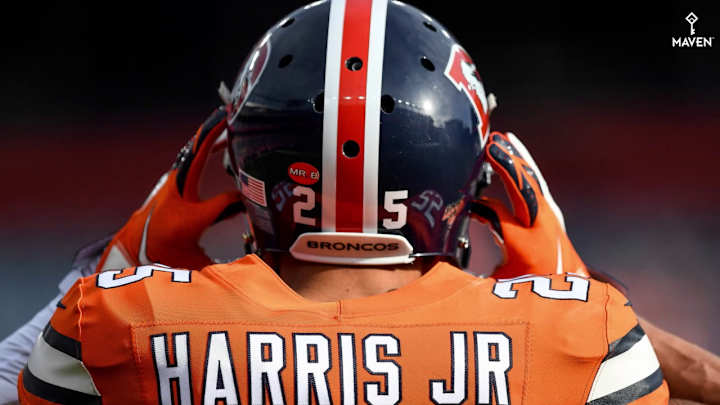
It's easy to think, then, that the Broncos should have extended Chris Harris, Jr. when they had the chance. However, we have to put things into context.
The Broncos made offers to Harris that would have paid him $12M APY, though I've seen different reports about contract length. Regardless, Harris didn't agree to those offers, which indicated he wanted to test the market and bet on himself.
The Broncos moved forward, acquiring A.J. Bouye in a trade with the Jaguars. Harris explored the open market this past week and took a two-year deal with the Los Angeles Chargers at $8.5M APY.
However, when Harris had talked last year about possibly approaching the $15M APY range, it tells you that the player had his ideas about his value, as much as the Broncos had their ideas, and thus it appears Harris overestimated his market.
There's also the consideration about what fans think a player is worth — and while sometimes they think a player is getting overpaid (as some believe was the case with Melvin Gordon, myself included), they can just as easily overvalue a player. In the case of Shelby Harris, I expected him to try to get to the second tier of D-line salaries, but there have been no reports to this point about him signing a deal with anybody, while defensive linemen who some might not think are as talented as Harris are getting signed by other teams.
In other words, what a player thinks he's worth, or what fans think a player is worth, doesn't always translate to what teams think they are worth. Yet, at the same time, it's hard to predict when one team will decide to go 'all in' on a particular player, and thus cause a ripple effect in the rest of the market.
As it is, we only saw a handful of players set the bar higher at positions, and that could impact what the Broncos will pay for any free agents they sign in the coming days, or those they may have to extend later on.
Allow me to sum it up.
Cornerback
Byron Jones did set a new high for the position but only two other players approached the $15M APY that Josh Norman got when he signed with the Redskins several years ago, those being James Bradberry and Trae Waynes, the latter I would describe as a shocker because it was the Bengals signing him when they usually go cheap.
The Eagles did give Darius Slay an extension that put him near the top after acquiring him via trade from Detroit. But the market, as a whole, didn't see a lot of veterans cash in big time.
In other words, the re-setting of the safety market last year didn't lead to the cornerback market being truly re-set this year. This could be good news for the Broncos if they wish to add another cornerback in free agency.
Safety
Perhaps the safety market wasn't going to go crazy to begin with once Justin Simmons and Anthony Harris got franchise-tagged. But there hasn't been a ton of big contracts there, with several safeties opting to stay with their current teams.
Both Devin McCourty and Jimmie Ward took less money to sign with their current teams, and while the Patriots generally don't go 'all in' on free agency, the Niners did that last year with Kwon Alexander. Perhaps the Niners re-evaluated and figured it was better to play it safe, especially when they didn't have a lot of cap space.
But there hasn't been any free agent safety who re-set the market. It makes me wonder if Simmons and Harris are going to be able to surpass what players got last year and have to take deals that are below those marks.
Off-Ball Linebacker
I think what teams saw was that the crazy money thrown to Alexander and C.J. Mosley last year, and look how that turned out for both teams. Of course, both were cases of players getting injured, but still, it may have caused teams to pause before paying too much money.
With that said, Joe Schobert and Blake Martinez garnered what I thought they would, but Cory Littleton took less money than I expected. Meanwhile, the team that went crazy was the Lions, who overpaid for Jamie Collins to the tune of $30M over three years. As far as the Broncos go, I can still see the team looking at free agents, but they'll be looking for value if that's the case.
Defensive Line
I never expected anyone was going to re-set the market here, and among unrestricted free agents. However, there was the case of a player involved in a trade, DeForest Buckner, who got a massive contract from the Colts. But those who hit free agency took much less money, with the exception of D.J Reader, who got $53M over four years from Cincinnati.
It's becoming clear that Shelby Harris isn't going to cash in like many of us thought. The same holds true for Derek Wolfe, though in his case, his health is likely scaring off teams, especially with players not being allowed to visit team headquarters to take physicals.
Perhaps Wolfe comes back into the fold, but he will certainly have to take much less than the $10M APY I thought he might garner. Harris, on the other hand, is likely going to have to approach things the same way Shaquil Barrett did last year and bet on himself with a one-year, low-cost deal.
Running Back
We've all debated the two-year, $16M contract the Broncos gave Melvin Gordon, but I will say this; his APY came just below the franchise tag amount for Derrick Henry and the transition tag amount for Kenyan Drake. Otherwise, activity has been limited here and most running backs are going to have to take low-cost deals in the second wave of free agency.
Interior O-Line
Graham Glasgow signed with Denver for $11M APY, which is at the top range for centers and slightly below the top range for offensive guards. The market didn't get much movement because Brandon Scherff and Joe Thuney were both tagged. From there, teams simply weren't willing to pay a lot of money.
Connor McGovern did get a good payday, but B.J. Finney came nowhere near what I thought he might get. Meanwhile, Ereck Flowers got a much bigger payday than I anticipated.
The Saints did give Andrus Peat a big extension, but not one that re-set the market. I would say I overestimated the market in some aspects, though it's possible if Scherff and Thuney hadn't been tagged, their negotiations may have allowed others to get bigger paydays.
Offensive Tackle
Nobody who hit the open market approached the money Humphries got. There was the crazy money the Jets threw at George Fant, though that seems more like a panic move after Jack Conklin took less than some might have expected in his deal with the Browns.
This could impact the Broncos' decision on whether or not to exercise the fifth-year option for left tackle Garett Bolles. If it comes in at less than $10M, there's a better chance the Broncos exercise it because it would still be lower than the money other free agents got. If it hits $10M or more, though, the Broncos may decline it and bet on Bolles not being able to cash in next year.
Quarterback
Tom Brady, Philip Rivers and Drew Brees took below-market deals but not drastically so. Meanwhile, the Panthers treated Teddy Bridgewater as a bridge quarterback, but with the possibility that he could be the guy to build around, depending on his level of play in 2020.
Ryan Tannehill's extension didn't come toward the top of the market, while Kirk Cousins did get closer to it in an extension designed to give the Vikings more cap room. All this could affect Dak Prescott, who isn't going to be able to get to $40M APY if that's what his agent thinks he can get. Meanwhile, the Broncos gave Jeff Driskel a deal that is typical for quarterbacks whose ceiling is that of a backup.
Tight End
I didn't expect the Broncos to add a tight end, but lo and behold, they signed Nick Vannett. He got the going rate for a backup tight end. Austin Hooper did become the highest-paid tight end in the NFL, but otherwise, it's been a mostly quiet market.
Wide Receiver
Amari Cooper did take less money to stay with the Dallas Cowboys, but his salary still put him near the top for the position. Everyone else who has signed thus far is taking much less than Cooper, though the Texans definitely overpaid for Randall Cobb. Robby Anderson, the top free agent still available, is likely going to have to take a one-year deal at this point.
Edge Rusher
Arik Armstead got a nice payday from San Francisco and Calais Campbell got a fair amount of money in his extension after the Ravens acquired him via trade. Robert Quinn did push to the higher end of the market in his contract with the Bears while Kyle Van Noy got a good payday from the Dolphins.
But the one who everyone thought might re-set the market — Jadeveon Clowney — remains un-signed, perhaps because of concerns about his health. As with Robby Anderson, I expect Clowney will have to take a one-year deal.
So the market overall didn't see a lot of crazy contracts get tossed around, nor did we see a lot of re-setting the market. Will it be the same next year? That's hard to say.
Coronavirus Impact
Restrictions this year with in-person visits to teams this year may have caused teams to shy away from certain players, particularly those with health concerns. Or perhaps it would have been quiet, anyway, because teams weren't convinced that players up for their third contract, as opposed to their second, were worth the money.
But it does show that you can never be certain what the market will bring. Teams certainly overvalue or undervalue certain players, but players can overvalue themselves and fans can do the same.
In the end, though, what matters is how well the players a team signs perform for that team. For the Broncos, regardless of what you think the players they signed or traded for are worth, they need to prove themselves on the field. If they do that, few are talking about the contracts any more.
Follow Bob on Twitter @BobMorrisSports and @MileHighHuddle.
 Add us as a preferred source on Google
Bob Morris has served as Denver Broncos On SI's resident cap analyst covering the Denver Broncos and NFL since 2017. His works have been featured on Scout.com, 247Sports.com, CBSSports.com, and BleacherReport.com.
Follow BobMorrisSports