%20%20--%3E%0A%3Csvg%20version%3D%221.1%22%20id%3D%22Layer_1%22%20xmlns%3D%22http%3A%2F%2Fwww.w3.org%2F2000%2Fsvg%22%20xmlns%3Axlink%3D%22http%3A%2F%2Fwww.w3.org%2F1999%2Fxlink%22%20x%3D%220px%22%20y%3D%220px%22%0A%09%20width%3D%2239px%22%20height%3D%2240px%22%20viewBox%3D%220%200%2039%2040%22%20enable-background%3D%22new%200%200%2039%2040%22%20xml%3Aspace%3D%22preserve%22%3E%0A%3Cpath%20fill%3D%22%23FFFFFF%22%20d%3D%22M38.5%2C7H28.2v26h10.3V7z%22%2F%3E%0A%3Cpath%20fill-rule%3D%22evenodd%22%20clip-rule%3D%22evenodd%22%20fill%3D%22%23FFFFFF%22%20d%3D%22M26.1%2C25.5c0%2C5.8-4.1%2C7.5-12.9%2C7.5C3.9%2C33%2C0%2C31.2%2C0%2C25.2v-1.1h11.6%0A%09v2.4c0%2C0.7%2C0.1%2C1.4%2C1.2%2C1.4c1%2C0%2C1.2-0.4%2C1.2-1.3v-0.9c0-1.6-0.9-1.6-3.5-2.2C2.2%2C21.7%2C0%2C19.7%2C0%2C15.3v-0.9C0%2C9.3%2C5.5%2C7%2C12.9%2C7%0A%09c10.2%2C0%2C12.8%2C2.6%2C12.8%2C7.4v1.8h-11v-2.9c0-0.6-0.4-1.1-1.2-1.1c-0.6%2C0-1.2%2C0.4-1.2%2C1.1v0.9c0%2C1.5%2C0.9%2C2%2C3.3%2C2.5%0A%09c8%2C1.6%2C10.5%2C3.3%2C10.5%2C7.5V25.5z%22%2F%3E%0A%3C%2Fsvg%3E%0A)
Tottenham Enjoys Rare Good Champions League Fortune; Romps for Man City, Real Madrid
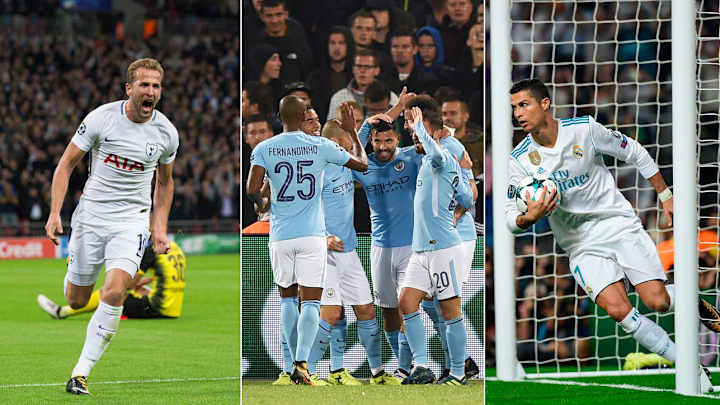
In a fine week for the Premier League sides in the Champions League, Liverpool was the only English side not to win, with Roberto Firmino's missed penalty looming large as Jurgen Klopp’s side was held to a 2-2 draw at home to Sevilla.
Tottenham enjoyed arguably its best European night in seven years, as it beat Borussia Dortmund 3-1 with two goals from Harry Kane, while also in that group two-time defending champion Real Madrid eased by APOEL 3-0.
Manchester City hammered Feyenoord 4-0 in Rotterdam, and while City hadn’t won any of its last six away ties in Europe, it was 3-0 up within 25 minutes and rolled from there, with the goals coming from John Stones (twice), Sergio Aguero and Gabriel Jesus. It wasn’t just the scoreline that impressed, though: it was the pace and intelligence of City’s movement. Following Saturday’s 5-0 win over Liverpool, it may be that Man City has finally assimilated to Pep Guardiola’s demands.
In the other game in the group, Shakhtar Donetsk beat Napoli 2-1. Taison and Facundo Ferreyra put the Ukrainian side 2-0 up before Arkadiusz Milik pulled one back from the penalty spot.
Champions League: Kane Double Leads Spurs; Ronaldo Brace Paces Real Madrid
It is Besiktas that tops Group G after an impressive 3-1 win in Porto. Cenk Tosun’s screamer restored the Turkish champion’s lead after a Dusko Tosic own-goal had cancelled out Anderson Talisca’s early header, before Ryan Babel’s late goal sealed the win. RB Leipzig’s first Champions League game ever ended in a draw against last season’s semifinalist Monaco. Emil Forsberg had put Leipzig ahead after 33 minutes, but Youri Tielemans poked in the equalizer two minutes later.
In Liverpool’s group, Maribor and Spartak drew 1-1, although the most significant event of the evening may turn out to be the flare apparently fired from among the Spartak fans at the German referee Deniz Aytekin.
Here are three thoughts from the end of Matchday 1 in the Champions League:
Real Madrid not its best, still coasts to start three-peat quest
After an opening night that brought five games won by margins of three goals or more, this was an evening of more even contests in the Champions League, with only two games won by three-goal margins. Not surprisingly, one of those was at the Bernabeu, as Real Madrid, looking for a third straight Champions League title, overwhelmed the Cypriot champion APOEL without ever being anywhere near its best.
Cristiano Ronaldo, who hasn’t featured in the league this season after being banned for pushing a referee in the Spanish Super Cup, soon made his mark peeling off at the back post to meet Gareth Bale’s low cross and direct a finish in at the far post. Ronaldo somehow then hit the bar from three yards out–protesting ridiculously that the ball had crossed the line–before converting a penalty extremely harshly awarded for handball.
Sergio Ramos hooked in a third on an overhead kick from Bale’s header soon after, and Real eased to the three points in the easiest game of the group.
Barcelona, PSG Make Opening UCL Statements; Manchester United's Win Comes at a Cost
Defensive woes, missed PK make Liverpool settle
Liverpool can be divided into two parts. The front half of the team is excellent; the back part, though, really isn’t. Loris Karius came in for Simon Mignolet, but fiddling around with the goalkeeper isn’t nearly enough to deal with the club’s defensive problems. Emre Can, Joe Gomez and Dejan Lovren all made mistakes in the build-up to Sevilla’s opener, leaving Wissam Ben Yedder unattended in the center to tap in.
But going forward, Liverpool is a different story. At its best, it tears forward in rapid waves. Hoffenheim and Arsenal already have been ripped apart by its counterattacking play this season, and Sevilla soon fell prey to similar thrusts. Alberto Moreno and Jordan Henderson played a lightning one-two before the fullback, playing against his former club, crossed low for Roberto Firmino to convert. A deflected Mohamed Salah shot made it 2-1, but Firmino hit the post with a penalty before halftime in a play that left the door open for Sevilla.
Defensive woes undermined Liverpool again, and Joaquin Correa finished neatly from Luis Muriel’s flick to equalize before Gomez was sent off late on. It was a point for Liverpool on a night that could have yielded three.
The Stories Behind the Crests, Part II
Asante Kotoko (Ghana)
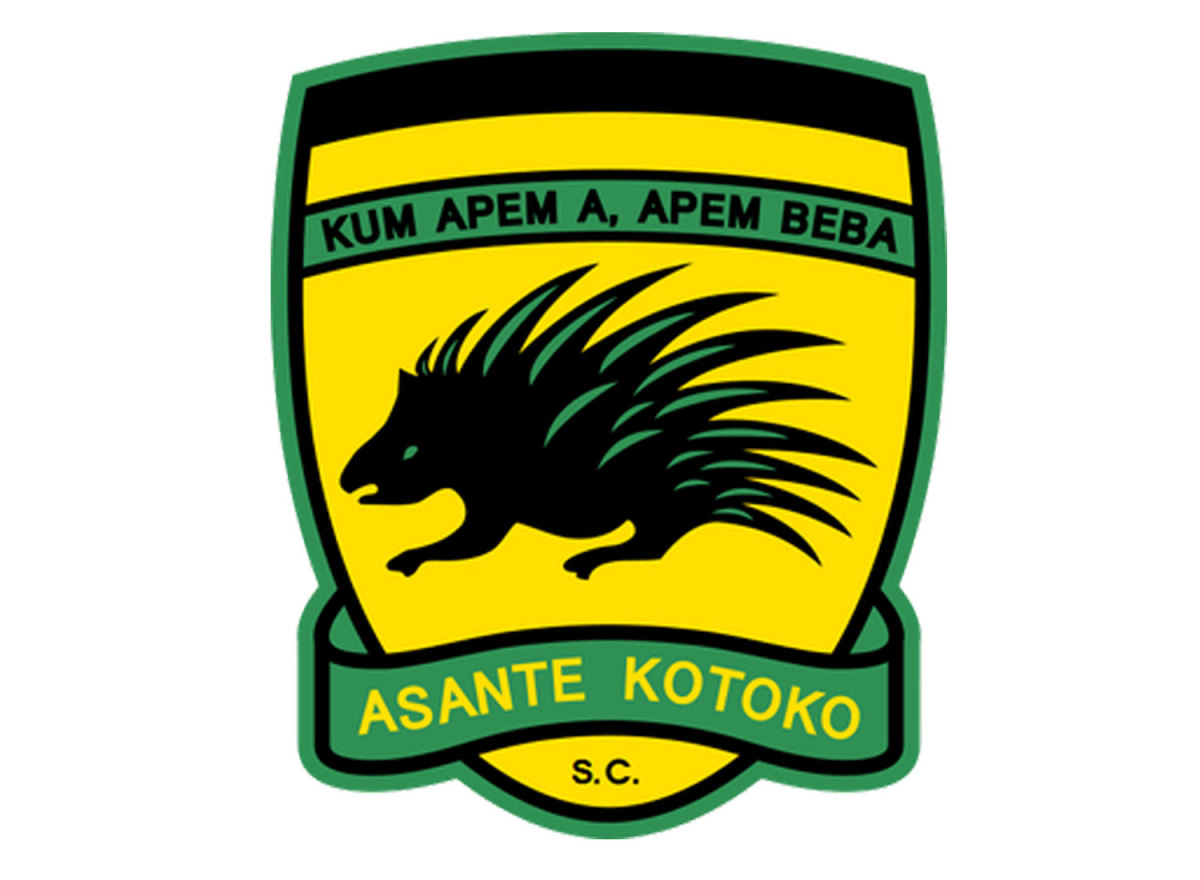
The name of the Ghanaian powerhouse (and two-time African champ) translates from the Twi language to “Ashanti Porcupine.” The Ashanti kingdom lasted more than 250 years and became part of present-day Ghana. Its flag was yellow, black and green and its symbol, adopted in 1701, was the porcupine, whose numerous quills evoked the motto “Kum Apem a, Apem Beba.” It means, “Kill a thousand—a thousand will come.”
Carolina Dynamo (USA)
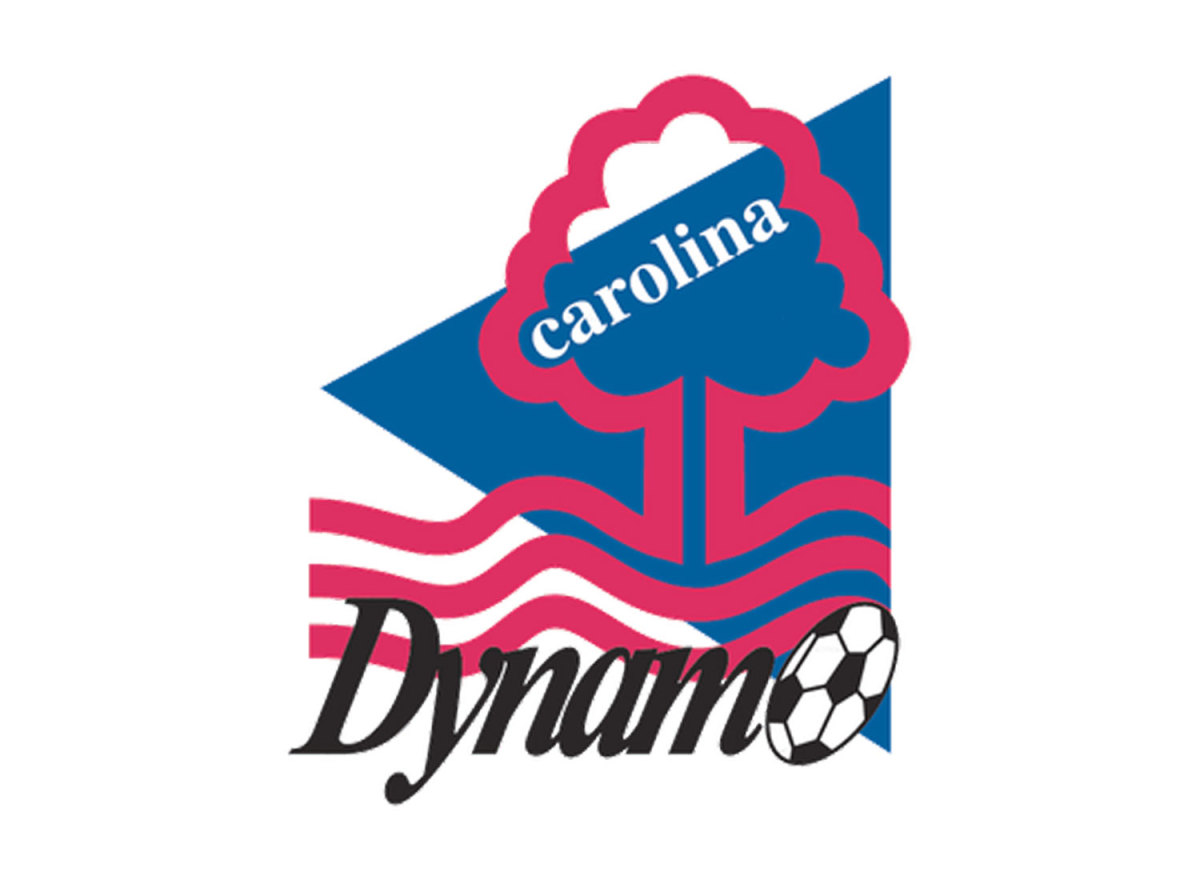
U.S. clubs have been copying European branding since before MLS kicked off. The PDL’s Dynamo, which competed as a pro team until 2003, were founded 10 years earlier by Neil Macpherson, the son of Nottingham Forest’s former chairman. Macpherson had no interest in nuance. Forest’s famous tree was pasted in its entirety over a blue triangle—the club’s home of Greensboro is part of the Piedmont Triad. And even though Macpherson sold the team in 2007, the Forest tribute remains.
Chelsea (England)
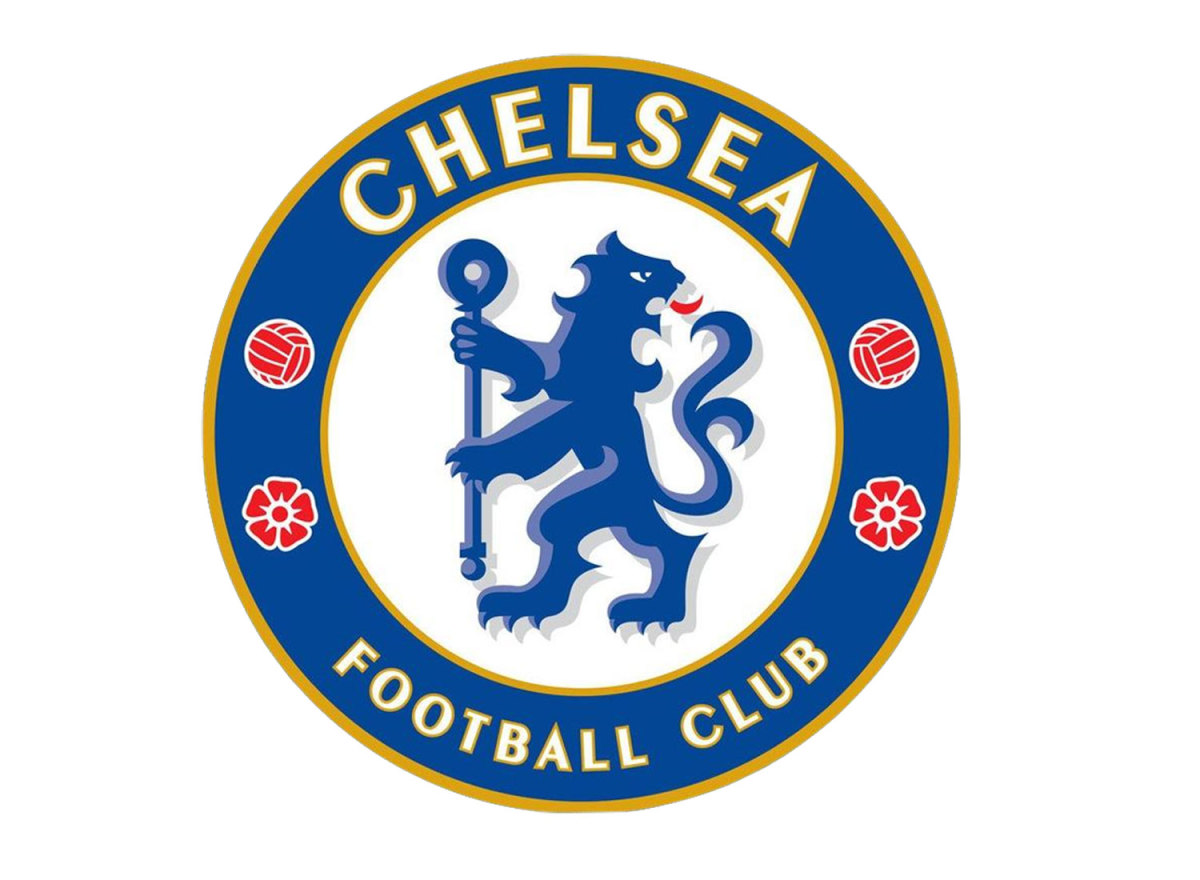
The lion, which was added to Chelsea’s logo in the 1950s, isn’t a reference to the three on the English coat of arms (which are walking), but rather to the rampant, “reguardant” lions (which are looking backward) used by the historic Cadogan family. Cadogans have been earls and lords and Viscounts Chelsea. One was the first president of the club and another was chairman as recently as 1982. Jockeys racing the family’s horses wore blue in the 19th century, and the Cadogans still have significant landholdings in the Chelsea area.
Emelec (Ecuador)
Thirteen-time Ecuadorian champion Emelec was founded in 1929 by an American, George Capwell, who ran the Electric Company of Ecuador (or the Empresa Eléctrica del Ecuador). In the USA, stars traditionally stand for states. And on Emelec’s crest, the 24 stars represent Ecuador’s 24 provinces. The club’s blue and white colors can be found on the flag of its home city of Guayaquil.
Fenerbahce (Turkey)
The best part of the crest is the yellow band across the blue shield, which symbolizes the “admiration and envy” others feel for the Istanbul club. Designed by a player a few years after the club’s 1907 founding, the logo also represents “nobility” (the blue), “purity and open-mindedness” (white), “love” and the Turkish flag (red) and “success” (green). The oak leaf stands for “resistance, power and strength.” Fener sets a high bar.
Hamburger SV (Germany)
HSV’s logo is an outlier in a few respects. The colors don’t reflect the city’s or the mostly white-and-red kit (the team’s nickname is “Rothosen”—red shorts) but rather those of SC Germania, one of the original clubs that evolved into present-day HSV. There are no initials or words. And it’s square. That’s quite rare. Flags are a common motif in German club badges, and it’s thought that HSV’s evokes the Blue Peter flag that signals that a docked ship is set to depart. Hamburg is the third-busiest port in Europe.
Huddersfield Town (England)
Coached by former USA international David Wagner and now Yorkshire’s only Premier League club, Huddersfield adopted the “Terriers” nickname in the late 1960s. It’s not the fiercest mascot, but it’s appropriate for a smaller club hoping to do big things. Much of the famous Yorkshire Terrier breed can trace its lineage back to Huddersfield Ben, an accomplished show dog from the city. The shield underneath the terrier includes a black chevron symbolizing the River Colne, nearby Castle Hill and two Yorkshire roses.
CA Huracan (Argentina)
The Buenos Aires club’s name and logo come from a hot air balloon—the “Hurricane”—operated by early Argentine aviator and engineer Jorge Newbery. In 1909, the year after the club’s founding, Newbery, whose father was from New York, set a South American record by flying El Huracán across Argentina, Uruguay and Brazil. He granted the new team permission to use the emblem and even helped with administrative matters. Several Argentine soccer clubs later would be named after him.
FC Ingolstadt (Germany)
“Schanzer” is a club nickname that reflects Ingolstadt’s history as a walled Bavarian fortress city that later, and famously, held out against a Swedish siege in the 1630s. “Verschanzen” means “to fortify,” a “Schanze” is an entrenchment, and proud citizens of Ingolstadt became “Schanzers.” The club mascot—the dragon in the corner that’s also seen on the city flag—is named “Schanzi.”
HB Koge (Denmark)
The Danish club, launched through a 2009 merger, uses a swan in its logo in part because it hoped to construct the country’s first carbon-neutral stadium. “The swan is the Nordic symbol for taking care of the environment,” the team told UEFA’s website. It’s also Denmark’s national bird.
Slovan Liberec (Czech Republic)
Often, a building depicted on a club crest is either really old or, like the Eiffel Tower or the Space Needle, globally iconic. Slovan, the three-time Czech champ, goes a different route. It’s logo features the Ještěd Tower, a 94-meter tall TV tower built in the 1960s that sits atop a hotel and restaurant, which in turn are on Ještěd Mountain. It’s a well-known tourist attraction with views of nearby Liberec and thanks to its proximity to the border, Germany and Poland.
FC Metz (France)
The badge of Oguchi Onyewu’s first pro club is highlighted by the Graoully dragon, which supposedly terrorized local residents until driven into the river by St. Clement of Metz during the early days of Christianity. The dragon has been a city symbol for some 1,000 years. On the right is the Cross of Lorraine, a symbol of French patriotism and liberation during World War II. Metz is Lorraine’s most populous city. Feelings toward the Germans were strong before the war as well, when Metz club officials decided to change from the city’s black-and-white colors—which also were associated with the German national team—to the deep red used by one of the club’s earlier incarnations.
Club Nacional de Futbol (Uruguay)
The colors and sash reflect the blue, white and red flag of José Gervasio Artigas, the Uruguayan national hero who led the country’s 19th century independence movement. That flag often flies alongside the national banner at government buildings. Nacional claims to be the first South American club to be launched by locals rather than expats (arch-rival Peñarol was established by British railroad workers). In 1903, four years after its founding, Nacional played as the Uruguayan national team against Argentina and won, 3-2.
New York Cosmos (USA)
It’s still American soccer’s most famous logo, and it’s far more abstract than most. The iconic swirls came from the mind of artist and soccer dad Wayland Moore, who was introduced to Cosmos GM Clive Toye. The swirly shapes simply are supposed to suggest movement while the colors, Moore has said, “represent different nationalities.” Toye, of course, had one particular nationality in mind. The Cosmos were wearing various combinations of yellow, green and blue for several years before Pelé finally made the move north.
Philadelphia Union (USA)
The “Don’t Tread on Me” flag that flew in the American Revolution and which remains a popular piece of national iconography was inspired by a political cartoon created in 1754 by Benjamin Franklin. The cartoon depicted a rattlesnake cut into sections, representing the colonies, and read “Join, or Die.” That snake, now joined, adorns the Union’s crest, accompanied by 13 stars signifying the original states. Blue and gold are the colors of both the city of Philadelphia (none of its other major pro sports teams wear those colors) and the Continental Army that won independence from Britain.
Portland Timbers (USA)
The Timbers have worn an axe (which looks like a ’T’) on their jerseys since 1975 and the three chevrons represent more than the evergreen trees of the Pacific Northwest. They stand for the three eras of Portland pro soccer—the NASL days in the 1970s and early ‘80s, the rebirth and ensuing decade in the second tier and then finally, the 2011 move to MLS. The 2015 champs darkened their green and gold colors ahead of the 2017 season and now sport this crest on their jerseys.
Portsmouth (England)
The crescent and star aren’t traditionally associated with England, but they have a long history in Portsmouth. The connection is King Richard I, who granted Portsmouth its town charter in the late 12th century, shortly after the Third Crusade. There, the man called Lionheart won a victory in Cyprus over a relative of the Byzantine emperor who’d taken Richard’s sister captive, and who used the crescent and eight-pointed star as his arms. Richard took the island, his sister and the bad guy’s Byzantine symbol, which Portsmouth soon adopted as an homage.
Sao Paulo FC (Brazil)
The black, red and white colors come from the two clubs that merged in 1930 to form SPFC, and also from the city flag. The stars atop the shield are more interesting. The three red stars symbolize the club world championships won by the Brazilian powerhouse. That’s typical usage. The two in yellow likely are unique, however, because they have nothing to do with soccer. They honor the world and Olympic records set in the 1950s by São Paulo triple jumper Adhemar Ferreira da Silva.
VfB Stuttgart (Germany)
The Bundesliga’s most eye-catching badge features the club’s initials, VfB, in old Germanic calligraphy (VfB stands for Verein für Bewegungsspiele, which roughly translates to “association for motion games”) and is highlighted by the three black antlers on a gold shield. Black and gold are the colors of both Stuttgart and the state of Baden-Württemberg, and the antlers were used as a symbol by the royal House of Württemberg as far back as the 13th century. The ruins of their eponymous castle are on a hill about three miles from VfB’s stadium.
Urawa Red Diamonds (Japan)
There’s a lot going on in the complex logo used by the five-time Japanese champions. The building atop the shield is the Saitama Elite Teacher Training College, which the club claims was the “birthplace of Saitama football.” There’s a ball and a couple flowers and some swirly bits (“extending circles of goodwill and friendship” apparently), but it’s the big red diamond that catches the eye. The club says it symbolizes “strong solidarity” but really, it comes from the logo of Mitsubishi, the manufacturing and technology conglomerate that’s owned the Diamonds since 1950.
Valencia (Spain)
The famous bat comes from Valencia’s city coat of arms, which also features the red and yellow stripes of King James I of Aragon, who took Valencia from the Moors in the 1200s. The legend is that a bat flew toward the king, or landed on or near his flag-depending on what you read—as he was entering the city and so became a symbol of good fortune. The bat appears on the crest of several Spanish cities and on the logos of additional clubs like Albacete and Levante.
Watford (England)
Their nickname is Hornets, but Watford’s players wear a red deer on their jerseys because of the club’s location in the county of Hertfordshire, just north of London. “Hart” is a term for stag, and the term “hertford” is Old English for “hart crossing.” Hertfordshire’s flag features the deer and some wavy water lines, and Watford is by some distance the county’s largest football club.
Rare good European fortune, result for Tottenham
This perhaps was the result that will make Wembley Stadium feel like home. Tottenham had won only two of its last 12 games at the national stadium, but, aided by Roman Burki’s vulnerability at the near post and two Dortmund goals being controversially ruled out, it won a thrillingly open game against the side currently top of the Bundesliga.
The signing of Davinson Sanchez has allowed Mauricio Pochettino to select a 3-4-2-1 in each of the last two games, and Spurs have cleared benefited from that. After the 3-0 win at Everton on Saturday came Tottenham’s best European display since beating Inter 3-1 in 2010.
After so many recent games in which it has played against a defense sitting deep, Tottenham seemed to relish taking on a team that played high up the pitch, particularly given Dortmund’s comparative lack of pace at the back. Son Heung-min tore forward on counter down left and lashed in at the near post after four minutes, and although Andriy Yarmolenko soon curled an equalizer, two excellent finishes from Harry Kane–irrepressible now August is over–gave Spurs the win despite a late red card for Jan Vertonghen.
Dortmund, though, may wonder why Christian Pulisic’s strike just before halftime was ruled out after a supposedly offside Pierre-Emerick Aubameyang tried and failed to tap it in, and why Aubameyang then had a goal of his own ruled out when, again, others were offside but the goalscorer was not.
 Add us as a preferred source on Google
An accomplished author of multiple books, Jonathan Wilson is one of the world’s preeminent minds on soccer tactics and history.