%20%20--%3E%0A%3Csvg%20version%3D%221.1%22%20id%3D%22Layer_1%22%20xmlns%3D%22http%3A%2F%2Fwww.w3.org%2F2000%2Fsvg%22%20xmlns%3Axlink%3D%22http%3A%2F%2Fwww.w3.org%2F1999%2Fxlink%22%20x%3D%220px%22%20y%3D%220px%22%0A%09%20width%3D%2239px%22%20height%3D%2240px%22%20viewBox%3D%220%200%2039%2040%22%20enable-background%3D%22new%200%200%2039%2040%22%20xml%3Aspace%3D%22preserve%22%3E%0A%3Cpath%20fill%3D%22%23FFFFFF%22%20d%3D%22M38.5%2C7H28.2v26h10.3V7z%22%2F%3E%0A%3Cpath%20fill-rule%3D%22evenodd%22%20clip-rule%3D%22evenodd%22%20fill%3D%22%23FFFFFF%22%20d%3D%22M26.1%2C25.5c0%2C5.8-4.1%2C7.5-12.9%2C7.5C3.9%2C33%2C0%2C31.2%2C0%2C25.2v-1.1h11.6%0A%09v2.4c0%2C0.7%2C0.1%2C1.4%2C1.2%2C1.4c1%2C0%2C1.2-0.4%2C1.2-1.3v-0.9c0-1.6-0.9-1.6-3.5-2.2C2.2%2C21.7%2C0%2C19.7%2C0%2C15.3v-0.9C0%2C9.3%2C5.5%2C7%2C12.9%2C7%0A%09c10.2%2C0%2C12.8%2C2.6%2C12.8%2C7.4v1.8h-11v-2.9c0-0.6-0.4-1.1-1.2-1.1c-0.6%2C0-1.2%2C0.4-1.2%2C1.1v0.9c0%2C1.5%2C0.9%2C2%2C3.3%2C2.5%0A%09c8%2C1.6%2C10.5%2C3.3%2C10.5%2C7.5V25.5z%22%2F%3E%0A%3C%2Fsvg%3E%0A)
FIFA Ready to Test VAR Alternative at 2025 U-20 World Cup
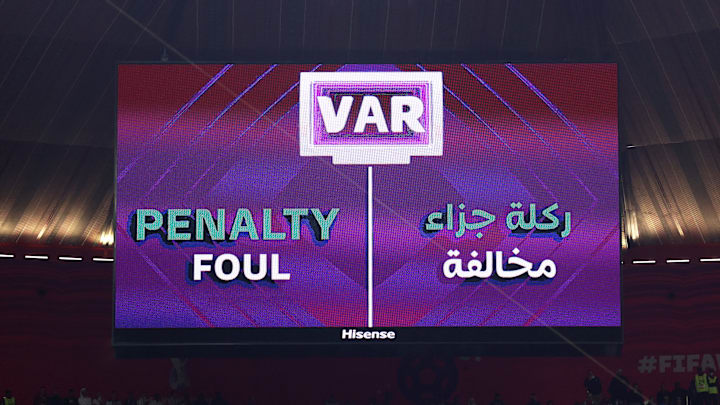
The 2025 FIFA U-20 World Cup in Chile begins this weekend, but it will be without a distinct feature of modern soccer: Video Assistant Referee (VAR).
Instead of VAR, the U-20 World Cup will be used to test what FIFA has called Football Video Support (FVS).
FVS is another version of video review, one that is more accessible for competitions across the world that have limited human and financial resources and cannot implement a full VAR review system.
The Blue Stars Youth Cup (a FIFA organized youth club competition) and the 2024 FIFA U-20 Women’s World Cup have also served as testing grounds for FVS.
Although FIFA already stated that VAR won’t be replaced, FVS is a cost-friendly alternative that will potentially help more leagues around the world have access to video review.
Here’s all you need to know it.
How Football Video Support Is Different From VAR
Using technology to support referees around the globe 🖥️⚽️
— FIFA (@FIFAcom) September 22, 2025
Football Video Support is the cost-effective alternative to Video Assistant Referee, implemented for competitions with limited human and financial resources. pic.twitter.com/azMhuegPIL
Unlike VAR, FVS doesn’t require referees serving as video match officials to constant review different camera angles, alerting the match referee whenever they feel there’s a reviewable action. Instead, team managers are the ones responsible of asking for a review to be made. This is similar to the video review formula followed in many U.S. sports such as the NFL and NBA.
During the U-20 World Cup, managers will be able to ask for reviews twice during the match. If the review is successful and the referee’s official decision is overturned, teams will be able to preserve their two reviews.
Only three pitch-side cameras are needed for FVS to be operational—though there can be more. However, this could lead to replay reviews being inconclusive and, as a result, no change in the referees decision.
For there to be VAR, FIFA requires at least four fully operational cameras, but there’s no limit to the amount that can be used for improved quality in reviews.
How Does Football Video Support Work

Here’s a step-by-step guide into how FVS works, via FIFA.
- A decision is made by the referee.
- A team manager must immediately ask for a review by twirling their finger in the air and handing the fourth official a review request card.
- The match referee will be notified by the fourth official and he will go to review the replay footage, stopping play when the ball is in a neutral zone if need be.
- A review operator will show different replays and angles so a decision can be made by the referee.
- The referee’s original decision will not be changed unless there’s conclusive evidence there was an error in judgement.
Additionally, after every goal, the fourth official will check replays on the review monitor to check if any illegal action was made by the scoring team during the build-up of the goal.
Actions That Are Reviewable With FVS
- Goal/No Goal
- Penalty/No Penalty
- Straight Red Cards
- Mistake in identity (when the referee shows a yellow or red card to the wrong player)
Furthermore, if for whatever reason the FVS technology malfunctions, the match will continue without the system after both team managers and captains have been informed.
READ THE LATEST SOCCER NEWS, TRANSFER RUMORS AND MATCH REACTION
 Add us as a preferred source on Google
Roberto Casillas is a writer for SI FC, focusing primarily on FC Barcelona, the Mexico National Team, Liga MX and all things Latin American football. Born and raised in Mexico City, he developed a deep passion for football from an early age and fell in love with Cruz Azul. The once future star of Mexican football still likes to showcase what’s left of his talent on the Sunday league pitch. He’s also a big fan of the New England Patriots—so much so he moved to the region for four years—, Chicago Cubs and is a life-long Formula 1 follower. When he takes a break from sports, he enjoys traveling the world, watching the latest great TV show, going to concerts and spending plenty of time with friends and family.