%22%3E%0A%3Cpath%20d%3D%22M0%204.9397H7.3484V12.6932H14.0649V4.9397H21.4133V26.912H14.0649V19.037H7.3484V26.912H0V4.9397Z%22%20fill%3D%22white%22%2F%3E%0A%3Cpath%20d%3D%22M23.6572%204H31.0299V8.55326H23.6572V4ZM23.7788%209.77664H30.9003V26.9121H23.7788V9.77664Z%22%20fill%3D%22white%22%2F%3E%0A%3Cpath%20d%3D%22M32.7241%2029.861L34.9197%2025.5589C36.8317%2026.5635%2038.7519%2027.1955%2041.1014%2027.1955C43.7669%2027.1955%2045.1848%2025.8101%2045.1848%2023.4281V22.9258C44.2125%2024.0276%2042.6084%2025.2834%2040.2264%2025.2834C35.8028%2025.2834%2032.6025%2022.1399%2032.6025%2017.4084V17.3436C32.6025%2012.5392%2035.8676%209.37134%2039.8213%209.37134C42.3329%209.37134%2043.8074%2010.3112%2045.0632%2011.5994V9.77643H52.1848V22.5855C52.1848%2025.7533%2051.5285%2027.9246%2049.9568%2029.4883C48.4174%2031.0277%2046.0679%2031.9999%2042.2357%2031.9999C38.4035%2031.9999%2035.4868%2031.2464%2032.7241%2029.8691V29.861ZM45.2172%2017.3679V17.3031C45.2172%2015.8285%2044.091%2014.6376%2042.3572%2014.6376C40.6234%2014.6376%2039.4972%2015.8609%2039.4972%2017.3679V17.4327C39.4972%2018.9073%2040.6234%2020.0658%2042.3572%2020.0658C44.091%2020.0658%2045.2172%2018.8748%2045.2172%2017.3679Z%22%20fill%3D%22white%22%2F%3E%0A%3Cpath%20d%3D%22M54.3145%204H61.436V12.0695C62.5379%2010.6597%2064.2636%209.37155%2066.6779%209.37155C70.2914%209.37155%2072.5437%2011.7535%2072.5437%2015.6181V26.9202H65.4221V17.9109C65.4221%2016.4364%2064.5471%2015.5857%2063.4777%2015.5857C62.4082%2015.5857%2061.436%2016.4364%2061.436%2017.9109V26.9202H54.3145V4Z%22%20fill%3D%22white%22%2F%3E%0A%3Cpath%20d%3D%22M80.8983%2023.6146L84.8196%2018.9398C87.2016%2020.7627%2089.9319%2021.5162%2092.5083%2021.5162C93.8289%2021.5162%2094.388%2021.1678%2094.388%2020.5764V20.5116C94.388%2019.8796%2093.6993%2019.5393%2091.3417%2019.0694C86.4157%2018.0648%2082.0812%2016.6551%2082.0812%2012.0046V11.9398C82.0812%207.76732%2085.3463%204.53467%2091.4065%204.53467C95.6437%204.53467%2098.7792%205.5393%20101.323%207.54857L97.7421%2012.5069C95.6681%2011%2093.1889%2010.3437%2091.1472%2010.3437C90.0454%2010.3437%2089.543%2010.7245%2089.543%2011.2511V11.3159C89.543%2011.9155%2090.1426%2012.2882%2092.4597%2012.7257C98.0743%2013.7627%20101.842%2015.3912%20101.842%2019.8148V19.8796C101.842%2024.4977%2098.0419%2027.3172%2092.1437%2027.3172C87.6877%2027.3172%2083.6692%2026.0614%2080.874%2023.6146H80.8983Z%22%20fill%3D%22white%22%2F%3E%0A%3Cpath%20d%3D%22M102.838%2018.4374V18.3726C102.838%2013.5682%20106.605%209.39575%20112.187%209.39575C115.955%209.39575%20118.62%2011.3402%20119.941%2014.1354L114.829%2017.0196C114.229%2015.9178%20113.476%2015.2939%20112.317%2015.2939C110.81%2015.2939%20109.684%2016.6145%20109.684%2018.3078V18.3726C109.684%2020.1631%20110.81%2021.4513%20112.228%2021.4513C113.484%2021.4513%20114.205%2020.8194%20114.893%2019.7256L120.071%2022.6747C118.531%2025.5347%20115.931%2027.3495%20111.847%2027.3495C106.638%2027.3495%20102.838%2023.2338%20102.838%2018.4374Z%22%20fill%3D%22white%22%2F%3E%0A%3Cpath%20d%3D%22M121.164%204H128.286V12.0695C129.387%2010.6597%20131.113%209.37155%20133.528%209.37155C137.141%209.37155%20139.393%2011.7535%20139.393%2015.6181V26.9202H132.272V17.9109C132.272%2016.4364%20131.397%2015.5857%20130.327%2015.5857C129.258%2015.5857%20128.286%2016.4364%20128.286%2017.9109V26.9202H121.164V4Z%22%20fill%3D%22white%22%2F%3E%0A%3Cpath%20d%3D%22M140.867%2018.405V18.3402C140.867%2013.5033%20144.886%209.36328%20150.533%209.36328C156.18%209.36328%20160.142%2013.4466%20160.142%2018.2753V18.3402C160.142%2023.177%20156.123%2027.317%20150.476%2027.317C144.829%2027.317%20140.867%2023.2337%20140.867%2018.405ZM153.295%2018.405V18.3402C153.295%2016.6469%20152.04%2015.2939%20150.468%2015.2939C148.896%2015.2939%20147.705%2016.6469%20147.705%2018.2753V18.3402C147.705%2020.0335%20148.961%2021.3865%20150.533%2021.3865C152.104%2021.3865%20153.295%2020.0335%20153.295%2018.405Z%22%20fill%3D%22white%22%2F%3E%0A%3Cpath%20d%3D%22M161.203%2018.405V18.3402C161.203%2013.5033%20165.222%209.36328%20170.869%209.36328C176.516%209.36328%20180.477%2013.4466%20180.477%2018.2753V18.3402C180.477%2023.177%20176.459%2027.317%20170.812%2027.317C165.165%2027.317%20161.203%2023.2337%20161.203%2018.405ZM173.631%2018.405V18.3402C173.631%2016.6469%20172.376%2015.2939%20170.804%2015.2939C169.232%2015.2939%20168.041%2016.6469%20168.041%2018.2753V18.3402C168.041%2020.0335%20169.297%2021.3865%20170.869%2021.3865C172.44%2021.3865%20173.631%2020.0335%20173.631%2018.405Z%22%20fill%3D%22white%22%2F%3E%0A%3Cpath%20d%3D%22M182.139%204H189.26V26.9121H182.139V4Z%22%20fill%3D%22white%22%2F%3E%0A%3Cpath%20fill-rule%3D%22evenodd%22%20clip-rule%3D%22evenodd%22%20d%3D%22M199.368%204.36764C205.191%20-1.45588%20214.632%20-1.45588%20220.456%204.36764C226.279%2010.1912%20226.279%2019.6324%20220.456%2025.4559L209.912%2036L199.368%2025.4559C193.544%2019.6324%20193.544%2010.1912%20199.368%204.36764ZM202.009%207.55761C201.948%207.86849%20201.916%208.39718%20201.916%209.14566V10.4189C201.916%2011.1832%20201.948%2011.7198%20202.013%2012.0267C202.078%2012.3317%20202.278%2012.6168%20202.617%2012.8762C202.956%2013.1376%20203.403%2013.3316%20203.958%2013.4623C204.512%2013.593%20205.1%2013.6583%20205.837%2013.6583C206.573%2013.6583%20207.217%2013.591%20207.769%2013.4524C208.322%2013.3158%20208.761%2013.1178%20209.086%2012.8604C209.411%2012.6029%20209.605%2012.3178%20209.666%2012.0069C209.728%2011.6961%20209.759%2011.1674%20209.759%2010.4189V9.14566C209.759%208.38134%20209.728%207.84473%20209.662%207.53781C209.597%207.23287%20209.397%206.94972%20209.058%206.68834C208.72%206.42696%20208.272%206.23291%20207.718%206.10223C207.163%205.97154%20206.536%205.90619%20205.839%205.90619C205.102%205.90619%20204.459%205.97352%20203.906%206.11213C203.352%206.24875%20202.914%206.44677%20202.589%206.70418C202.265%206.9616%20202.071%207.24673%20202.009%207.55761ZM207.276%2024.8638C210.876%2024.8638%20212.557%2024.2064%20212.557%2021.862V21.858V21.3155C212.557%2019.6581%20211.516%2018.971%20208.252%2018.3136C207.278%2018.1136%20206.908%2017.9136%20206.908%2017.3136V16.9414C206.908%2016.6543%20207.177%2016.5117%20207.413%2016.5117C207.749%2016.5117%20207.918%2016.7137%20207.918%2016.9414V18.1136H212.391V17.3988C212.391%2015.4563%20211.347%2014.4266%20207.177%2014.4266C204.15%2014.4266%20201.896%2015.3414%20201.896%2017.3711V17.7433C201.896%2019.5155%20202.805%2020.3155%20206.201%2021.0303C206.28%2021.0472%20206.355%2021.063%20206.427%2021.0781C207.329%2021.2674%20207.647%2021.3341%20207.647%2021.9174V22.2897C207.647%2022.6619%20207.546%2022.8045%20207.142%2022.8045C206.67%2022.8045%20206.637%2022.5471%20206.637%2022.262V21.2897H201.894V21.7471C201.894%2024.149%20203.476%2024.8638%20207.276%2024.8638ZM213.424%2024.5569H217.925V14.7355H213.424V24.5569ZM214.955%2013.5019H217.925V6.06064H215.092V9.411L213.193%206.06064H210.359V13.5019H213.193V10.1199L214.955%2013.5019ZM206.269%2012.152C206.204%2012.2688%20206.055%2012.3262%20205.825%2012.3262L205.827%2012.3282C205.604%2012.3282%20205.459%2012.2767%20205.398%2012.1757C205.336%2012.0748%20205.305%2011.8074%20205.305%2011.3758V7.90068C205.305%207.51852%20205.352%207.28684%20205.445%207.20962C205.538%207.13239%20205.675%207.09279%20205.851%207.09279C206.059%207.09279%20206.198%207.14031%20206.265%207.23734C206.332%207.33239%20206.366%207.55416%20206.366%207.90068V11.3203C206.366%2011.7579%20206.334%2012.0352%20206.269%2012.152Z%22%20fill%3D%22white%22%2F%3E%0A%3C%2Fg%3E%0A%3Cdefs%3E%0A%3CclipPath%20id%3D%22clip0_15247_3714%22%3E%0A%3Crect%20width%3D%22225%22%20height%3D%2236%22%20fill%3D%22white%22%2F%3E%0A%3C%2FclipPath%3E%0A%3C%2Fdefs%3E%0A%3C%2Fsvg%3E%0A)
What Does Leadership Look Like in High School Football? Jon Kitna and Three Other Coaches Have an Answer
What is leadership?
Well, before an answer is provided, how about a short story?
I clearly remember highlighting the quotes and trying to neatly cut a USA Today newspaper article from the top fold of the page on a brilliant Northern California day in the fall of 2007.
I smiled and taped it onto the purplish red cabinet by the water cooler that stood against a white wall in the weight room at Sacred Heart Preparatory High School, hoping that it might resonate with some of the kids and provoke a few questions; introduce them to the importance of leadership and that there was something more to life than the underpinnings of athletic success and the superficialities that inform the adolescent experience.
The article featured then Detroit Lions starting quarterback Jon Kitna and his offseason goal of elevating the team. The essence of the piece was easy to ascertain: the strong leadership and connectivity the fiery former NFL QB brought to the locker room.
“As much as he admires Kitna’s toughness, (Rod) Marinelli (Lions’ head coach at the time) values the chemistry factor: ‘He’s got a feel for his teammates. I saw this in this guy so fast. It’s an intangible, but it’s so important. He can rally a team. You need that,’” read the USA Today article.
“A Christian, he’s studying 1 Corinthians, Romans and Philippians as part of the team Bible groups…He also has begun reading another book on his shelf, The Barbarian Way. ‘It’s talking about how the world wants Christians to be soft,’ Kitna said. ‘But when you know the truth, there’s no need to be soft.’”
What this all points to is leadership. Now, for the answer...
To Begin With
The head coach of the Sacred Heart football program at the time I slapped that USA Today feature onto a wall was Canadian Football League veteran Pete Lavorato.
Lavorato was in the middle years of building a solid foundation for a football program that had only begun five years prior.

A firm believer in Christ, he gently brought his faith convictions into the program, eventually using the precepts from a book to help create a blueprint for culture.
“It wasn't right away. It wasn't right at the beginning, I don't think,” Lavorato recounted. “The good thing about Sacred Heart is that it was a Catholic school, right? So you could talk about Jesus, the gospel.”
That was his primary objective. The 2003 book Season of Life by Jeffrey Marx, which chronicles the implementation of the “Building Men for Others” model by Coach Joe Ehrmann into the Gilman School (Baltimore) football program, helped refine the Sacred Heart blueprint.
Though acquainting the love of Christ with his players was goal number one for Lavorato, he also wanted to develop leaders.
“Yes, I mean, I wanted to turn young men into leaders…I guess every young man is born to be a leader, but not necessarily the kind of leaders that we're maybe thinking of,” he said. “Maybe he's going to be the leader in his family or his group of friends or able to turn people that he knows in the right direction.”
So, What Is Leadership?
Is it about the journey with a group of players and the molding and shaping that happens through weeks of peaks and valleys? The player who experiences frustration and success while trying to keep his teammates centered? The coach who models affirmation and love, choosing transformation over transaction?
It’s all of the above.
And it certainly doesn’t seem to be about hoisting a championship trophy.
This past NCAA basketball season, Michigan coach Dusty May told CBS Sports after winning the national championship that the journey meant more than the destination.
“The journey was so much better than the destination,” May said. “The finality of it all is almost disappointing because you have one of the most special groups of humans you'll ever be around, and at that moment, it all ends.”
The coaches interviewed for this piece share a similar view: Winning feels empty without something that reaches beyond championships, individual success and win-loss records.
To them, the bigger victory is what players carry with them after football — the values, love and sacrifice they bring to their families and communities long after their days on the field are over.
St. Xavier Builds Leaders Through Service and Sacrifice
At St. Xavier High School in Louisville, Kentucky, the leadership council connected to the school’s football program read James Kerr’s profound leadership book, Legacy. It offered insights into and dissected the New Zealand All Blacks' genuine culture and leadership dynamics, a boon to any program intent on developing leaders.

“Their leadership is a huge piece of it,” said St. Xavier assistant football coach and leadership council advisor Steve Frommeyer. “They believe everybody has to become a leader, which is an interesting concept, because mostly in our world it's the one guy out in front, whoever has the power, whoever has the title or the role, or everybody looks to the best player or whatever.”
One of the standout values the All Blacks have incorporated into their corporate culture is that every member of the organization and the squad is on equal footing, so everyone is a leader. The prime example of this, which the Legacy book highlighted, is that the best player down to the one who may not get much playing time sweeps the sheds. Translated into American sports nomenclature, it is simply cleaning the locker rooms, the bathrooms, included. If the Kansas City Chiefs adopted this value, Mahomes would be expected to be the first in line.
'It's everybody has to buy in, everybody has to become a leader and the leaders develop leaders,” Frommeyer said. “So it starts at the top. And then everybody winds up coming on board…And when you start thinking you're too good to clean the sheds? Now we got a problem. Now the team is not cohesive. Everybody's not sharing. Everybody's not thinking about the other guy. They're just thinking about themselves.”
Now the target has been hit. That is the purpose of the St. X Leadership Council. Sacrifice for, and commitment to, one another and one’s community.
As Kerr explains in the book, “Leaders connect personal meaning to a higher purpose to create belief and a sense of direction.”
The All Blacks believe that developing individuals and equipping them with the tools and character to contribute beyond the field will, in effect, do the same on the field.
At St. X, it also goes well outside of the playing and practice fields. The leadership council not only reads books, but they use the hands and feet. Service projects are paramount. Frommeyer said this past winter participants from the council chopped and stacked firewood for families living in remote areas who don’t have access to central heating. The school’s athletes are consistently engaged in community service projects.
“St. X is great, just the general school-wide mindset of doing service…They (athletes) do a lot of different types of service for all different kinds of communities…so I've seen our kids in other sports, not just football, do service,” Frommeyer said. “And it's invaluable. You really see who the natural leaders are that could help to spread leadership to other kids.”
Faith Is at the Center of St. Xavier's Leadership Model
The Gospel is what essentially drives the St. X Leadership Council. Its actions, intentions and purpose-driven mission reflect the messages of the New Testament.
“It basically is the Gospel put in more every day, somewhat athletic terminology,” Frommeyer said. “It's a pretty simple mindset about what winning really is.”
The St. X coach says it’s about giving, not taking, whereas, in many programs, winning is taking.
“Real simple. It's not complicated,” he added. “By giving, you wind up getting way more than you ever, ever thought. I think we're going to find over time that the kids who are genuinely giving and genuinely caring about their teammates and doing the right things will, in the long run, be more successful than those that aren't.”
Frommeyer frames it in ecclesiastical terms, the council’s source of motivational power.
“It’s this reality that we're here to help each other. God came. His son came, died on a cross, and did all this to help us. We're called to help each other. So, if God, the Son of God, did it, then, you know, it must be pretty important to help each other out. To love your neighbor. And when we don't, then you know there's something wrong.”
How Jon Kitna Found His Purpose After Football
Liberty Township, Ohio sits 24 miles north of Cincinnati, along I-75. It’s where gorgeous farmland meets suburbia and it still seems to be expanding.
In 1997, Lakota High School became Lakota East High School and Lakota West High School. The annual football game between the schools draws 10,000-plus each year.
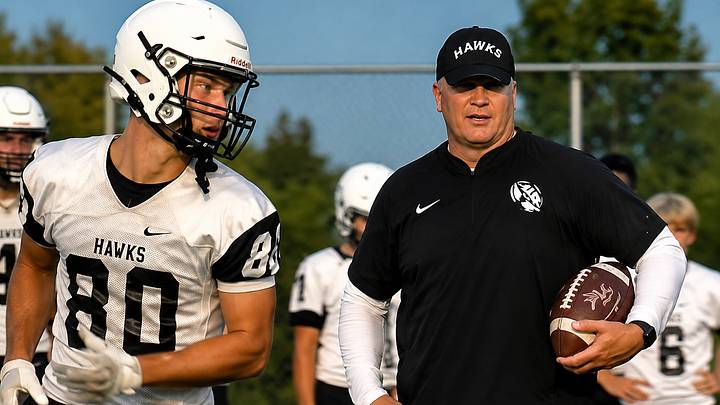
At Lakota East, Jon Kitna helms the program. If you aren’t familiar with Kitna, he was stationed behind center for the Bengals full-time from 2001 to 2003. He punched in 14 NFL seasons before answering his second calling as a high school coach and educator. Kitna arrived in Liberty Township in 2023 following the 13-year tenure of Coach Rick Haynes. They play in the Greater Miami Conference (Southwest District, Class AAA Division I), which is arguably one of Ohio's foremost football leagues, regularly producing Division I talent and state-title contenders.

Kitna has a plan. But we’re not talking offensive schemes or optimizing personnel to create favorable situations on the gridiron. We’re talking life.
“I was an idiot. And I was an idiot until my third year in college,” Kitna told High School on SI. “I was everything that I'm trying to train my young men not to be. That's who I was.”
In his third year of college at Central Washington University, a transformation occurred in the life of the Tacoma, Washington native. By his own account, Kitna was a serial womanizer who guzzled copious amounts of booze.
“I was an alcoholic womanizer. I cussed like a sailor. I was cheating my way through school,” he admitted. “Yeah, football was going well. I was playing well, all that stuff, but I was just a loser.”
The “loser” behavior became amplified in his mind. He could sense that something had to give. It’s a sense of being led, which can’t be truly explained in worldly terms, to a type of peace and renewal.
“That's when Jesus Christ intersected my life for the first time ever, at 21 years old. I heard the Gospel, and it just changed my life immediately,” he said.
So Kitna is on a mission to transform young men. A state title would be epic for the Liberty Township community, but how about producing young men who will lift up the community and impact lives in a positive and meaningful way?
In 2003, Kitna was given a copy of Season of Life by Bengals’ tight end coach John Garrett. Joe Ehrmann’s quest to develop purposeful masculinity in young men had a profound effect on Kitna.
“In 2003, after reading that book, it became a calling,” Kitna reverently remembers. “There it is, right there. Training and coaching kids from the inside out. Being a transformational coach as opposed to a transactional coach, and really pouring into young men and trying to give them the tools that they're going to need to be impactful, successful members of the community.”
In other words, creating the type of high school football player who contributes to society before the playing field.
“There are two types of coaches: transactional and transformational,” said Ehrmann in an interview posted on the American Camp Association website. “Transactional coaches cut deals with their players to get what they want out of them: ‘Give me this kind of work and I'll give you minutes on the field.’ I wanted to be a transformational coach. Transformational coaches help shape and guide who their players are.”
Kitna was impressed and inspired.
“So I’ve followed Joe since then,” he said. “I’ve been at conferences that he's speaking at. I've read his second book, Inside Out. I've had my staff read his books, and so that's our model. The transformational coaching model is it. At the end of the day, how can I have the most impact with the blessings God has given me? How can I pour out instead of just continue to take in? That's the path that God has given us and chosen us to go on.”
The former NFL player says that his goal is to get 20 percent, or one out of every five players, to buy into this concept of living outward and not for yourself; to shed self-centeredness and serve others.
“To really understand living outward focused, being a servant leader. Doing everything I can in my control. Not being somebody who plays a victim role. I'm a victor, right? Yes, I come from different circumstances. All those things. Those are true. But what can I control?”
Kitna came from modest circumstances. He grew up poor in Tacoma, Washington. His parents began dropping him off at the Boys and Girls Club while in kindergarten, and Kitna gravitated to athletics and has never let go.
“My high school basketball coach actually just had a tremendous impact on me,” Kitna said. “So I wanted to be able to have an impact on people. And as my pro career kept going, a lot of different opportunities kept popping up.”
As his professional career progressed, Kitna developed an affinity for preaching and teaching from the pulpit. So when he completed his final shift in the NFL, he knew his next venture would be to lift people up.
Kitna spends nearly three hours a day with his student-athletes for most of the year, an ample amount of time to have a positive effect on maturing minds. And that time is spent communicating and teaching four pillars of actionable wisdom: reject passivity, accept responsibility, expect the greater reward (or engage with God), and lead courageously. The pillars are based on the R.E.A.L. model, laid out in the Robert Lewis book, Raising a Modern Day Knight.
His life-coaching methodology aims to disrupt the journey along the wrong path.
“We think the world's lied to young men. The world tells you a real man is what we call the three B's. You got money in your billfold. You got conquest in the bedroom, and you are really good on the ball field. Three B's. I was surrounded for 16 years by a whole bunch of what the world would call real men. Yet 80 percent of the people in the NFL are divorced, bankrupt, or hooked on drugs within one year after being done with playing.”
Staying Out of the Fray
Today, high school football programs seem to regularly get ransacked by unscrupulous coaches, one-dimensional athletes and misguided parents, who seek the so-called better transfer opportunity.
Not at Lakota East. Kitna said they’ll coach whoever walks through the door, but they won’t search for potential transfer situations or recruit from another school. Obviously, that is anathema in the Thunderhawk program.
Conversely, if the emphasis on character cannot keep a player at Lakota East, then that becomes an unfortunate circumstance, but the door is always open in the opposite direction.
“We got to be great at what we do to keep kids,” Kitna implored. “They get a choice what school they want to go to when they're going into ninth grade. We want them to come here. We want them to know the character piece. We're going to partner with your parents. We're going to train real manhood.”
If leveraging your abilities and position to acquire a Power Four scholarship, or even an FBS one, or maximizing NIL opportunities, are your goals, then Lakota East is not your best option. But whose loss is it then?
“Everyone's like, ‘We gotta give them a reason to want to be at this school.’ And I think the biggest thing that we have for them is the character development,” Kitna said. “How does the character stuff happen? That's why I love football. It's because it comes up every day.”
Kitna is visible. Our interview took place in the middle of the school, not a football office. There was plenty of student traffic. The mutual respect between the math teacher/football coach and student body was immediately apparent. Kitna said it’s all part of building relationships with kids. And not just football student-athletes.
“I want kids to know they can find me, if they need me,” he said. “The amount of kids that come to my office in tears, you know? I want to form relationships with people that aren't football kids. I think there's a ministry there. And I have a great ministry with some of these kids that they're not going to play football. Male, female. We have equipment managers. They love it.”
Daniel Hand's 10-Week Program Teaches Character
“So, Season of Life came into my hands in 2004,” said Erik Becker, the head coach of 15-time state champion Daniel Hand High School in Madison, Connecticut. “I was three years into coaching, and I was super young.”
When Becker picked up Season of Life, he was essentially searching for a deeper coaching experience, one that truly mentored players in an actionable sense.
“At the time I was also working for youth and family services in Madison,” he said. “Part of the story is that some kids in our program made a bad decision. And I was thinking about wanting to integrate my work with kids through youth and family…I’m also a YMCA guy. YMCA has a program called Character Counts that is based on respect, responsibility, honesty, and caring. And reading Joe's words, reading Season of Life, spoke to everything I ultimately believed coaching could be with the best of football.”

That led to the creation of a 10-week character program, which has been a staple in the Hand football program for more than 20 years.
“So, we have this character program that's embedded within our team. It's similar to Character Counts. It’s integrity, it's responsibility, it's humility, it's service,” Becker explained.
He said the players begin the program answering a battery of questions and reading a hero story. Then they’ll share answers and discuss the story with each other as a group, as a way to help guide the team through the season.
Question examples from their Character handbook: "Can you think of a time when someone has acted without integrity? What was your reaction? Who is a role model of integrity in your life? Why?"
Now, digest and relate. The hope is that tangible connections will be made during the process.
“We have it so that our captains run it,” Becker said. “It just delights me to watch them facilitate the conversation. I love seeing the biggest, strongest kids in our school stand up and talk about what humility means and why it's important. So that's a huge part of what we do.”
For Becker, football is ministry. It’s a vehicle to change lives and an opportunity to teach boys about the aspects of life that are vastly more important than blocking, tackling and a full-squat max.
“I believe that coaching is ministry. We’re not a Catholic school. So we're not preaching the gospel to kids. But you don't have to. You certainly can do this work without being a Catholic school. I’m super blessed and honored to do this work with young men.”
At Sacred Heart Prep, Leadership Meant Serving Others
But for Lavorato, he was at a Catholic school. And besides the message and framework illustrated in a Season of Life, the highly successful California high school coach simply established precepts deeply rooted in Christ.
“The good thing about Sacred Heart is that it was a Catholic school,” Lavorato said. “So, you could talk about Jesus, the gospel. There wasn't going to be too much pushback as opposed to public schools. There were times when I would ask the other coaches, ‘Hey, would you guys like to come over and pray with us?’ Whether we won or lost. Sometimes they would, and then sometimes they’d go, ‘No, we're not allowed to do that.’”
“I’m a born-again Christian. Jesus Christ lives in me. And at that time, He lived in me. My goal in my life has always been to get people to understand that Jesus loves them and he cares about them. And all he wants is to have a relationship with them…But relationship is a two-way thing. You know, it can't just be one forcing himself on the other one. They've got to want to have relationship. So, that's basically my message. And that comes from my own personal experience. It's that simple.”
After Lavorato left Sacred Heart Prep, he moved on to The King's Academy, a Bay Area evangelical Christian school, where he could freely continue presenting his message of developing a personal relationship with Jesus.
“They wanted you to talk about Jesus Christ and about having a relationship with Christ. And that was what their school was basically founded on.”
At Sacred Heart, Lavorato’s teams won five section titles and played in two state championship finals, but perhaps the best moments for those SHP players, or when their eyes shined the brightest, were when they were helping others.
For a stretch of years during Lavorato’s tenure at SHP, the program would invite special-needs kids to the preseason practices, where players and kids connected through football.
“We were intentional in terms of we didn't just talk about being a man built for others and all that… we would bring them on campus and have football practice. The kids (players) would coach them…we would give up a number of days of practice just to work with the kids….we'd have about, if I remember correctly, like 20, 25 of them on the field playing football. That was the best time ever. I think our kids got more out of it than the special-needs kids. So, it was more for them. It was amazing.”
So, What Does Leadership Really Look Like?
Again, what is this thing we call leadership? Particularly in high school football. What does it look like? What is it supposed to look like?
Frommeyer provided an uncomplicated example that kind of answers these questions.
“The spark of divinity that's in us that makes us realize how good it is to sacrifice for others,” Frommeyer said. “I can give away a $20 bill and feel just absolutely thrilled that I was given the opportunity to give the $20 bill. Some people would be like, ‘What are you doing?’ Whether it's a lot of money to you or not, you know they need it. I'm doing it because of that need. But also, I have to admit, it makes me feel good because I've helped somebody else out.”
And leadership seems to also be about relationships. Supernaturally or worldly; with Jesus, community, family or teammates.
“Joe Ehrmann hasn't changed. It's transformational,” Kitna said. “It's really hard to get grown men to wrap their brain around. The most important thing is the relationships. Most people want to coach football. And I'm like, ‘That's 10 percent of what we do.”
 Add us as a preferred source on Google
Chris Adams has been in sports media since 2013. Currently, he freelances high school sports coverage for the Emporia Gazette (remotely), located in Emporia, Kansas. In 2024, Chris covered sports full-time for The News Enterprise in Elizabethtown, Kentucky. His first stint with the Gazette (remote) began in 2021 and ended in 2023. From 2013 to 2017, he was a reporter at two Texas newspapers, covering high school sports. He began contributing to High School On SI in 2025.