%20%20--%3E%0A%3Csvg%20version%3D%221.1%22%20id%3D%22Layer_1%22%20xmlns%3D%22http%3A%2F%2Fwww.w3.org%2F2000%2Fsvg%22%20xmlns%3Axlink%3D%22http%3A%2F%2Fwww.w3.org%2F1999%2Fxlink%22%20x%3D%220px%22%20y%3D%220px%22%0A%09%20width%3D%2239px%22%20height%3D%2240px%22%20viewBox%3D%220%200%2039%2040%22%20enable-background%3D%22new%200%200%2039%2040%22%20xml%3Aspace%3D%22preserve%22%3E%0A%3Cpath%20fill%3D%22%23FFFFFF%22%20d%3D%22M38.5%2C7H28.2v26h10.3V7z%22%2F%3E%0A%3Cpath%20fill-rule%3D%22evenodd%22%20clip-rule%3D%22evenodd%22%20fill%3D%22%23FFFFFF%22%20d%3D%22M26.1%2C25.5c0%2C5.8-4.1%2C7.5-12.9%2C7.5C3.9%2C33%2C0%2C31.2%2C0%2C25.2v-1.1h11.6%0A%09v2.4c0%2C0.7%2C0.1%2C1.4%2C1.2%2C1.4c1%2C0%2C1.2-0.4%2C1.2-1.3v-0.9c0-1.6-0.9-1.6-3.5-2.2C2.2%2C21.7%2C0%2C19.7%2C0%2C15.3v-0.9C0%2C9.3%2C5.5%2C7%2C12.9%2C7%0A%09c10.2%2C0%2C12.8%2C2.6%2C12.8%2C7.4v1.8h-11v-2.9c0-0.6-0.4-1.1-1.2-1.1c-0.6%2C0-1.2%2C0.4-1.2%2C1.1v0.9c0%2C1.5%2C0.9%2C2%2C3.3%2C2.5%0A%09c8%2C1.6%2C10.5%2C3.3%2C10.5%2C7.5V25.5z%22%2F%3E%0A%3C%2Fsvg%3E%0A)
Red Sox’s Signing of Alex Bregman Shows They’re Ready to Contend Again
In this story:
The Boston Red Sox are back at the high-stakes baccarat table.
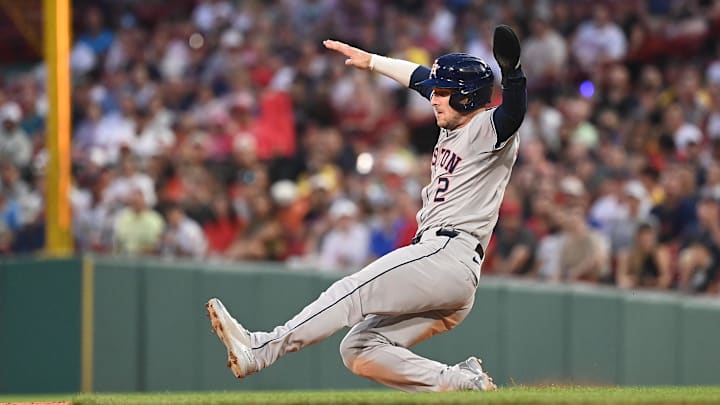
They announced their return to baseball’s elite spenders by agreeing to pay free agent infielder Alex Bregman, coming off his worst season, Aaron Judge money to likely play second base.
The three-year, $120 million deal likely pushes Boston slightly over the initial $241 threshold for paying the Competitive Balance Tax. Back in the day, from 2004 to ’19, when the Red Sox won three titles, they paid the tax 10 times in 16 years. But lately, Boston fell back to operating a middle-tier franchise when it came to payrolls. The team paid the CBT once, and barely so, in the previous five years. It was 12th in payroll last season.
The Bregman signing makes good on a declaration in November by president and CEO Sam Kennedy that the Red Sox were willing to go past the CBT threshold to build a team that wins “90 to 95 games.” On paper, with the additions of Bregman and pitchers Garrett Crochet, Walker Buehler and Aroldis Chapman and top position prospects Roman Anthony, Kristian Campbell and Marcelo Mayer knocking on the door, they appear to have done just that.
The Red Sox did well to limit the contract to three years, which pays Bregman through his age 31 to 33 seasons. But they paid a huge price to do it, with a $40 million average annual value before deferrals are calculated. Bregman joins Judge and Jacob deGrom with a $40 million AAV, trailing only Shohei Ohtani, Juan Soto and Zack Wheeler.
Bregman is tailor-made for the Sox. A pull-side power hitter, he has the highest OPS at Fenway Park of any player in the ancient ballpark’s history. He is a terrific defender and a former college shortstop who should have no problem moving from third base to second base in the likely event Boston keeps Rafael Devers at third.
He has elite strike zone discipline and contact skills—something Boston needed. The Red Sox had the third worst strikeout rate in MLB last year (25.4%). None of the worst seven teams in strikeout rate made the postseason. Bregman is coming off career full-season lows in OBP (.315) and OPS (.768) but the decline was due largely to a poor start. From mid-May he slashed .279/.331/.515.
 Add us as a preferred source on Google
Tom Verducci is a senior writer for Sports Illustrated who has covered Major League Baseball since 1981. He also serves as an analyst for FOX Sports and the MLB Network; is a New York Times best-selling author; and cohosts The Book of Joe podcast with Joe Maddon. A five-time Emmy Award winner across three categories (studio analyst, reporter, short form writing) and nominated in a fourth (game analyst), he is a three-time National Sportswriter of the Year winner, two-time National Magazine Award finalist, and a Penn State Distinguished Alumnus Award recipient. Verducci is a member of the National Sports Media Hall of Fame, Baseball Writers Association of America (including past New York chapter chairman) and a Baseball Hall of Fame voter since 1993. He also is the only writer to be a game analyst for World Series telecasts. He lives in New Jersey with his wife, with whom he has two children.