
Tarik Skubal's Arbitration Dance with Tigers Could Be Bad News For A's
In this story:
The Athletics have been on an extension rampage the past two offseasons, extending Brent Rooker, Lawrence Butler, Tyler Soderstrom and Jacob Wilson. Obviously the intent here is to lock in the core of the offensive group for the A's as they gear up for their time in Las Vegas, while also locking in some cost certainty.
The trouble is, the biggest piece of their offense may be Nick Kurtz after his monstrous rookie season, and he has yet to sign an extension. Of course, there is no rush to get a deal done as he's under team control through 2030. But at the same time, the precedent that was just set with Tarik Skubal winning his arbitration case against the Detroit Tigers could spell doom for the Athletics.
So what happened, and why is this worrisome for the A's?

The way that arbitration works, is that if the player and the team are unable to come to terms on a deal for the upcoming season, then they go to arbitration, where a three-person panel will hear from both sides and make a determination. What they are determining is what the player will make for the upcoming year, the team's salary offer, or what the player is asking for.
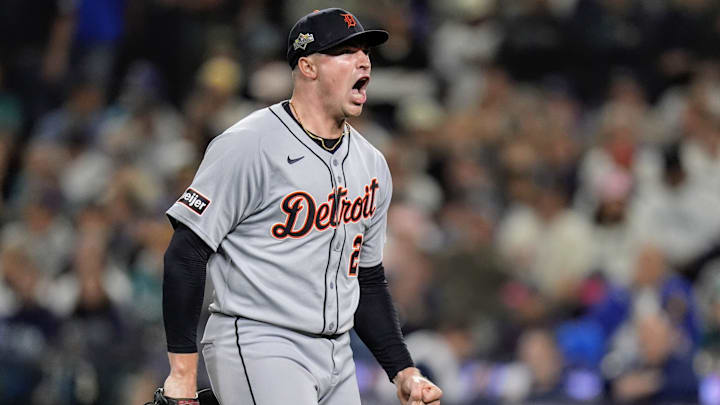
In this specific case between the Tigers and Skubal, Detroit filed at $19 million, which is a touch below the record that had been established for a pitcher when David Price earned $19.75 million 11 years ago. Skubal filed at $32 million after winning his second consecutive American League Cy Young award.
The short version here is that the arbiters sided with Skubal, and he will be making the $32 million salary in 2026, which is a brand new record, and more importantly, a new precedent for the players coming up behind him.
One could argue that Kurtz and Skubal aren't comparable because one is the best pitcher in baseball and the other is a guy coming off a solid rookie campaign. That's true on the surface, but there is a chance that Kurtz starts collecting hardware just like Skubal in the coming years, too.
Aaron Judge has won three of the past four American League MVP awards, with Shohei Ohtani (now in the NL) winning the other during his time with the Los Angeles Angels.
Kurtz put up 4.6 fWAR last season in 117 games—his first in the big leagues and just a year out of college. Over the course of a full 162-game season, he'd be looking at 6.3 fWAR at that same pace. If he continues to improve a bit, either with how he fares aganst left-handers or defensively, he could be a regular 7-8-win player.
Couple that sort of production with Judge about to enter his age-34 campaign, and there is a fairly clear pathway being presented, in time.
The hardware is part of this equation that could set him up for arbitration hearings down the line.
The other, potentially bigger part, is that his agents, Excel Sports Management, have not traditionally come to terms on pre-arbitration extensions, according to MLB Trade Rumors. Of course, they could come to terms once he hits arbitration in a couple of years, by which time he'll be much more established as a player.
Right now it would likely take something in the $140-160 million range over eight years in order to lock him up. Then again, if he has two more seasons like the one he just produced, that figure could go up significantly. The question is whether Kurtz will bet on himself to continue producing until he hits free agency so that he gets full market value, or if he takes the sure deal at some point.
Last month when some of the players were in Sacramento for some local media hits, Kurtz told reporters that an extension isn't really his focus. His focus is on winning, and if the A's win games, everyone will get paid. This doesn't exactly sound like someone on the verge of signing an extension.
The A's have made it clear that they would like to extend Kurtz (and others), but Thursday's decision in favor of Tarik Skubal may have provided the incentive for Kurtz to stay the course and hope to cash in later.
Recommended Articles:
 Add us as a preferred source on Google
Jason has been covering the A’s at various sites for over a decade, and was the original host of the Locked on A’s podcast. Mason Miller once said he likes Jason's content.
Follow byjasonb