%22%3E%0A%3Cpath%20d%3D%22M0%209.72534H5.31306L11.3609%2017.2239V9.72534H16.9943V26.7196H11.945L5.63335%2018.8819V26.7196H0V9.72534Z%22%20fill%3D%22white%22%2F%3E%0A%3Cpath%20d%3D%22M18.4827%2020.1632V20.1161C18.4827%2016.1595%2021.3276%2013.145%2025.303%2013.145C30.0132%2013.145%2032.1987%2016.4233%2032.1987%2020.4552C32.1987%2020.7472%2032.1987%2021.0864%2032.1704%2021.3784H23.645C24.0313%2022.5465%2024.9545%2023.1494%2026.1414%2023.1494C27.14%2023.1494%2027.9596%2022.6878%2028.8356%2021.7929L31.7936%2024.148C30.4842%2025.8436%2028.6096%2027.04%2025.7458%2027.04C21.403%2027.04%2018.4639%2024.2987%2018.4639%2020.1726L18.4827%2020.1632ZM27.1777%2018.9479C27.0552%2017.6856%2026.3016%2016.9603%2025.3313%2016.9603C24.361%2016.9603%2023.7487%2017.7327%2023.5791%2018.9479H27.1777Z%22%20fill%3D%22white%22%2F%3E%0A%3Cpath%20d%3D%22M32.1045%2013.4653H37.3705L38.727%2018.8066L40.3284%2013.4182H44.7183L46.348%2018.8537L47.7516%2013.4653H52.9517L48.9009%2026.8233H44.285L42.5139%2021.1429L40.6958%2026.8233H36.1081L32.1045%2013.4653Z%22%20fill%3D%22white%22%2F%3E%0A%3Cpath%20d%3D%22M65.3677%2020.7L58.9619%209.72534H65.3206L68.2315%2015.3116L71.1707%209.72534H77.4634L71.0576%2020.6247V26.7196H65.3772V20.7H65.3677Z%22%20fill%3D%22white%22%2F%3E%0A%3Cpath%20d%3D%22M74.9102%2020.1442V20.0971C74.9102%2016.3572%2078.0189%2013.1543%2082.3899%2013.1543C86.7609%2013.1543%2089.8225%2016.3101%2089.8225%2020.05V20.0971C89.8225%2023.8369%2086.7138%2027.0399%2082.3428%2027.0399C77.9718%2027.0399%2074.9102%2023.884%2074.9102%2020.1442ZM84.5283%2020.1442V20.0971C84.5283%2018.7877%2083.558%2017.742%2082.3428%2017.742C81.1276%2017.742%2080.2044%2018.7876%2080.2044%2020.05V20.0971C80.2044%2021.4065%2081.1747%2022.4522%2082.3899%2022.4522C83.6051%2022.4522%2084.5283%2021.4065%2084.5283%2020.1442Z%22%20fill%3D%22white%22%2F%3E%0A%3Cpath%20d%3D%22M91.1602%2013.4652H96.671V16.1406C97.4247%2014.3413%2098.6399%2013.1826%20100.825%2013.2768V19.1268H100.241C97.9145%2019.1268%2096.671%2020.4174%2096.671%2023.3566V26.7291H91.1602V13.4747V13.4652Z%22%20fill%3D%22white%22%2F%3E%0A%3Cpath%20d%3D%22M101.871%209H107.382V17.5442L110.227%2013.4652H116.228L112.073%2018.8537L116.294%2026.7196H110.396L108.475%2023.074L107.382%2024.487V26.7196H101.871V9Z%22%20fill%3D%22white%22%2F%3E%0A%3Cpath%20d%3D%22M122.897%2018.2695V18.2224C122.897%2013.1449%20126.901%209.35791%20132.271%209.35791C135.182%209.35791%20137.537%2010.3282%20139.383%2011.9297L136.199%2015.7637C135.078%2014.8123%20133.844%2014.2847%20132.44%2014.2847C130.226%2014.2847%20128.625%2015.9804%20128.625%2018.2884V18.3355C128.625%2020.7377%20130.302%2022.3862%20132.676%2022.3862C133.646%2022.3862%20134.183%2022.2355%20134.616%2022V20.3043H131.705V16.6587H139.939V24.5246C138.092%2026.0319%20135.521%2027.0775%20132.44%2027.0775C127.146%2027.0775%20122.897%2023.5355%20122.897%2018.2601V18.2695Z%22%20fill%3D%22white%22%2F%3E%0A%3Cpath%20d%3D%22M141.493%209H147.202V12.5232H141.493V9ZM141.587%2013.4652H147.098V26.7196H141.587V13.4652Z%22%20fill%3D%22white%22%2F%3E%0A%3Cpath%20d%3D%22M148.389%2022.961V22.9139C148.389%2020.2668%20150.358%2018.7878%20153.438%2018.7878C154.559%2018.7878%20155.991%2019.0327%20156.566%2019.2776V19.061C156.566%2017.8458%20155.812%2017.1392%20154.116%2017.1392C152.76%2017.1392%20151.62%2017.4313%20150.452%2017.8929L149.481%2014.2283C151.008%2013.6443%20152.76%2013.2581%20155.068%2013.2581C157.762%2013.2581%20159.514%2013.8139%20160.673%2014.982C161.671%2015.9805%20162.058%2017.2617%20162.058%2019.1834V26.7385H156.547V25.4009C155.623%2026.3994%20154.389%2027.0494%20152.731%2027.0494C150.179%2027.0494%20148.389%2025.5893%20148.389%2022.9704V22.961ZM156.622%2021.8117V21.2559C156.302%2021.1334%20155.821%2021.0392%20155.36%2021.0392C154.267%2021.0392%20153.664%2021.6987%20153.664%2022.5182V22.5653C153.664%2023.3378%20154.22%2023.8559%20154.926%2023.8559C155.897%2023.8559%20156.622%2023.0835%20156.622%2021.8211V21.8117Z%22%20fill%3D%22white%22%2F%3E%0A%3Cpath%20d%3D%22M163.716%2013.4652H169.227V15.3116C170.075%2014.2188%20171.412%2013.1543%20173.277%2013.1543C176.066%2013.1543%20177.818%2015.0007%20177.818%2017.9869V26.729H172.307V19.7579C172.307%2018.6181%20171.629%2017.9587%20170.8%2017.9587C169.971%2017.9587%20169.227%2018.6181%20169.227%2019.7579V26.729H163.716V13.4746V13.4652Z%22%20fill%3D%22white%22%2F%3E%0A%3Cpath%20d%3D%22M180.494%2022.2825V17.7231H178.939V13.4745H180.494V10.1492H186.005V13.4745H189.066V17.7231H186.005V21.0767C186.005%2022.0753%20186.466%2022.4333%20187.342%2022.4333C187.851%2022.4333%20188.435%2022.292%20189.019%2022.0188V26.2673C188.143%2026.7289%20186.834%2027.021%20185.496%2027.021C182.246%2027.021%20180.494%2025.5137%20180.494%2022.2825Z%22%20fill%3D%22white%22%2F%3E%0A%3Cpath%20d%3D%22M189.452%2025.1182L191.317%2021.9907C192.918%2022.9892%20194.718%2023.4697%20196.225%2023.4697C196.762%2023.4697%20197.026%2023.3472%20197.026%2023.0363V22.9892C197.026%2022.7254%20196.781%2022.5559%20195.443%2022.2167C192.089%2021.3878%20190.026%2020.4928%20190.026%2017.7515V17.7044C190.026%2014.7935%20192.353%2013.1638%20195.801%2013.1638C197.987%2013.1638%20200.144%2013.7196%20201.755%2014.6899L200.003%2017.9682C198.59%2017.1957%20196.894%2016.7341%20195.773%2016.7341C195.236%2016.7341%20195%2016.8754%20195%2017.1486V17.1957C195%2017.4595%20195.292%2017.6291%20196.63%2017.9682C199.984%2018.7972%20202%2019.7204%20202%2022.4334V22.4805C202%2025.3726%20199.842%2027.0494%20196.244%2027.0494C193.672%2027.0494%20191.336%2026.39%20189.442%2025.1276L189.452%2025.1182Z%22%20fill%3D%22white%22%2F%3E%0A%3Cpath%20fill-rule%3D%22evenodd%22%20clip-rule%3D%22evenodd%22%20d%3D%22M211.368%204.36764C217.191%20-1.45588%20226.632%20-1.45588%20232.456%204.36764C238.279%2010.1912%20238.279%2019.6324%20232.456%2025.4559L221.912%2036L211.368%2025.4559C205.544%2019.6324%20205.544%2010.1912%20211.368%204.36764ZM214.009%207.55761C213.948%207.86849%20213.916%208.39718%20213.916%209.14566V10.4189C213.916%2011.1832%20213.948%2011.7198%20214.013%2012.0267C214.078%2012.3317%20214.278%2012.6168%20214.617%2012.8762C214.956%2013.1376%20215.403%2013.3316%20215.958%2013.4623C216.512%2013.593%20217.1%2013.6584%20217.837%2013.6584C218.573%2013.6584%20219.217%2013.591%20219.769%2013.4524C220.322%2013.3158%20220.761%2013.1178%20221.086%2012.8604C221.411%2012.6029%20221.605%2012.3178%20221.666%2012.0069C221.728%2011.6961%20221.759%2011.1674%20221.759%2010.4189V9.14566C221.759%208.38134%20221.728%207.84473%20221.662%207.53781C221.597%207.23287%20221.397%206.94971%20221.058%206.68834C220.72%206.42696%20220.272%206.23291%20219.718%206.10223C219.163%205.97154%20218.536%205.90619%20217.839%205.90619C217.102%205.90619%20216.459%205.97352%20215.906%206.11213C215.352%206.24875%20214.914%206.44677%20214.589%206.70418C214.265%206.9616%20214.071%207.24673%20214.009%207.55761ZM219.276%2024.8638C222.876%2024.8638%20224.557%2024.2064%20224.557%2021.862V21.858V21.3155C224.557%2019.6581%20223.516%2018.971%20220.252%2018.3136C219.278%2018.1136%20218.908%2017.9136%20218.908%2017.3136V16.9414C218.908%2016.6543%20219.177%2016.5117%20219.413%2016.5117C219.749%2016.5117%20219.918%2016.7137%20219.918%2016.9414V18.1136H224.391V17.3988C224.391%2015.4563%20223.347%2014.4266%20219.177%2014.4266C216.15%2014.4266%20213.896%2015.3414%20213.896%2017.3711V17.7433C213.896%2019.5155%20214.805%2020.3155%20218.201%2021.0303C218.28%2021.0472%20218.355%2021.063%20218.427%2021.0781C219.329%2021.2674%20219.647%2021.3341%20219.647%2021.9174V22.2897C219.647%2022.6619%20219.546%2022.8045%20219.142%2022.8045C218.67%2022.8045%20218.637%2022.5471%20218.637%2022.262V21.2897H213.894V21.7471C213.894%2024.149%20215.476%2024.8638%20219.276%2024.8638ZM225.424%2024.5569H229.925V14.7355H225.424V24.5569ZM226.955%2013.5019H229.925V6.06064H227.092V9.411L225.193%206.06064H222.359V13.5019H225.193V10.1199L226.955%2013.5019ZM218.269%2012.152C218.204%2012.2688%20218.055%2012.3262%20217.825%2012.3262L217.827%2012.3282C217.604%2012.3282%20217.459%2012.2767%20217.398%2012.1758C217.336%2012.0748%20217.305%2011.8074%20217.305%2011.3758V7.90068C217.305%207.51852%20217.352%207.28684%20217.445%207.20962C217.538%207.13239%20217.675%207.09279%20217.851%207.09279C218.059%207.09279%20218.198%207.14031%20218.265%207.23734C218.332%207.33239%20218.366%207.55416%20218.366%207.90068V11.3203C218.366%2011.7579%20218.334%2012.0352%20218.269%2012.152Z%22%20fill%3D%22white%22%2F%3E%0A%3C%2Fg%3E%0A%3Cdefs%3E%0A%3CclipPath%20id%3D%22clip0_15232_2585%22%3E%0A%3Crect%20width%3D%22237%22%20height%3D%2236%22%20fill%3D%22white%22%2F%3E%0A%3C%2FclipPath%3E%0A%3C%2Fdefs%3E%0A%3C%2Fsvg%3E%0A)
New York Giants Week 16: First Look at Minnesota Vikings’ Offense
In this story:
With the NFC playoff picture tightening and their hopes of a berth increasing after the incredible Sunday Night Football victory against Washington, the Giants’ attention turns to Week 16 and another tough test against the North division-leading Minnesota Vikings (11-3). It will be New York’s first trip to the Twin Cities since October 2016, when the home Vikings took a decisive 24-10 win.
Both franchises have crossed paths 29 times dating back to the 1964 season, with Minnesota holding a 17-12 advantage in the all-time series. In their last meeting in 2019, quarterback Kirk Cousins threw for over 300 yards and two touchdowns, assisted by 262 yards of offense from Dalvin Cook and Adam Thielen to help lead the Vikings to a 28-10 win in East Rutherford.
Now, the Vikings welcome the Giants, boasting one of the more dominant aerial attacks in the NFL that has helped power them to a breakaway rein in the NFC North. At the forefront of that offense is the aforementioned Cousins, who has eclipsed at least 3,600 passing yards for the eighth consecutive season. The 34-year-old veteran came up big just last week, completing 34 passes for 460 yards and four touchdowns (season highs) in a 39-36 comeback victory over the Indianapolis Colts.
Yet, the Michigan State alum would go nowhere without his stellar core of wide receivers at his disposal. Among the group, star Justin Jefferson has made a strong case to be named Offensive Player of the Year, tallying 111 receptions for 1,623 yards and seven touchdowns, with the former two stats ranking first in the league. Minnesota also relies on huge production from Adam Thielen, K.J. Osborn, and tight end T.J. Hockneson, all of whom combine for 1,478 yards and ten touchdowns in 14 games.
The Vikings’ run game isn’t anything to sleep on, either. It features a 1,000-yard ball carrier in Cook at the top, who has reached that mark in the past four seasons, including a career-high 1,559 rushing yards in 2020. Cook stands among the top 10 in attempts and yards, meaning he will get reps in an offense that sometimes lives and dies by the deep ball. Teammate Alexander Mattison also contributes to the unit, having three seasons of at least 400 yards under his belt.
Through their first 14 games, the Vikings are smack in the middle of the league in points and total yards, ranking 8th and 13th in both categories, respectively, while averaging 5.4 yards per play. Minnesota is excellent at converting first downs (313 this season), a product of their top-10 passing attack in attempts (3rd), yards (7th), and touchdowns (7th) behind the heroics of players like Jefferson.
The team’s rushing statistics are much less impressive on the ground, but the caveat comes toward the endzone. The Vikings are near the bottom of the league in rushing attempts (27th), yards (28th), and average yards per carry (24th), a result of having essentially a one-running back product that teams are learning how to shut down. They still rank seventh-best in the NFL in rushing touchdowns, holding 16 total scores.
While they have their successes on the offensive side this season, the biggest weakness for Minnesota comes when it’s their turn to try to stop the opposing team’s production in the air. In 2022, the organization’s almost dead last in passing attempts, yards, and average yards allowed, including giving up the 18th-most touchdowns inside the 20-yard line. The run defense is better, but still, it’s towards the bottom of most of the same categories.
If the Giants want any chance to win this football game, it will take massive production from their offensive corps and an early attack on the Vikings weary defense to pull it out.
There’s some debate going around that Minnesota is a fraudulent contender in the NFC, given the results of some of their recent games, but Big Blue cannot take any snaps off when their unit is on the field. Kevin O’Connell’s crew can put up drives and points in a flash, and the last thing the Giants want after an important win is a blowout response.
The franchise was able to take a collective breath after the momentous 20-12 victory in Washington momentarily salvaged their postseason dreams in year one of a rebuild. Their grit will be tested by likely their last difficult opponent on the schedule, but there is no doubt of a chance to shock the league again and add to their 1.5-game cushion. The hope is that Sunday night’s feat will serve as a rallying point for a banged-up yet persistent Giants team.
Until then, let’s take a deeper look at the Minnesota Vikings offensive centerpieces and what to watch for on Saturday.
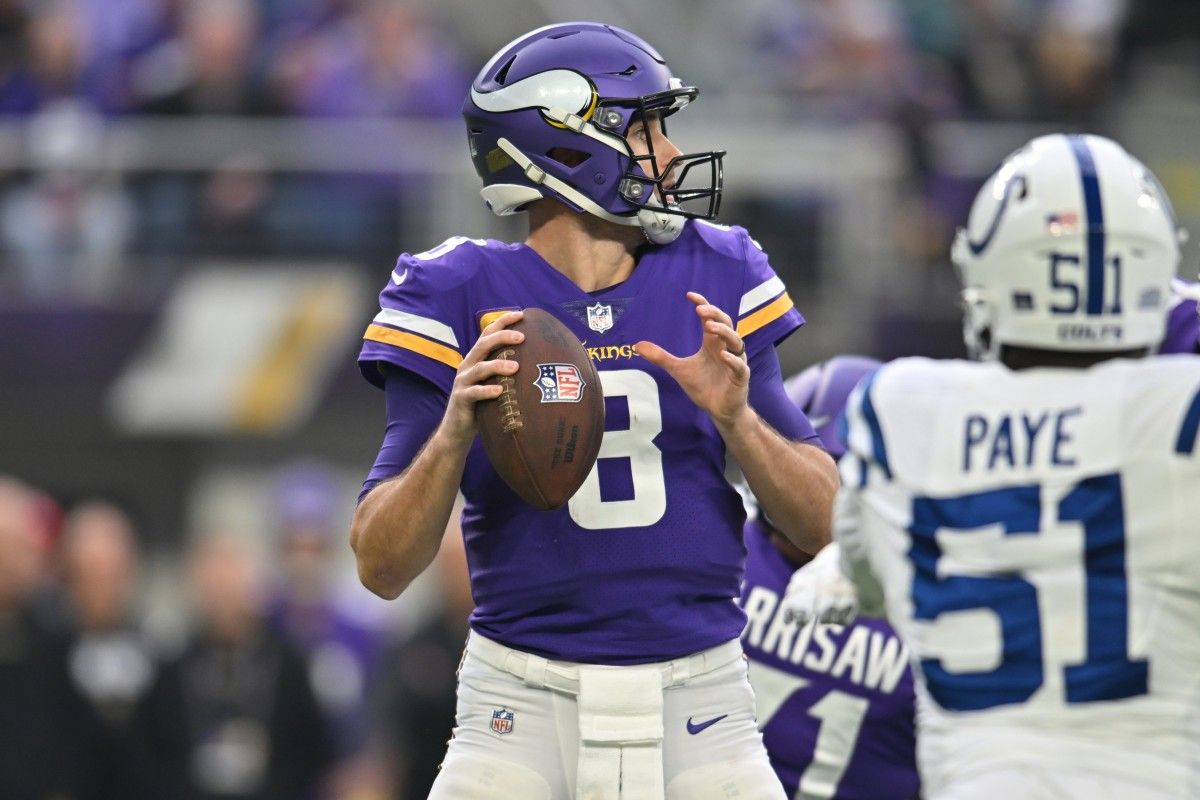
Quarterback
Arguably since the Daunte Culpepper years from 2000-2005, the Minnesota Vikings have struggled to maintain consistency at the quarterback position.
In the 12 seasons following Culpepper’s departure, the franchise rotated through 16 starting quarterbacks, with none beginning more than three seasons as the opening week option. With the arrival of Kirk Cousins in 2018, that trend appears to be nixed as the gunslinger attempts to resurrect his career and build something special in Minneapolis.
An alum of Michigan State and former 2012 fourth-round pick by the Washington Redskins, Cousins, arrived in Minnesota on March 15, 2018, as a free agent, signing a three-year contract worth $84 million that’s been extended twice through the end of the 2023 season. Before that deal, the 34-year-old spent his first six stints in Washington, garnering two Pro-Bowl selections and three consecutive campaigns of at least 4,000 passing yards and 11 touchdowns.
Unfortunately for Cousins, who spent his first three years as a backup and had only one season finish under a 60% completion percentage, all the franchise records and occasionally flashy outings resulted in just one year with nine wins and a playoff berth, where Washington was trounced in the Wild Card by the Packers. The two sides agreed to part ways after the season ended, and the following offseason Minnesota gave him the highest-paying contract in league history.
In five seasons with the Vikings, Cousins has taken the organization from NFC North mediocrity to two playoff appearances, with another forthcoming as division champions and conference contender. He’s been an incredibly reliable quarterback, missing only two games while amassing 1,808 completions (66.7% completion average) for 20,205 yards and 148 touchdowns. Not only has he set career-highs in several areas during his latest tenure, but he’s also shattered Vikings’ team records, including most consecutive games with at least one touchdown (36).
Playing in 14 games this fall, Cousins has totaled 355 completions (65.3%) for 3,818 yards, 24 touchdowns, and 11 interceptions, the second-lowest stat line of his career. However, he’s earned his best start to a season in that span and ranks sixth and fifth in the first two categories. With an amazing arsenal of weapons at his disposal, the infamous “You Like That!” quarterback is playing with all the confidence in the world, and the hope is it will help carry his team to a Super Bowl appearance.
Leaving the Spartans in 2012 to make his case to the NFL front offices, Cousins was not a prospect with immense size. He had some deficiencies with his throwing that made general managers question his ability to succeed at the next level. He wasn’t strong and accurate as a deep-range passer. Still, his experience (three-year collegiate starter) and tireless effort to produce in the open field convinced at least one team to take a chance on him as a backup flyer.
Stepping back into the pocket, Cousins plays with a game manager’s mentality that allows him to stay calm and focused while doing what is needed to move the ball downfield and put the offense in position to win the afternoon. He hates the idea of turning the possession over on silly, costly mistakes, so the eleventh-year veteran always makes the safest decisions with the pigskin and picks the most accurate throwing lane to connect with one of his receivers.
While he is a more conservative player who tends to look for the easiest target to advance the drive, the talent surrounding Cousins increases his value on the field. The quarterback has averaged at least seven yards per throw and garnered darts as long as 75 yards in his time with the Vikings, a product of his wide receivers’ ability to deliver quality yards after the catch and burn defenses into the third level for highlight reel touchdowns. His averages are 7.0 and 64 in 2022, and five weapons have long receptions of at least 36 yards.
If he decides he wants to take off with the rock, Cousins is an athlete that can make some solid runs with his feet to burn intermediate yardage or earn a first-down conversion. Do not expect him to thrash defenses to the endzone, though, as he only boasts a 4.93 40-yard dash and will get chased down by speedy cornerbacks.
In his NFL career, he has 286 attempts for 894 yards (3.1 average) and 19 touchdowns, with four of those seasons crossing 115 yards rushing. This year, those numbers sit at 27 rushes for 58 yards (2.1 average) and two touchdowns, his lowest total since the 2019 season, meaning he hasn’t been much of a factor in that regard.
Running Backs
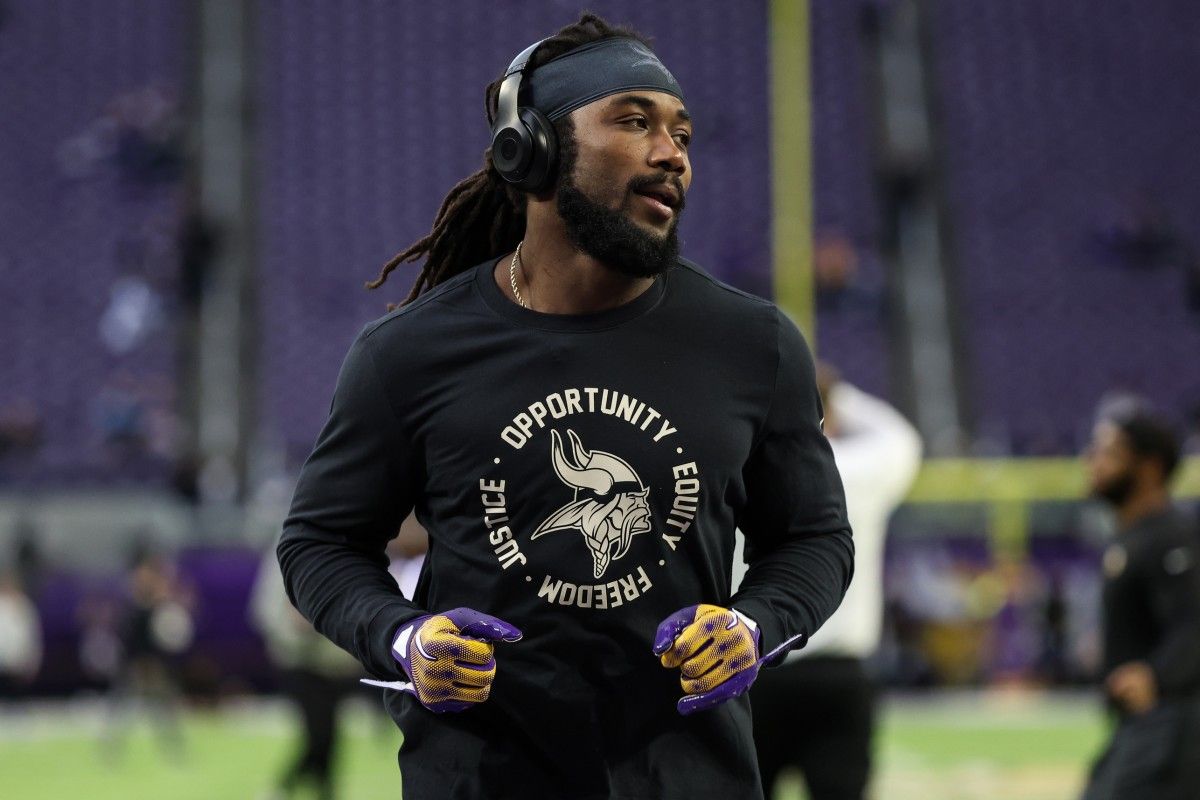
When it comes to the Minnesota Vikings’ rushing attack, most handoffs go through lead running back Dalvin Cook.
Entering his sixth season in Minneapolis after hailing from Florida State University, Cook maintained his starting role due to a productive resume that features 70 games played with 1,248 carries for 5,865 yards (4.7 average) and 47 touchdowns. The former 2017 second-round pick has eclipsed 200 rushes and 1,000 yards in his last four campaigns, allowing him to rank among the top-10 running backs in overall stat lines.
In 2022, Cook appeared in all 14 games for the Vikings and collected 230 carries for 1,045 yards (4.5 average) and eight touchdowns, all three marks ranking him fifth, eighth, and 12th among active rushers, respectively. Only four of his games this season failed to garner at least 72 yards from scrimmage meaning he’s been an active contributor and difficult weapon to thwart in the Viking’s entire offensive operation.
While he can flourish in the most zone, gap, and power schemes, as seen in his collegiate tenure, Cook’s greatest potential shows when the play is extended wide, and he can be that home run-hitting ball carrier in Minnesota’s backfield. At 5’11”, 215 pounds, the 24-year-old lacks the true power to bulldoze his way through the teeth of the defense, so he counts on good balance, footwork, and open field burst to make him a talented contributor.
It’s difficult to bring Cook down if he gets into a groove and has excellent protection guiding him toward the perimeter. Taking off from the backfield, he runs with choppy, relentless feet and a compact stride downhill and doesn’t resort to dancing his way around defenders.
Instead, Cook will use his plus-graded vision to make first and second reads off the field and figure out where the linebackers and safeties are flowing. If the two parties have extreme gap commitment too soon, he will unload his lateral cuts in a flash to extend the play to the outside zone. If there is flowing by the defense, he’ll deceive them outside with hesitation steps and glances before taking it back inside and pounding the football up the middle.
Cook rarely gets unwavered by the big moment, given his record of monster games in college and when the onus falls on him to make the game-saving play for his offense, the running back turns things into a secret gear never seen before. As he approaches the endzone, he becomes the greedy runner who finds all the power in his legs to cash the check across the goal line.
Once he shifts from the first to second read on outside zone rushes and reaches the corner of the line, Cook hits his run-away gear toward the endzone and makes the entire defense flow after him. He will take hits up the field and fight to stay up, but he can elude defenders with subtle changes of direction and completely cut back across the grain to evade all tacklers to the conversion needed.
The last element of Cook’s game comes from the backfield or inside receiver slot when he contributes to the passing effort. Minnesota will sometimes feature him in two-back setups, sending him on screen or bubble routes to the sidelines or short flat routes over the middle for quick dump-and-run plays. He sometimes has trouble holding onto a darted ball, but he can still be dangerous if given space after the catch.
This season, Cook has 13 receptions for 78 yards and a touchdown, on pace to shatter his career-low set in his rookie campaign of 10 catches and 82 yards. If the pass goes a different direction, expect Cook to step up in pass protection and give it his all despite common mismatches on huge defensive edge rushers.
Following Cook, the only Vikings ball carrier with a sniff of production is fourth-year teammate Alexander Mattison. A former 2019 third-round pick out of Boise State, the 24-year-old Mattison has been a nice complementary ball carrier behind Cook, earning at least 96 rushes and 434 yards on the ground in his last three seasons.
This fall, Mattison has accumulated 52 carries for 174 yards (3.3 average) and three touchdowns which is on pace to be the slowest start in his career. Part of that has resulted from the heavy reliance on Cook to churn out the team’s yardage every Sunday, but the rest comes from the player’s role in the passing game. In 56 career appearances, Mattison has 68 receptions for 513 yards and three scores, including two seasons with at least 125 and a touchdown in that span.
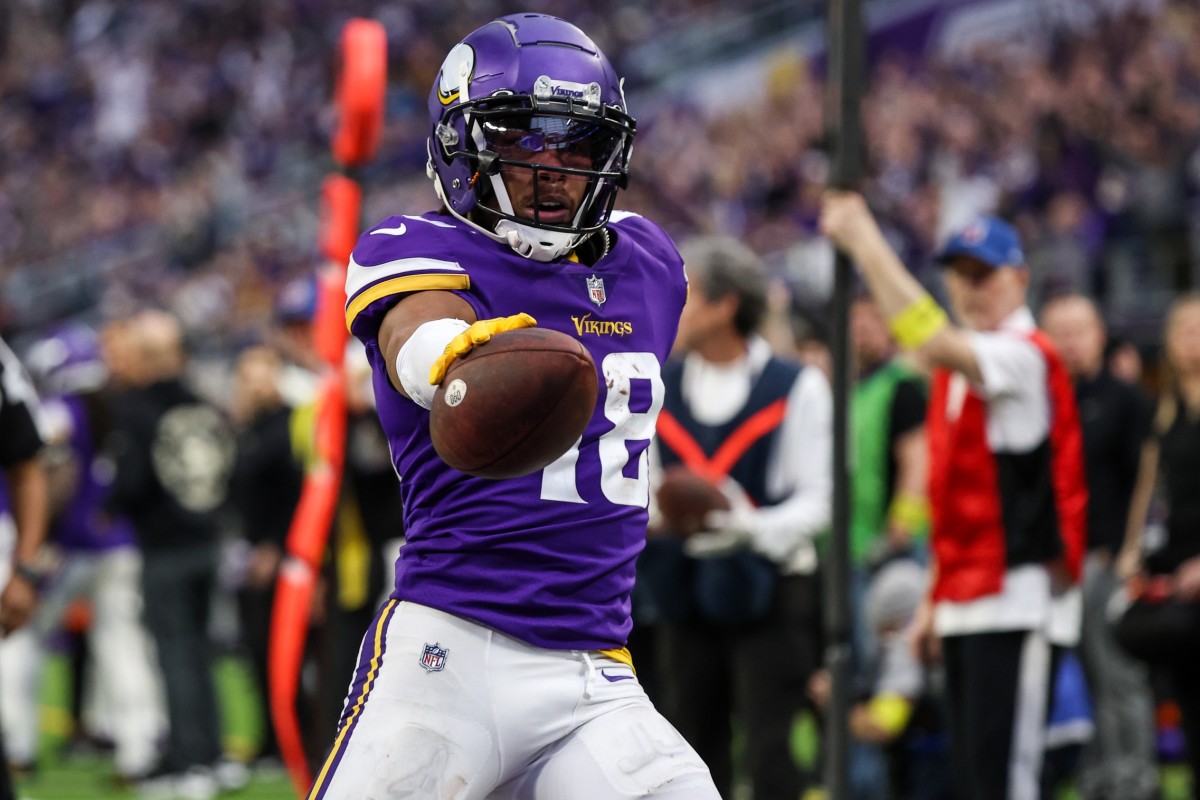
Wide Receivers
Similar to the Philadelphia Eagles two weeks ago, the Minnesota Vikings enter Week 16’s matchup with the Giants boasting one of the league's most dangerous wide receiving units.
Despite 13 total players contributing to their receiving totals this season, a large chunk of Vikings’ production comes from a trio of pass catchers who combine for 2,766 yards and 16 touchdowns on the offensive side of the ball. These same players are among the NFL’s top 50 scorers, meaning they could all be huge threats inside the opponents’ 20-yard line weekly.
Their names are Justin Jefferson, Adam Thielen, and K.J. Osborn, and together they help the Vikings’ offense light up the scoreboard if not contained.
Reigning high above the receiving leaderboards is Jefferson, Minnesota’s third-year stud out of LSU. A 2020 first-round pick by the franchise, the 23-year-old has quickly blossomed into one of the most talented ball hawks with three consecutive 1,000-yard campaigns that include at least seven touchdowns and an average of 15.1 yards per catch. Expect the accolades to be thrown his way this year, as the receiver has garnered a career-high 1,623 yards to go along with seven scores and a 14.6-yard average in his first 14 games.
Jefferson’s unrealistic numbers rank him in the position’s top-10 performers, including first in both receptions (158) and yards. Yet, the story of this player’s deadly impact on the Vikings’ offense goes beyond the numbers into the intense intangibles he brings to every play on Sundays.
While he can play as an outside target when asked, Jefferson’s stock has soared as an inside slot receiver with the size and savvy to make chain-moving and game-altering catches all over the field. Dubbed a “quarterback’s best friend” during his combine workouts, the Louisiana native has respectable speed and separation ability. Still, his contested catch focus and other ball skills lead to his excellent completion percentages.
Coming off the line of scrimmage, Jefferson unleashes a good initial burst to gain a lengthy advantage toward the stem of his route. To give that stem more power, he flashes a sharp jab step on the defender that establishes space and allows him to make a play on even the quickest of anticipation balls. The former Tiger is one of the most reliable targets for must-have passes, using his quick hands to stab the ball out of the break and secure important first-down conversions or red zone scores.
Extending the route across the field, Jefferson is very slippery working his way around intermediate traffic and adept at redirecting the play according to his quarterback’s location and throwing lanes. He can also adjust his speed to different gears to help him cover ground and track the lowest of lead passes, shielding the pigskin from the ground with solid hand coverage.
Going back to his hands, they’ve helped carve Jefferson into one of the most instinctive pass-catchers of the modern era. If the ball is thrown slightly behind or below the receiver’s comfort range, he deploys a series of impressive twists, turns, and other mid-air adjustments to complete the reception and extend the drive. After stabbing the odd ball with his hands, he brings back the fluid body movements to redirect himself and earn more yardage after the catch.
Beyond these attributes, Jefferson is a viable option for the Vikings’ vertical approach. Not only will he beat the corner down the sidelines with his long strides in most instances, his sharpened catch focus, ridiculous catch radius, and leaping ability carry him to the high point of contested catches to bring down the momentous grab. If he’s not catching, the future All-Pro player will do his part in pass blocking for his teammates.
Thielen, the oldest member of the Vikings’ receivers, follows in second with 132 career games, 530 receptions, 6,652 yards, and 54 touchdowns on his resume, including an average of 12.6 yards per catch. A ninth-year player and undrafted free agent out of Minnesota State, Thielen built up a reputation for being the team’s No. 1 vertical threat before Jefferson’s arrival by having at least five seasons with over 700 yards and four touchdowns, with two consecutive 1,000-yard years in 2017-18.
In 14 games played this season, Thielen has accumulated 68 receptions for 686 yards (10.4 average) and five touchdowns, the first and third categories ranking him among the top 25 players in his position. At 6’2” and 200 pounds, the 32-year-old has been an overlooked player dating back to his high school days because of his underwhelming size. Still, with insane downfield concentration and ball skills, he elevated himself into a full-fledged NFL-level deep threat on the outside.
Playing 413 of his snaps out wide in both 11- and 12-personnel groupings, the Vikings will send Thielen out on a ton of intermediate slants and deep post, corner, or vertical routes, letting him use his catching prowess to make big-time receptions over the top of the secondary. He has decent elusiveness after the catch to turn upfield, elude oncoming tacklers, and gain extra yardage, holding an average of 2.3 yards after the catch per reception for a total of 155 yards in 2022.
Rarely does Thielen make mistakes with the ball in his hands, as he posts fantastic grades of 90.9 and 81.0 in drops and fumbles, per PFF. He also fights to get to the ball, whether on underthrown shots or looks across the field, a factor that has kept the Vikings’ offense to two interceptions on plays going his way. His initial profession and route breaks are typically very clean and concise, allowing the quarterback to know where he’ll be and where to land the intended target.
Thielen is not as aggressive of a pass blocker as Jefferson, with only a mere 53.6 score, the second-lowest mark of his career. That doesn’t mean he isn’t willing to help out on occasion, as he knows its most minute of contributions that have helped him rise to the status he has at the professional level.
Rounding out the top three is sophomore receiver K.J. Osborn hailing from the University of Miami. Taken in the fifth round of the 2020 draft by Minnesota, the 25-year-old spent his first year with the organization off the field before entering the receiving rotation in the 2021 season. In two active campaigns for the Vikings, he’s collected 95 receptions for 1,112 yards (11.7 average) and 11 touchdowns, with the better showing in his rookie stint, where he earned 655 yards and seven scores.
Now playing in his second full season, Osborn has 45 receptions for 457 yards and four touchdowns, placing him in the top 35 active receivers. He also averages 10.2 yards per reception, meaning he can be an intermediate-range weapon for Kirk Cousins and the Minnesota offense.
When he was being scouted for the pro level, Osborn earned many critiques for his size, speed, and quickness, with doubters saying the 5’11”, the 203-pound receiver wouldn’t be able to overcome tight man coverage against elite cornerbacks. Nevertheless, he does whatever it takes to contribute on the field, and it’s his instincts in space and toughness that enable him to thrive as a slot receiver.
On the line of scrimmage, Osborn recognizes the weaknesses in zone coverage presented by the defense and serves as the communicator to his teammates. He’ll alter and adjust his routes based on where the coverages go, often settling into the short area for a nice catch-and-run play. He'll also work into the safeties and makes difficult catches over the middle without fear of being rocked on the collision.
Osborn can contribute to the special teams’ unit as both a kick and punt returner, playing three seasons in the role back at college. He hasn’t returned any this season, but he has a combined 25 attempts and 353 yards should he get called up.
Tight Ends
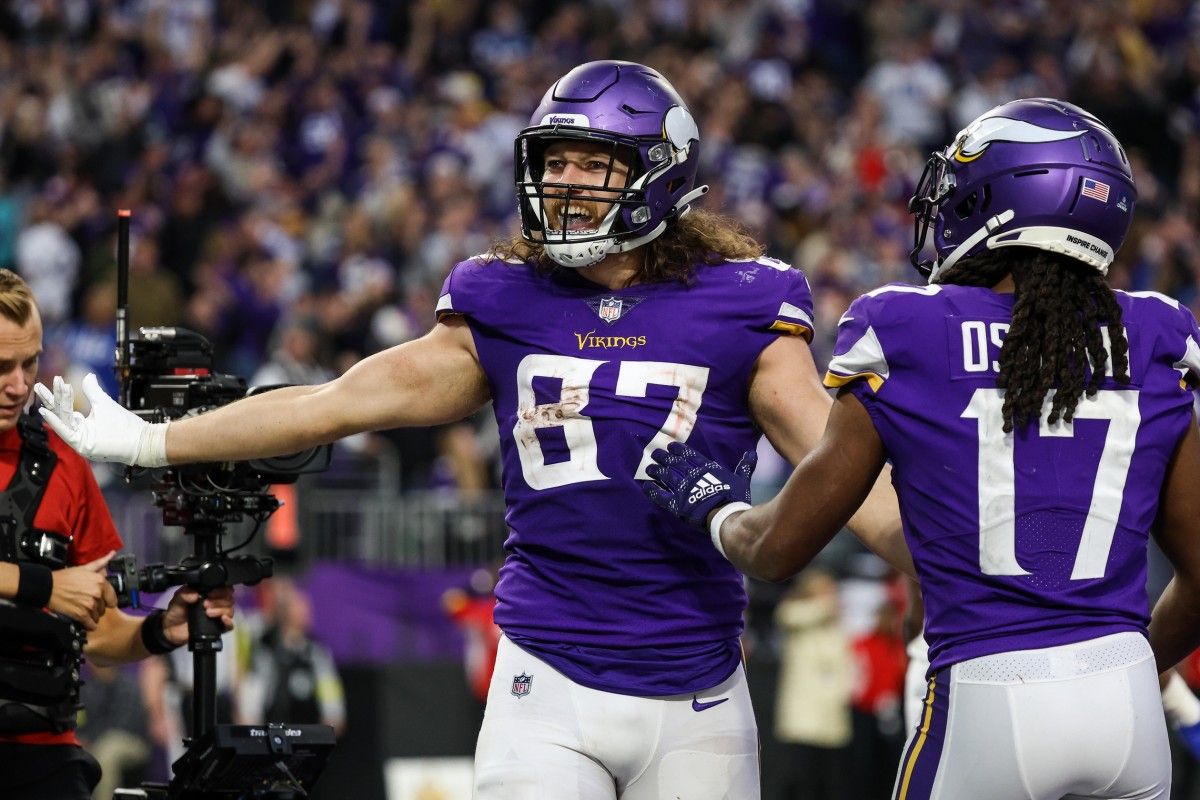
With the departure of former starter Kyle Rudolph in 2021, who held the position for ten seasons, the Minnesota Vikings needed to find a solid replacement for their tight end department. Their initial answer was a committee of players donating minimal production to the offense, but now they’ve got a strong suitor in the recent acquisition of T.J. Hockenson.
A fourth-year player out of Iowa, Hockenson entered the NFL in 2019 when he was selected No. 8 overall pick by the Detroit Lions. Playing his first three seasons with the pride as one of their biggest developmental pieces, the 25-year-old tallied two years with at least 61 receptions, 500 yards, and four touchdowns and was a top weapon for then-new quarterback Jared Goff.
In November, the Lions made a surprising trade with the rival Vikings near the league’s deadline, sending Hockenson, a 2023 fourth-round pick, and a 2024 conditional fourth-round pick in exchange for a second and third-round in the same drafts, respectively. Coming across the division with the Pro Bowler was a resume touching 186 receptions for 2,068 yards and 15 touchdowns, including a 10.7 yard per catch average that stood high among active tight ends.
Since donning the purple and yellow, Hockenson has accumulated another 39 receptions for 335 yards and one touchdown, ranking fourth-best among the Vikings receiving leaderboard. Add in his Lions’ statistics, and the former first-rounder has 65 receptions for 730 yards and four touchdowns, the latter tied for his second-highest total.
Any effort to describe Hockenson would conclude that he’s one of the best all-around tight ends in the game over the past few seasons. At 6’5” and 248 pounds, he has the size and athletic talent to fit into any scheme and tends to be deployed in 12-personnel packages with a bit of 11-personnel mixed in between.
Playing in either package as an additional blocker, Hockenson takes full advantage of his burly frame to gain control of his inline defender. He uses his strength and toughness to sustain and finish the block into the second level. He punches with crisp, hands-on inside run blocks, keeping his foot moving through the contact to establish a gaping hole for his moving ball carrier. It’s not often Hockenson pancakes an opposing rusher, but he has what it takes to knock them over and extend to the next level as a lead move blocker.
When Hockenson extends his game into the aerial offense, his athleticism and ability to create separation from the defender make him special. He comes off the line of scrimmage with a good upfield burst and takes long, fluid strides to uncover himself in the intermediate and deep levels of the field. The route tree is always leveraged and sharp with Hockenson, who knows how to change his speed in and out of his cuts and turns to throw off defenders and earn extra space for a wide catch radius.
If the ball comes in his direction, Hockenson can win plays against linebackers and over-the-top safeties with his excellent body control and sticky hands. At the point of the catch, he uses his aforementioned frame to get in front of the ball and shield it from oncoming traffic. High-point balls aren’t out of his range either, as Hockenson has an above-average catch radius to secure passes away from his chest, and he isn’t afraid to make the play through contact.
Hockenson is a player that can inflict damage on opposing defenses in various ways, offering the Vikings an extra threat when the rest of their receiving core is contained on the other end. The Giants’ have already seen a few tight ends of his caliber throughout their schedule, so it’s expected they’ll prepare heavily to shut down any influence he might have on Minnesota’s offensive success.
Besides Hockenson, the Vikings also have Irv Smith Jr. and Johnny Mundt among their active ranks. The two tight ends have combined for 292 yards and three touchdowns of production in the first 14 games for the Minnesota offense, meaning they could then earn a handful of reps in the same schemes or leave a mark on Saturday’s gamebook.
Offensive Line
For the first time in a while, the New York Giants could be facing an offensive line closer to their end of the experience spectrum in the Minnesota Vikings’ starting front.
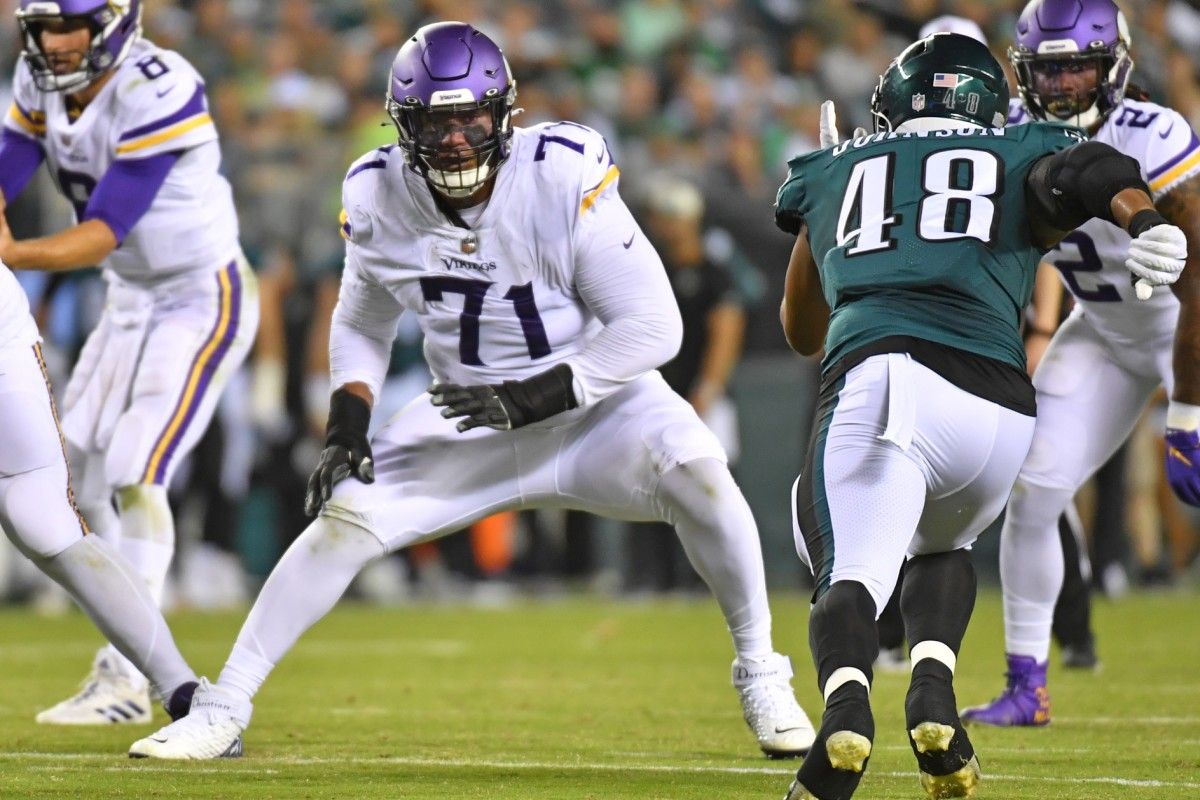
After facing Commanders and Eagles’ units that held numerous players with decades of professional blocking, the Vikings enter Saturday’s contest with their protection composed of five young players with under five years of experience each. In the interior, they have three players within their first three seasons, including a rookie at the right guard spot who will be battle-tested by the Giants’ pressure-heavy defensive linemen.
As December football rolls on, the Vikings’ offensive line has been fairly serviceable at protecting the backfield and keeping Cousins upright. According to ESPN analytics, Minnesota ranks 20th in run block win rate (71%) and the same marking in pass block win rate, but the latter comes with much less efficiency (57%). Only one member of the starting line stands top-10 in their position for pass block win rate, meaning the opportunities could be there for New York to earn some significant pressures on a mistake-prone pocket.
Beginning at left tackle, the Vikings roll out second-year player Christian Darrisaw to protect Cousins’ blindside. A 2021 second-round pick by the organization out of Virginia Tech, Darrisaw resumed the starting role this year and has offered some of the best dual blocking among active players at his position. He’s played in 11 games so far, tallying 685 snaps and grades within the ’80s in both passing and rushing schemes, per PFF.
Over that span, the 23-year-old has been spectacular at withstanding fierce pass rushes toward the interior. Darrisaw has allowed only three sacks, three QB hits, eight hurries, and 14 pressures in his time on the field, translating to a career-high 98% efficiency rating. Rarely does he get penalized in run blocking, holding just two infractions to his name all season.
Next up on the left side is guard Ezra Cleveland, the third-year player out of Boise State. The 24-year-old was taken in the second round of the 2020 draft by Minnesota and has been a meaningful contributor to the success of the Vikings’ rushing offense. Despite having 326 more snaps in pass-blocking scenarios, his impact has come on the ground with a 96% efficiency rating, a 78 grade by PFF, and just two penalties allowed on his watch.
Where Cleveland runs into trouble is working as a pass rusher, in which he stands top-10 among left guards in sacks allowed. To accompany his four succumbed this season, Cleveland bottoms out with a 52.0 pass-blocking score and has given up 16 hits, 23 hurries, and 43 overall pressures. The left guard spot could be where the Giants’ defensive front line finds their easiest path to Cousins.
Manning the middle at center is Garrett Bradbury, the fourth-year pro out of NC State. Banged up in recent weeks, Bradbury’s overall snaps have decreased steadily over the last two seasons, but he’s still provided fairly consistent protection in both pass and run scenarios. In 12 appearances this fall, he’s played in 809 snaps (career-low) but earned a 70.2 overall blocking grade that slightly favors the rushing attack.
Despite his absences, Bradbury holds a 97.4% efficiency rating on the front line, the best marking in his four seasons with Minnesota. The former 2019 first-round pick has allowed two sacks, four hits, 18 hurries, and 24 overall pressures in 2022, the former number marking him 13th in the entire league. He’s a little more penalty-prone, with an eleventh-highest four infractions on the year.
Rookie Ed Ingram fills the Vikings’ right guard hole from LSU by turning over to the right side. The 59th overall pick in the 2022 draft by Minnesota, Ingram has struggled severely in his first season as a starter at the NFL level and could be the biggest weakness on the Vikings’ front come Saturday.
In 967 total snaps (third most for active right guards), Ingram has played 647 as a pass protector and the other 320 blocking for Dalvin Cook and company. His grades have not been very good, as PFF records him at a 55.4 overall score and a team-low 41.5 note in pass-blocking situations. It is there that the 23-year-old Ingram has allowed a league-leading nine sacks, 15 hits, 27 hurries, and 51 overall pressures.
His run protection is a little better at a 63.4 score, but he is another player prone to racking up a few penalties against more experienced defensive linemen. Going up against an aggressive Leonard Williams or Dexter Lawrence might be his toughest matchup of his debut campaign and a matchup to watch when New York sends the blitzes up the middle.
Fifth-year veteran Brian O’Neill rounds off the right tackle position for Minnesota. A 27-year-old out of Pitt, O’Neill was selected in the second round of the 2018 draft and is arguably the best lineman in the Vikings starting front. Per ESPN, O’Neill is ranked second among offensive tackles in pass block win rate with an astounding 94% that trails only Philadelphia’s Lane Johnson.
Also playing in 967 total snaps this season (third most among right tackles), O’Neill’s reps lean heavily towards pass blocking, where he holds a 97.6 efficiency rating, the fourth-highest rating of his career, through 14 contests. His sacks given up are a little high at six (tied for 8th), and penalties at five. However, his four hits, 13 hurries, and 23 overall pressures make for it and contribute to an 83.7 overall grade when the run is factored in.
O’Neill holds an 86.5 score for the run-blocking effort but is not inside the top-10 offensive tackles in the run-block win rate category. He was a stalwart player for the Vikings in the previous two seasons, so the hope for Minnesota is that he can resurrect those numbers against the Giants and offer clean throwing lanes on the right side of the line.
Join the Giants Country Community
- Sign up for our FREE digest newsletter
- Follow and like us on Facebook
- Submit your questions for our mailbag
- Check out the new Giants Country YouTube Channel.
- Listen and subscribe to the daily LockedOn Giants podcast.
- Subscribe and like the LockedOn Giants YouTube Channel
- Sign up for our FREE message board forums
- Get your Giants tickets today from SI Tickets!
 Add us as a preferred source on Google
-1ca98c375b90186224f7ec5e456f6e73.webp "Stephen Lebitsch")
“Stephen Lebitsch is a graduate of Fordham University, Class of 2021, where he earned a Bachelor’s degree in Communications (with a minor in Sports Journalism) and spent three years as a staff writer for The Fordham Ram. With his education and immense passion for the space, he is looking to transfer his knowledge and talents into a career in the sports media industry. Along with his work for the FanNation network and Giants Country, Stephen’s stops include Minute Media and Talking Points Sports.
Follow SLebitschSports