%20%20--%3E%0A%3Csvg%20version%3D%221.1%22%20id%3D%22Layer_1%22%20xmlns%3D%22http%3A%2F%2Fwww.w3.org%2F2000%2Fsvg%22%20xmlns%3Axlink%3D%22http%3A%2F%2Fwww.w3.org%2F1999%2Fxlink%22%20x%3D%220px%22%20y%3D%220px%22%0A%09%20width%3D%2239px%22%20height%3D%2240px%22%20viewBox%3D%220%200%2039%2040%22%20enable-background%3D%22new%200%200%2039%2040%22%20xml%3Aspace%3D%22preserve%22%3E%0A%3Cpath%20fill%3D%22%23FFFFFF%22%20d%3D%22M38.5%2C7H28.2v26h10.3V7z%22%2F%3E%0A%3Cpath%20fill-rule%3D%22evenodd%22%20clip-rule%3D%22evenodd%22%20fill%3D%22%23FFFFFF%22%20d%3D%22M26.1%2C25.5c0%2C5.8-4.1%2C7.5-12.9%2C7.5C3.9%2C33%2C0%2C31.2%2C0%2C25.2v-1.1h11.6%0A%09v2.4c0%2C0.7%2C0.1%2C1.4%2C1.2%2C1.4c1%2C0%2C1.2-0.4%2C1.2-1.3v-0.9c0-1.6-0.9-1.6-3.5-2.2C2.2%2C21.7%2C0%2C19.7%2C0%2C15.3v-0.9C0%2C9.3%2C5.5%2C7%2C12.9%2C7%0A%09c10.2%2C0%2C12.8%2C2.6%2C12.8%2C7.4v1.8h-11v-2.9c0-0.6-0.4-1.1-1.2-1.1c-0.6%2C0-1.2%2C0.4-1.2%2C1.1v0.9c0%2C1.5%2C0.9%2C2%2C3.3%2C2.5%0A%09c8%2C1.6%2C10.5%2C3.3%2C10.5%2C7.5V25.5z%22%2F%3E%0A%3C%2Fsvg%3E%0A)
The Cuba Cinco: Fans skirt travel ban to witness USA's 2008 World Cup qualifier
NOTE: This story initially appeared on SI.com in September 2008.
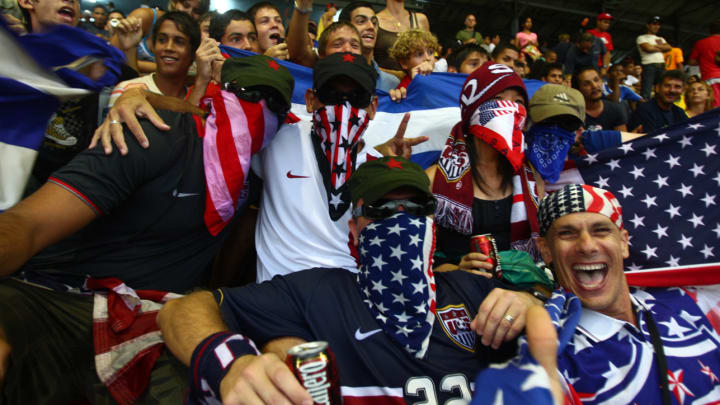
HAVANA, Cuba – The U.S. national soccer team arrived here yesterday from Miami for its first-ever World Cup qualifier against Cuba, but they weren’t the only Americans who found their way to Havana. On Thursday night I met up in the Plaza Vieja with five hardcore U.S. soccer fans who defied the U.S. government’s ban on unlicensed travel to Cuba and got into the country by flying separately through a third country.
I won’t be naming them here for obvious reasons, so I’ll call them the Cuba Cinco: four men and one woman ranging in ages from 28 to 38 and hailing from California (two), New York (two) and Colorado.
“It was pretty much a no-brainer,” said one who travels to every U.S. road qualifier. “The U.S. is playing Cuba and we follow the U.S. team. Then there’s the historical significance of the game. For people who are really fans you can’t miss it. The team’s playing here, embargo be damned. We’re not going to make a political statement. We’re just going to watch the game and take in a new culture.”
“It’s kind of a convergence of different things,” said another. “It’s a World Cup qualifier and it’s being played in Cuba. How often is that going to happen? I always said if it ever happens I’m going to be here whatever my financial circumstances. I can’t really afford this trip right now. I’ve got two little kids at home. But it’s the U.S.-vs.-Cuba in Cuba. There’s not many trips where you can say it’s a once-in-a-lifetime thing. So to me it just has to be done.”
• SI VAULT: Goal Embargo–U.S. ekes out World Cup qualifying win in Cuba
The Cuba Cinco has already arranged to rent a snazzy 1950’s-era U.S. convertible to take them to Saturday’s game, and their plan is to wear “Fidel-style caps,” as one of them put it, with U.S. flag bandannas obscuring their faces bandito-style. They also brought several U.S. scarves and flags to take to the game.
They’re part of a growing subculture of U.S. soccer fans who will go to extreme lengths to follow their team--like sneaking into Cuba. This group of five alone had traveled to see the U.S. play in Mexico, Honduras, Costa Rica, South Korea, Barbados, Germany, Switzerland, Venezuela, England and other countries. (Two of them even went to Barcelona for a game that was supposed to take place against Catalonia but was canceled.) Like the players, they use the term “caps” to describe the number of U.S. games they’ve attended.
Mailbag: After Bradley, who's the next American coach to make it big overseas?
“It’s kind of like a secret club,” said one, taking a swig of a Cuban microbrew that came from a majestic five-liter, four-foot-high tube at our table. “You meet these people all around the world, but you never meet them on U.S. soil. One minute you’ll meet someone in Costa Rica and then you’ll hang out in some crazy bar in Guatemala City and the next minute you’re in Korea or wherever it takes you. I love travel and I love soccer, and this is like the perfect fusion. We need a World Cup in Mongolia or something.”
The Cuba Cinco says they’re aware of the risks that come with traveling to Cuba. According to the U.S. Department of the Treasury, criminal penalties for violating U.S. sanctions against spending money in Cuba range up to 10 years in prison and $250,000 in individual fines. Yet it’s hard to imagine a Stars-and-Stripes-waving U.S. fan would face such harsh punishments.
GALLERY: Scenes from USMNT's 2008 Havana trip
Scenes from Havana: USA's 2008 World Cup qualifier in Cuba
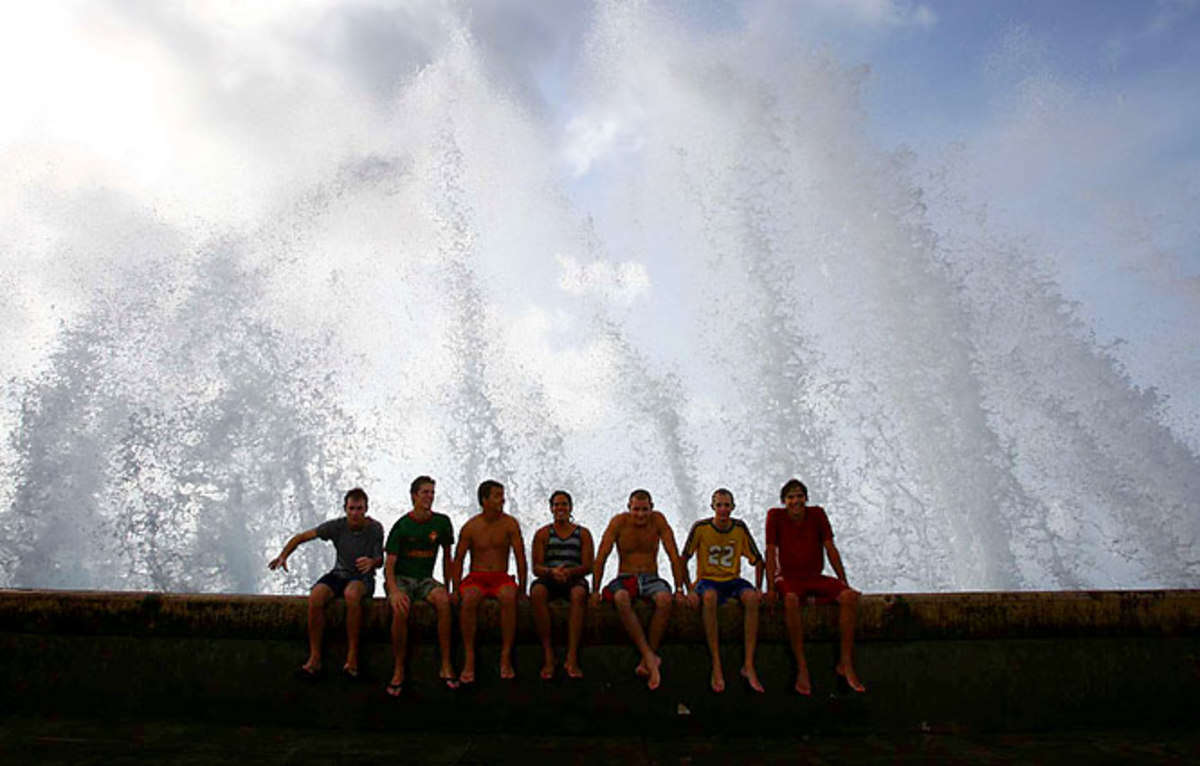
The Malecon is Havana's long oceanfront avenue where Habaneros pass the time on lazy weekends and weekday evenings. This group of seven college students spent the day getting soaked by the bracing salt-water waves crashing into the seawall. "When is the soccer game?" one of them asked. Saturday: 8 p.m. "I think we'll go."
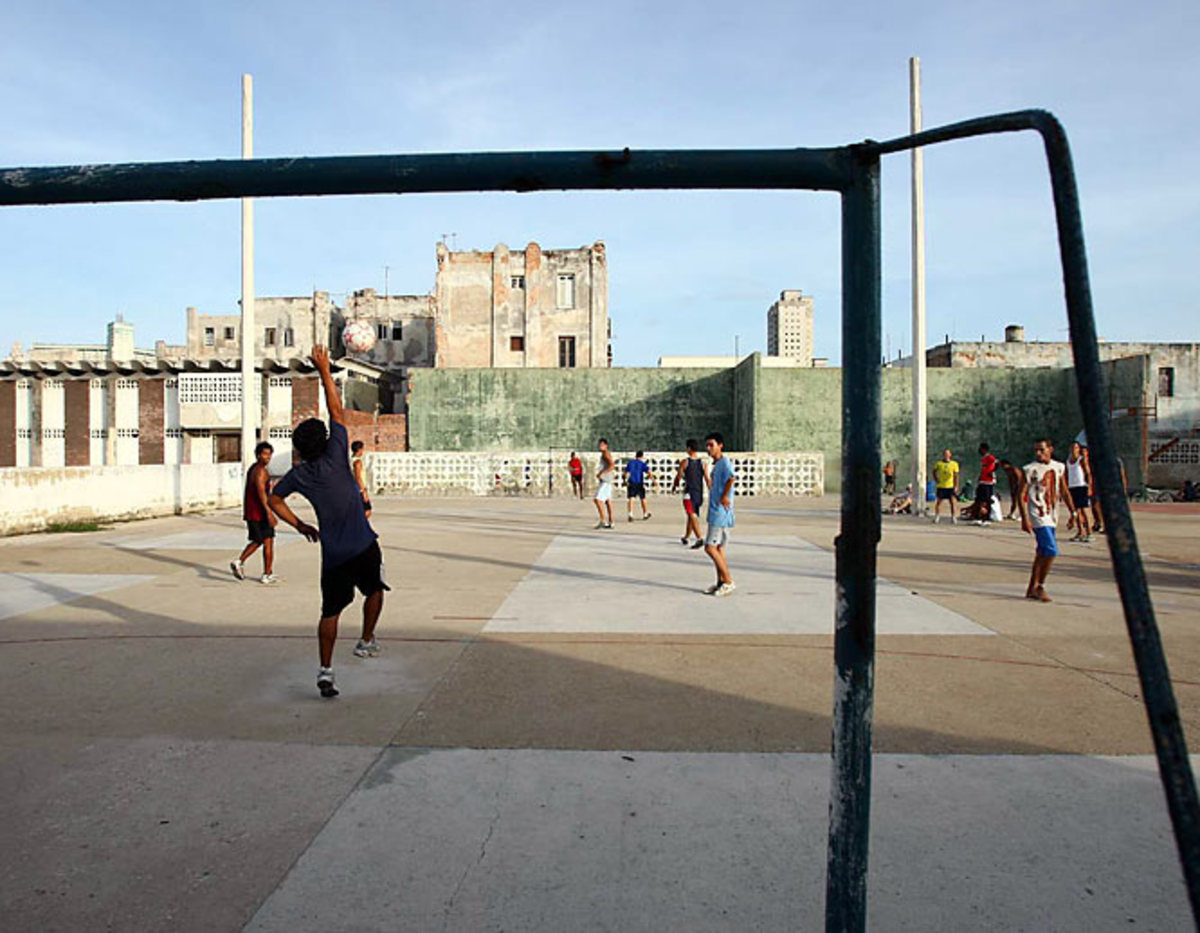
Near the corner of the Malecon and Avenida G is a concrete jungle where you can find games of pickup soccer, basketball and even volleyball taking place on weekday afternoons. Soccer may only be the fourth- or fifth-most popular sport in Cuba, but its stature is slowly growing. Some of these guys had game, too.
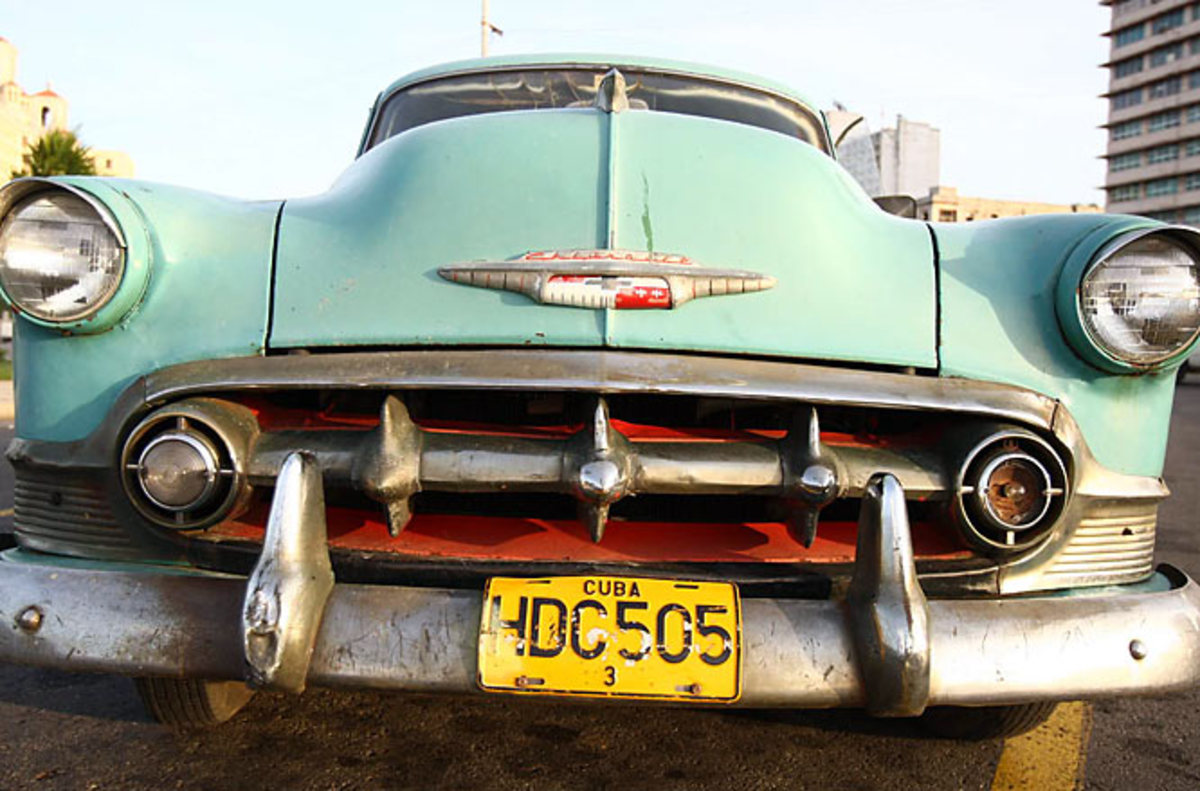
Pre-Revolution cars from the U.S. dominate the streets of Havana, some in better condition than others.
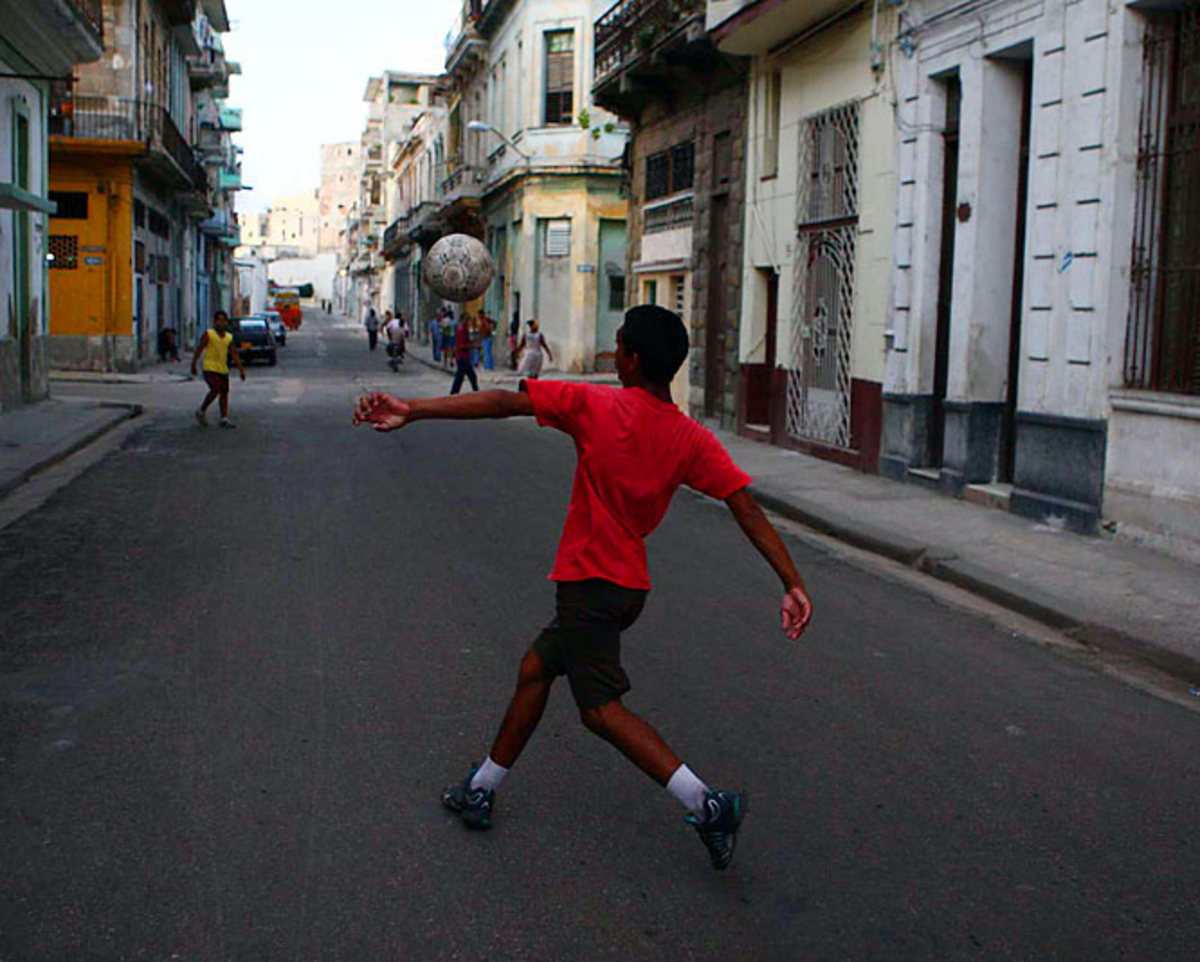
Toward sunset we found some street-soccer scenes in Centro Habana, a shabby-but-vibrant part of town with narrow streets, crumbling buildings and locals who will talk your ear off.
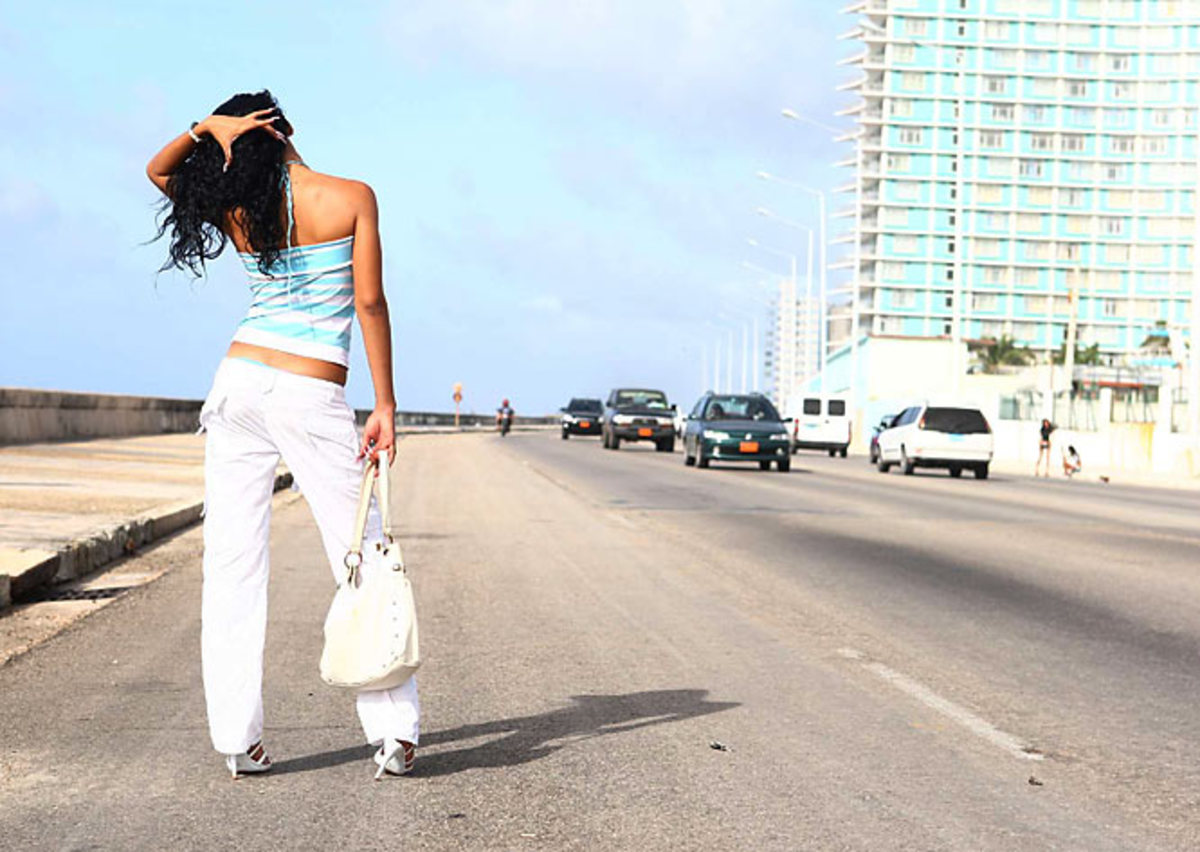
Just a block down from where the U.S. soccer team will be staying on the Malecon is a scene that might distract the lads from the task at hand.
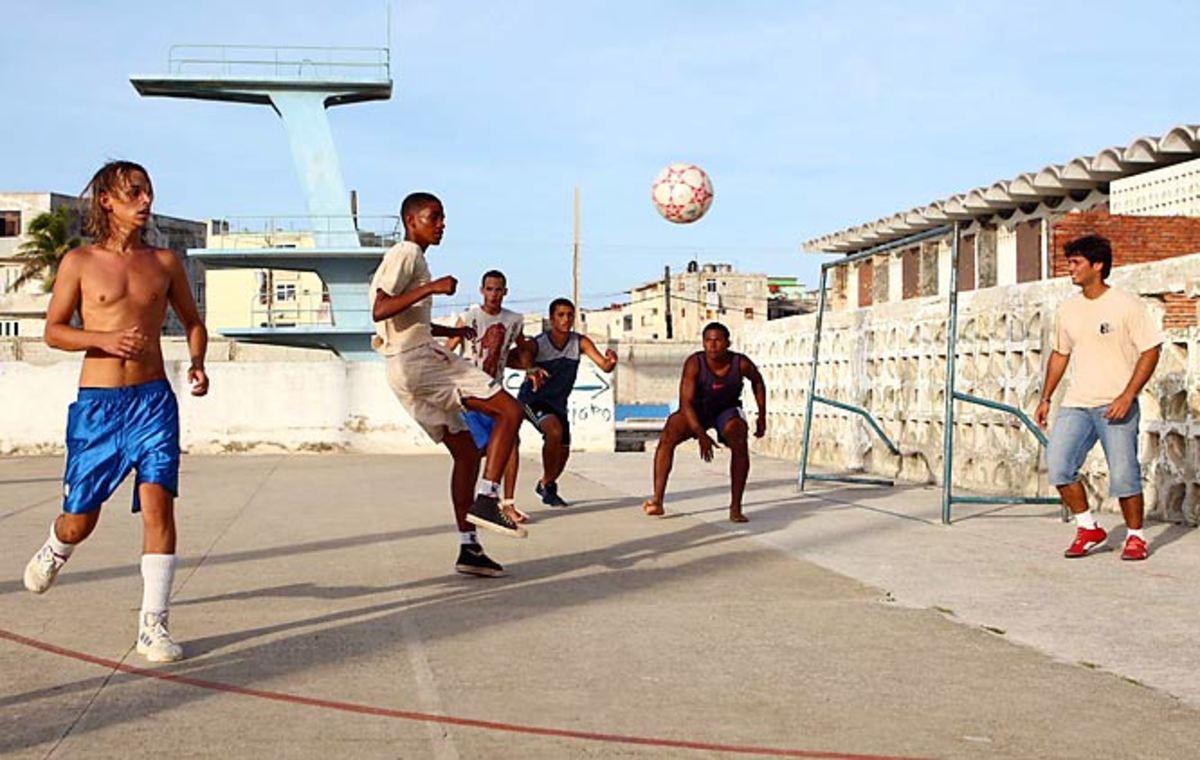
We never did figure out why the pickup soccer games were taking place on concrete instead of in the grassy park just a few blocks away, but these guys seemed satisfied with a harder field that more closely resembles that of Real Salt Lake's Rice-Eccles Stadium.
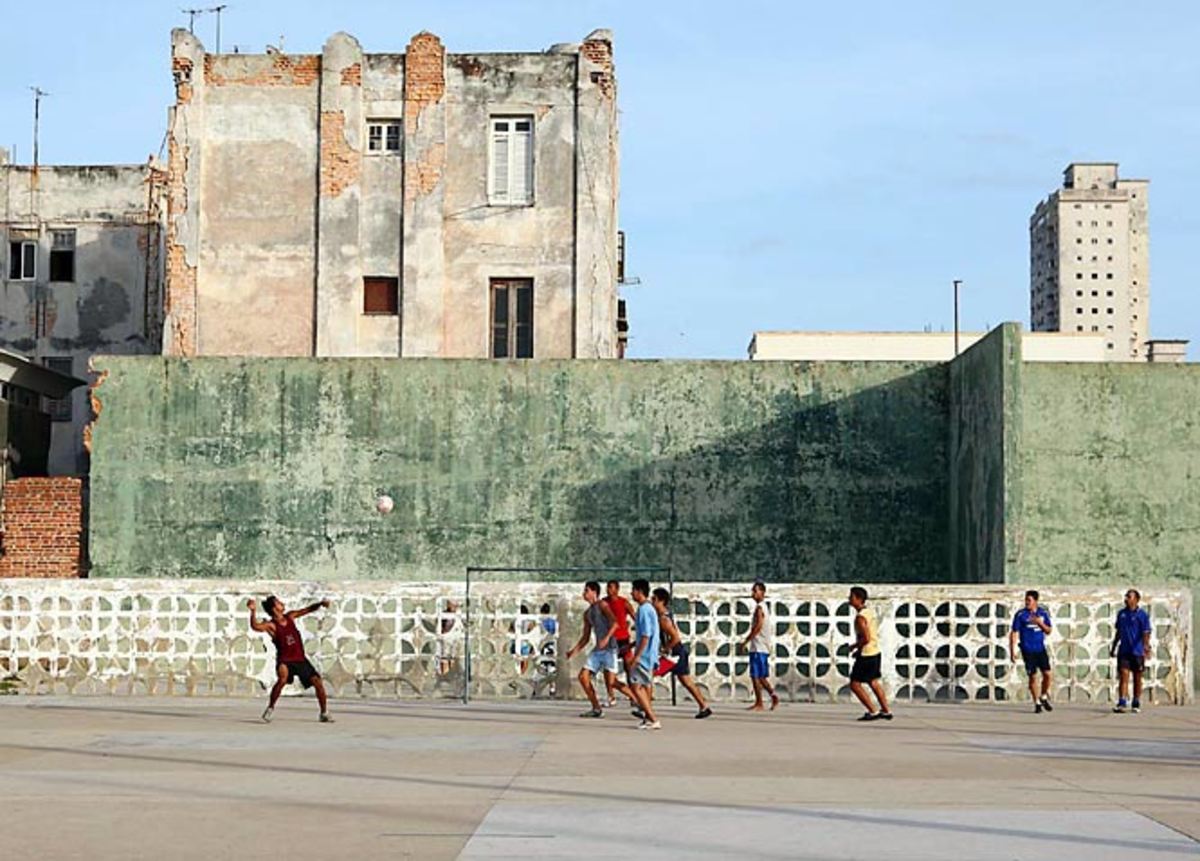
The best player on the concrete was an Asian guy in a blue North Carolina Tar Heels T-shirt. (Who knows? Maybe Anson Dorrance is trying to open up a new recruiting territory.) Note the building conditions: the reason Habaneros walk down the middle of the street instead of on the sidewalk, we're told, is that dozens of buildings fall down in Havana each year.
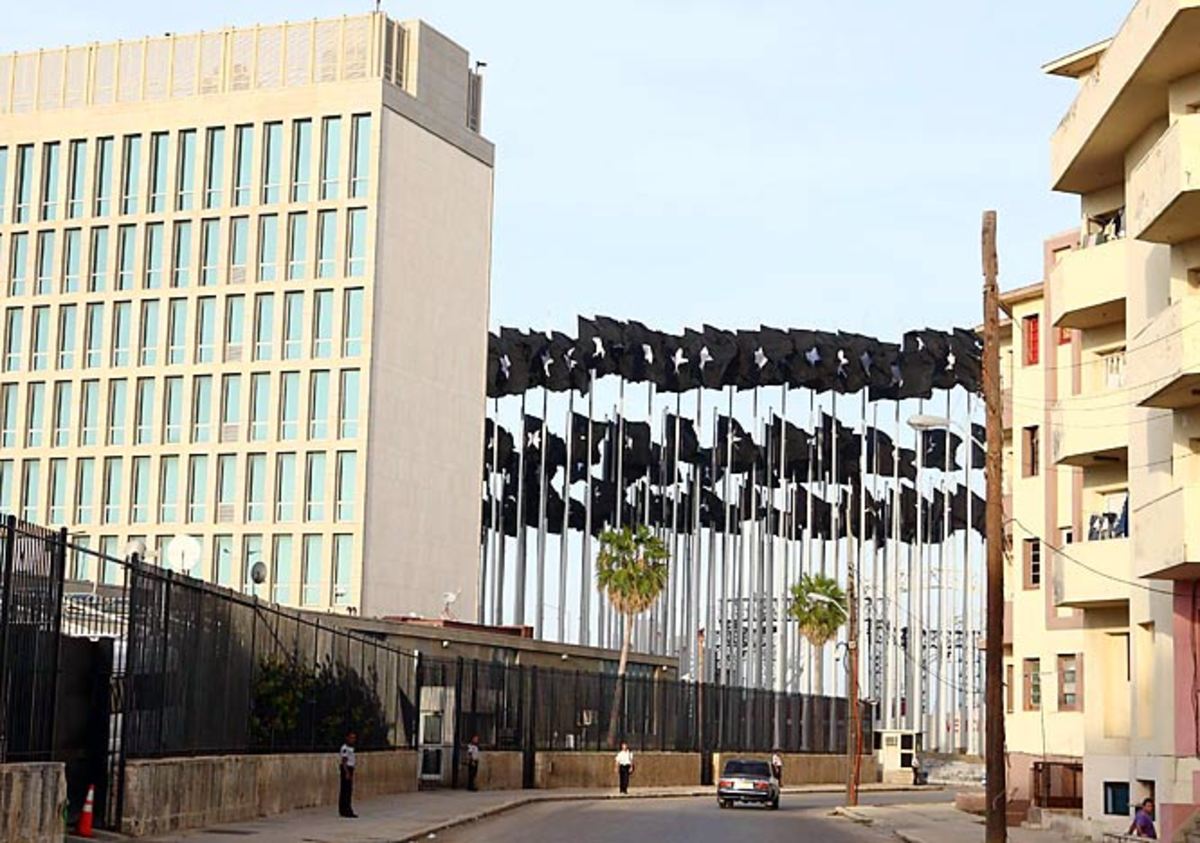
The U.S. Interests Section building (left), operated by the Swiss, is the closest thing in Havana to a U.S. embassy. When the U.S. started posting electronic sign-board messages to counter Castro's message a few years ago, the Cuban government responded by erecting 138 flags in front of the building to block the view of the sign-board messages. Immature on both sides? Yes. The black flags are a little creepy in person, too.
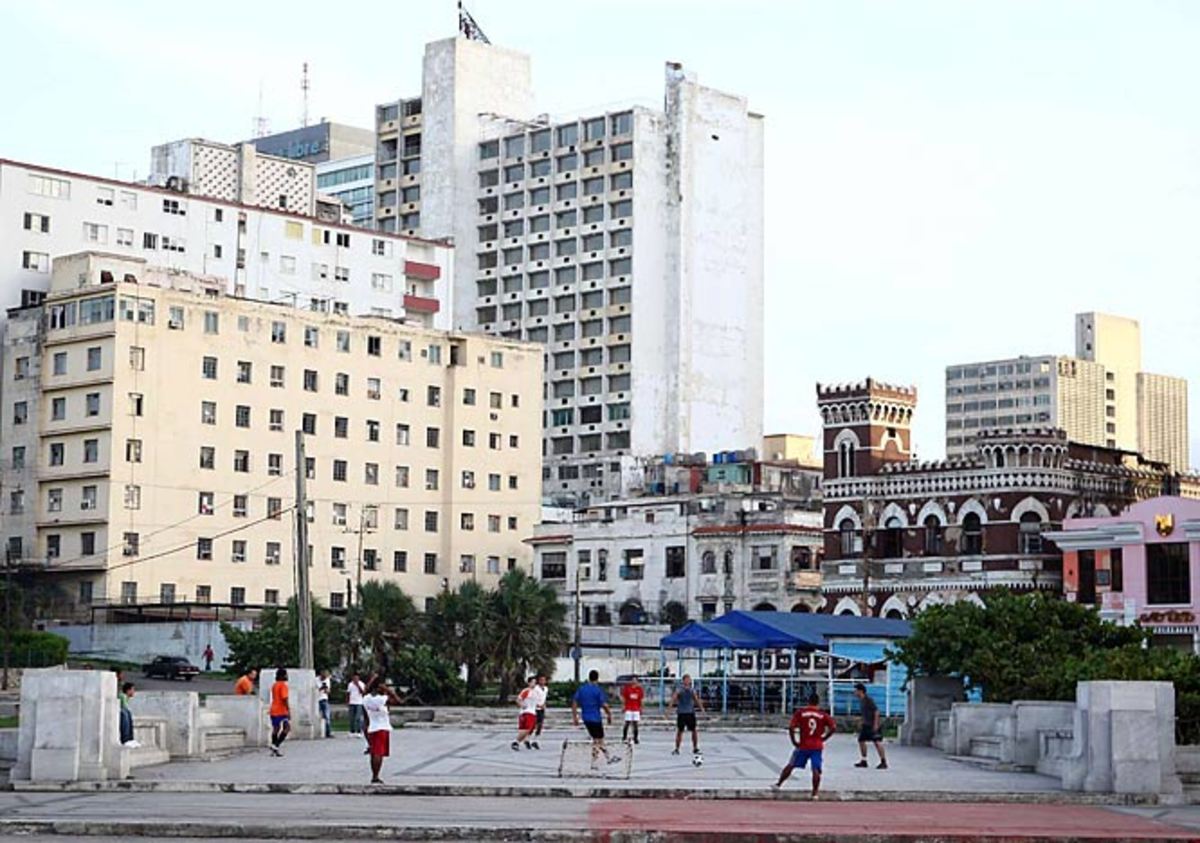
It wasn't hard to find a pickup soccer game in Havana. These guys had the most original makeshift goals we saw all day. In an unscientific poll using the number of knockoff jerseys we saw, FC Barcelona is the most popular soccer team in Cuba. (Not once did we see a Cuban national team jersey, which Maykel Galindo says aren't available for purchase here.)
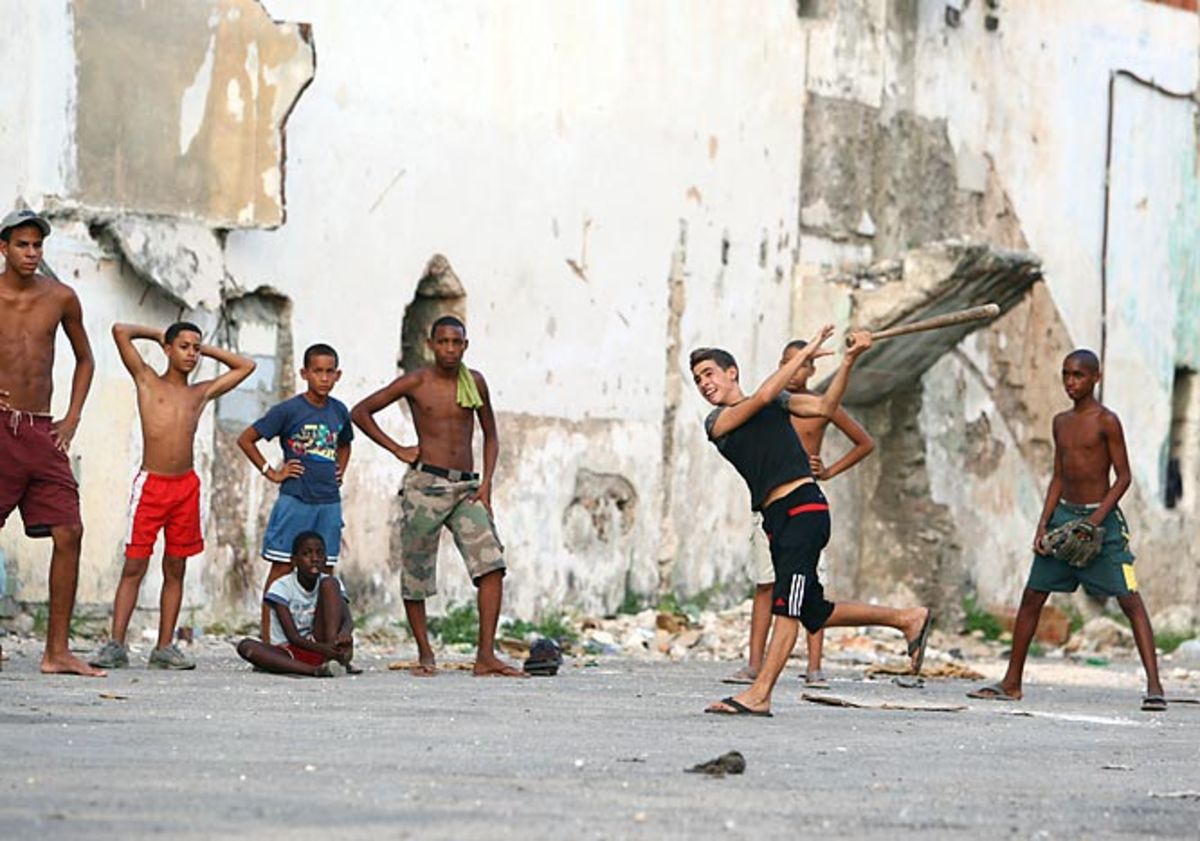
A street baseball game in Old Havana.
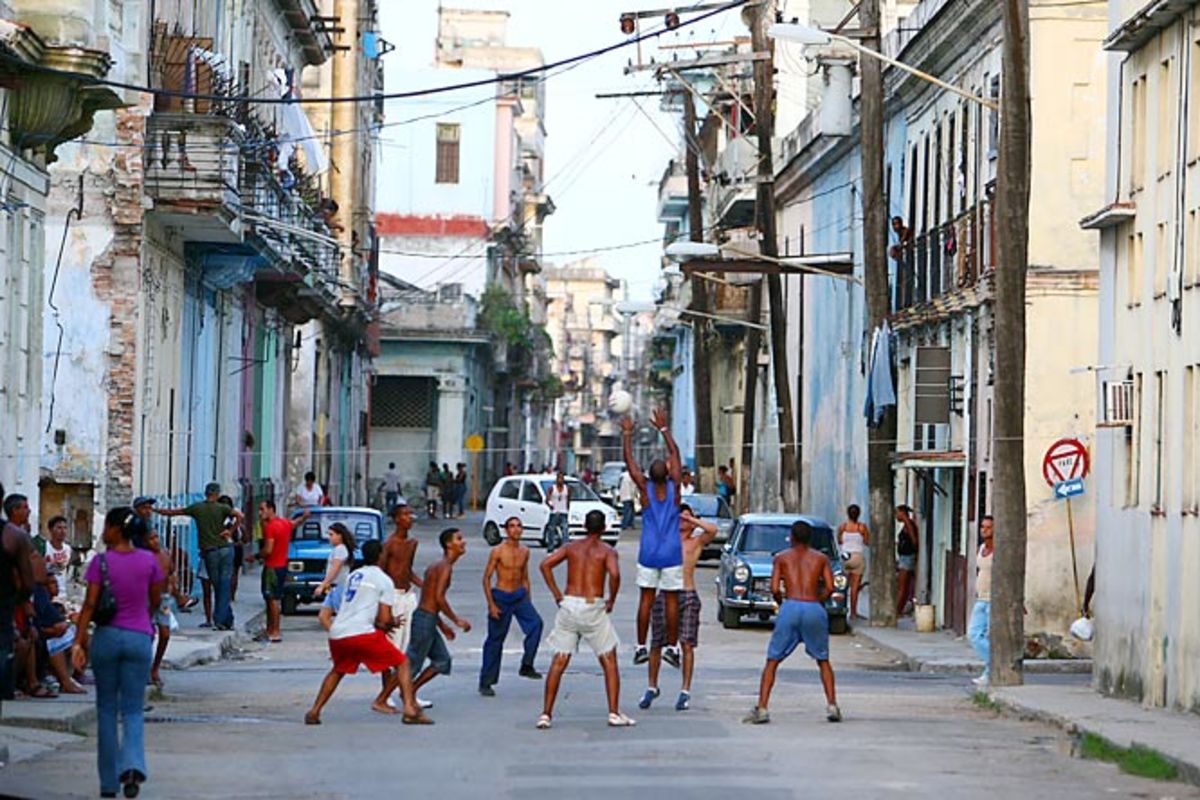
Baseball, soccer and basketball aren't the only sports you'll find being played on the streets of Havana. There are also volleyball games like this one.
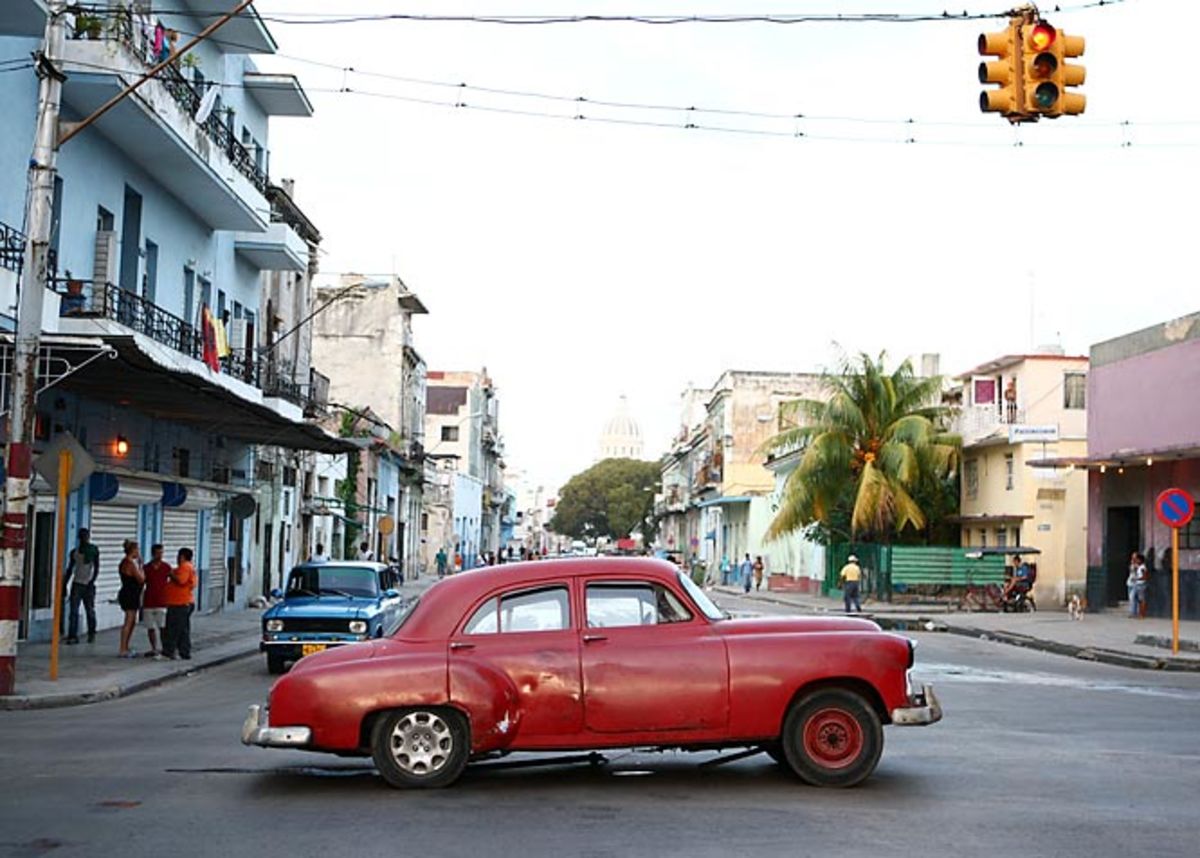
An old hulk found a bad spot to break down–in the middle of a Havana intersection.
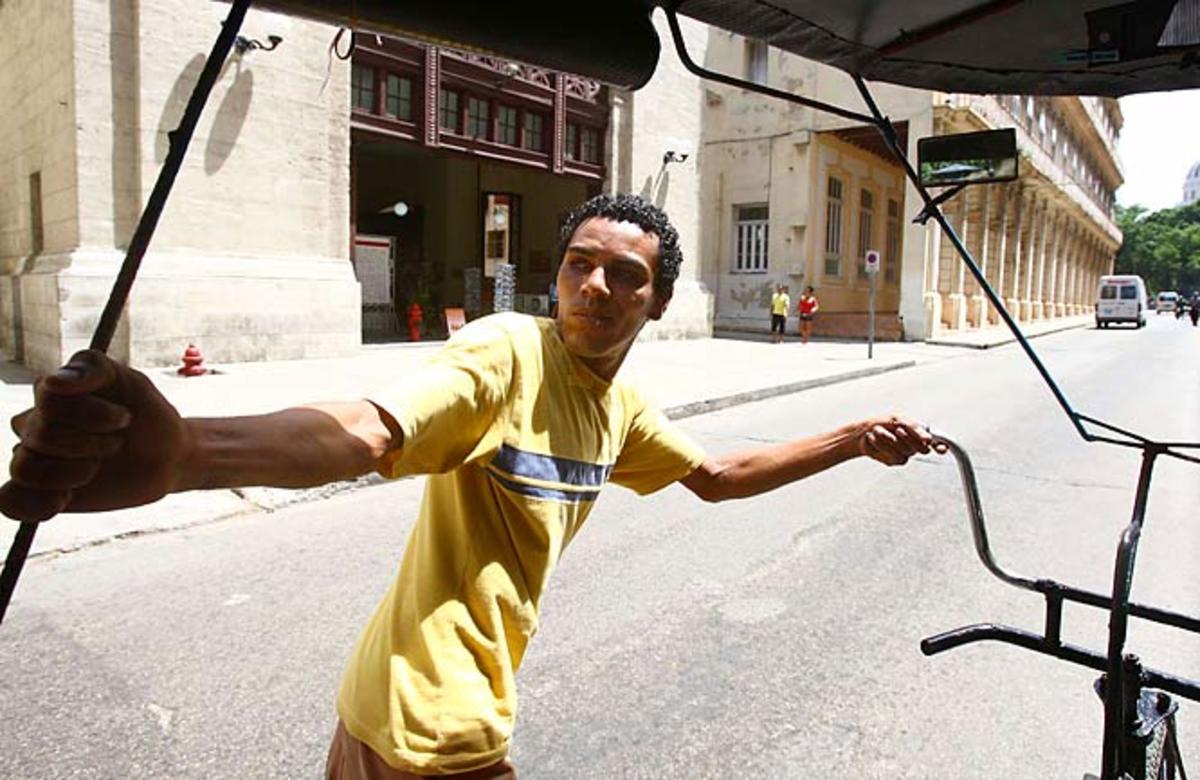
Our pedicab driver started getting nervous and mumbling about "la policia" before backing us onto a street without cops. We kept asking the guy why he was anxious about the police, but he never explained.
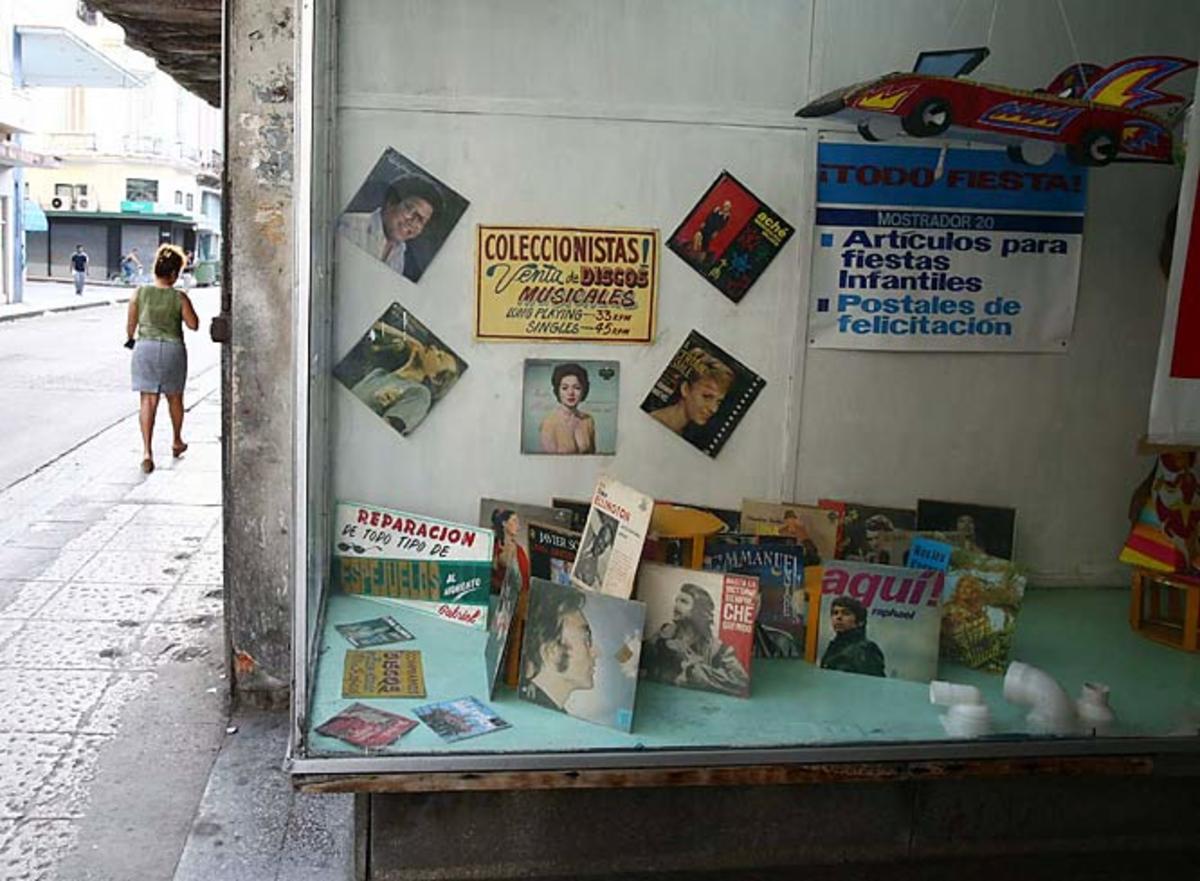
Old John Lennon albums are available alongside the songs of Che Guevara at this store in Havana.
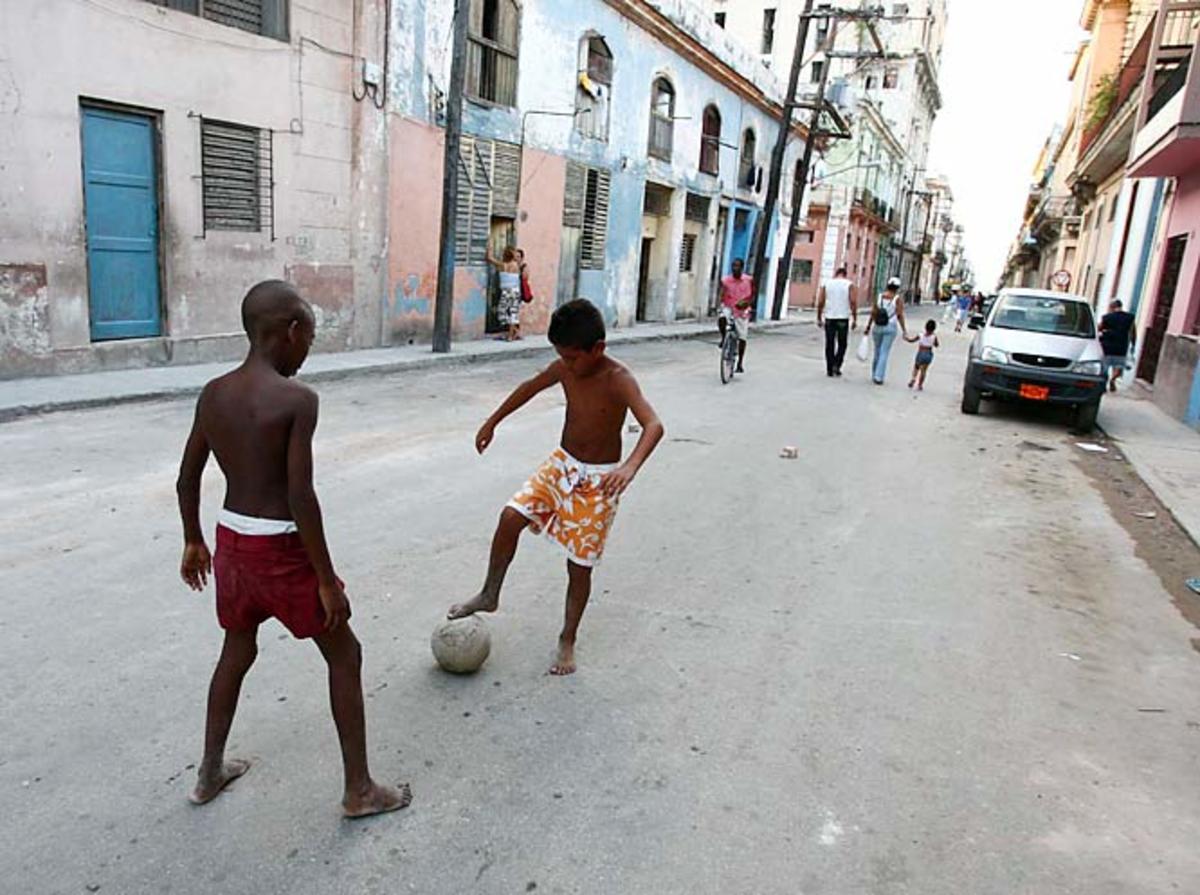
Two barefoot kids go one-on-one with a futbol.
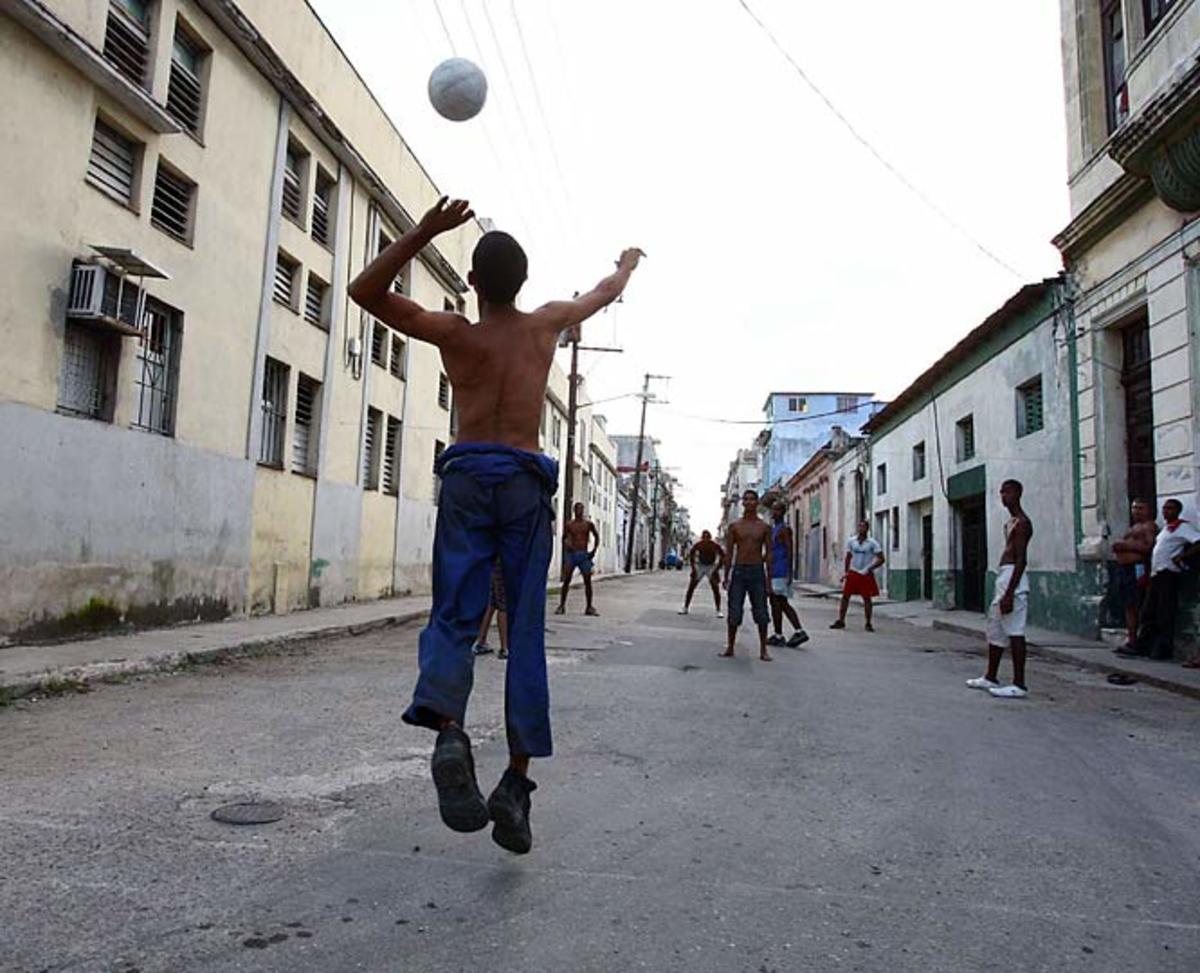
Trying out the southpaw jump-serve.
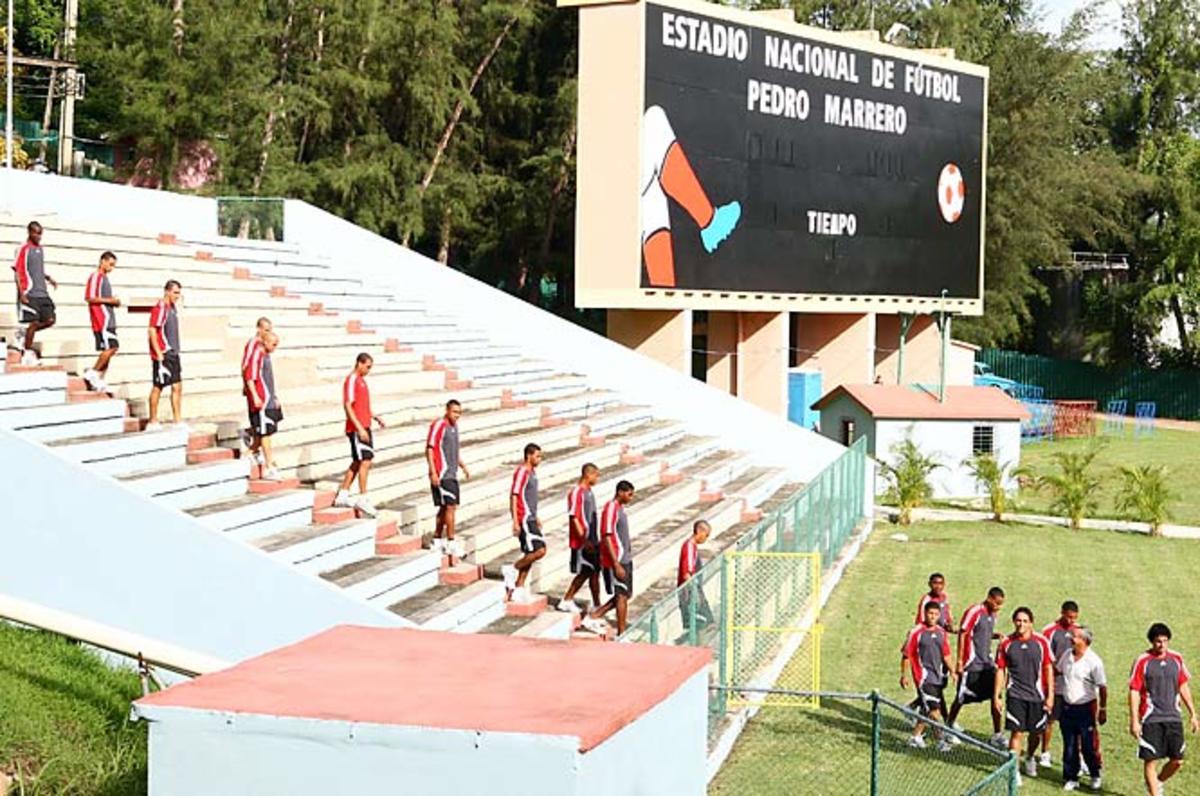
The Cuban national soccer team enters Estadio Pedro Marrero for their session with the international media on Wednesday.
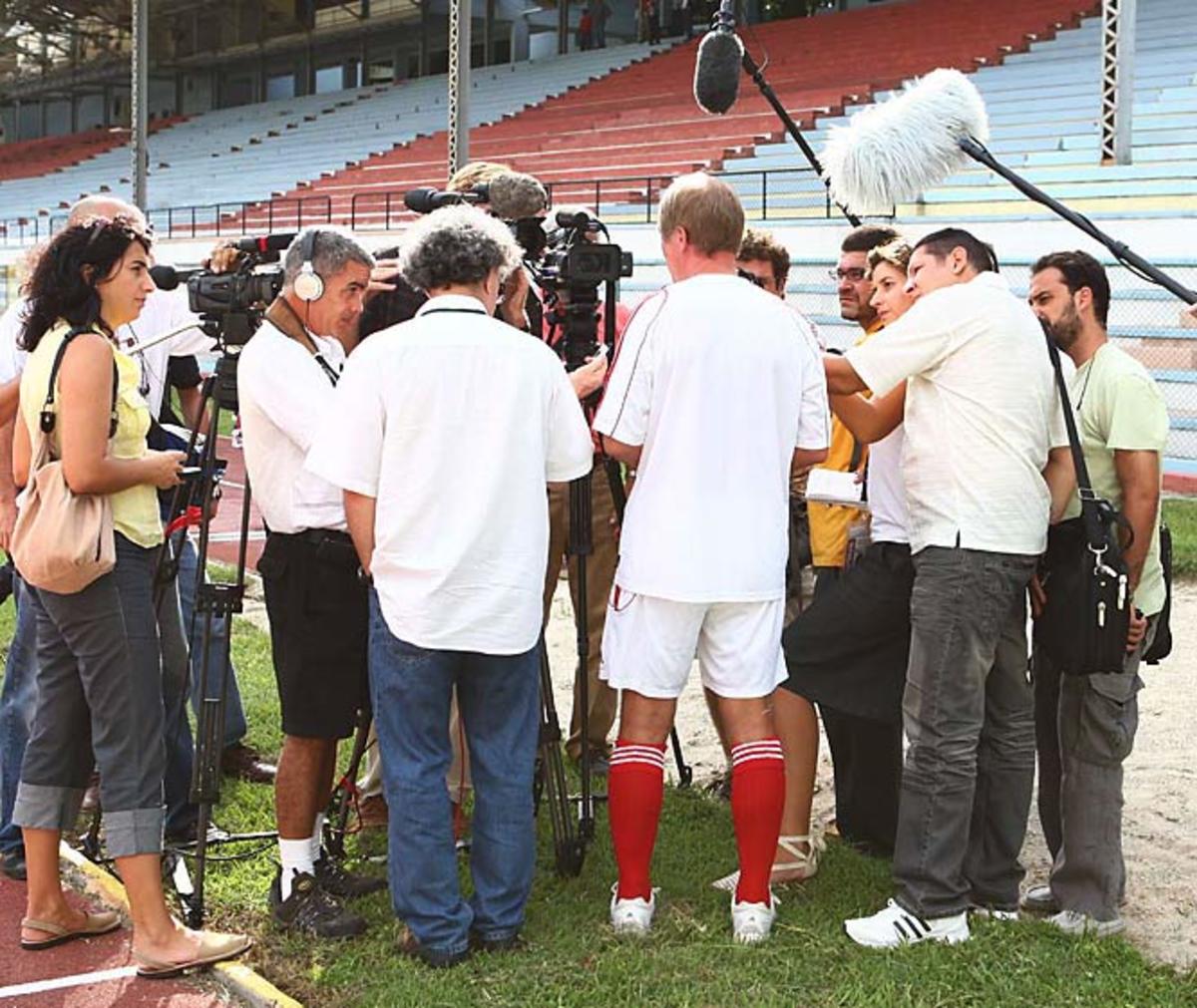
Cuba's German coach, Reinhold Fanz, meets with the media on Wednesday.
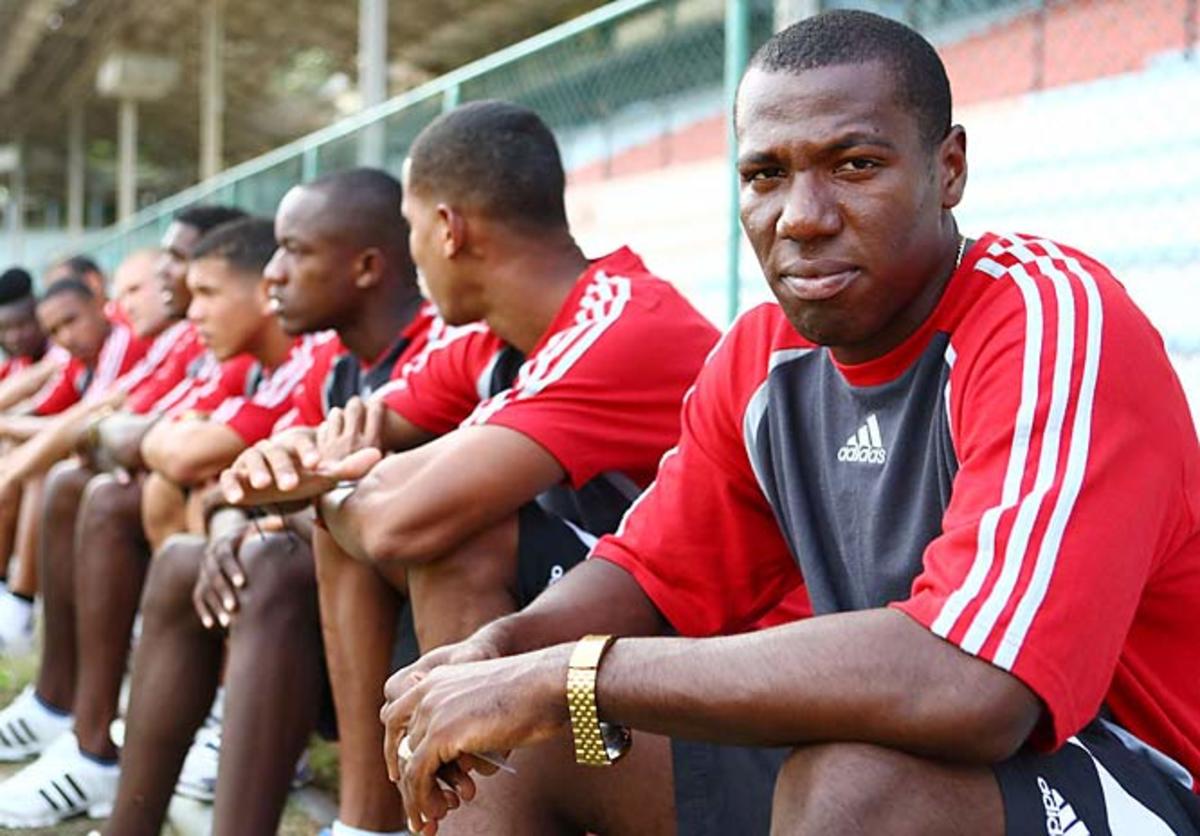
23-year-old Roberto Linares, the high-scoring forward on Cuba's national team, sat down with SI.com for an interview. Linares scored Cuba's goal in its 1-1 tie with the U.S. during the Olympic qualifying tournament last March. Seven of his teammates on that team ended up defecting to the U.S., but Linares stayed in Cuba.
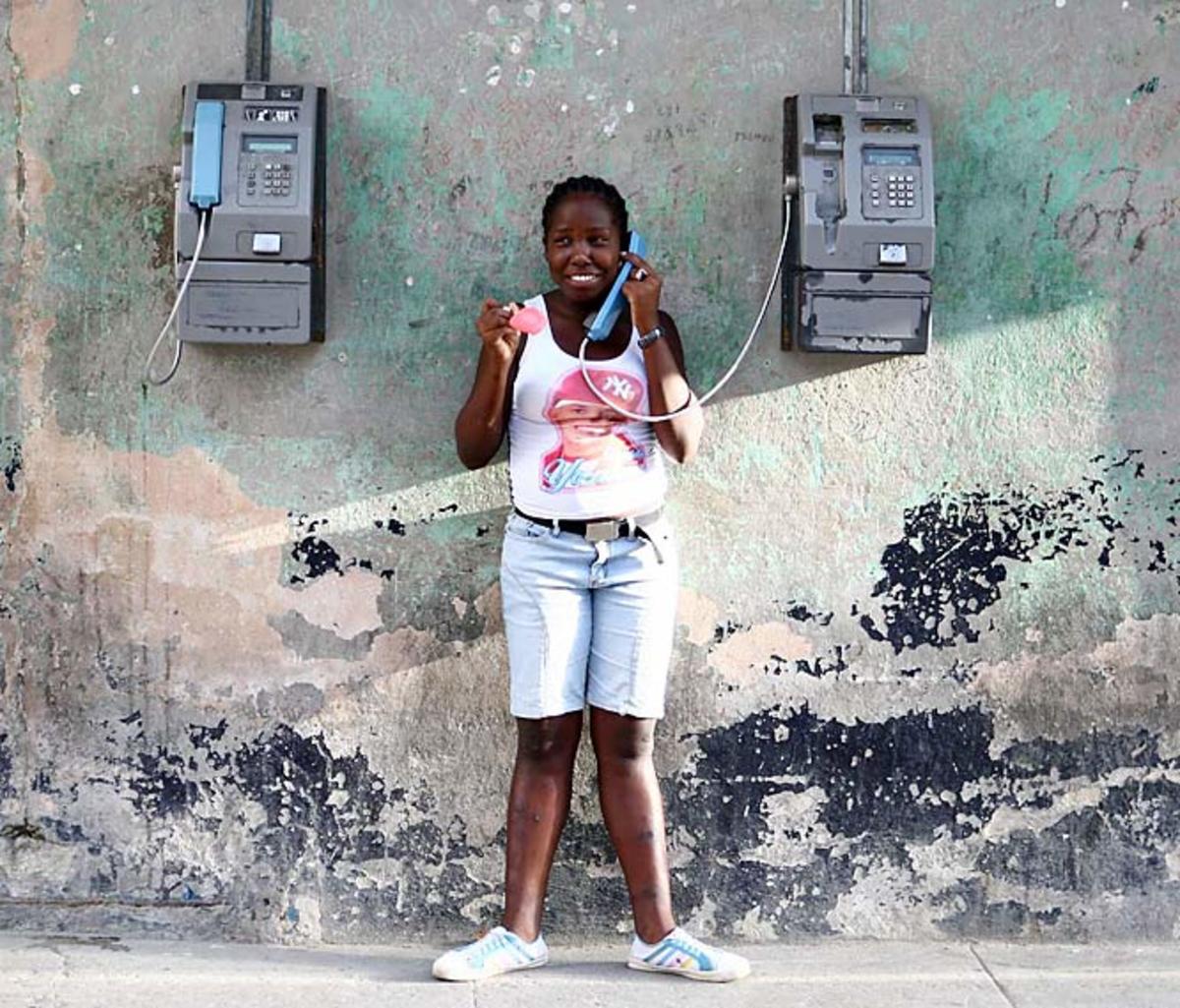
Lacking air-conditioning in most buildings, Habaneros take to the streets in the late afternoon and early evening in Old Havana.
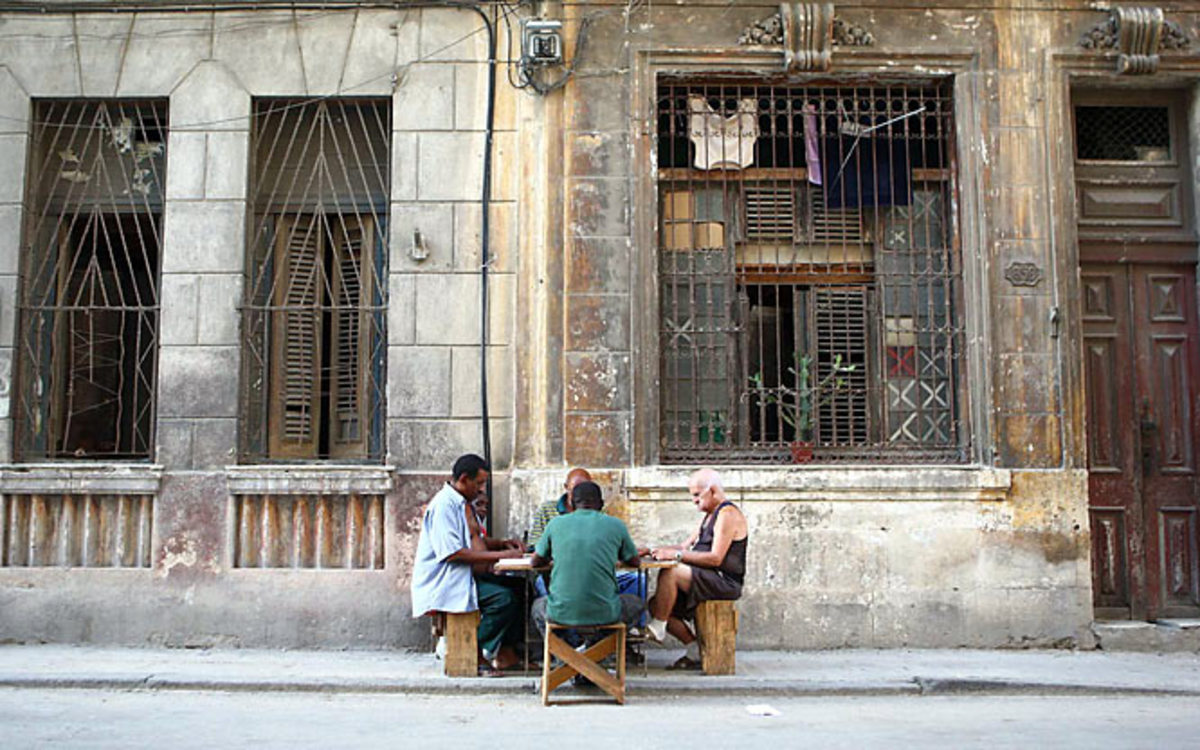
Games of dominoes are taking place everywhere in Old Havana.
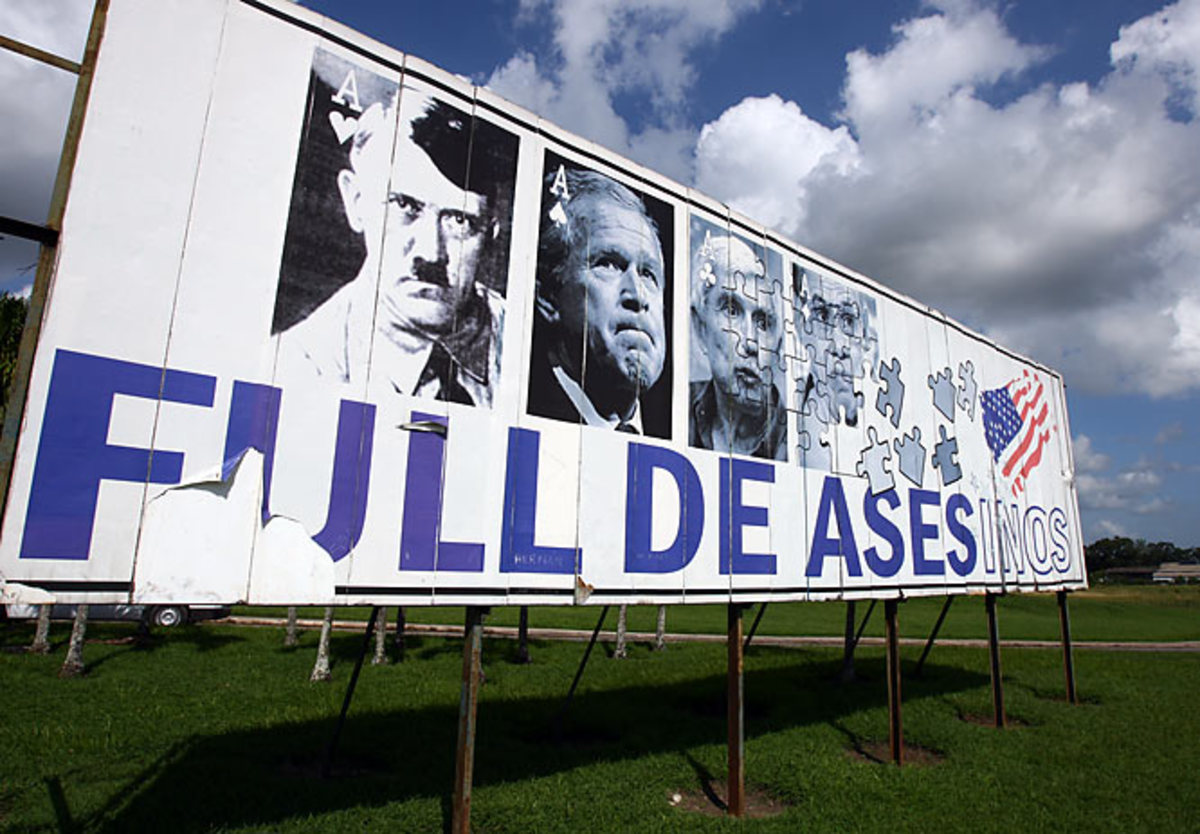
One of the first things the U.S. soccer team saw on the road leaving the Havana airport was a giant billboard featuring President George W. Bush next to Adolf Hitler, the late Cuban-exile leader Jorge Mas Canosa and Orlando Bosch. "Full De Asesinos" has a double meaning: "Ases" means "Aces" (note the playing card theme, an echo of the U.S.-produced playing cards showing ex-Iraqi leaders), while "Asesinos" means "Murderers."
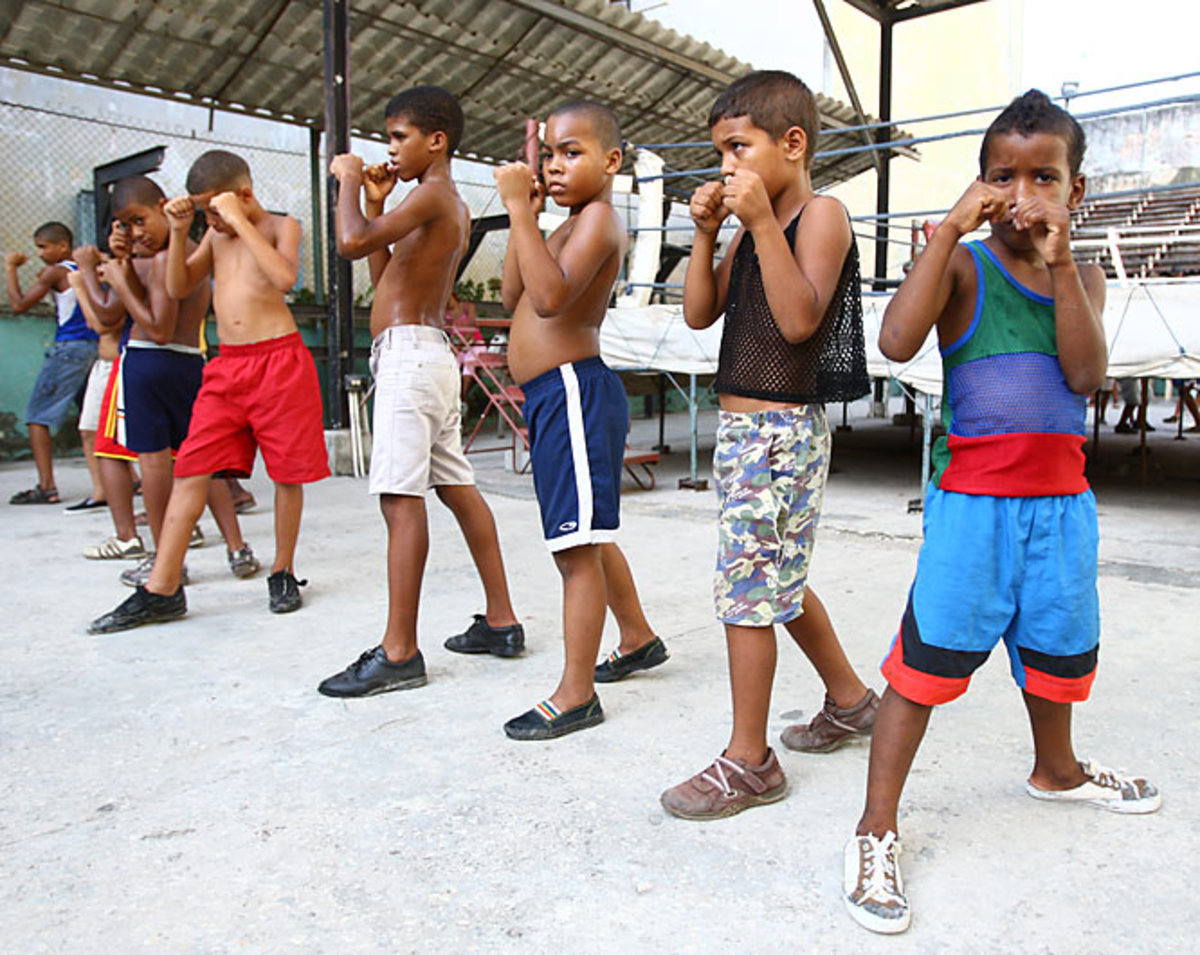
The Rafael Trejo Gymnasium is an open-air boxing gym in Old Havana near the train station that has produced some of Cuba's top–and future–boxers over the years.
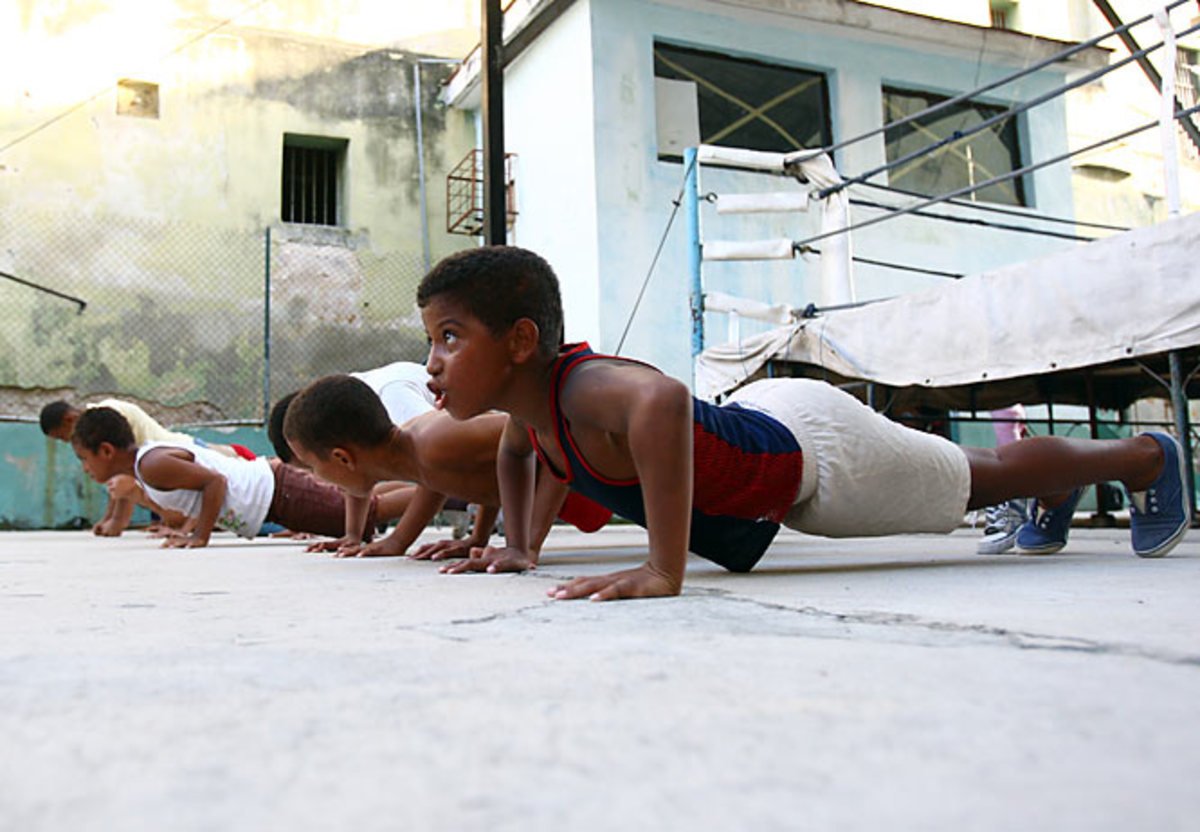
SI's Simon Bruty attended a training session at the Rafael Trejo Gymnasium with young boxers aged 7 to 14 led by instructor Hector Vinent, the light-welterweight gold medalist from the 1992 and '96 Olympic Games.
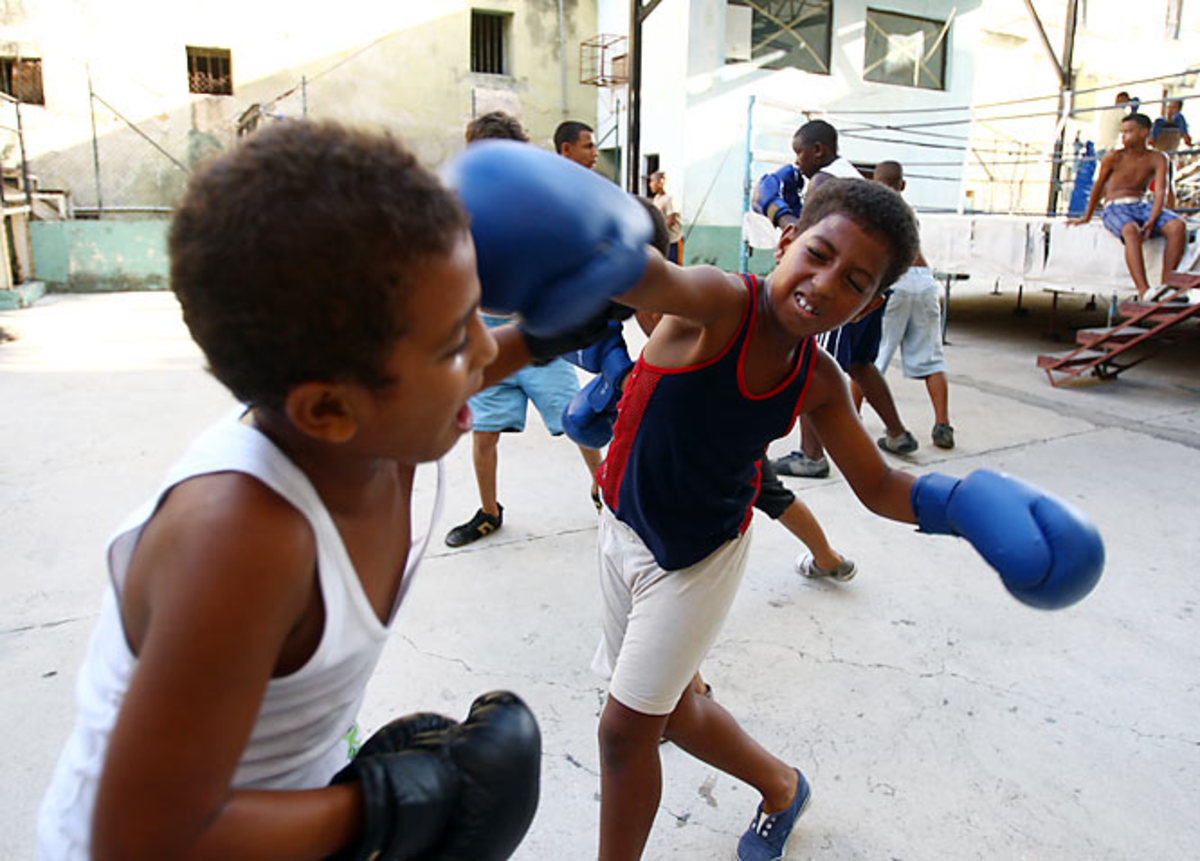
Youngsters exchange jabs at the Rafael Trejo Gymnasium in Old Havana.
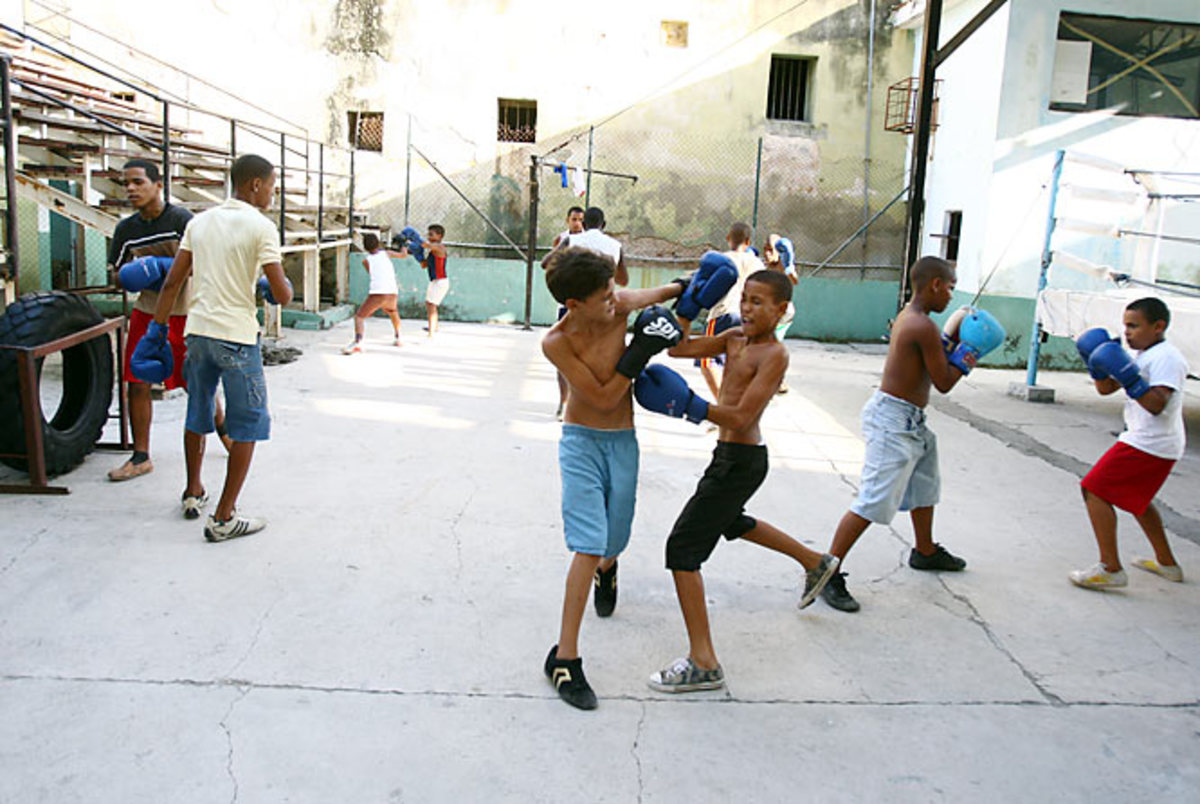
More sparring sessions at the Rafael Trejo Gymnasium in Old Havana.
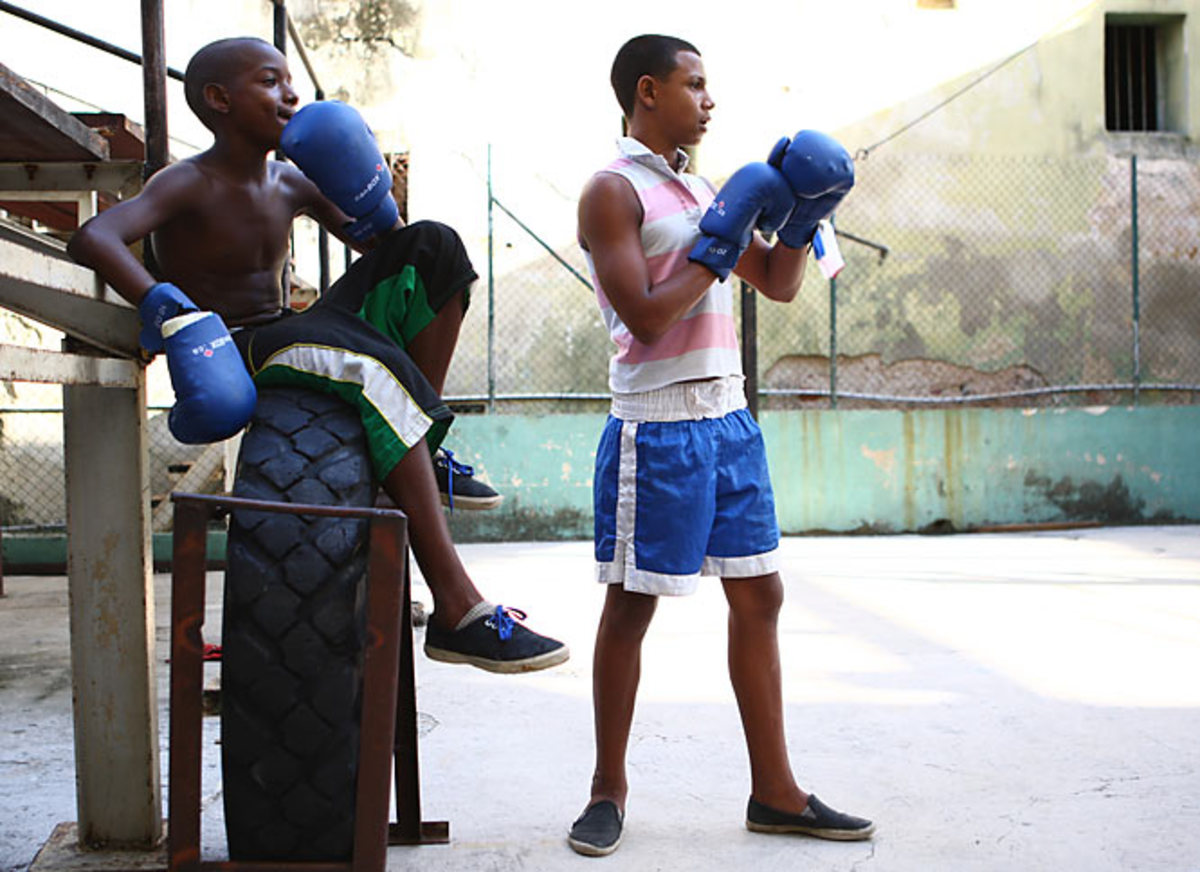
Young boxers wait for their turn at the Rafael Trejo Gymnasium.
“I’m fine with [the risks],” said one. “I don’t mind being the person that ends up asking for a hearing and then becoming the big constitutional civil rights case. Because I don’t think it’s constitutional for the U.S. to make it illegal for Americans to spend their money in Cuba.”
“If you think about it, too,” added another, “we’re here to support the U.S. national team in another country. If they were going to make an example of us, what kind of example would that set?”
“I will go anywhere our team plays to support our team, which is thereby supporting our country,” said another. “I’m not doing this to hold the middle finger up to the country or the government or anything like that. It’s just that I don’t really care about any arbitrary law that’s going to restrict my ability to travel. We’re supposed to be free. I consider that to extend to the right to travel.”
Klinsmann calls on young GKs, veteran core, Pulisic, Morris for USA's October friendlies
All five admit they were nervous coming into Cuba and will be again when they return to the States. But each one said the effort and the risks are worth it. “We all know that [the U.S. players] are coming to a stadium where their fans are outnumbered 10,000 to 1,” one said. “I want to be that one guy there supporting them–and show that I’m a fan and I’m willing to spend my own nickel and come out here to see you play.”
“Do the U.S. players know they have fans coming out to support them in Cuba?” one member of the Cuba Cinco finally asked.
I told them I didn’t think so.
“Well, they’ll have at least five.”
 Add us as a preferred source on Google
A leading soccer journalist and best-selling author, Grant Wahl has been with SI since 1996 and has penned more than three dozen cover stories.