%20%20--%3E%0A%3Csvg%20version%3D%221.1%22%20id%3D%22Layer_1%22%20xmlns%3D%22http%3A%2F%2Fwww.w3.org%2F2000%2Fsvg%22%20xmlns%3Axlink%3D%22http%3A%2F%2Fwww.w3.org%2F1999%2Fxlink%22%20x%3D%220px%22%20y%3D%220px%22%0A%09%20width%3D%2239px%22%20height%3D%2240px%22%20viewBox%3D%220%200%2039%2040%22%20enable-background%3D%22new%200%200%2039%2040%22%20xml%3Aspace%3D%22preserve%22%3E%0A%3Cpath%20fill%3D%22%23FFFFFF%22%20d%3D%22M38.5%2C7H28.2v26h10.3V7z%22%2F%3E%0A%3Cpath%20fill-rule%3D%22evenodd%22%20clip-rule%3D%22evenodd%22%20fill%3D%22%23FFFFFF%22%20d%3D%22M26.1%2C25.5c0%2C5.8-4.1%2C7.5-12.9%2C7.5C3.9%2C33%2C0%2C31.2%2C0%2C25.2v-1.1h11.6%0A%09v2.4c0%2C0.7%2C0.1%2C1.4%2C1.2%2C1.4c1%2C0%2C1.2-0.4%2C1.2-1.3v-0.9c0-1.6-0.9-1.6-3.5-2.2C2.2%2C21.7%2C0%2C19.7%2C0%2C15.3v-0.9C0%2C9.3%2C5.5%2C7%2C12.9%2C7%0A%09c10.2%2C0%2C12.8%2C2.6%2C12.8%2C7.4v1.8h-11v-2.9c0-0.6-0.4-1.1-1.2-1.1c-0.6%2C0-1.2%2C0.4-1.2%2C1.1v0.9c0%2C1.5%2C0.9%2C2%2C3.3%2C2.5%0A%09c8%2C1.6%2C10.5%2C3.3%2C10.5%2C7.5V25.5z%22%2F%3E%0A%3C%2Fsvg%3E%0A)
Alexis Ohanian’s Interest in Supporting Women’s Sports Lies in the Bottom Line
Alexis Ohanian would be the first to tell you he’s no expert when it comes to women’s soccer or golf or track and field. Though he played nose tackle in high school and religiously watched NFL games with his father, he didn’t hold onto the childhood dream of becoming a professional athlete for long. Sports were important to him, but so was building his own company—Reddit, which he founded in 2005 at the age of 22.
Still, sports have never been far from Ohanian’s mind. But it wasn’t the influence of his megastar wife Serena Williams—with whom he has two daughters, 8-year-old Olympia and 2 1/2-year old Adira—or some notion of reliving his high school glory days that led him back. Like any entrepreneur, his goal is building billion-dollar companies. And sports have become the next arena for Ohanian to do exactly that.
After he founded the NWSL’s Angel City FC—which was sold to Disney CEO Bob Iger and his wife, Willow Bay, for a $250 million valuation four years later in 2024—Ohanian has ramped up his presence in sports. He owns Los Angeles Golf Club, the first team to join the Tiger Woods and Rory McIlroy–backed golf simulator league TGL. He launched Athlos, an all-women’s track event.
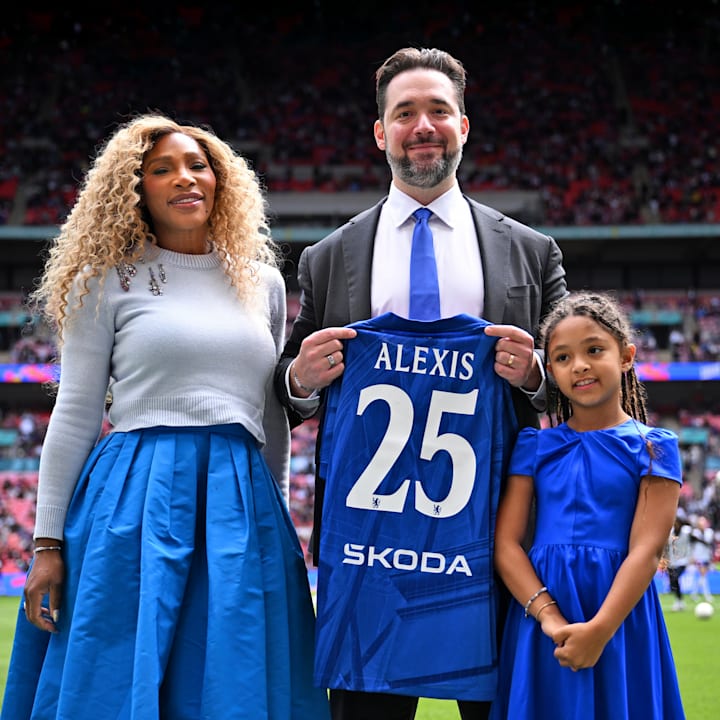
Ohanian then made a $26.5 million investment into Chelsea women’s soccer last May, procuring a 10% stake in the club. In October, he announced plans to add another L.A.-based franchise in the newly expanded League One Volleyball.
As he continues to grow his footprint in the sports world, Sports Illustrated sat down with Ohanian for a conversation about his investments, the state of women’s sports and more.

This interview has been edited for brevity and clarity.
Sports Illustrated: What is it about the emerging league space in sports that made you want to get involved?
Alexis Ohanian: It started purely as a business opportunity. And I rage-tweeted in March of 2019 about how undervalued women’s professional sports in particular was. It was just math. Basically I just started a framework [with Angel City] that I’ve been very fortunate to continue with the woman who led all of the marketing for Angel City, Kayla Green. We started L.A. Golf Club together for much the same reason. Here is this business opportunity where the market is currently undervaluing either these athletes, this sport or maybe a combination of both.
SI: Do you feel as though there’s a space for these sports and formats to compete with the giants of the industry when it comes to media deals?
AO: We’re all still limited to 24 hours in a day. So at some point we will reach saturation. However, as an internet guy, my mindset is entirely built around how do you capture attention in the hardest environment. No disrespect to television, but it is in many ways a relic of a previous world, but not the world that this generation of sports fans grew up in. The generation of sports fan I’m really interested in is the one who is digital-native, the one who is consuming sports clip by clip, highlight by highlight.
I grew up in a very singular household. The NFL was the only sport that mattered. So in a way, I can look at every one of these other sports from first principles, simply because I am an outsider to them. In emerging sports, we aren’t going to get those massive media deals on Day 1. You’ve got to earn it. And I believe that if you can earn that fan’s attention where you have to fight against every cat video, every AI slop video, every random Reddit post, you’re competing on the freest market of ideas. If you can win there, I’m not worried.
SI: You’ve said that women’s sports were viewed as charity. What do you mean by that and why did that bother you so much?
AO: I can speak to one experience I had showing up to my first board of governors’ meeting at the NWSL. And unfortunately what I learned very quickly was that even the very best owners saw this as charity because they said ‘I have a daughter or a granddaughter who likes soccer and that’s the only reason I have this thing.’ I understand people have different business ambitions, but for me, my ambitions are to build billion-dollar businesses. If you’re not oriented that way, sell your team. Move along. It’s not for you.
What was so infuriating about it for me was it’s not like we don’t have an example sitting right in front of us showing how women’s sports can be just as big, if not bigger than their male counterpart. Now I happen to live with that reason, and yet so many men, so comfortable in positions of power to say that is jarring. The good news is that you’re seeing the whipsaw effect now. What I love about [America] is that when you win with capitalism, you drop the mic. For decades, people have said to support women’s sports for society, for feminism. But when you win with capitalism, you just drop the mic.
SI: What was Serena’s reaction when you first told her you wanted to invest in women’s sports?
AO: She did try to talk me out of it. She had lived through how broken a lot of the industry around women’s sports was and was very skeptical that it could change. I think one of the reasons I’ve had the career that I’ve had is because I look for experts in industries to try to talk me out of building and investing. It’s often the case that the folks who have the deepest insight into it are gonna be some of the most skeptical. So hearing an expert like Serena try to talk me out of it actually just emboldened me because it helped me understand exactly where the flaws were.
SI: She’s gotten into the sports investment world herself. Do the two of you talk about that together?
AO: It is incredibly church and state. I keep everything buttoned up. Every now and then she’ll ask me for management advice and business advice with her [venture capital] firm, but I learned early in the marriage that even though it's my job to give unsolicited advice to CEOs and founders, it’s not a great thing to give unsolicited advice to your wife. If she asks, I’m happy to.
SI: One of the big selling points of Athlos was the investment and the amount of prize money, which historically has not been the case for athletes in track. Where is that funding coming from?
AO: It’s totally self-funded. We said from the jump that our ambition was to build a league and I try to underpromise and overdeliver in public, but in private I’m very matter-of-fact with ‘here’s the one-year plan, here’s the two-year plan, here’s the three-year plan’ with our biggest stakeholders. When Gabby Thomas and I were at our businesswoman sports summit in 2024 announcing that prize money of [$60,000] per event, that was phase zero. And then we wanted to build from that. So we added long jump. We did instant payouts [in 2025] thanks to Cash App. And then the Tiffany & Co. crowns are beautiful, one-of-ones. So the dollars were important… and our ambition here is to build a league so that we can have this Formula One of track and field. And we can take it to major cities across the globe and we can keep this sport thriving outside the Olympics.
SI: Well, Formula One has been around for a lot longer than Athlos has. So when you think about sustainability, not every startup league is going to be able to make it. Is that something you worry about?
AO: As a founder, you constantly live with this soul-crushing belief, this existential crisis that you’re never good enough. So you never feel content but you also never allow yourself to believe that you can fail. You figure out how to compartmentalize that. It’s one of the reasons we really try to underpromise and overdeliver in the things that we do. And the most important stakeholders are our athletes. The number one goal of the first Athlos meet was that every athlete would come away from it saying it was the best meet they’d ever been to. Check. Now we’ve pushed ourselves to be a little more ambitious. The Kentucky Derby’s been around for a long time, Formula One’s been around for a very long time. The one advantage we have is our sport. The sport of running has been around longer than both of those combined. And we know that every four years it takes center stage in the consciousness in a bigger way than either of those other sports.
SI: How has your approach been different with an established entity like Chelsea women’s soccer?
AO: It felt kind of like a cheat code, like I skipped to level 10. The Women’s Super League is still an emerging league in many ways. And then you have Chelsea. When you are a really successful franchise, if your women’s club is sort of a sub-brand under the men, all of your best people are going to eventually just get promoted out to work on the men’s side. So it’s a chance to reimagine what it means to be a women’s club. There’s a chance to take all the legacy from Chelsea, but still have it feel kind of like a startup.
SI: Is there any sport or league or entity that you haven’t invested in that’s really interesting to you?
AO: There are definitely opportunities for sports that are tremendously popular, especially in the U.S., that then just disappear. That’s a theme. Another one would be the opposite of the Premier League problem, where English men’s football is so powerful that it takes more time to convince folks of the women’s game. So what’s an example of a sport where there is no dominant male presence?
Then there’s probably some new era. I always tell people this is an anti-AI bet. You look at Hollywood and the music industry, those are going to be upended by AI. Sport will be enhanced, because no one wants to see a robot Ryder Cup. On the whole, I think we’re looking in spaces where there is that opportunity today in sports that people by and large understand and, in the best case, obsess over every few years.
More Soccer on Sports Illustrated
 Add us as a preferred source on Google
Zach Koons is a programming editor at Sports Illustrated who frequently writes about Formula One. He joined SI as a Breaking and Trending News writer in February 2022 before joining the programming team in 2023. Koons previously worked at The Spun and interned for the Atlanta Journal-Constitution. He currently hosts the “Bleav in Northwestern” podcast and received a bachelor’s in journalism from Northwestern University.
Follow ZachKoons