%20%20--%3E%0A%3Csvg%20version%3D%221.1%22%20id%3D%22Layer_1%22%20xmlns%3D%22http%3A%2F%2Fwww.w3.org%2F2000%2Fsvg%22%20xmlns%3Axlink%3D%22http%3A%2F%2Fwww.w3.org%2F1999%2Fxlink%22%20x%3D%220px%22%20y%3D%220px%22%0A%09%20width%3D%2239px%22%20height%3D%2240px%22%20viewBox%3D%220%200%2039%2040%22%20enable-background%3D%22new%200%200%2039%2040%22%20xml%3Aspace%3D%22preserve%22%3E%0A%3Cpath%20fill%3D%22%23FFFFFF%22%20d%3D%22M38.5%2C7H28.2v26h10.3V7z%22%2F%3E%0A%3Cpath%20fill-rule%3D%22evenodd%22%20clip-rule%3D%22evenodd%22%20fill%3D%22%23FFFFFF%22%20d%3D%22M26.1%2C25.5c0%2C5.8-4.1%2C7.5-12.9%2C7.5C3.9%2C33%2C0%2C31.2%2C0%2C25.2v-1.1h11.6%0A%09v2.4c0%2C0.7%2C0.1%2C1.4%2C1.2%2C1.4c1%2C0%2C1.2-0.4%2C1.2-1.3v-0.9c0-1.6-0.9-1.6-3.5-2.2C2.2%2C21.7%2C0%2C19.7%2C0%2C15.3v-0.9C0%2C9.3%2C5.5%2C7%2C12.9%2C7%0A%09c10.2%2C0%2C12.8%2C2.6%2C12.8%2C7.4v1.8h-11v-2.9c0-0.6-0.4-1.1-1.2-1.1c-0.6%2C0-1.2%2C0.4-1.2%2C1.1v0.9c0%2C1.5%2C0.9%2C2%2C3.3%2C2.5%0A%09c8%2C1.6%2C10.5%2C3.3%2C10.5%2C7.5V25.5z%22%2F%3E%0A%3C%2Fsvg%3E%0A)
Paralympic Skier Andrew Kurka Is Planning the Next Chapter of His Life—and His Sport
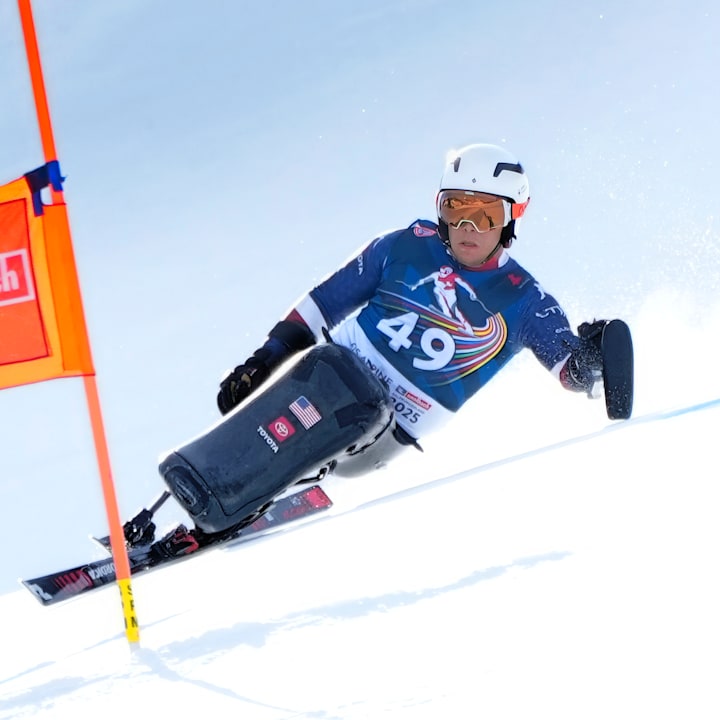
Andrew Kurka thinks he is ready to stop skiing down mountains. But he will never stop climbing them.
Kurka intends to retire from skiing after these Paralympics, at age 34. He hopes to come home from Italy with more medals (he already has two) and no more required surgeries (he already needs one, for a herniated disc in his neck). He and his wife, Verónica, want to have children. He owns a bed and breakfast in his home state of Alaska. He is a boat captain. He has a pilot’s license. He hunts; he fishes; he wants to teach others with disabilities how to fly.
“It’s so hard, especially as an Olympic or Paralympic athlete, to finally get there and then to back away,” Kurka says, “especially when they’re still good. It’s really tough to give up on a career. But for me, I’m starting to open that door.”

Some folks inexplicably view him as almost a charity case: “athletes in the Paralympic realm are still seen as just kind of disabled people, by a lot of people,” Kurka says, rather than as athletes. Those with reasonably open minds might view him as exceptional. He does not really like that, either. What he really wants is for American kids with physical challenges to watch him and think: I can do that.
“The hardest part about stepping away,” Kurka says, “is the fact that there isn’t anyone to replace me.”
Most athletes want to see their sport to grow. Michael Phelps said it all the time. Tiger Woods, too. But for Kurka, that desire runs deeper. So much of skiing, for anybody, is about finding the balance between fear and belief. So much of life with a disability is about finding that same balance. If there is nobody coming up to replace him, that seems to say something about how people with disabilities are taught to view themselves.
Kurka has seen too many young skiers watch him and lose confidence.
“When they see how good the elite skiers are, it kind of crushes them,” he says. “They’re like, ‘Uhh … I can’t imagine doing that.’ ”

He says, “I know that there is a young athlete that will triumph and be better than I ever was, who just hasn’t been introduced to the sport yet.” But first, that young athlete will have to imagine doing it.
There is much to learn from Kurka, but the most important lessons are about that sweet spot between fear and belief. Kurka is a threat to medal in technical events, but he has had more success as a speed-skier, mostly because those are the events in which fear is most likely to surpass belief.
“From the moment I push out of the start to the moment I reach the bottom, I just focus on what I need to do in this instant,” he says. “When I’m so focused and I’m so engrossed in doing what I do as perfectly as I can, there isn’t room for fear. That’s a distraction. That’s a thought that’s left at the top of the hill. That’s something that doesn’t exist in my minute and 30 seconds worth of racing.”
In Pyeongchang in 2018, Kurka won gold in the downhill and silver in the Super G. Four years later, in Beijing in 2022, Kurka broke his arm on the day of the downhill. He competed anyway and finished fourth. In Kurka’s world, that was a normal response. His mother once broke her ankle during a round of golf and kept playing.
“My grandma slipped at 90 years old on the ice and broke her hip,” he says, “and then walked herself to the hospital.”
Most of us do not think like this. But more of us probably could.
“When I’m so focused and I’m so engrossed in doing what I do as perfectly as I can, there isn’t room for fear. ”Andrew Kurka
When Kurka was 13, he severely damaged three vertebrae in the middle of his spinal cord in an ATV accident. Almost everything he has done since is a triumph of belief over fear. But understand something: Kurka absolutely does fear crashes. Everybody should. The key is to know when to keep that fear present and when to push it to the side—and then to be able to do both.
Kurka is extremely conscious of the risks of the sport. In the past two years, two Italian alpine skiers, Matteo Franzoso (25) and Matilde Lorenzi (19), died from injuries suffered during training-run accidents. Logically, a training run is just as dangerous as a competition, but because the stakes are lower, safety measures are often relaxed. Kurka says “I have absolutely put my foot down in many situations” when he felt that safety netting along the course was inadequate.
“The same attention is not paid attention in training,” Kurka says. “People become complacent. It’s dangerous, O.K.? It’s just as dangerous now as it will be later. It’s also on the athletes to stand up for themselves: ‘These B-Nets need to be set, and this needs to be changed, or I will not run it.’ ”
Some athletes are so aware of the risks of skiing that they refuse to think about them. They cannot afford to ski scared. Kurka has an easier time putting that fear to the side when he is skiing, so he has an easier time keeping it present when he looks at a course.
“People inherently put fear, and they put their worries, on the backburner,” he says. “If you focus on those things you’re not going to be a great athlete at this sport. You’re inspecting the course, things inside the course. You don’t often look outside of the course.”
He says when he voices concerns to race organizers, “They will happily set up the netting. I don’t think there’s been a single time when I had resistance. It’s just a matter of seeing it and noticing it. Everyone wants us to be safe out there.”

There is a lesson there, too. Becoming a Paralympian is daunting. It is physically taxing and financially challenging, and it can often feel like people do not really care if you succeed. But so many of them do want you to succeed. You just have to get them to see it.
To that end, Kurka has worked with a Colorado-based nonprofit, No Excuses Unlimited, which raises money for the U.S. Paralympic Ski and Snowboard Team. He wants to advise young athletes on how to make a go of this: how to ski, how to raise funds, how to start a nonprofit.
Kurka will not entirely rule out competing in the French Alps for the 2030 Paralympics, “but I’m pretty sure I’m done. I have plenty of things to fill that void in my life.” If the competition in Cortina d’Ampezzo is indeed the end for him, he could leave with multiple podium finishes.
“It's a good hill for me,” he says. “You know, it's challenging enough to where a lot of my competitors back off.”
More Olympics on Sports Illustrated
 Add us as a preferred source on Google
Michael Rosenberg was a senior writer for Sports Illustrated, covering any and all sports. He writes columns, profiles and feature stories and has covered almost every major sporting event. He joined SI in 2012 after working at the Detroit Free Press for 13 years, eight of them as a columnist. Rosenberg is the author of “War As They Knew It: Woody Hayes, Bo Schembechler and America in a Time of Unrest.” Several of his stories also have been published in collections of the year’s best sportswriting. He is married with three children.
Follow rosenberg_mike