%20%20--%3E%0A%3Csvg%20version%3D%221.1%22%20id%3D%22Layer_1%22%20xmlns%3D%22http%3A%2F%2Fwww.w3.org%2F2000%2Fsvg%22%20xmlns%3Axlink%3D%22http%3A%2F%2Fwww.w3.org%2F1999%2Fxlink%22%20x%3D%220px%22%20y%3D%220px%22%0A%09%20width%3D%2239px%22%20height%3D%2240px%22%20viewBox%3D%220%200%2039%2040%22%20enable-background%3D%22new%200%200%2039%2040%22%20xml%3Aspace%3D%22preserve%22%3E%0A%3Cpath%20fill%3D%22%23FFFFFF%22%20d%3D%22M38.5%2C7H28.2v26h10.3V7z%22%2F%3E%0A%3Cpath%20fill-rule%3D%22evenodd%22%20clip-rule%3D%22evenodd%22%20fill%3D%22%23FFFFFF%22%20d%3D%22M26.1%2C25.5c0%2C5.8-4.1%2C7.5-12.9%2C7.5C3.9%2C33%2C0%2C31.2%2C0%2C25.2v-1.1h11.6%0A%09v2.4c0%2C0.7%2C0.1%2C1.4%2C1.2%2C1.4c1%2C0%2C1.2-0.4%2C1.2-1.3v-0.9c0-1.6-0.9-1.6-3.5-2.2C2.2%2C21.7%2C0%2C19.7%2C0%2C15.3v-0.9C0%2C9.3%2C5.5%2C7%2C12.9%2C7%0A%09c10.2%2C0%2C12.8%2C2.6%2C12.8%2C7.4v1.8h-11v-2.9c0-0.6-0.4-1.1-1.2-1.1c-0.6%2C0-1.2%2C0.4-1.2%2C1.1v0.9c0%2C1.5%2C0.9%2C2%2C3.3%2C2.5%0A%09c8%2C1.6%2C10.5%2C3.3%2C10.5%2C7.5V25.5z%22%2F%3E%0A%3C%2Fsvg%3E%0A)
The Fire Have Rekindled a Long-Lost WNBA History in Portland
Sylvia Crawley loves a scrapbook. This is how she has preserved her basketball career, pasting in all the photographs, tucking old tickets in the pages. And for decades, her scrapbooks were all that she had to show for her time with the Portland Fire.
Crawley was on the WNBA team’s inaugural roster when it debuted as an expansion franchise. She was the first player to touch the ball as an official member of the Fire—she went out for their first jump ball, in their debut game against the Houston Comets on May 31, 2000, and she won. Crawley started almost every game that season for the Fire, and the next season, and the season after, too. And that was it. The franchise disbanded when the WNBA changed its team ownership structure in 2002. Crawley and her teammates were scattered in a dispersal draft. The 6'5" center was left with only the photographs.

It soon felt as if the franchise might have simply not existed in the first place. The Fire had played for just three seasons and never qualified for the playoffs. Memories faded for all but the most passionate of local fans. When the Fire disappeared, the easy access to its archives did, too, and Crawley never found a way to track down her old highlights.
“I have photos of me playing, but no footage to show my family, my nieces, my nephews,” she says. “I’m now married, and my husband never really got to see me play, not in the pros.”
Last summer, however, the group behind a new WNBA expansion team in Portland announced that it would call itself the Fire. The news was accompanied by video of the original team: They were taking on not just the name, but the history, too. Crawley was entranced. She went through all of the clips—remembering some games that she had forgotten and discovering others that she had been playing back in her mind for some two decades. The 2026 franchise is under different ownership and is operating in a (very) different era of the WNBA. But it has revived the history and resurfaced the archives of the original team, in what has been a delightful, unexpected blessing for retired players such as Crawley.
“It all came rushing back to me. When they started resurrecting everything, it was like, we’re not forgotten,” Crawley says. “Our stuff is still in the archives. It still exists. It’s still out there for people to see.”

The key challenge for any expansion franchise is building its own identity. But there is a twist for the Fire—this is a new franchise that is also an old one. It’s just the first of what may be several teams in this situation over the coming years in the WNBA. The relocation of the Connecticut Sun is set to revive the Houston Comets, and expansion teams in Detroit and Cleveland will be able to connect themselves back to older local franchises, too. The early history of the WNBA was dotted with the abandoned legacies of these defunct or relocated teams. And the league’s increasingly bright future is coming with some new chances to revisit its past.
“It’s a really cool opportunity,” says Portland forward Bridget Carleton, the team’s first selection in the expansion draft. “Us being a reason to remember those names and remember the people who played here… There’s a lot of new fans in the W, especially right now, so it’s a great opportunity to look back.”
Crawley was not the only player who felt like she had watched parts of her legacy disappear. This was a common experience for female hoopers of her generation.
After winning a national championship with UNC in 1994, Crawley went pro, which then could only mean going overseas. (She would ultimately suit up for pro games in 16 countries, she says.) It felt like a dream come true when serious women’s pro ball arrived in the U.S. in the late ’90s. The end of the decade saw a battle of two leagues attempting to define the sport: the American Basketball League, which had launched first and prided itself on paying out higher player salaries, and the Women’s National Basketball Association, which had the backing of the NBA and Nike. It was a fight that ended relatively quickly. The ABL folded. The WNBA is now celebrating its 30th season. And players like Crawley felt like collateral damage.
She had started her domestic pro career in the ABL. (Two of her three seasons in the league were actually spent in Portland—as part of the first women’s basketball franchise in town, the Portland Power, which had been among the original teams of the league.) Crawley was then part of the great reshuffling of players battling for WNBA roster spots after the ABL collapsed. She caught on back in Portland, with the Fire, and then with the San Antonio Silver Stars.
Which means the story of her career is not easy to share. Crawley knows the deal by now: People will ask where she played and get confused if she tries describing the league that folded, the franchise that quickly went defunct, and the final stop with a team long since relocated. “There are other players, they retire and their team still exists,” Crawley says. Just not for her—or for many of her contemporaries. This has long been a source of frustration around women’s basketball. So much that is taken for granted in more established leagues has traditionally been hard to come by here. It can be difficult to grow without a sense of continuity.

Fandom thrives with storylines and rivalries and connections to players whose names stir up old memories. It’s hard when so much has been ripped out of the ground before it really had a chance to take root.
The Fire’s new leadership is cognizant of that dynamic. When the franchise held its first home preseason game last Sunday, it did not simply welcome fans but instead welcomed them back, nodding at the shared history. (In a dream matchup for a pyromaniac, the Sparks defeated the Fire, 85–75.) The crowd of 13,550 offered plenty of looks at fresh merch—little girls and grown men alike lining up at the arena store for jerseys and shirts to rep their new squad. But it was not hard to spot throwbacks. If the original fan base was small, it was also fiercely dedicated, and some of them had been holding on to Fire gear for 25 years. Still others showed up in old Portland Power gear from the ABL.
“We’re part of a really rich and unique and special story related to Portland’s fandom around women’s sports,” says Fire senior vice president of marketing and communications Kimberly Veale. “There were other professional leagues that existed here prior to the WNBA, and the original Portland WNBA team is a huge part of that story, too.”
Veale is familiar with the work of launching an expansion franchise. She had the same job title last year but with the Golden State Valkyries. In its first year in the WNBA, the team sold out every home game, sprinted to a record valuation and showed that an expansion franchise can form a distinct fan culture quickly. Much of that is not directly replicable by a different franchise. But Veale was drawn to pulling off a similar feat in a different market.
“We knew that Golden State was going to have success, and it had incredible success, and I think the same is true with Portland,” Veale says. “So while some of the tactics are similar… Portland isn’t the Bay Area, and it’s been a really fun challenge.”

The fact that Portland already had its own WNBA team is part of that challenge. They want to nod at the history without replicating it: The name is the same, but the logo is new, and while red is still a core color, they’ve added in some pink. They want players and fans to feel like they have the chance to build something new. But they want to make use of existing material that no other expansion team has.
“We have a team history,” Veale says. “We have franchise leading scorers. We had a Rookie of the Year in Jackie Stiles. We have all of these stories and all of these things that we’re able to celebrate.”
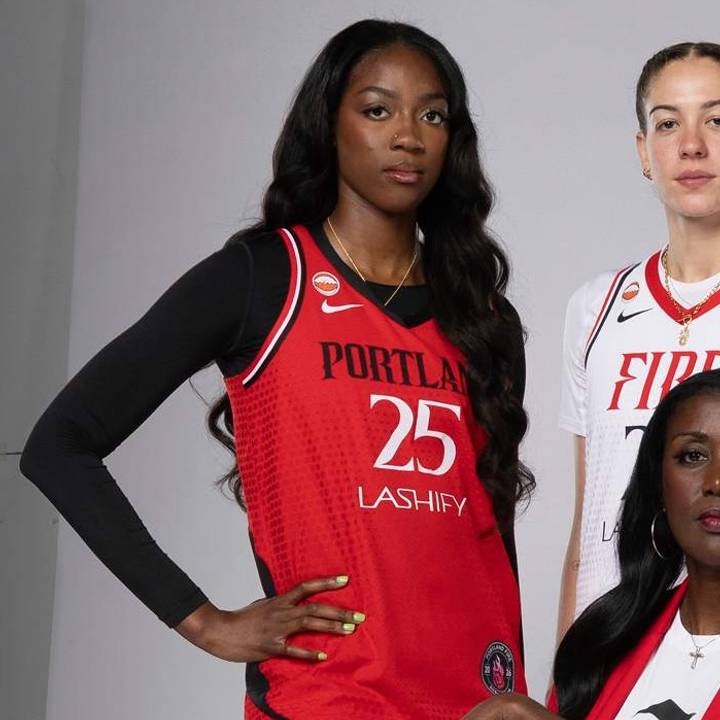
No. 1 on that list of franchise leading scorers is Crawley. (She is also No. 1 in rebounds, blocks and fouls.) The day following that first home preseason game, Crawley meets Carleton and some of her teammates at the photo shoot for this story. She tells them about that first jump ball, 26 years ago, and she tells them how excited she is for one of them to have the same chance now.
“It’s one thing to go to a new team and say, like, Hey, I’m here for a new beginning,” says Portland forward Emily Engstler. “It’s another thing to go to a brand new franchise and be a part of a legacy for that first year.”

Here is one of the traditional benefits of an expansion team. Any mundane feat might also be a historic first. “Everything we did was history,” Crawley says. The original Fire went 10–22 in their first season for a winning percentage of .313. The revived team is not projected to do much better. But what Crawley remembers, she says, are all of those firsts, no matter how small they were: “The first charge, everybody bum-rushed and picked them up,” she says. “It was so exciting.” All of that will look different here: These will not be straightforward firsts but instead firsts-after-a-quarter-century-of-dormancy. The players are excited all the same. And they hope that each one might be a chance to remember the otherwise forgotten players who did it first.
“I really hope that people still do talk about those players,” Engstler says. “I mean, without them, we wouldn’t be here.”
Crawley shows the current players her old jersey, which is decidedly Y2K-era, blocky font and gold accents and all. “Oooh, I want to wear those one day,” Carleton says. And there’s now a real chance that she might: All it would take is a Throwback Night. The nostalgia finally has a place to live outside Crawley’s scrapbook.
More WNBA from Sports Illustrated
 Add us as a preferred source on Google
Emma Baccellieri is a staff writer focused on women’s basketball for Sports Illustrated. She previously covered MLB. She has also written for Baseball Prospectus and has been honored with multiple awards from the Society of American Baseball Research. A graduate of Duke University, she lives in Washington, D.C.
Follow emmabaccellieri