%20%20--%3E%0A%3Csvg%20version%3D%221.1%22%20id%3D%22Layer_1%22%20xmlns%3D%22http%3A%2F%2Fwww.w3.org%2F2000%2Fsvg%22%20xmlns%3Axlink%3D%22http%3A%2F%2Fwww.w3.org%2F1999%2Fxlink%22%20x%3D%220px%22%20y%3D%220px%22%0A%09%20width%3D%2239px%22%20height%3D%2240px%22%20viewBox%3D%220%200%2039%2040%22%20enable-background%3D%22new%200%200%2039%2040%22%20xml%3Aspace%3D%22preserve%22%3E%0A%3Cpath%20fill%3D%22%23FFFFFF%22%20d%3D%22M38.5%2C7H28.2v26h10.3V7z%22%2F%3E%0A%3Cpath%20fill-rule%3D%22evenodd%22%20clip-rule%3D%22evenodd%22%20fill%3D%22%23FFFFFF%22%20d%3D%22M26.1%2C25.5c0%2C5.8-4.1%2C7.5-12.9%2C7.5C3.9%2C33%2C0%2C31.2%2C0%2C25.2v-1.1h11.6%0A%09v2.4c0%2C0.7%2C0.1%2C1.4%2C1.2%2C1.4c1%2C0%2C1.2-0.4%2C1.2-1.3v-0.9c0-1.6-0.9-1.6-3.5-2.2C2.2%2C21.7%2C0%2C19.7%2C0%2C15.3v-0.9C0%2C9.3%2C5.5%2C7%2C12.9%2C7%0A%09c10.2%2C0%2C12.8%2C2.6%2C12.8%2C7.4v1.8h-11v-2.9c0-0.6-0.4-1.1-1.2-1.1c-0.6%2C0-1.2%2C0.4-1.2%2C1.1v0.9c0%2C1.5%2C0.9%2C2%2C3.3%2C2.5%0A%09c8%2C1.6%2C10.5%2C3.3%2C10.5%2C7.5V25.5z%22%2F%3E%0A%3C%2Fsvg%3E%0A)
Young USMNT goalkeeping trio gets shot as Klinsmann seeks a worthy successor
It was in September 2008 that the U.S. national team last visited Havana, but it may as well have been the 1970s or 80s. President George W. Bush’s administration had doubled down on the embargo, tightened travel restrictions and included Cuba in an expanded “Axis of Evil”. A handful of intrepid American fans who made the illegal trip to support their national team covered their faces with bandannas. That team would have driven past a billboard featuring portraits of Bush and Adolf Hitler, and later found locals scouting a practice session from a dorm built into the Estadio Pedro Marrero.
The U.S. won the 2010 World Cup qualifier, 1-0, on a goal by Clint Dempsey. Brian Ching helped set it up. Bob Bradley was the coach that day. Carlos Bocanegra was the captain and Landon Donovan the star. And in goal—Tim Howard. His backup was Brad Guzan. The more things change….
The Cuba Cinco: Fans skirt travel ban to witness USA's 2008 World Cup qualifier
Jurgen Klinsmann’s U.S. squad left for Havana late Wednesday night and on Friday afternoon, it’ll play in Cuba for only the third time. It’s the first friendly between the countries since 1947. Last year the New York Cosmos visited Havana and played the national team. When Barack Obama visited the island in March—he was the first U.S. president to do so in more than 80 years—he attended an exhibition between the Tampa Bay Rays and the country’s beloved baseball team. Travel bans have been eased, embassies established and this spring, mail and cruise service resumed.
It’s a new era in U.S.-Cuba relations, and in many ways it feels like we’re on the cusp of a new era for the U.S. national team. The World Cup prospects of players like Clint Dempsey, Jermaine Jones and Kyle Beckerman—veterans whose influence is felt far beyond the scoreboard—are in doubt. Michael Bradley and Jozy Altidore are practically the elder statesmen. And the next generation is knocking on the door. Christian Pulisic, John Brooks, DeAndre Yedlin and Jordan Morris, all of whom are on the current roster, are among a promising cohort of players in their late teens (Pulisic) or early 20s.
But little has changed in net. If the World Cup was this month, Howard and Guzan would be the starter and backup (or backup and starter). In the summer of 2018, when Klinsmann and Co. expect to be in Russia, Howard will be 39 years old. Guzan will be just 33, but he’ll have to be in a different situation than he is now, which is on the bench at Middlesbrough. Neither situation is ideal. But who would bet against them holding on to the No. 1 and 2 spots? For close to three decades, the two sure things about the U.S. national team were that the goalkeeping would be good, if not great, and that there was competition and/or heirs apparent for the starting job. It’s an actual American soccer tradition. But who’s next in line now? Who’s going to challenge Howard and Guzan in 2018 and beyond?
“The U.S. has been extremely blessed for a period of time where they always felt comfortable with what was next, and now they’re waiting for the next person who’s going to make it that obvious and we really hope the next person is going to make it obvious. Because if we don’t, then it’s a situation we haven’t had to worry about in a long time,” Kasey Keller told SI.com from Florida, where the national team was training ahead of Friday’s game.
GALLERY: Scenes from Havana in 2008, USMNT's last visit to Cuba
Scenes from Havana: USA's 2008 World Cup qualifier in Cuba
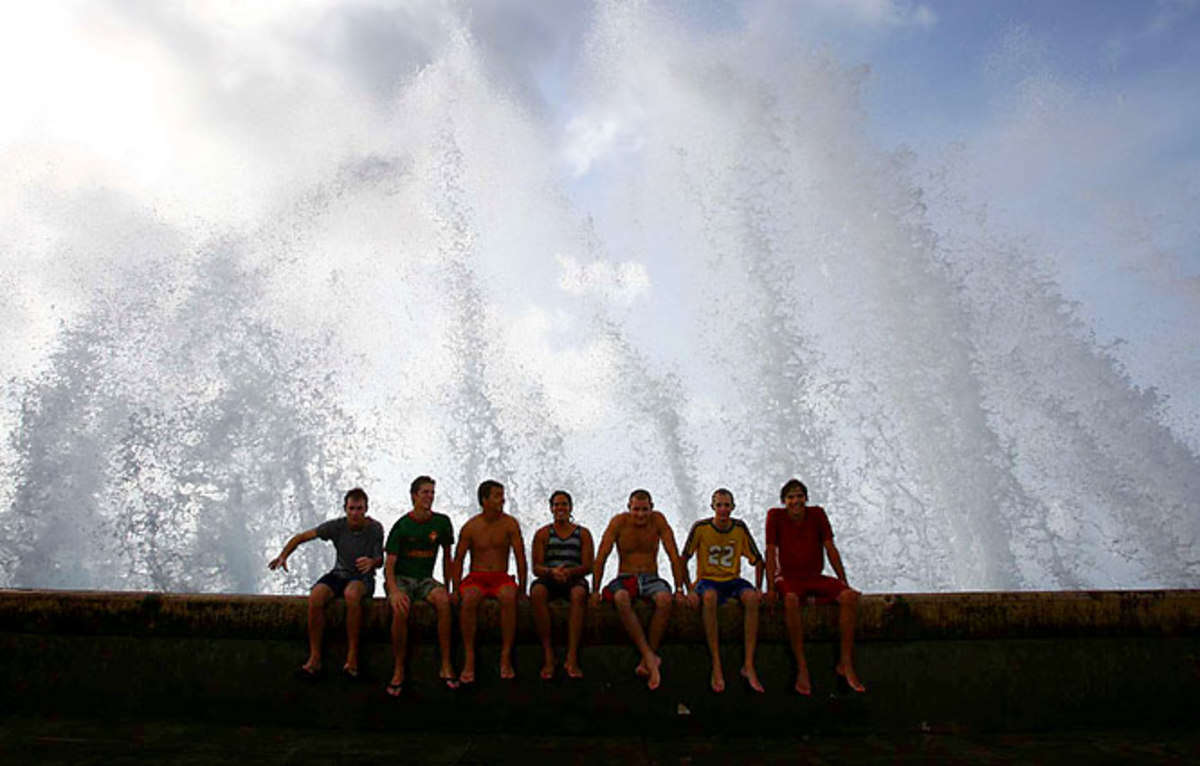
The Malecon is Havana's long oceanfront avenue where Habaneros pass the time on lazy weekends and weekday evenings. This group of seven college students spent the day getting soaked by the bracing salt-water waves crashing into the seawall. "When is the soccer game?" one of them asked. Saturday: 8 p.m. "I think we'll go."
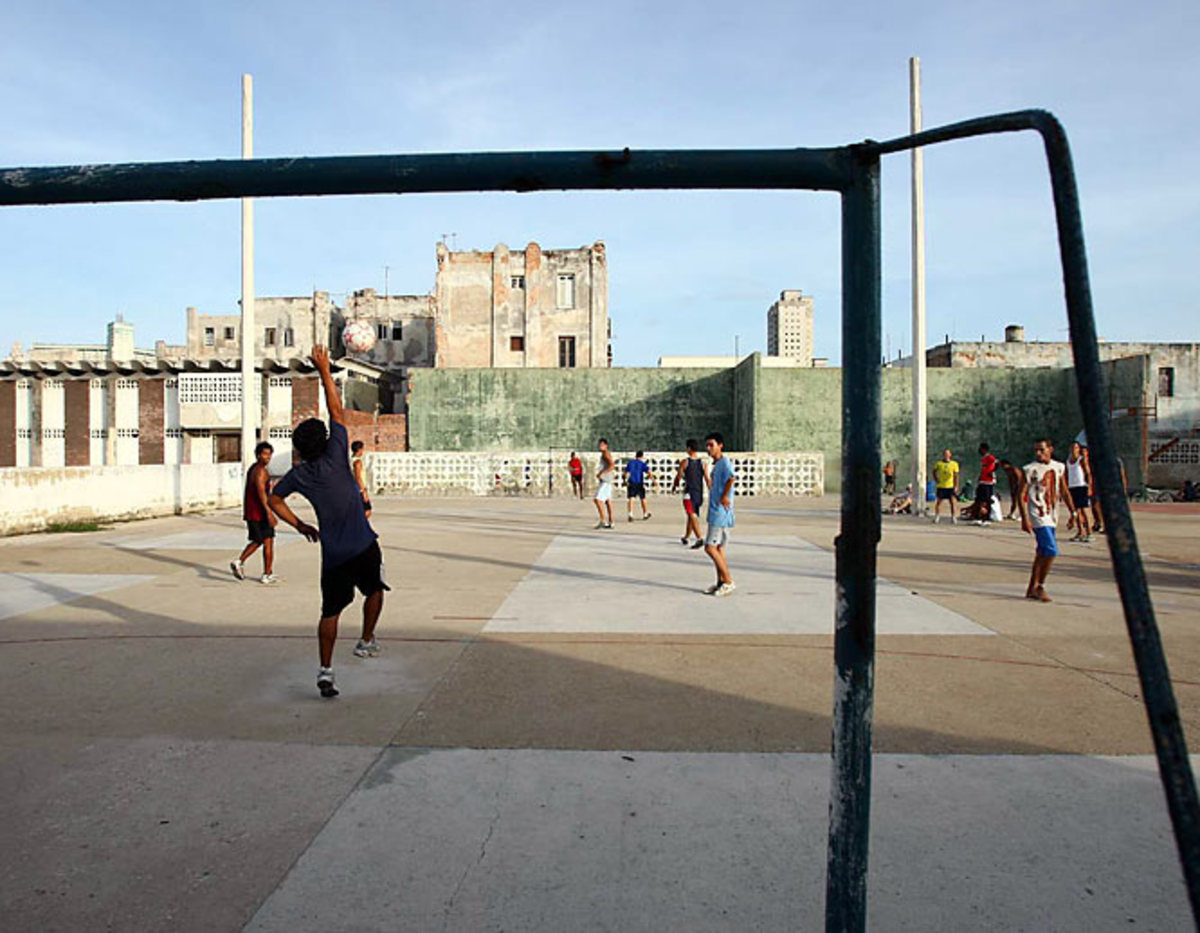
Near the corner of the Malecon and Avenida G is a concrete jungle where you can find games of pickup soccer, basketball and even volleyball taking place on weekday afternoons. Soccer may only be the fourth- or fifth-most popular sport in Cuba, but its stature is slowly growing. Some of these guys had game, too.

Pre-Revolution cars from the U.S. dominate the streets of Havana, some in better condition than others.
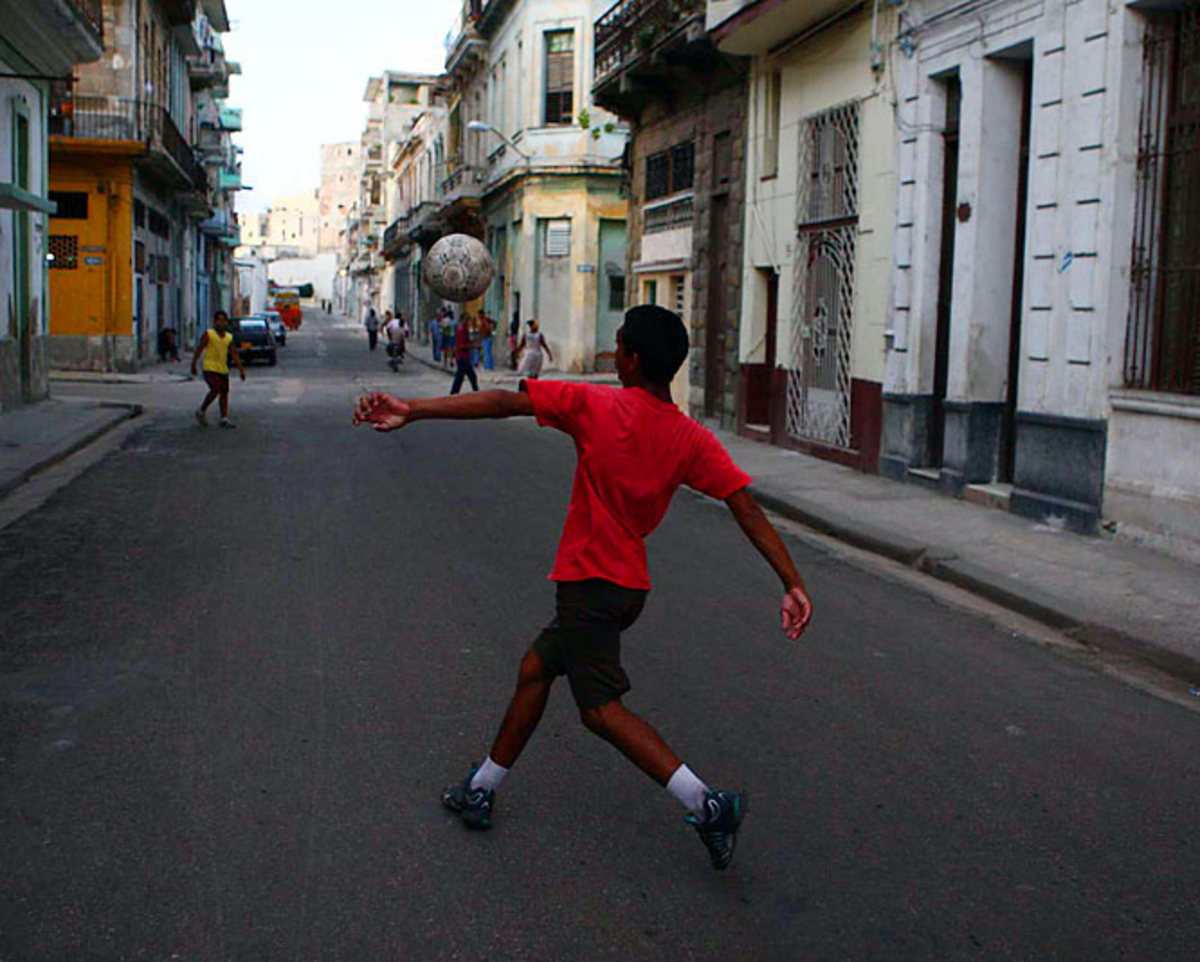
Toward sunset we found some street-soccer scenes in Centro Habana, a shabby-but-vibrant part of town with narrow streets, crumbling buildings and locals who will talk your ear off.

Just a block down from where the U.S. soccer team will be staying on the Malecon is a scene that might distract the lads from the task at hand.
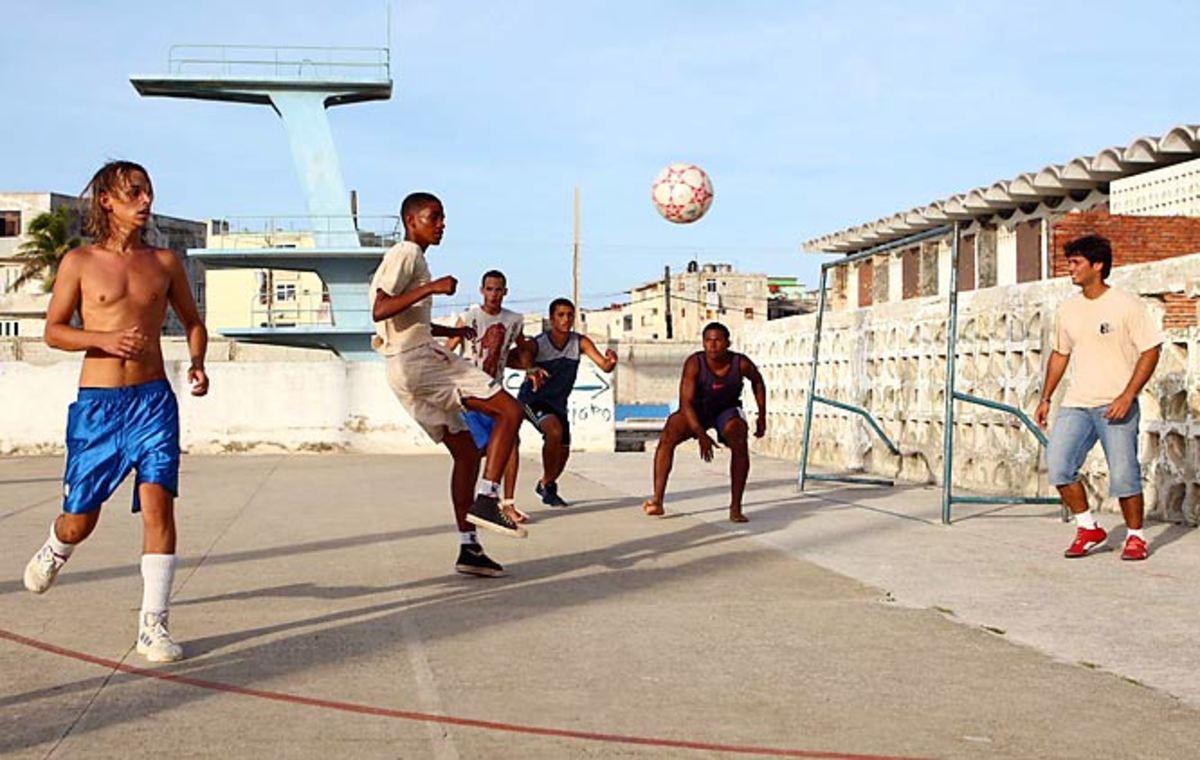
We never did figure out why the pickup soccer games were taking place on concrete instead of in the grassy park just a few blocks away, but these guys seemed satisfied with a harder field that more closely resembles that of Real Salt Lake's Rice-Eccles Stadium.
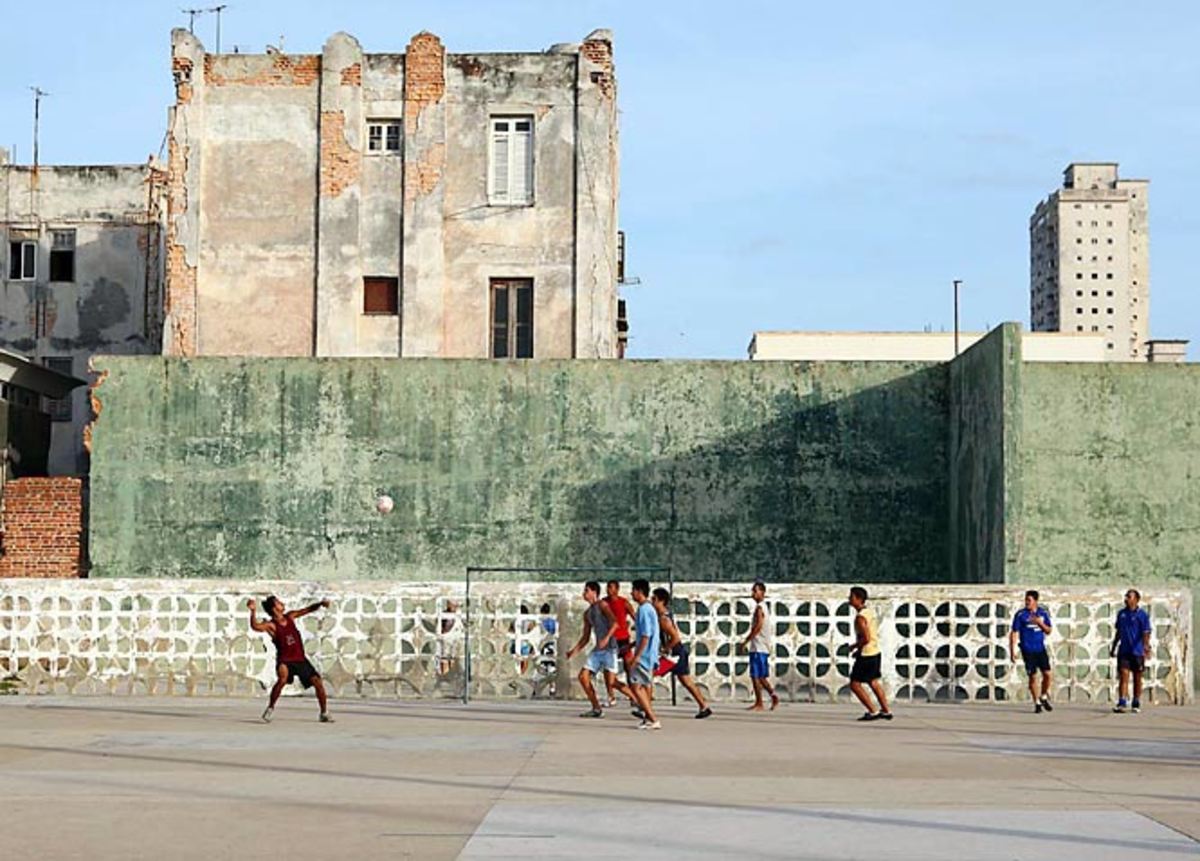
The best player on the concrete was an Asian guy in a blue North Carolina Tar Heels T-shirt. (Who knows? Maybe Anson Dorrance is trying to open up a new recruiting territory.) Note the building conditions: the reason Habaneros walk down the middle of the street instead of on the sidewalk, we're told, is that dozens of buildings fall down in Havana each year.
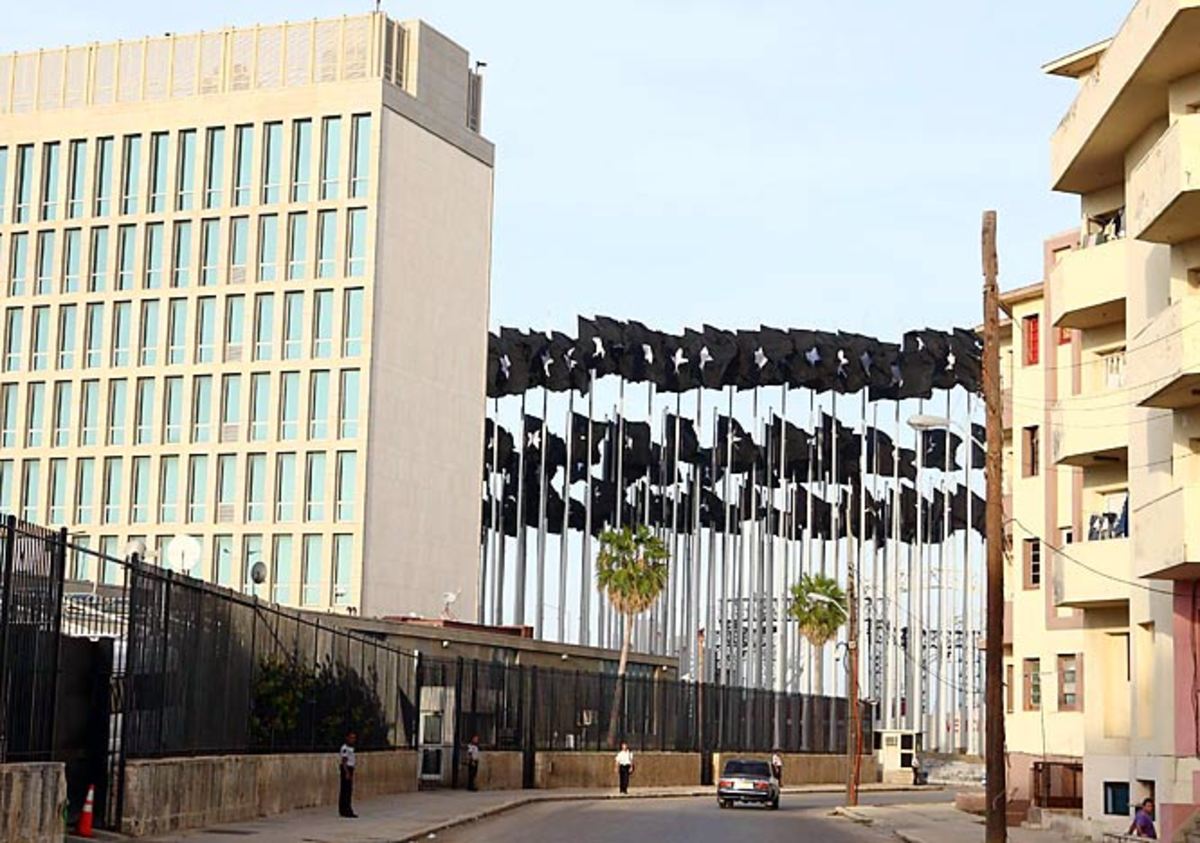
The U.S. Interests Section building (left), operated by the Swiss, is the closest thing in Havana to a U.S. embassy. When the U.S. started posting electronic sign-board messages to counter Castro's message a few years ago, the Cuban government responded by erecting 138 flags in front of the building to block the view of the sign-board messages. Immature on both sides? Yes. The black flags are a little creepy in person, too.
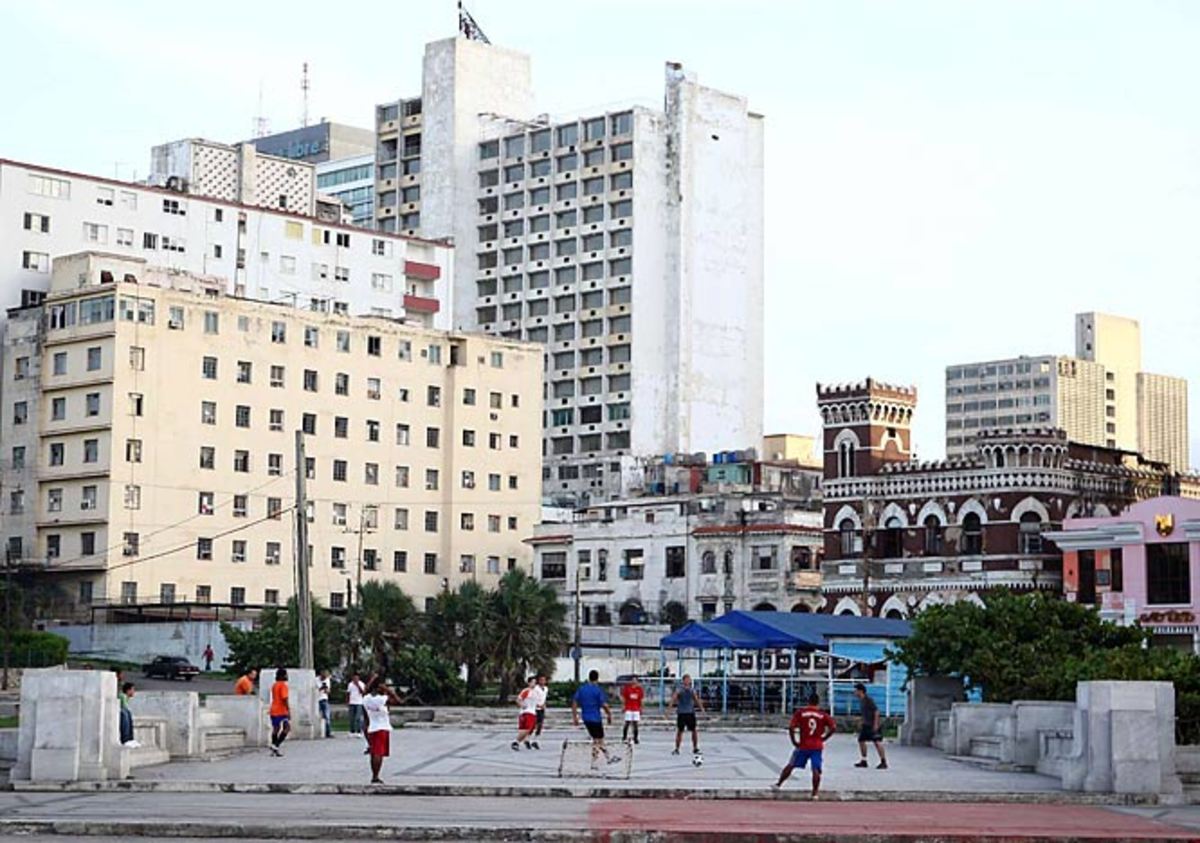
It wasn't hard to find a pickup soccer game in Havana. These guys had the most original makeshift goals we saw all day. In an unscientific poll using the number of knockoff jerseys we saw, FC Barcelona is the most popular soccer team in Cuba. (Not once did we see a Cuban national team jersey, which Maykel Galindo says aren't available for purchase here.)
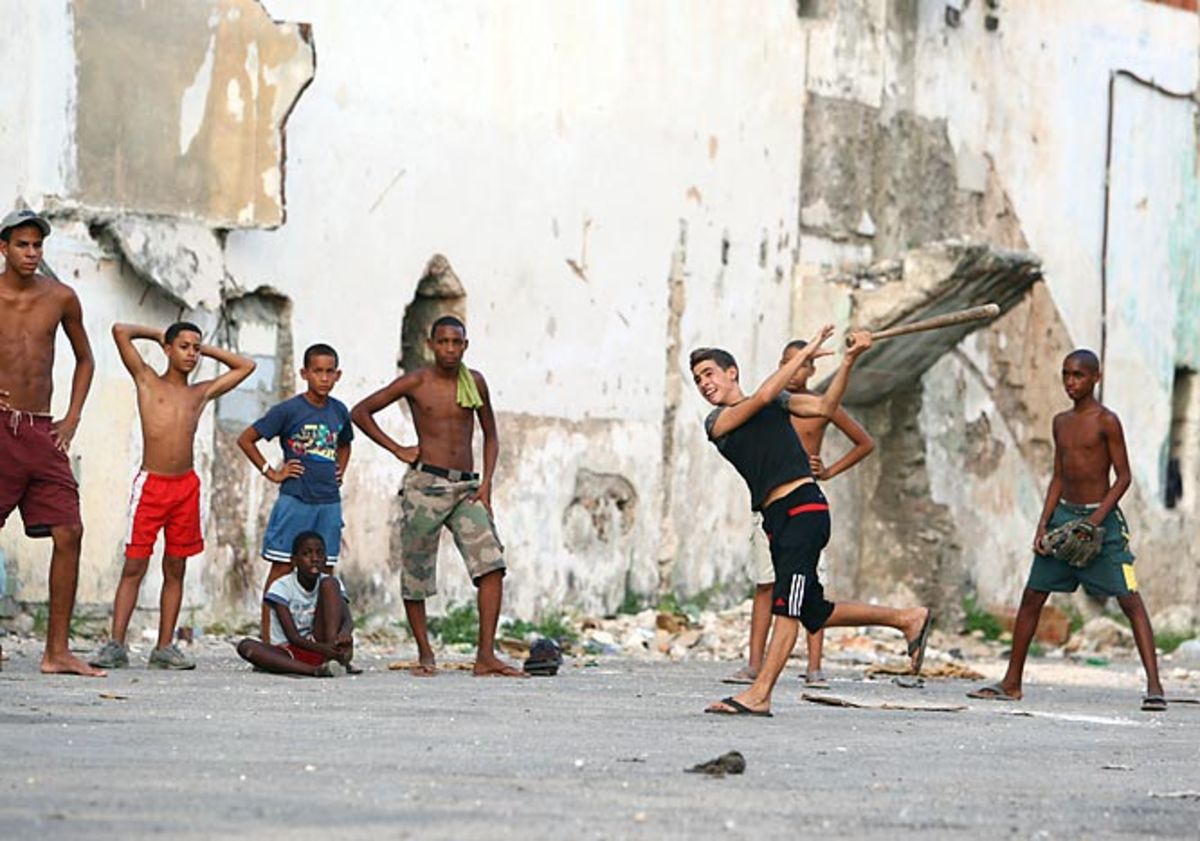
A street baseball game in Old Havana.
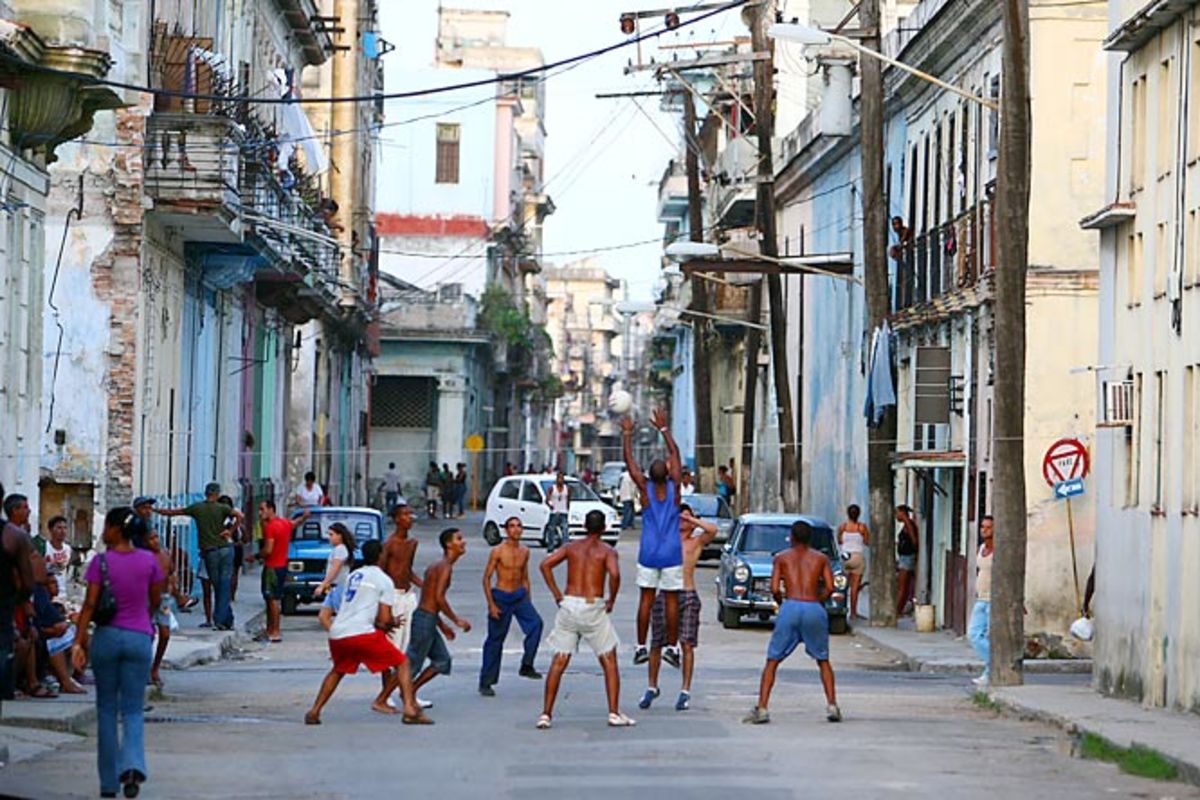
Baseball, soccer and basketball aren't the only sports you'll find being played on the streets of Havana. There are also volleyball games like this one.
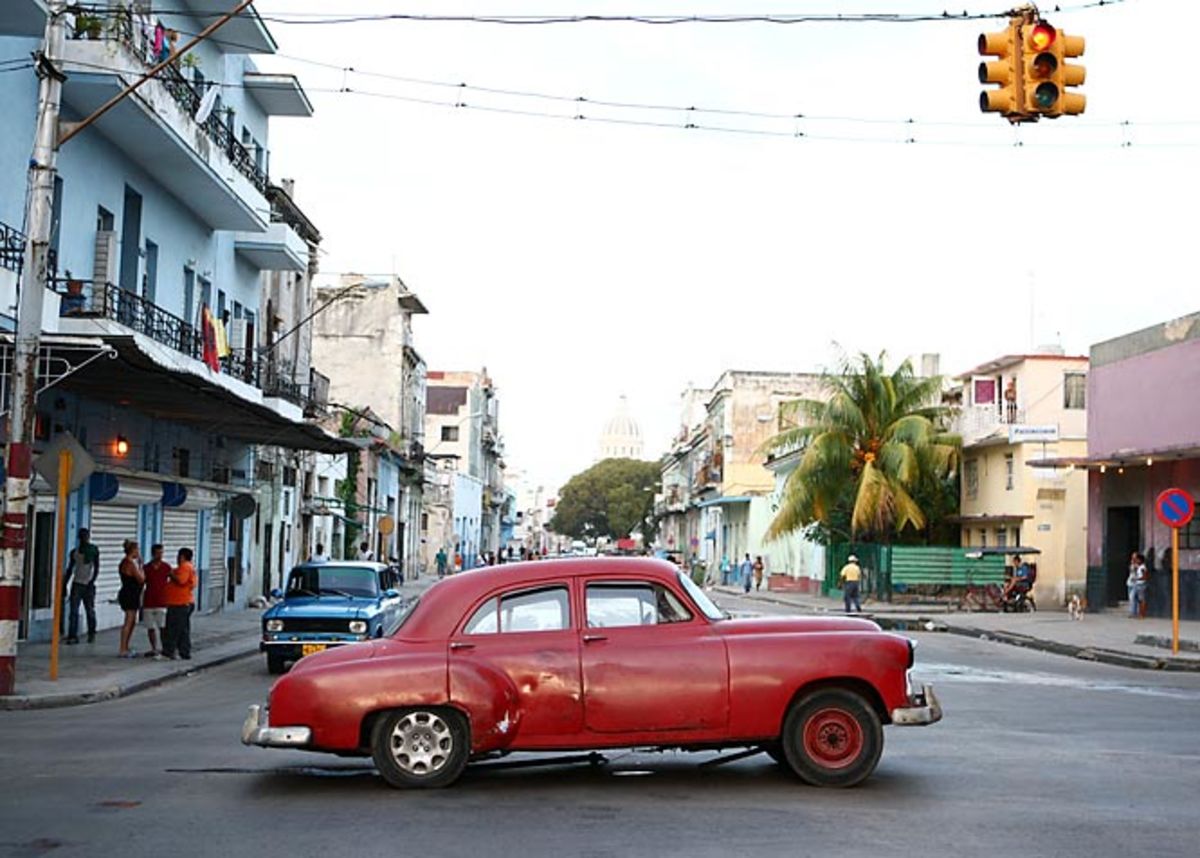
An old hulk found a bad spot to break down–in the middle of a Havana intersection.
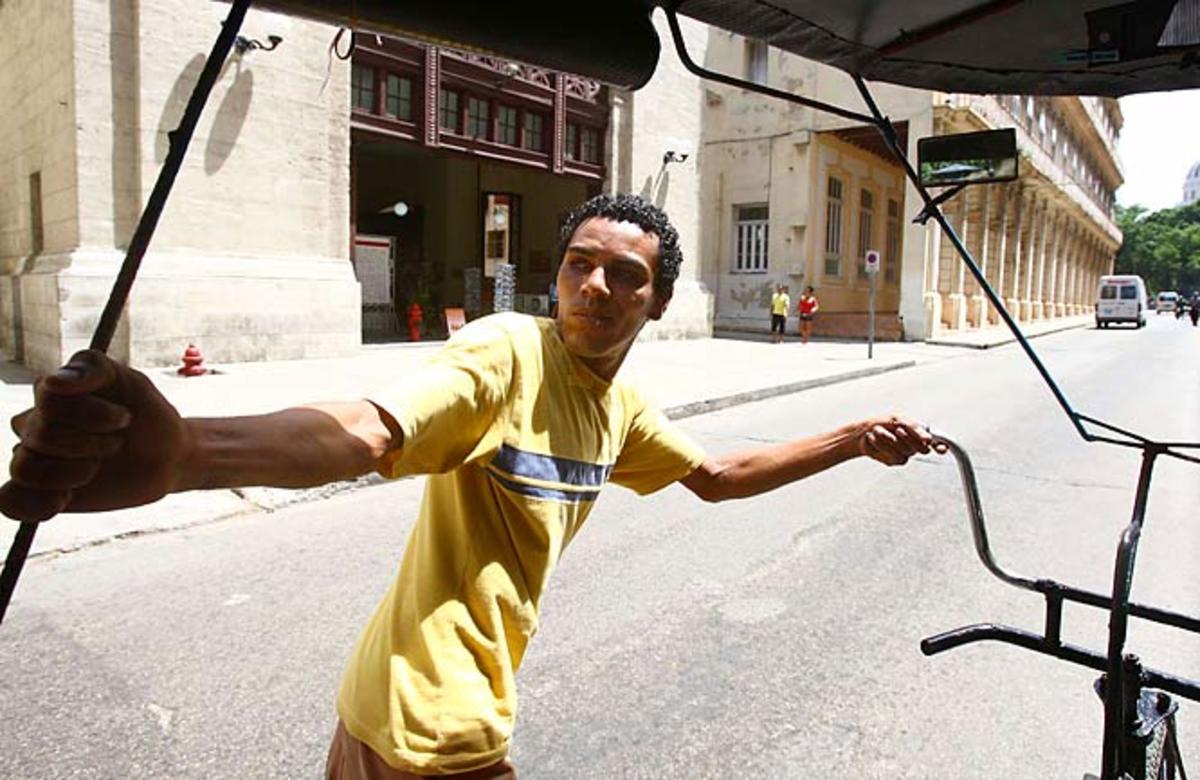
Our pedicab driver started getting nervous and mumbling about "la policia" before backing us onto a street without cops. We kept asking the guy why he was anxious about the police, but he never explained.

Old John Lennon albums are available alongside the songs of Che Guevara at this store in Havana.
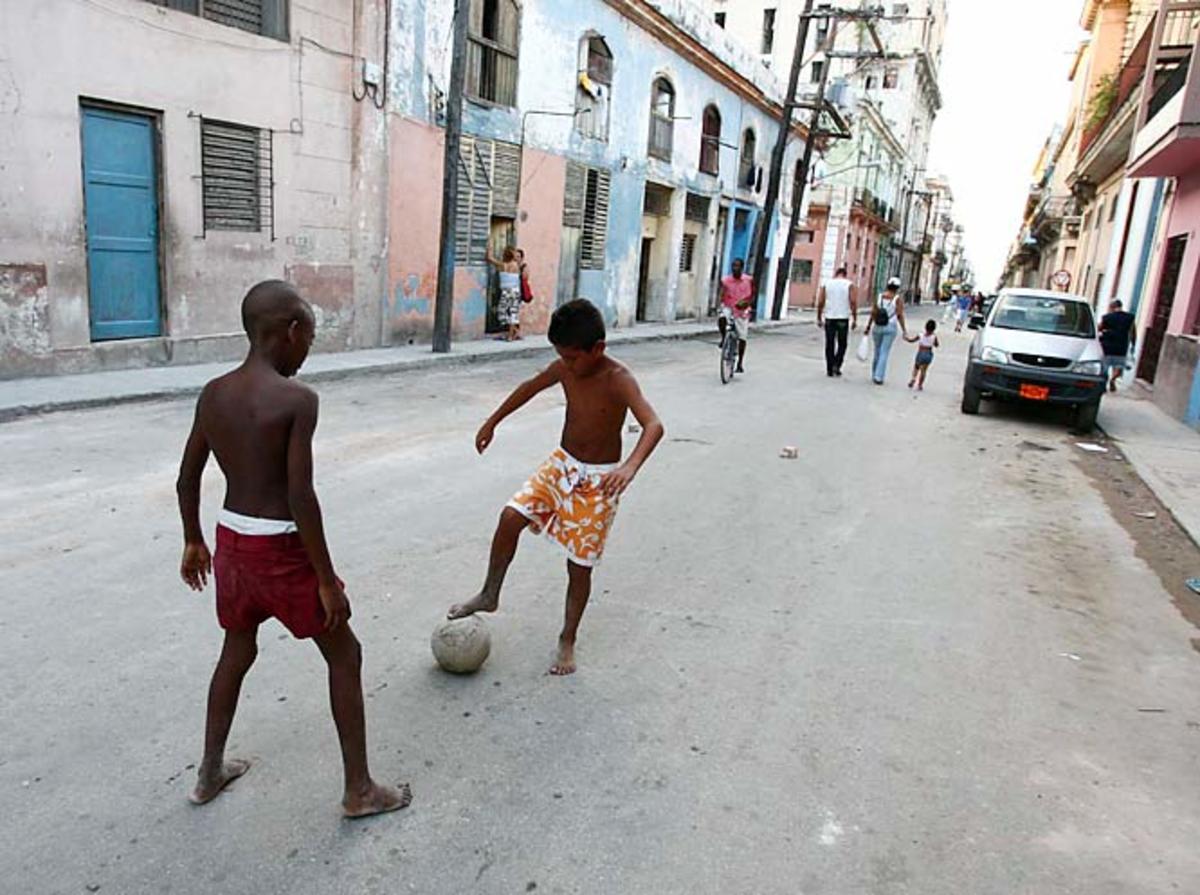
Two barefoot kids go one-on-one with a futbol.
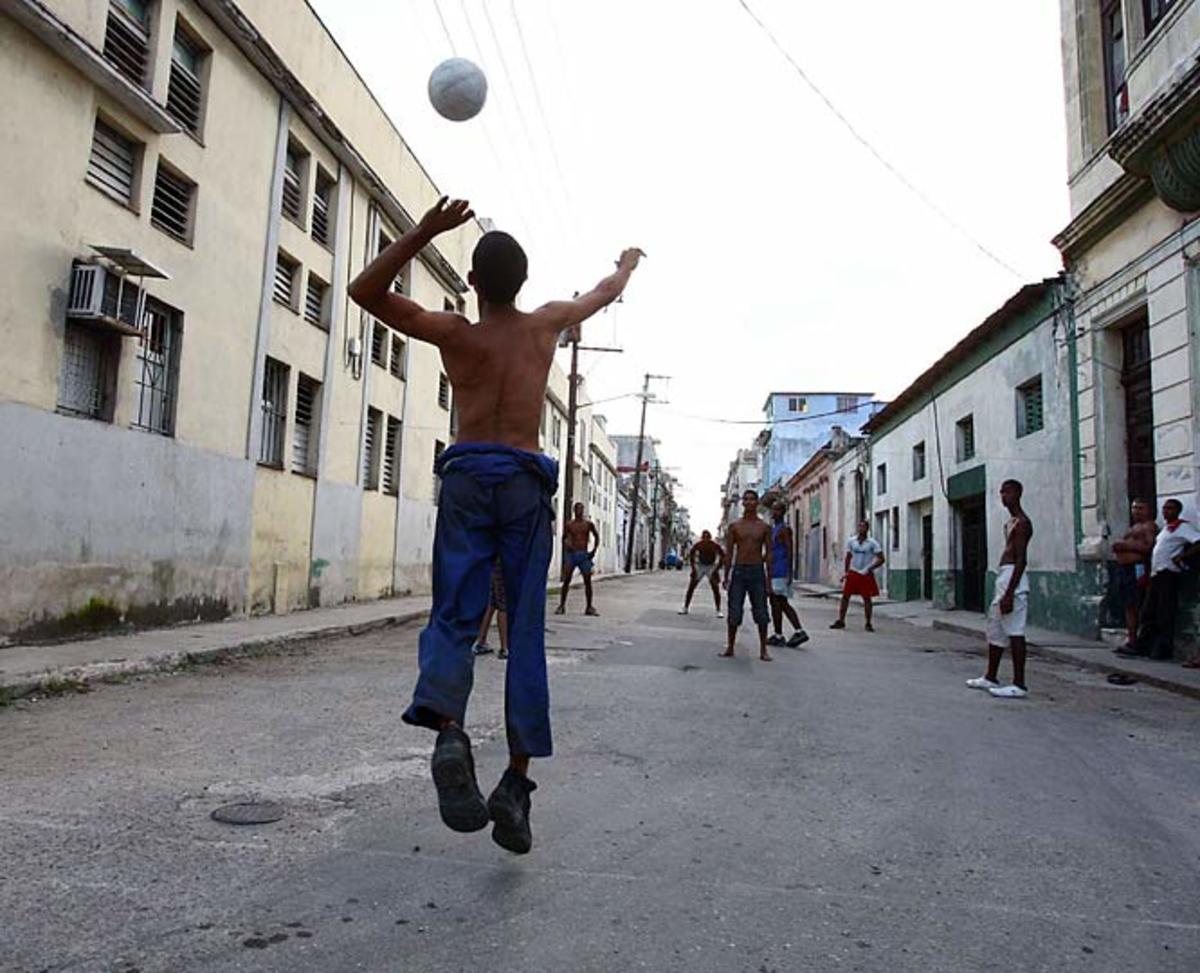
Trying out the southpaw jump-serve.
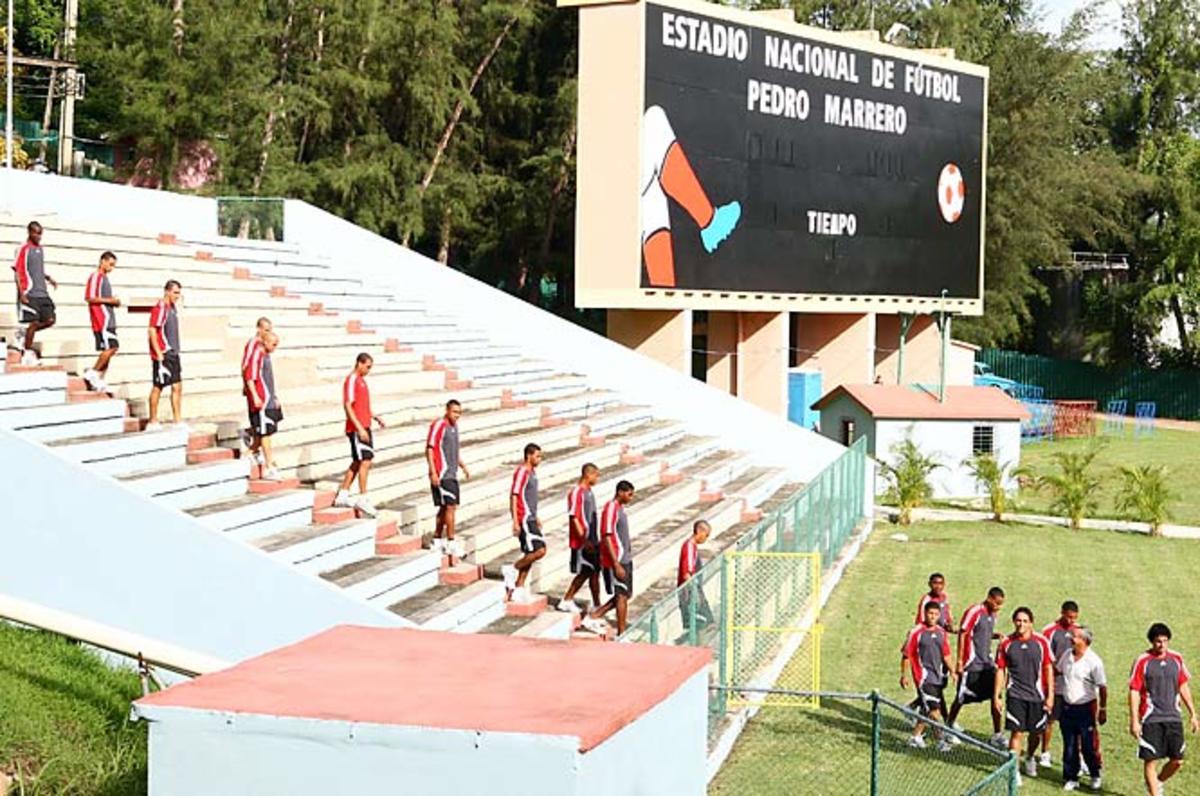
The Cuban national soccer team enters Estadio Pedro Marrero for their session with the international media on Wednesday.

Cuba's German coach, Reinhold Fanz, meets with the media on Wednesday.
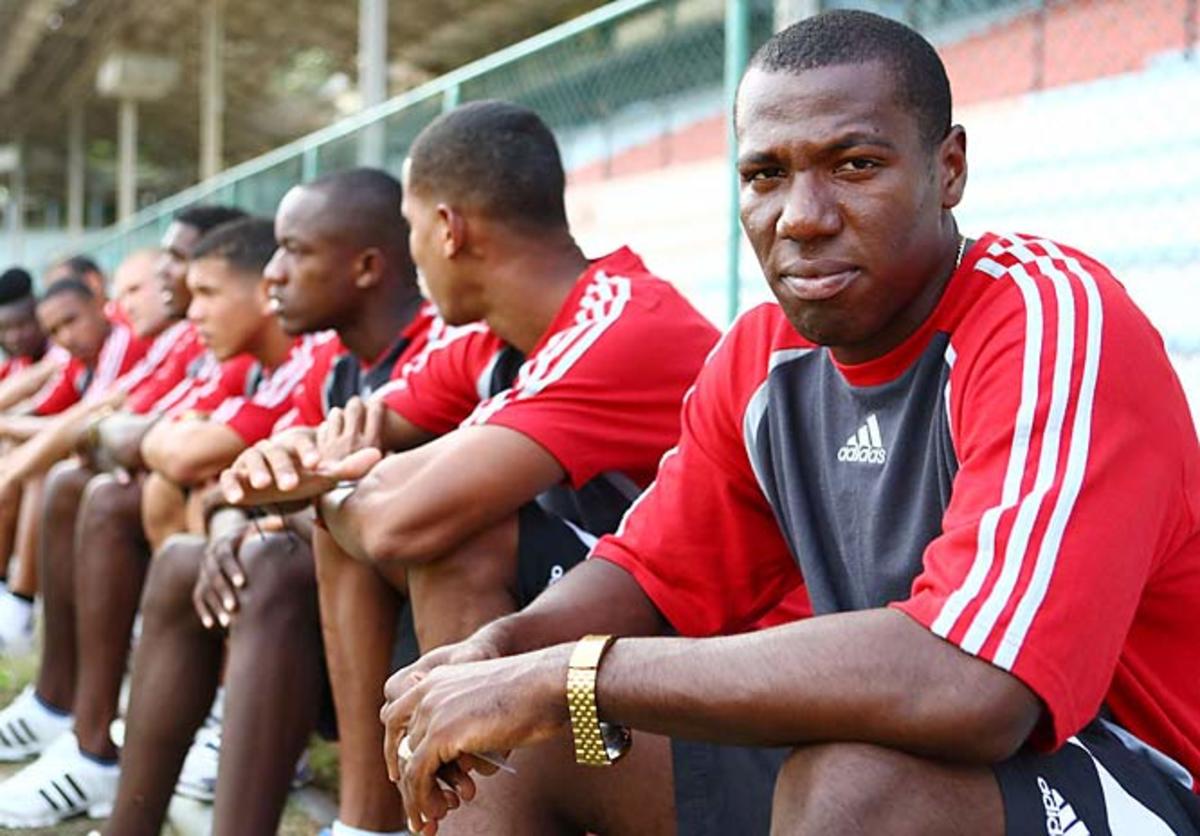
23-year-old Roberto Linares, the high-scoring forward on Cuba's national team, sat down with SI.com for an interview. Linares scored Cuba's goal in its 1-1 tie with the U.S. during the Olympic qualifying tournament last March. Seven of his teammates on that team ended up defecting to the U.S., but Linares stayed in Cuba.

Lacking air-conditioning in most buildings, Habaneros take to the streets in the late afternoon and early evening in Old Havana.
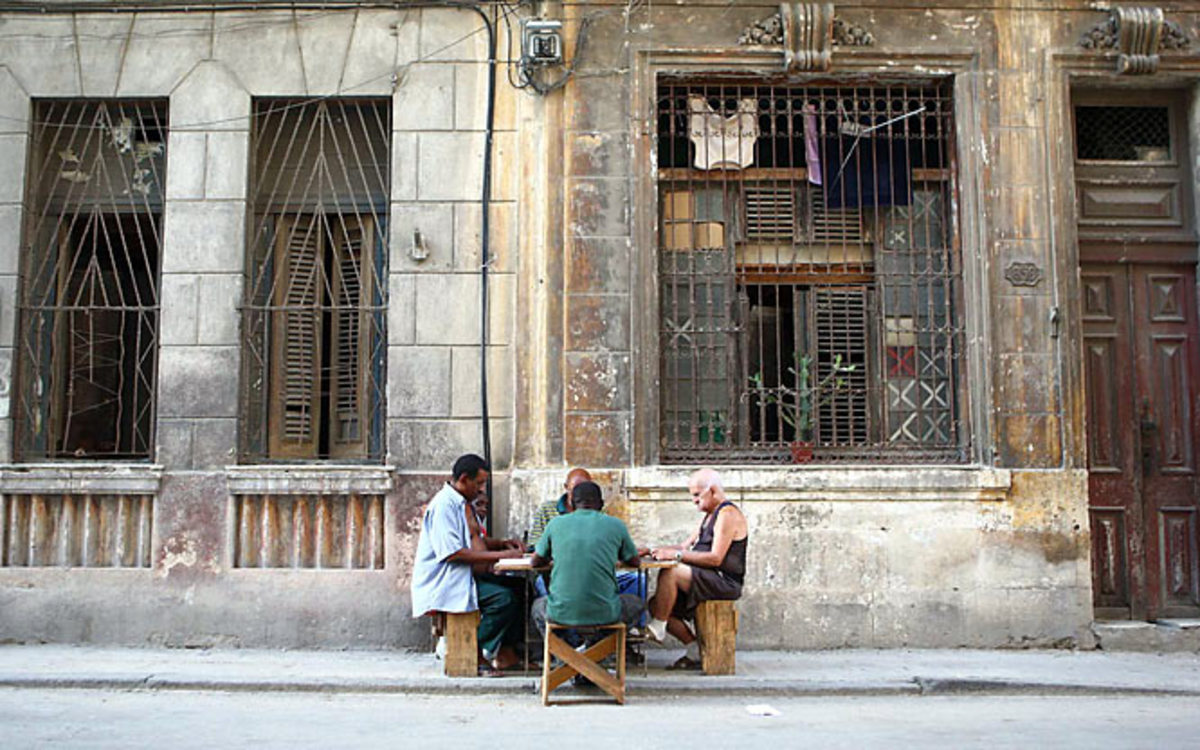
Games of dominoes are taking place everywhere in Old Havana.
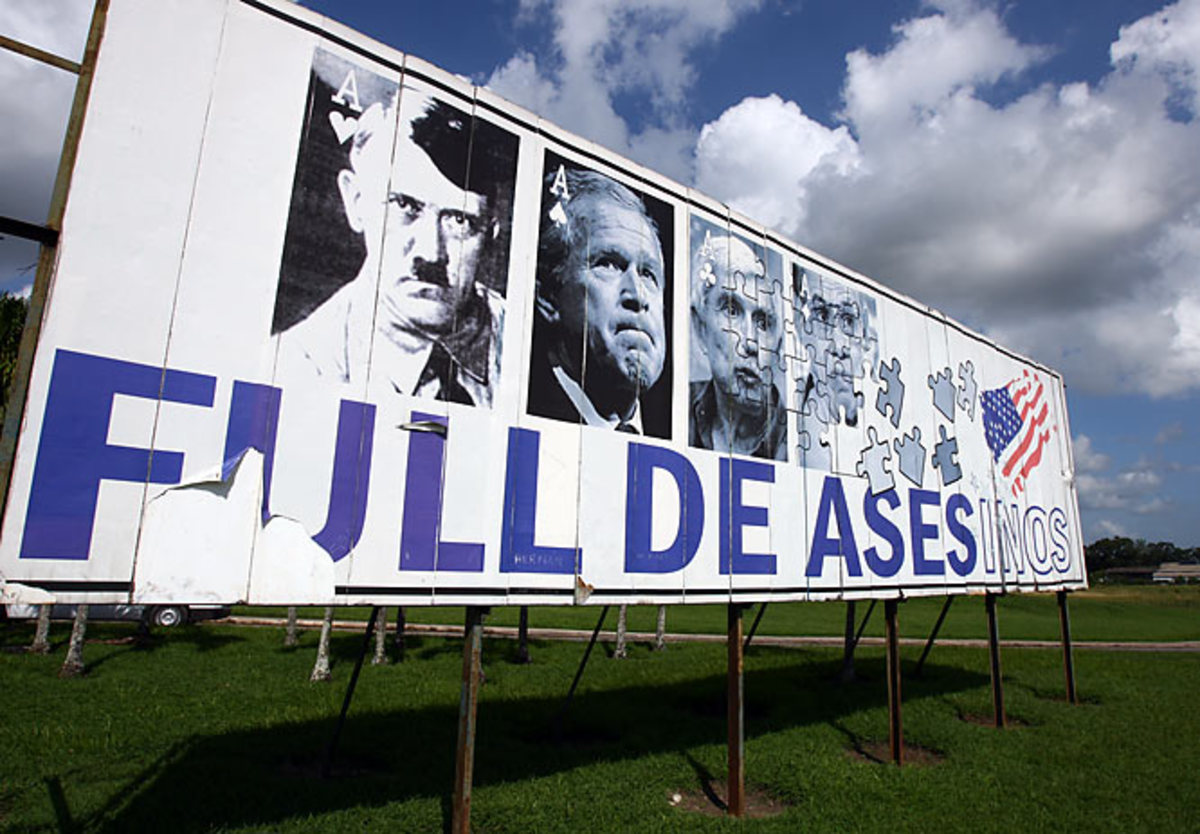
One of the first things the U.S. soccer team saw on the road leaving the Havana airport was a giant billboard featuring President George W. Bush next to Adolf Hitler, the late Cuban-exile leader Jorge Mas Canosa and Orlando Bosch. "Full De Asesinos" has a double meaning: "Ases" means "Aces" (note the playing card theme, an echo of the U.S.-produced playing cards showing ex-Iraqi leaders), while "Asesinos" means "Murderers."
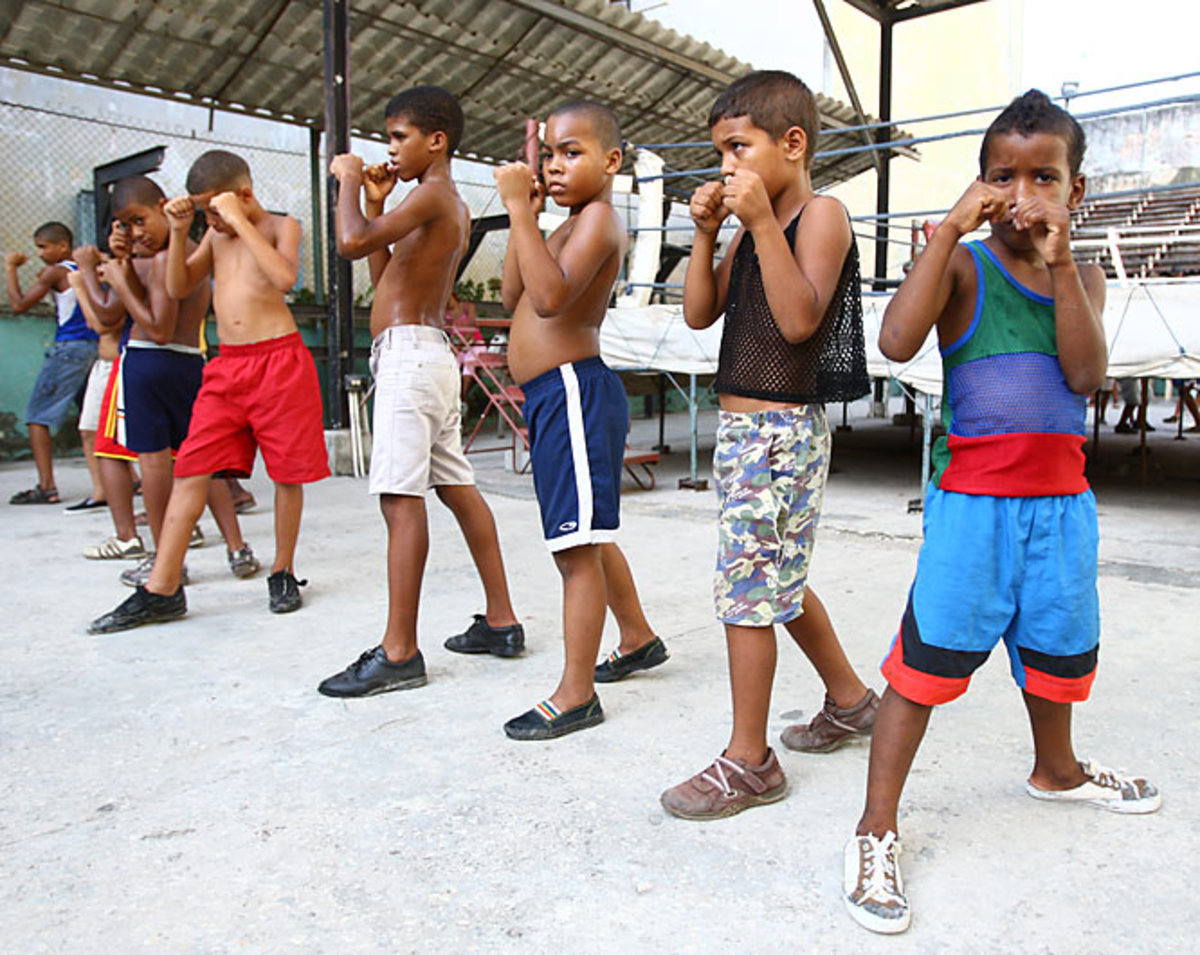
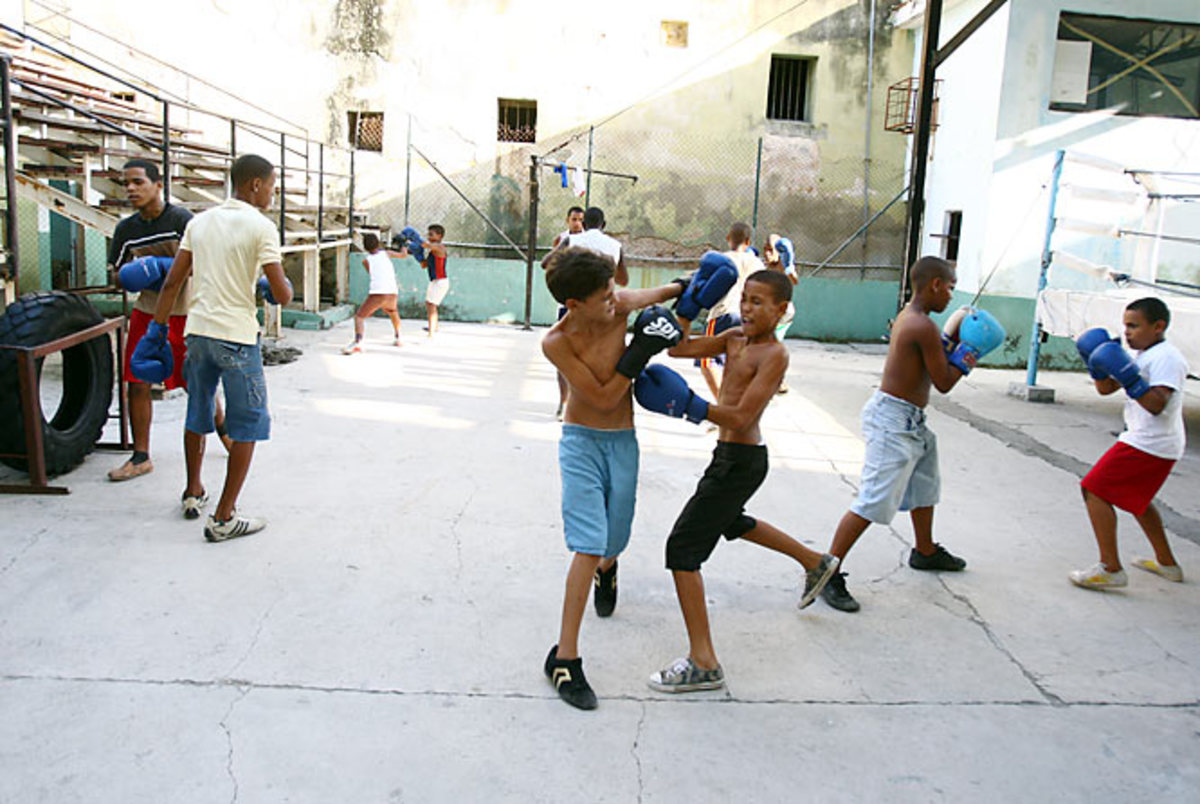
The Rafael Trejo Gymnasium is an open-air boxing gym in Old Havana near the train station that has produced some of Cuba's top–and future–boxers over the years.

SI's Simon Bruty attended a training session at the Rafael Trejo Gymnasium with young boxers aged 7 to 14 led by instructor Hector Vinent, the light-welterweight gold medalist from the 1992 and '96 Olympic Games.
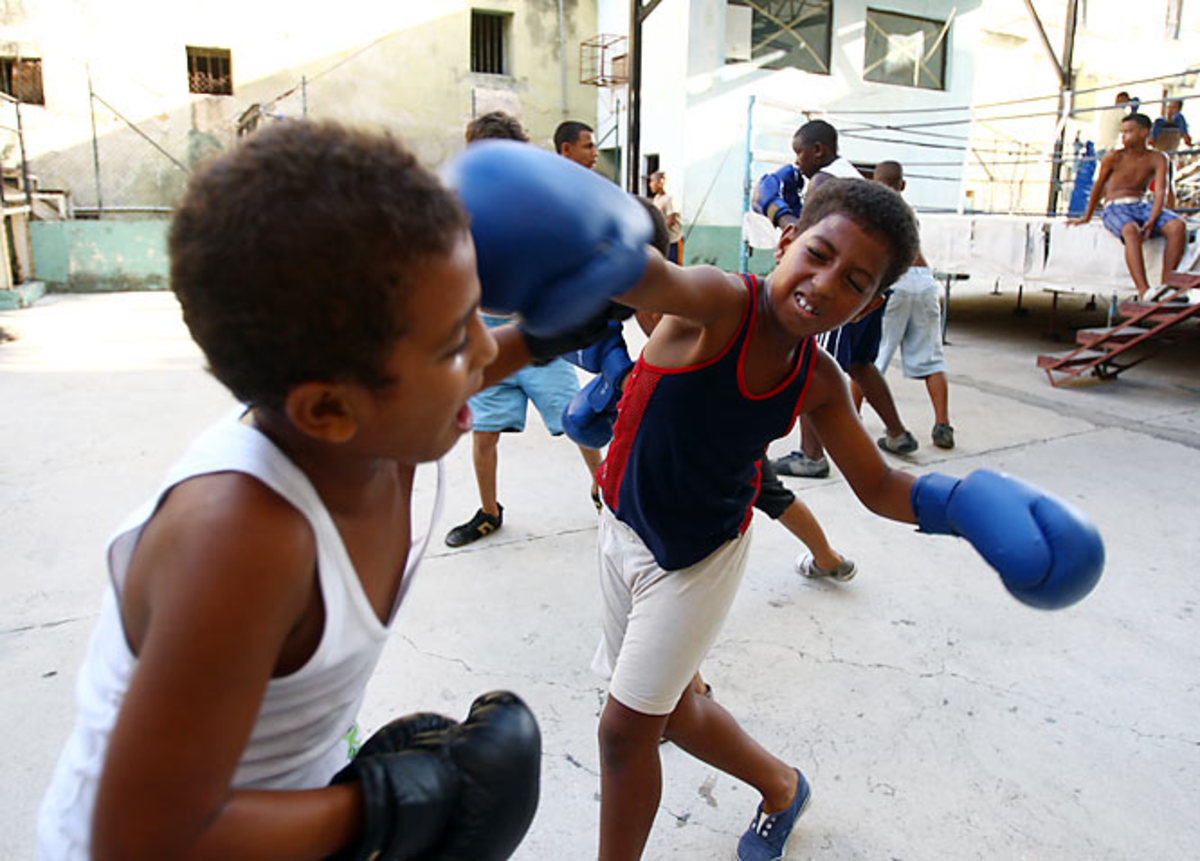
Youngsters exchange jabs at the Rafael Trejo Gymnasium in Old Havana.
More sparring sessions at the Rafael Trejo Gymnasium in Old Havana.
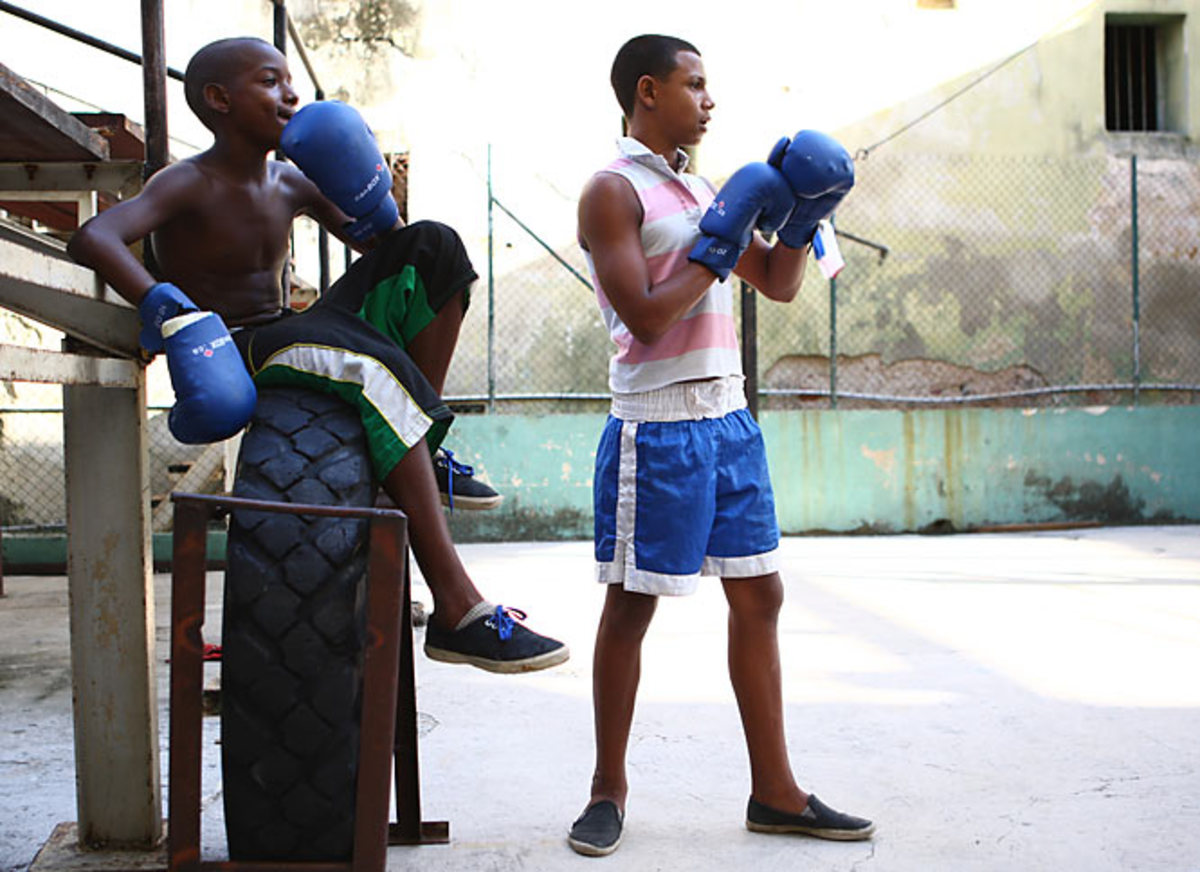
Young boxers wait for their turn at the Rafael Trejo Gymnasium.
Keller is a big part of the American goalkeeping tradition. The National Soccer Hall of Fame inductee starred in England, Spain, Germany and the U.S., earned 102 caps and went to four World Cups. He now assists Klinsmann.
"There have been some opportunities but nobody’s taken them,” Keller said. “Nobody then said, ‘Wow, OK, he’s the next guy.’"
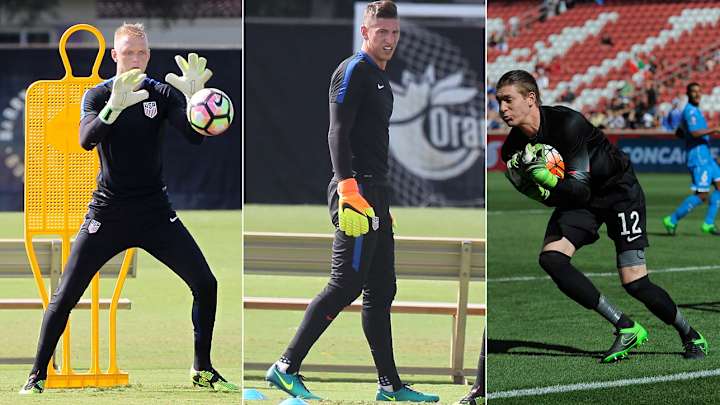
So now, Klinsmann is hoping to jumpstart a new era in goal. World Cup qualifiers against Mexico and Costa Rica are around the corner, but the U.S. staff knows exactly what it has in Howard and Guzan and doesn’t think friendlies against Cuba and New Zealand (next Tuesday in Washington, D.C.) will make much of a difference. So they’ve both been left behind this month. Instead, Klinsmann called in Ethan Horvath (Molde FK), David Bingham (San Jose Earthquakes) and William Yarbrough (Club León). They’ve earned a combined three senior caps.
“It’s our job to bring along the next wave of goalkeepers and try to give them opportunities,” Klinsmann told reporters in Florida. “The only way they can grow is if you let them play. We see obviously a lot in training sessions, but training and games is two different worlds so hopefully we can get them on the field and give them another kind of maturing opportunity.”
Added Keller, “There’s a point in time where you have to figure out if somebody is good enough in case it does matter … What you’re doing is trying to figure out worst-case scenarios. You’re trying to see, what if [Howard and Guzan are unavailable]? Who now, from what we’ve seen, can do the job?
“This is a rare opportunity to give a couple other people some games just to give you peace of mind,” Keller said.
Klinsmann calls on young GKs, veteran core, Pulisic, Morris for USA's October friendlies
Horvath, 21, was the third goalie on the Copa América Centenario squad and seems likely to start at least one of the two upcoming friendlies. Although the Denver area native has yet to play for the senior team, he’s established himself as a starter in Europe and now is nearing the end of his fourth season at Molde. It’s his second campaign as the No. 1.
Bingham, 26, has been starting for his hometown Earthquakes for two seasons and appears to have emerged as Klinsmann’s favorite MLS netminder. He’s leapfrogged Bill Hamid and Sean Johnson, who have obvious talent but issues with injury or inconsistency, and 37-year-old Real Salt Lake icon Nick Rimando. Bingham shut out Canada in February in his only U.S. appearance and told reporters in Florida, “Obviously we’re here for a reason, and it’s up to us to take the chance that we’re given.”
Yarbrough, 27, is a two-time champion with Léon. In early 2015, the Mexican-born son of American missionaries chose to suit up for the U.S. rather than El Tri. He’s played twice in relief of Rimando.
“It’s a huge opportunity,” Yarbrough said this week. “Knowing that Howard and Guzan aren’t in camp, we know that it’s a big opportunity for us to prove why we’re here and it’s a great shot and a great opportunity. Sometimes opportunities like this only come once. We feel prepared. I feel prepared and it’s up to me now to show coaches what I can do on the field and what I can do for this team.”
Roadmap to Russia: The USA's 2018 World Cup qualifying Hexagonal task
As much respect as Klinsmann, Keller and the rest of the staff have for Howard and Guzan, they’d very much like to see someone challenge the incumbents and establish himself as the next in a line of great American goalies. For a couple years it seemed like either Hamid or Johnson would do so. And they still might. Johnson is 27 and back in net for the Chicago Fire and Hamid is only 25 and seems to secure (or steal) points for D.C. United on an almost regular basis. Others have drifted in an out of contention.
Cody Cropper, 23, couldn’t crack the lineup in four seasons at Southampton and now is backing up Bobby Shuttleworth at the New England Revolution. Zack Steffen, 21, played for U.S. youth teams and signed with SC Freiburg last year. But he’s now on Columbus Crew SC’s books and has played on loan this year with the USL’s Pittsburgh Riverhounds. New York Red Bulls stalwart Luis Robles is the reigning MLS Goalkeeper of the Year, has experience in Germany and did well at the most recent U.S. January camp. But he’s 32 and not really a candidate to be Howard’s long-term successor.
The U.S. has always had a successor. And this week, Klinsmann and his staff are starting to think about the next one. They’ll hope that Howard and Guzan maintain their health and form for another two years and that in the meantime, someone, anyone, emerges to pick up the mantle.
“Pro sports is about opportunity and particularly in goalkeeping, when there’s only one of you. You’re not substituted. You can’t come off the bench. Look at what Christian did the other day for Dortmund [against Real Madrid]. Look what he did against St. Vincent. You don’t get to do that as a goalkeeper,” Keller said. “When am I going to get an opportunity to play an Ethan Horvath, to see if he can do it? And when you do it, you do it in these odd friendlies ... This is a rare opportunity to give a couple other people some games just to give you peace of mind."
 Add us as a preferred source on Google
A lifelong soccer player, coach and fan, Brian Straus joined SI in 2013 after covering the sport for The Washington Post, AOL and Sporting News.