%20%20--%3E%0A%3Csvg%20version%3D%221.1%22%20id%3D%22Layer_1%22%20xmlns%3D%22http%3A%2F%2Fwww.w3.org%2F2000%2Fsvg%22%20xmlns%3Axlink%3D%22http%3A%2F%2Fwww.w3.org%2F1999%2Fxlink%22%20x%3D%220px%22%20y%3D%220px%22%0A%09%20width%3D%2239px%22%20height%3D%2240px%22%20viewBox%3D%220%200%2039%2040%22%20enable-background%3D%22new%200%200%2039%2040%22%20xml%3Aspace%3D%22preserve%22%3E%0A%3Cpath%20fill%3D%22%23FFFFFF%22%20d%3D%22M38.5%2C7H28.2v26h10.3V7z%22%2F%3E%0A%3Cpath%20fill-rule%3D%22evenodd%22%20clip-rule%3D%22evenodd%22%20fill%3D%22%23FFFFFF%22%20d%3D%22M26.1%2C25.5c0%2C5.8-4.1%2C7.5-12.9%2C7.5C3.9%2C33%2C0%2C31.2%2C0%2C25.2v-1.1h11.6%0A%09v2.4c0%2C0.7%2C0.1%2C1.4%2C1.2%2C1.4c1%2C0%2C1.2-0.4%2C1.2-1.3v-0.9c0-1.6-0.9-1.6-3.5-2.2C2.2%2C21.7%2C0%2C19.7%2C0%2C15.3v-0.9C0%2C9.3%2C5.5%2C7%2C12.9%2C7%0A%09c10.2%2C0%2C12.8%2C2.6%2C12.8%2C7.4v1.8h-11v-2.9c0-0.6-0.4-1.1-1.2-1.1c-0.6%2C0-1.2%2C0.4-1.2%2C1.1v0.9c0%2C1.5%2C0.9%2C2%2C3.3%2C2.5%0A%09c8%2C1.6%2C10.5%2C3.3%2C10.5%2C7.5V25.5z%22%2F%3E%0A%3C%2Fsvg%3E%0A)
Entering tough Costa Rica environment, Klinsmann turns to his 'difference-makers'
SAN JOSÉ, Costa Rica — The numbers are stark. Not only has the U.S. never won a game in Costa Rica in 10 tries—and it's gone a putrid 0-8-1 in World Cup qualifiers there—but the final scores have rarely been even close. This small Central American country, the most unkind road destination in U.S. Soccer history, has a giant hex on the U.S. when it comes to the Hex.
In fact, here are the scores from the last seven times the U.S. has played in Costa Rica:
3-1
3-1
3-0
2-0
2-1
3-2
2-1
But after suffering a brutal start to the Hex in a 2-1 loss to Mexico on Friday—the U.S.’s first home World Cup qualifying defeat since 2001—the pressure has ratcheted up on the Americans to take something, anything, out of these first two final-round qualifiers when the U.S. meets Costa Rica on Tuesday (9:05 p.m. ET, BeIN Sports, NBC Universo).
On familiar ground, USMNT enters Costa Rica match with must-win mentality
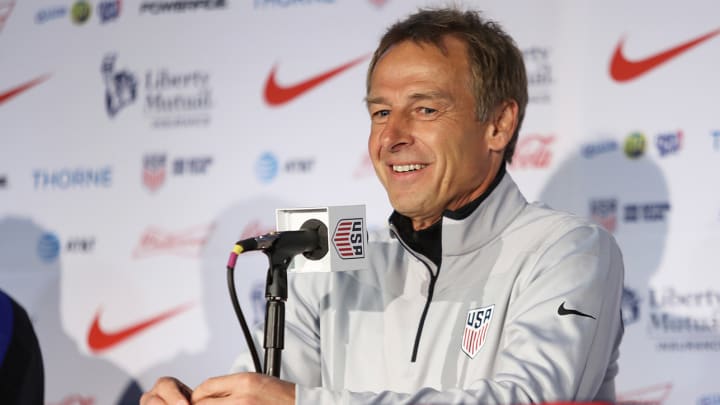
“We can win here, we can absolutely win here,” said U.S. coach Jurgen Klinsmann in a roundtable with print reporters at the team hotel on Monday. “Will it take a lot of effort and things need to click? Absolutely. We should have beaten Mexico a couple days ago. We didn’t knock them off with the second goal, and they out of the blue get a corner kick, an individual mistake and they scored. Boom. There go the three points you wanted.”
“We all understand we need points to qualify,” Klinsmann added later. “The first game, the result sits right here [pointing to the pit of his stomach]. It puts us on the spot for tomorrow night. We all know that. Players know that. The staff knows that. But it’s absolutely doable.”
Klinsmann addressed several topics during his nearly hour-long discussion, including:
• Was he too ambitious in shaking up the U.S. into an unaccustomed 3-5-2 formation for the big rivalry game against Mexico on Friday?
“I think it was not too ambitious,” Klinsmann said. “I think even continuing that formation would have worked out if we adjusted better in the one-against-one situations. We were just five or six yards away from [Giovani] Dos Santos or [Hector] Herrera in certain moments. I said before the game: ‘Guys, if there’s ever a moment we switch back to make you feel better, no problem.' And we did that.”
GALLERY: USA vs. Mexico through the years
USA vs. Mexico Soccer
November 11, 2016 – Mexico 2, USA 1
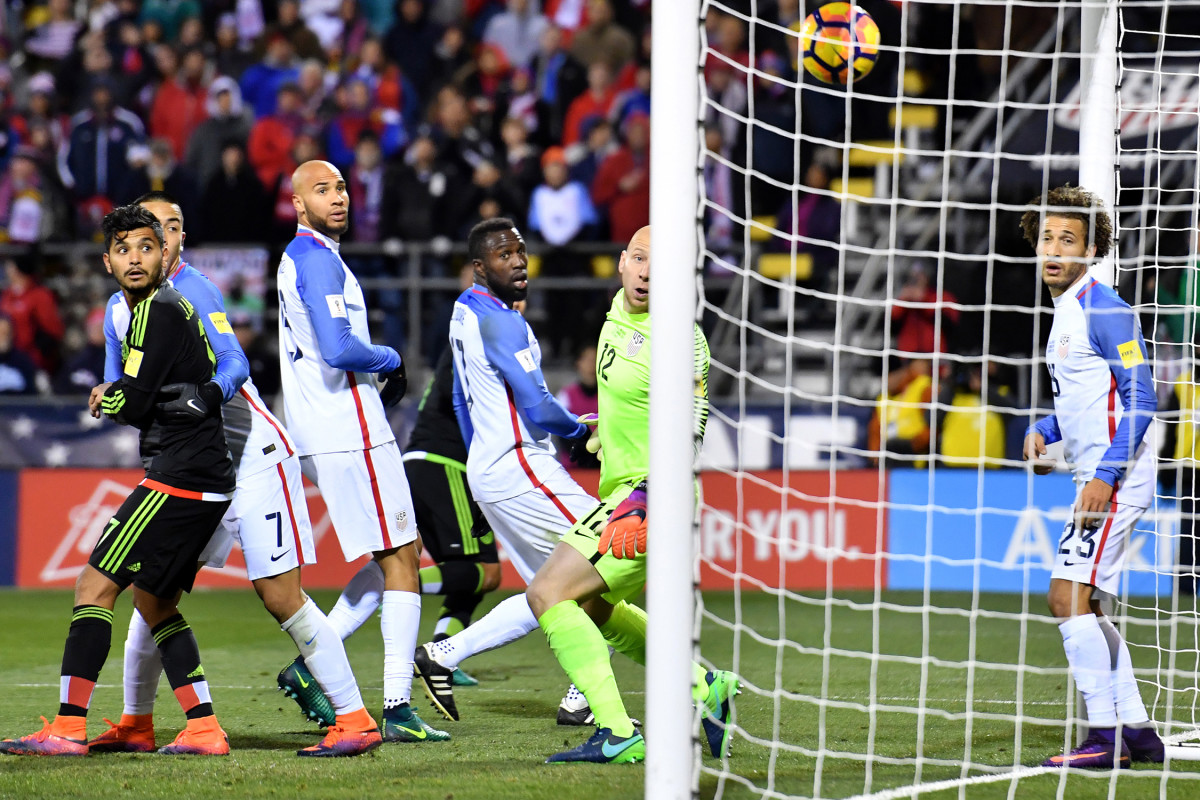
USA and Mexico players watch Rafa Marquez's 89th-minute header find the net in a famous World Cup qualifying win in Columbus for El Tri.
October 10, 2015 – Mexico 3, USA 2 (AET)
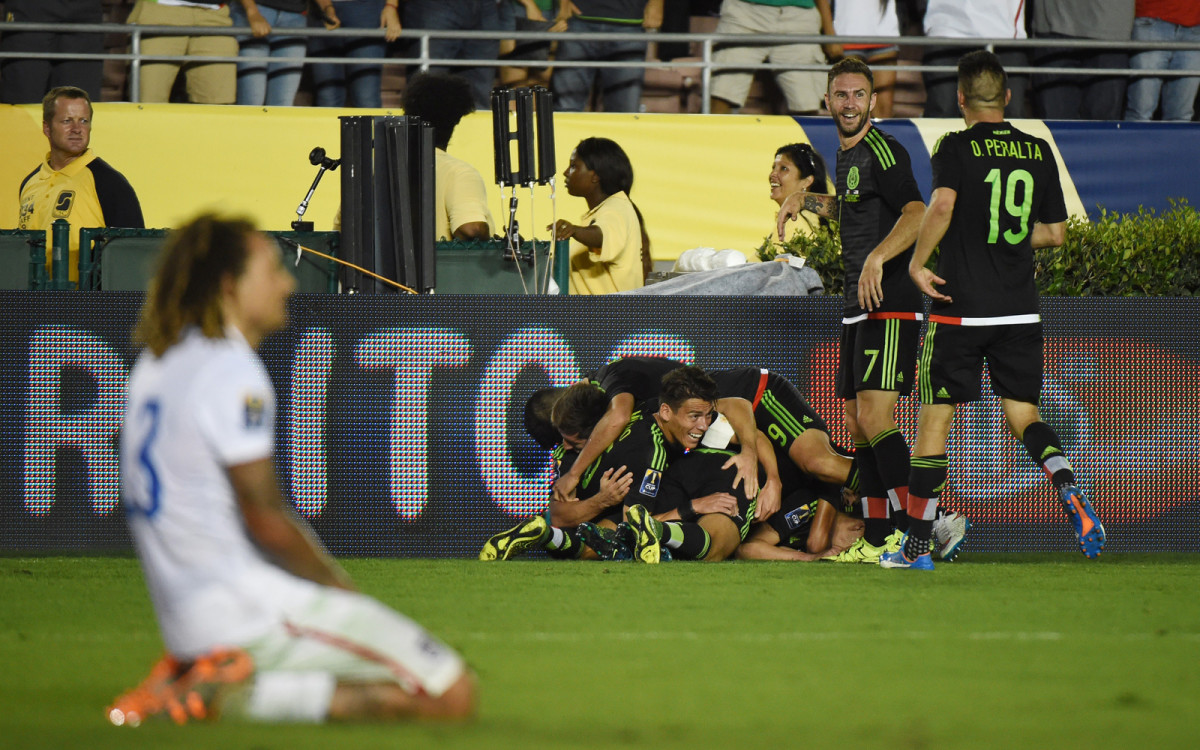
Jermaine Jones falls to his knees in disappointment as Mexico celebrates after Paul Aguilar's sensational volley in extra time captured the CONCACAF Cup for El Tri and sends the U.S. rival to the 2017 FIFA Confederations Cup.
April 15, 2015 — USA 2, Mexico 0
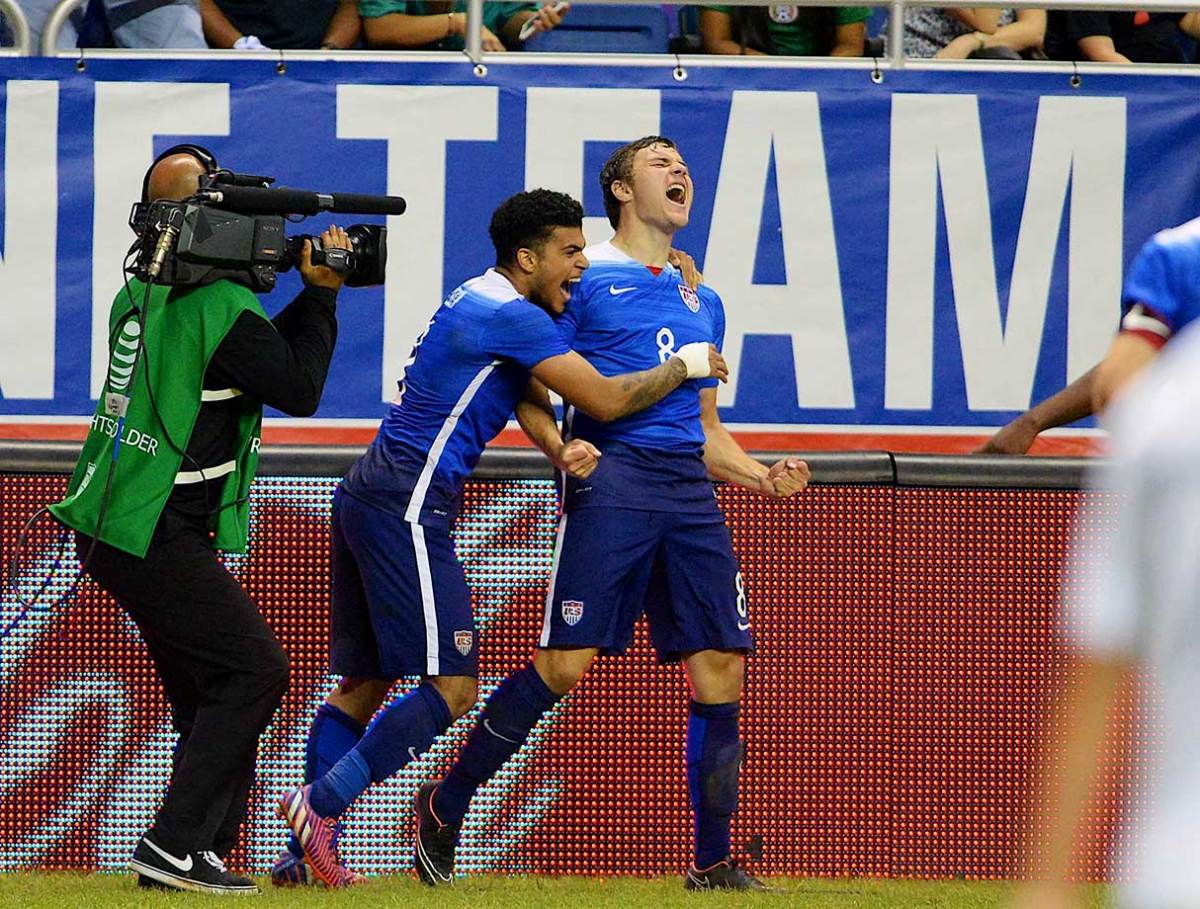
Stanford University's Jordan Morris marked his first senior national team start with his first international goal, sparking the USA in another 2-0 triumph over Mexico, this one at the Alamodome in San Antonio.
September 10, 2013 — USA 2, Mexico 0
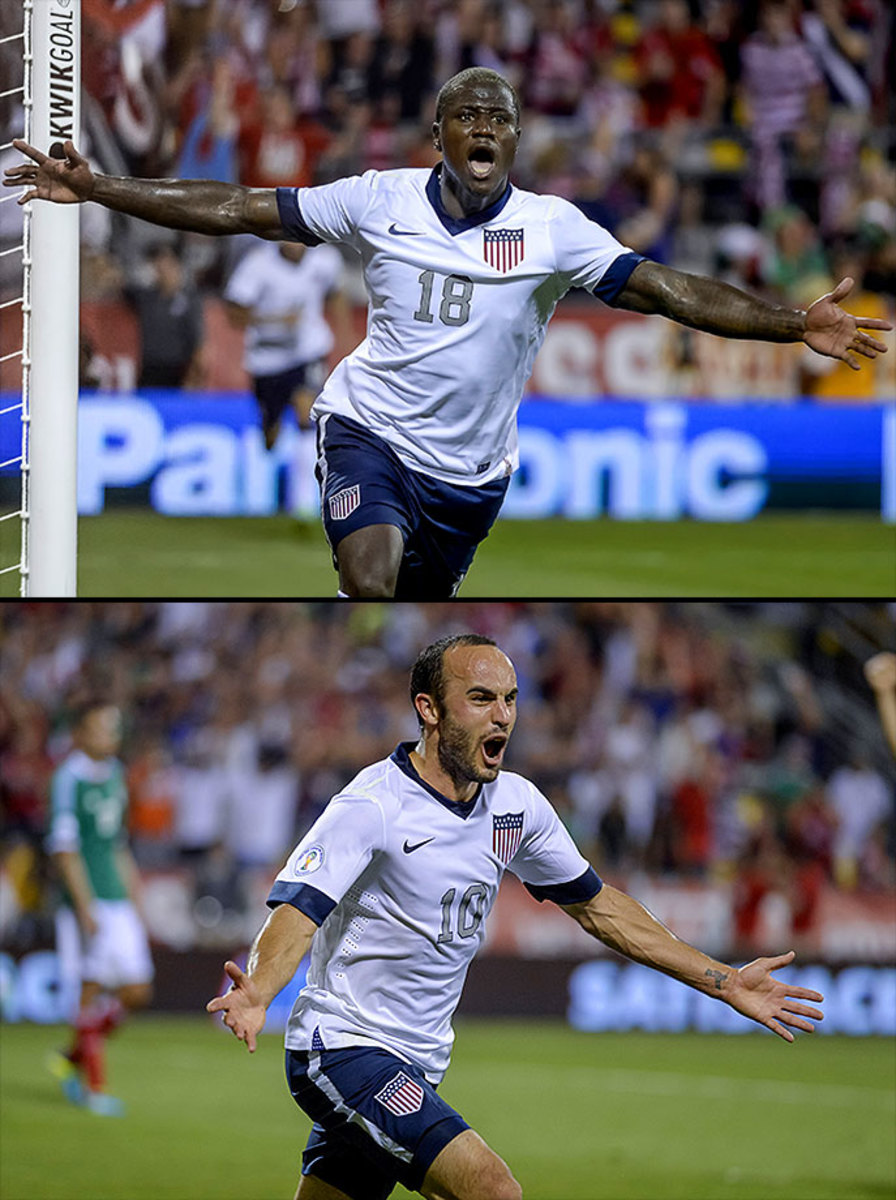
Eddie Johnson and Landon Donovan scored second-half goals to beat El Tri by the same score for the fourth consecutive qualifier in Columbus, Ohio.
March 26, 2013 — USA 0, Mexico 0
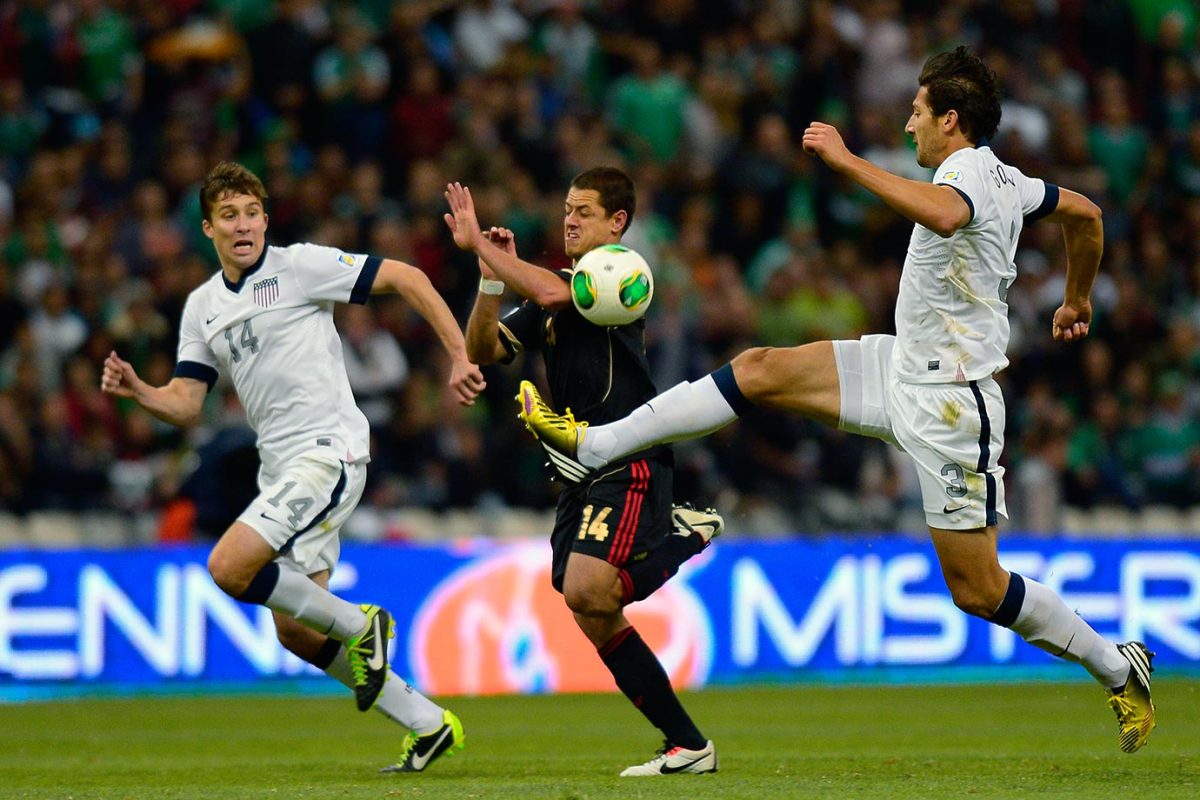
Clint Dempsey captained the U.S. to a 0-0 draw at Estadio Azteca, the second time ever the Americans registered a point in World Cup qualifying in Mexico (the other a 1997 tie). Defenders Omar Gonzalez and Matt Besler were the stars as Mexico couldn't cash in on several opportunities. The U.S. escaped to remain in second place in CONCACAF qualifying.
August 15, 2012 — USA 1, Mexico 0
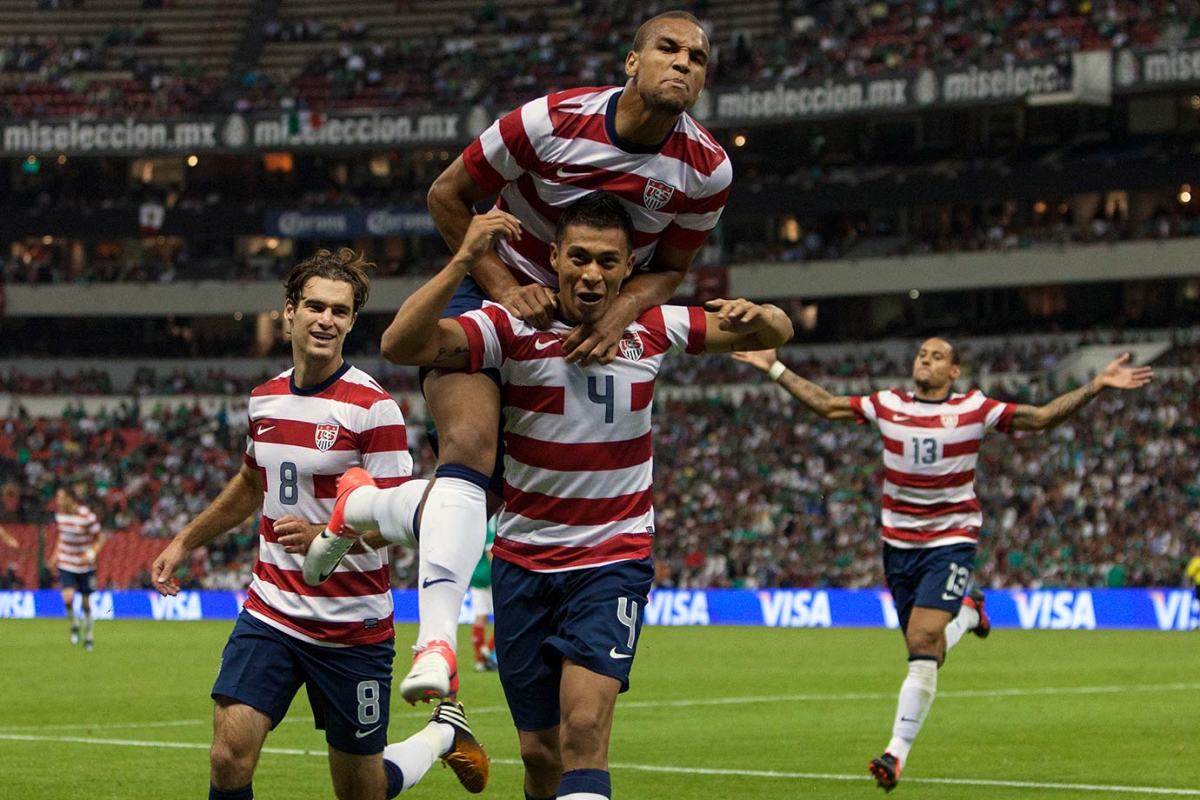
It took 25 attempts, but after this friendly, the United States could finally say that it had won at Mexico City's Azteca Stadium. Despite being outplayed for most of the match, the U.S. won thanks to an 80th-minute goal from Michael Orozco Fiscal — the first international goal of his career.
August 10, 2011 — USA 1, Mexico 1
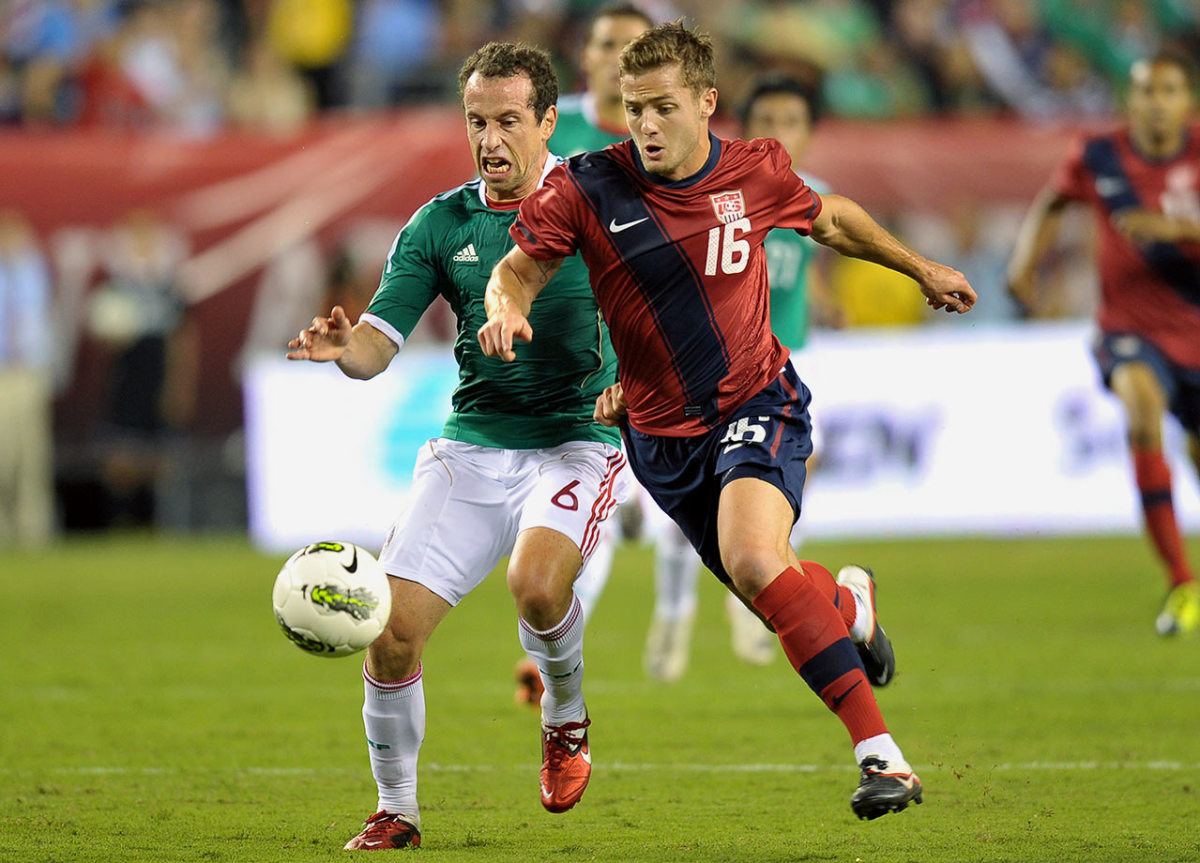
Head coach Jurgen Klinsmann's U.S. debut got off to a rough start, as the Americans trailed Mexico, 1-0 after an uninspired first half in Philadelphia. The U.S. showed more verve after halftime, though, and an impressive display from Brek Shea and a 73rd-minute goal from Robbie Rogers led to a 1-1 draw.
June 25, 2011 — Mexico 4, USA 2
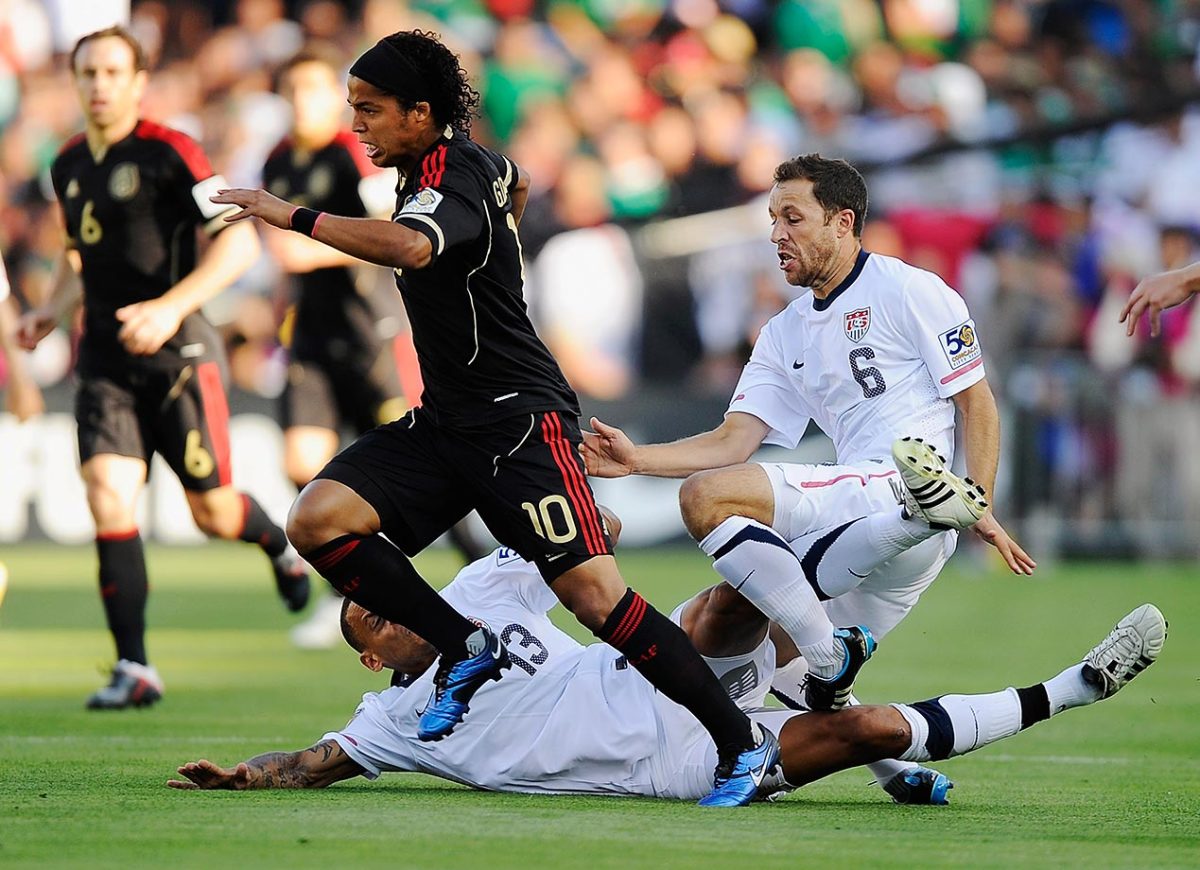
In the Gold Cup final, Mexico captured its second straight title in the battle for CONCACAF bragging rights and secured a berth in the 2013 Confederations Cup. Pablo Barrera scored twice; Giovani Dos Santos and Andres Guardado also had goals. The U.S. was up 2-0 early on Michael Bradley and Landon Donovan goals, but poor defending (partially due to the loss of Steve Cherundolo by injury) doomed the Americans.
August 12, 2009 — Mexico 2, USA 1
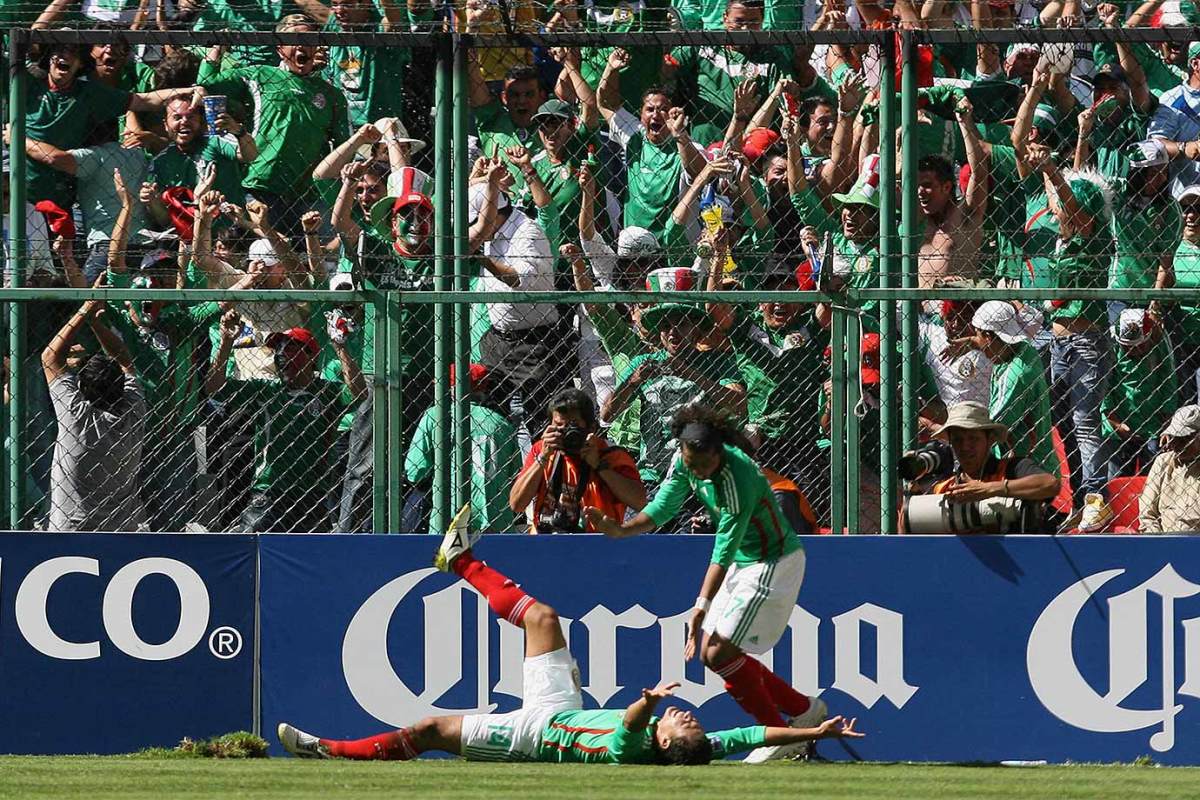
The U.S. took its first-ever lead at Azteca Stadium, but went on to lose 2-1 in what was a critical World Cup qualifier for Mexico. The win changed the tide for the then-struggling Mexican squad, as it went on to go 3-0-1 in its next four matches to earn a trip to South Africa. The U.S. still went on to finish first in CONCACAF qualification.
July 26, 2009 — Mexico 5, USA 0
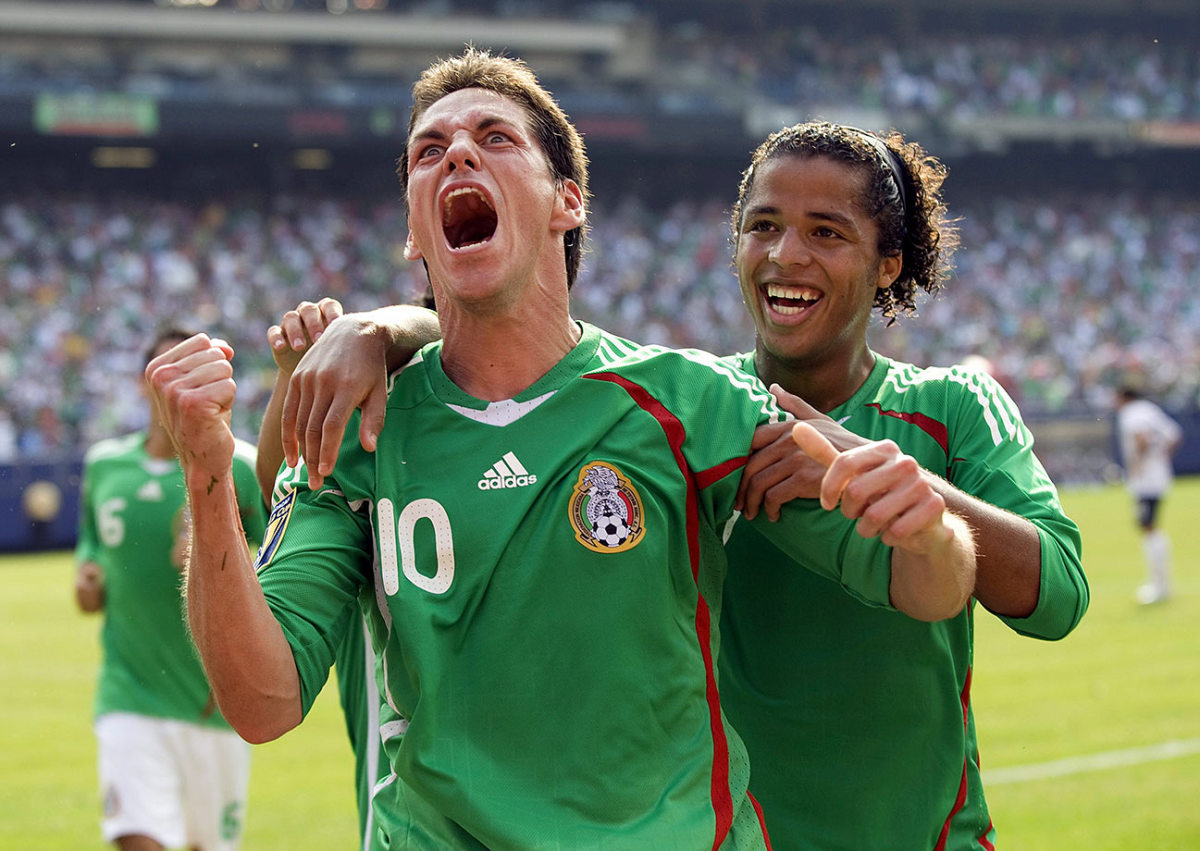
Mexico put an emphatic end to the Americans' 9-0-2 home streak against "El Tri." The Mexicans took the Gold Cup from the two-time defending champion, with five different players scoring goals in the second half at Giants Stadium.
February 11, 2009 — USA 2, Mexico 0
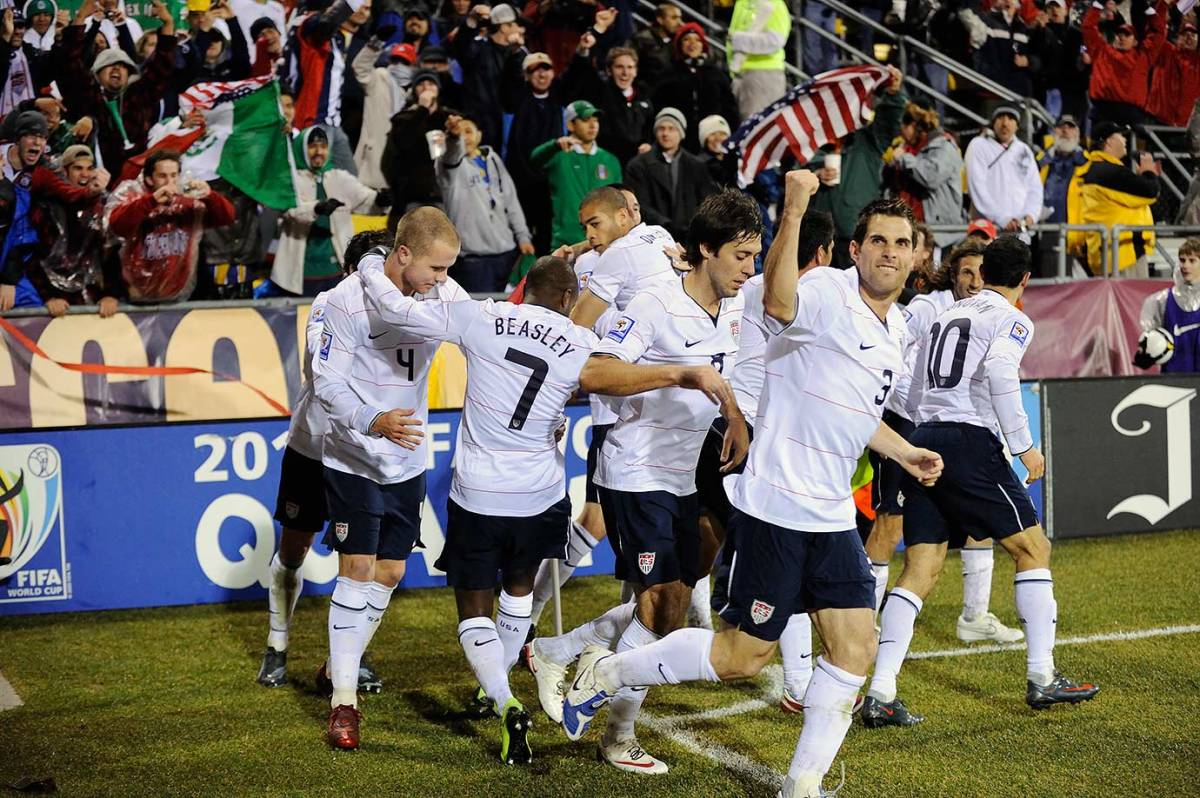
Two goals from Michael Bradley gave the U.S. another home victory over Mexico. It marked the eleventh consecutive time that the Americans had gone unbeaten against Mexico when playing on U.S. soil.
June 24, 2007 — USA 2, Mexico 1
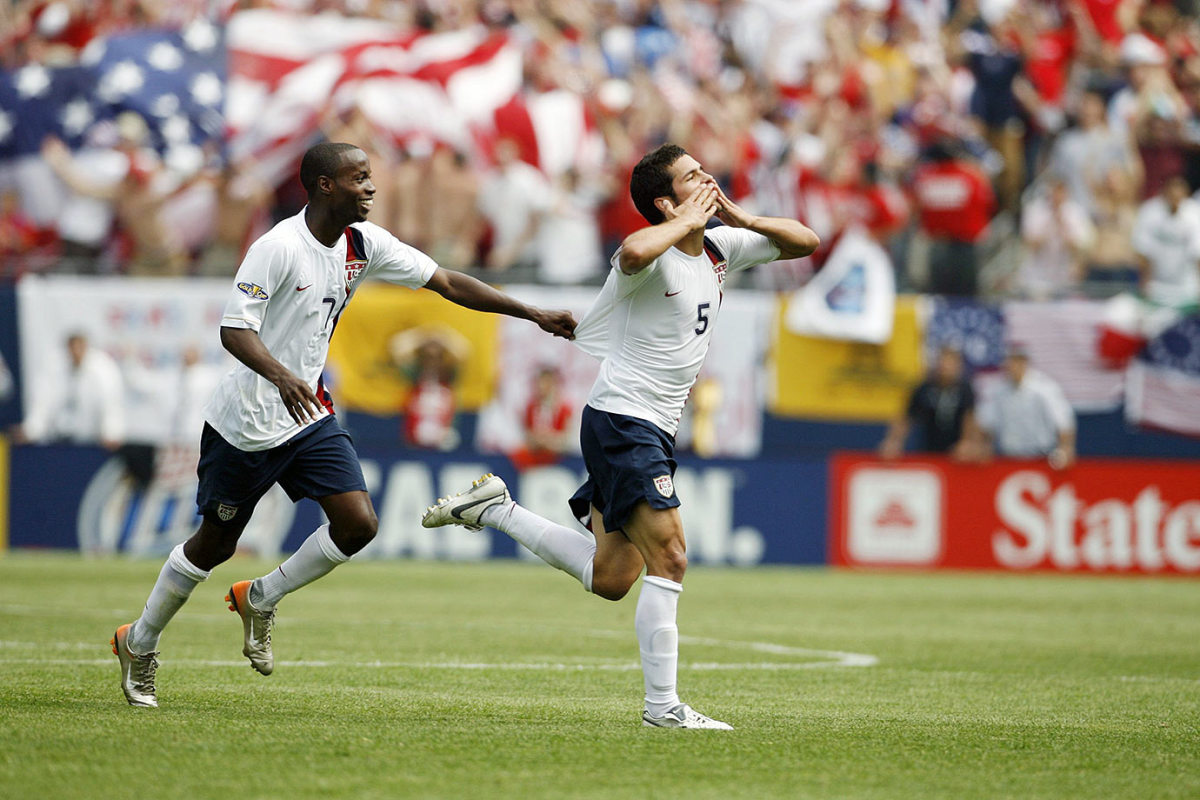
Down 1-0, second-half goals from Landon Donovan and Benny Feilhaber gave the U.S. the victory in the 2007 Gold Cup finals. The win earned the Americans a spot in the 2009 Confederations Cup, where they achieved their famous upset over Spain.
September 3, 2005 — USA 2, Mexico 0
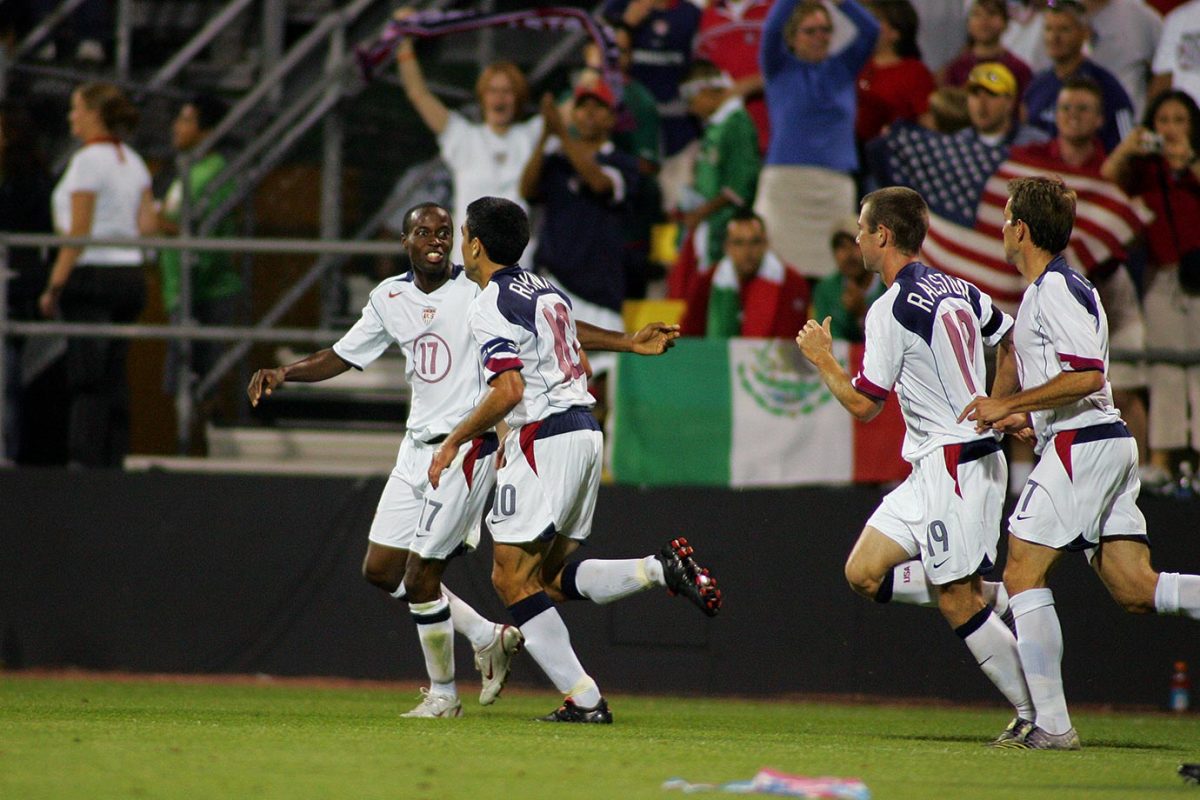
A 2-0 victory over "El Tri" clinched a spot in the 2006 World Cup, with goals coming from Steve Ralston and DaMarcus Beasley.
May 8, 2003 — USA 0, Mexico 0
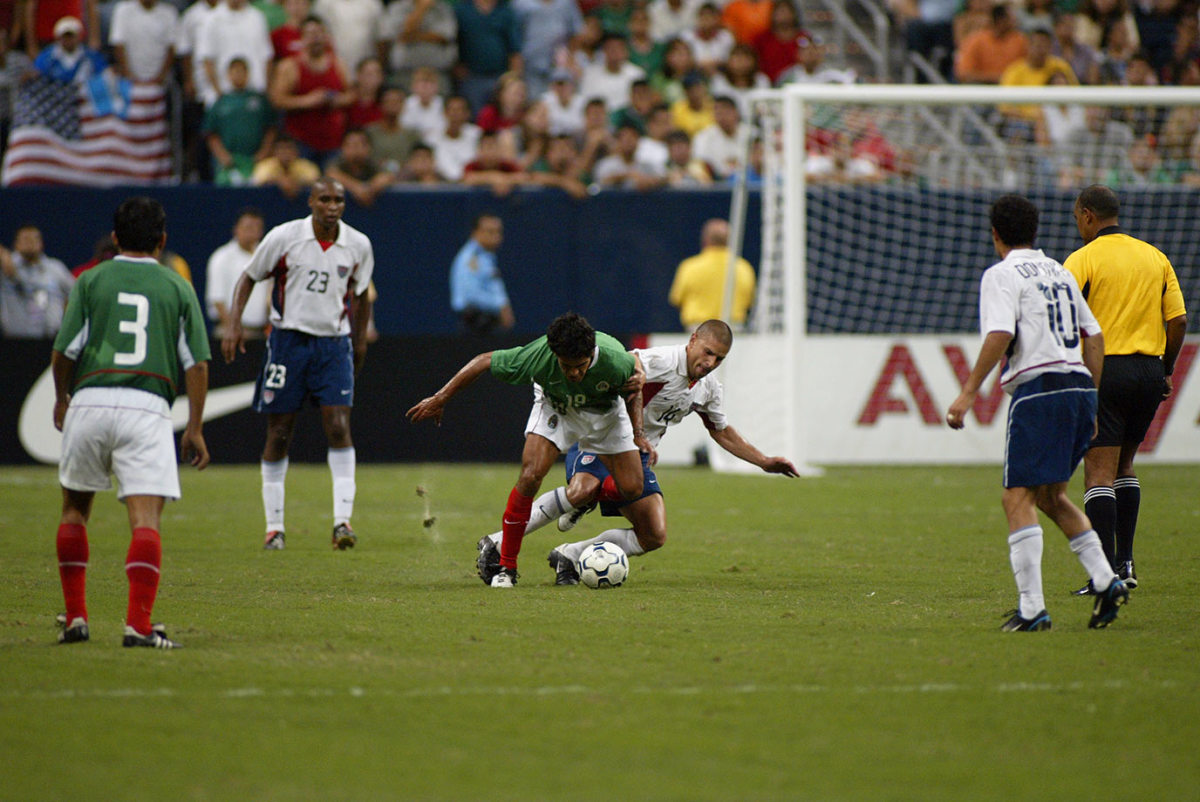
In their first meeting since the 2002 World Cup, an all-MLS squad of Americans played Mexico to a 0-0 draw in front of more than 69,000 people in Houston.
June 17, 2002 — USA 2, Mexico 0
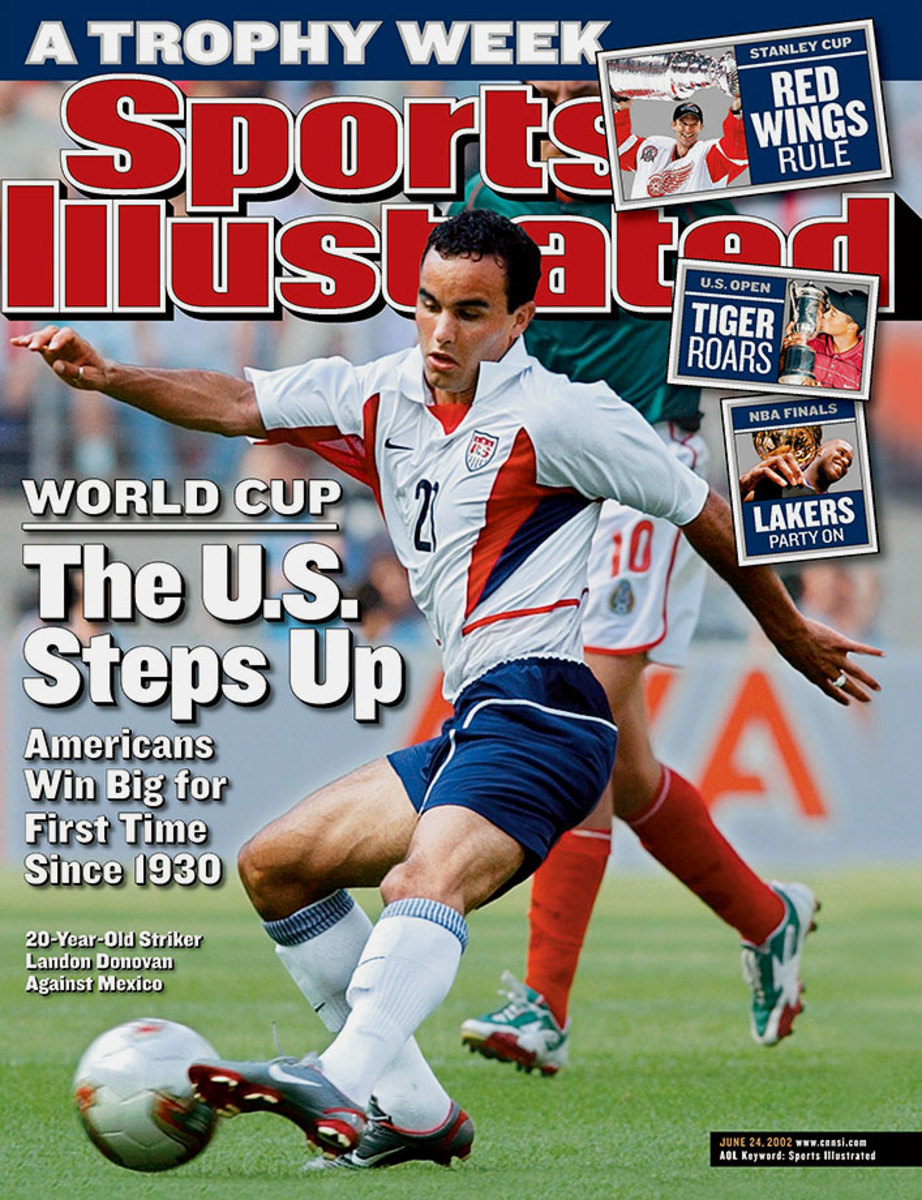
Arguably the biggest win in U.S. soccer team history came against its archrivals at the 2002 World Cup. Brian McBride and Landon Donovan gave the Americans a 2-0 victory in South Korea to send their team to the quarterfinals. It is the furthest stage the team has reached in the World Cup since 1930.
July 1, 2001 — Mexico 1, USA 0
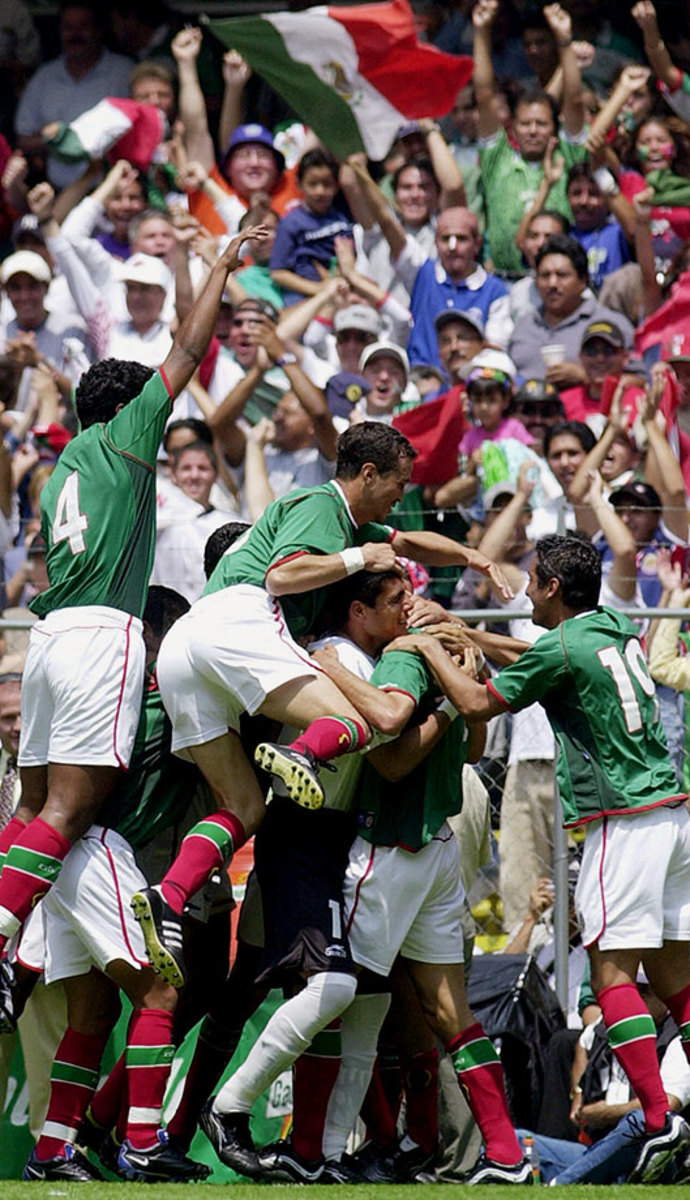
Needing a win to stay in contention for the 2002 World Cup, the Mexicans won 1-0 at Azteca Stadium, making their record 21-0-1 when hosting the Americans.
February 28, 2001 — USA 2, Mexico 0
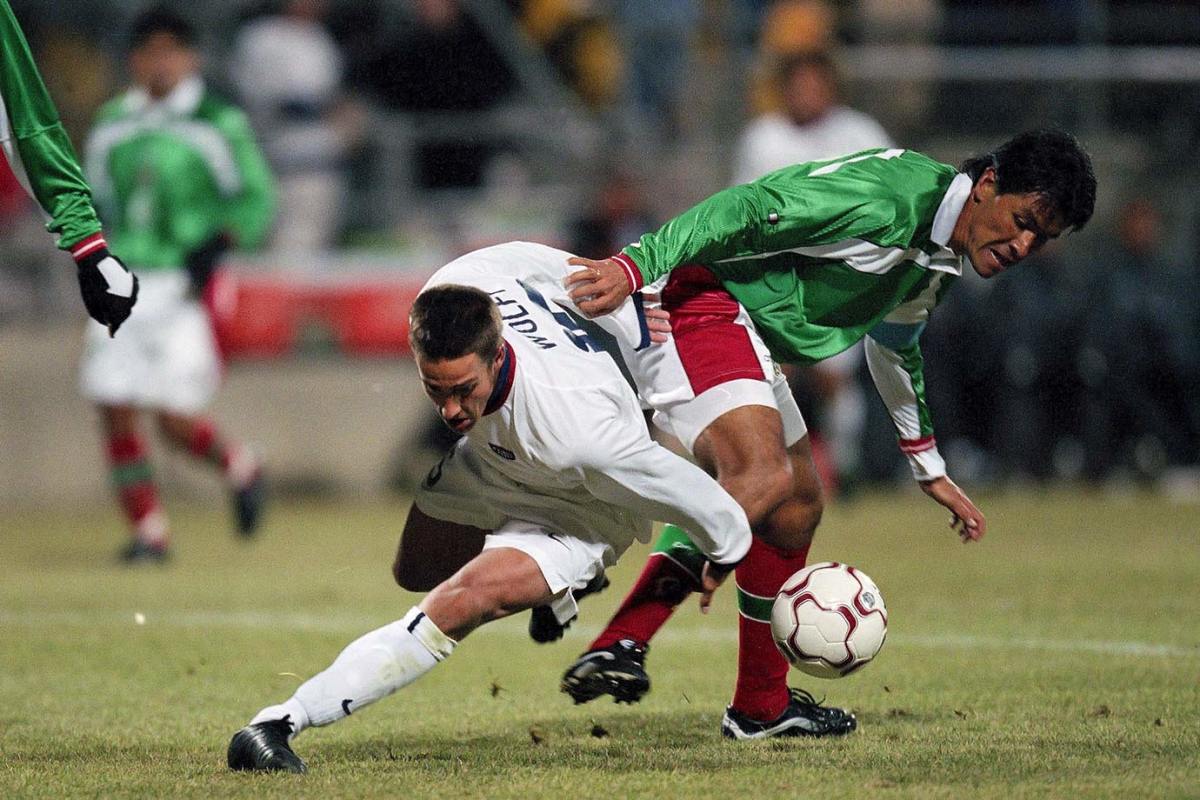
For the first time ever, the Americans won their third consecutive game against Mexico. The victory came in the World Cup qualifying finals and was held in Columbus, Ohio.
August 1, 1999 — Mexico 1, USA 0
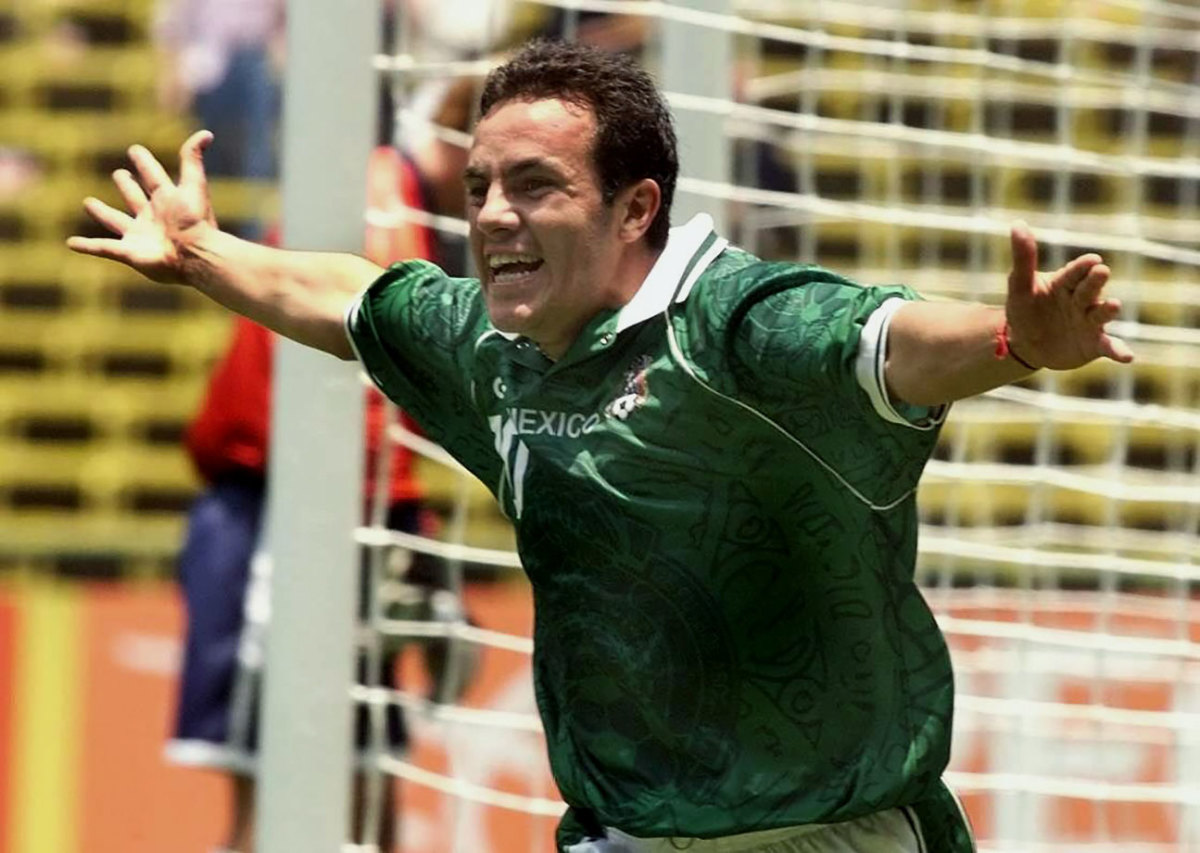
Cuauhtemoc Blanco's goal in extra time eliminated the U.S. in the semifinals of the 1999 Mexico City Confederations Cup. The win capped off a long tradition of Mexican dominance over the American side, a streak that shortly thereafter ended, as the Americans won the next three matches against their rivals.
July 17, 1995 — USA 0, Mexico 0
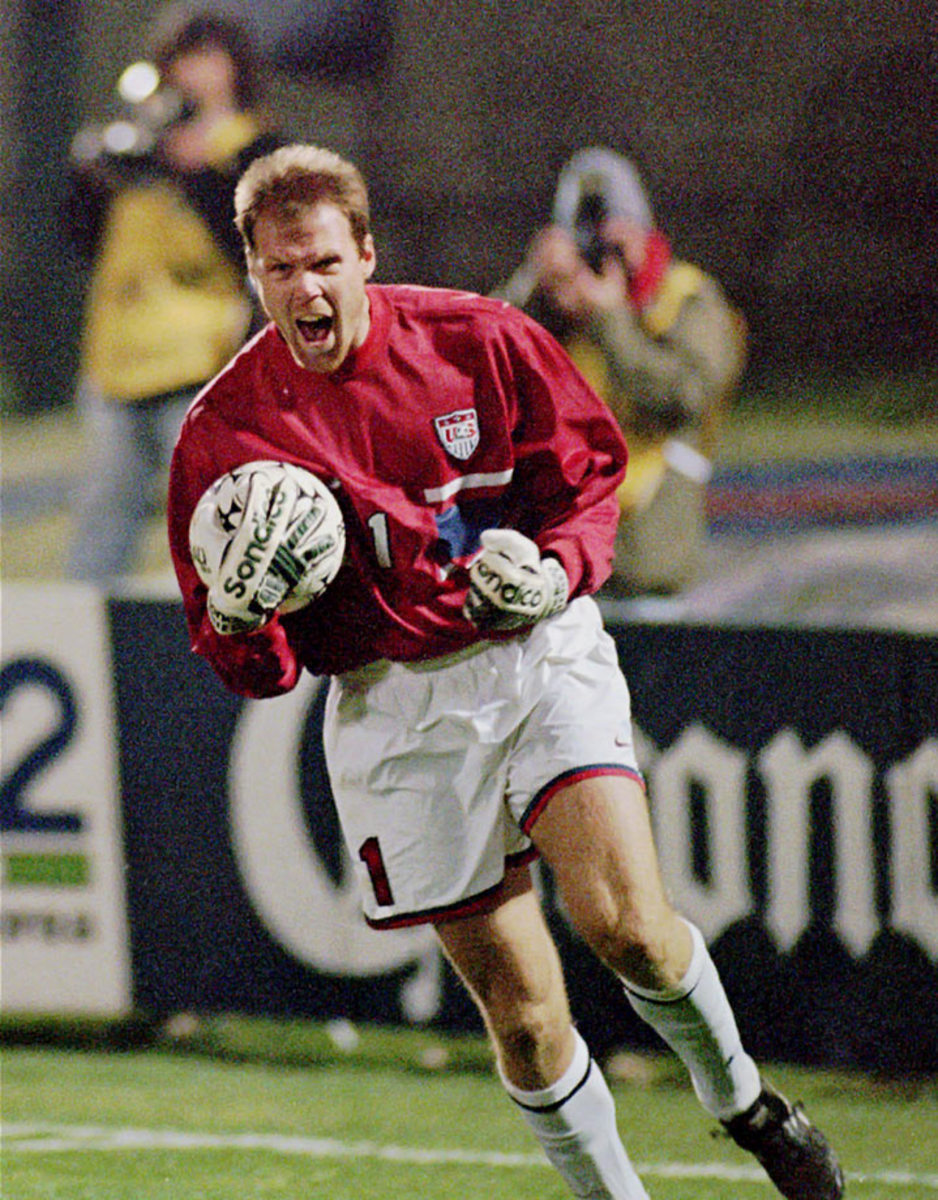
The USA outlasted Mexico in a penalty shootout to reach the semifinals of the 1995 Copa America. After a 0-0 draw, goalkeeper Brad Friedel was the hero in PKs, making two saves. The U.S. made all four of its attempts and advanced.
• Klinsmann said John Brooks apologized to the team for allowing his mark, Rafa Márquez, to get free for a wide-open header on Mexico’s late corner-kick goal.
“It’s important that you realize that you made the mistake,” Klinsmann said. “Nobody chops off your head, but let’s make sure it doesn’t happen again. Let’s make sure you’re not switching off the last minute of the game.”
• Klinsmann’s relationship with Michael Bradley is a fascinating one. The coach and his captain had different takes on what went wrong with the approach against Mexico on Friday, with Klinsmann saying Bradley and Jones didn’t do enough in one-on-one defensive matchups, while Bradley spoke more than once of Mexico having “a clear idea” of what it was doing, with the implication being that the U.S. did not.
On Monday, Klinsmann focused on the term “difference-maker” to describe what he wants from his players on the national team, including Bradley.
“I see Michael, we go back through the thought process of: Who is a difference-maker in what way?” Klinsmann said. “I always say for five years now, Michael Bradley is a difference-maker when he goes through the midfield with the ball at his feet, when he plays a final pass, when he maybe does a chip over the back line, when he breaks into the box, when he plays a killer ball, when he has that energy he transmits with his dynamic approach where the opponent is literally kind of just frozen.”
“Jermaine [Jones] is a difference-maker with his energy, being a s---head, being the personality he is, because they back off. Dos Santos sees Jermaine and goes five yards away. Every one of our guys we hope to be difference-makers. Because that’s why you’re a national team player. For Michael to play the same role he does in Toronto for us, just being in front of the back line and floating, being a nice passer, which he does undoubtedly well, it’s all nice, no doubt. But he’s not making a difference for us.”
Despite rust, recent injury, Jermaine Jones remains a mainstay for Klinsmann, USA
“Tomorrow night, World Cup qualifier, Costa Rica, good team, went to the quarters of the World Cup, we need difference-makers. We have these discussions in every camp, Michael and I, and it’s cool. I say, ‘Michael, I know you can play the 6. I’m not saying you can’t play the 6. But I want the Michael that has the ball at his feet and goes vroom! Like you beat Germany, Holland and all these games.’ In the second half against Mexico, he wins the ball up the field and he shoots. He could have passed it over to Bobby, but that is a difference, that moment, stepping in there, bringing that ball and suddenly we have a big chance to score the second goal. These are the moments he needs to do that.”
• There are plenty of varying opinions on whether Klinsmann has been a good coach for the U.S., but one thing you have to give him credit for is his prospect-spotting of players like Bobby Wood (who Klinsmann stuck with through some lean times) and Jordan Morris (who was playing in the NCAA when Klinsmann was starting him in friendlies against Mexico).
What exactly was it that Klinsmann saw in those players that not everyone else did?
“That’s one part of why you want to be a coach,” Klinsmann said. “It’s something that drives coaches, to evaluate a talent, to have a vision for that talent, strength/weakness profiles and see where can you actually take that talent? A national-team player down the road has to be a difference-maker … When you see Bobby and you see his movements, you see his ball control, and then you analyze his character, you see there’s a tremendous inner drive to learn. You see he’s very raw, but you see he’s both-footed, good in the air if he reads it. A lot of the pieces you then analyze, you ask yourself, are those teachable? Can you develop those pieces to a level where he will be a difference-maker with those pieces?”
Sounders' Jordan Morris embraces the expected, unforeseen pressures in Seattle
“I had already had people tell me about Jordan. Then I saw him in the training scrimmage with Stanford and it just confirmed what people had told me about him already. Jordan is never intimidated. He’s a very balanced character, far more balanced than Bobby in that way. Has a totally different background. But he sees the space in front of him. He sees people and goes into more of a quarterback role. He sees between lines … He knows he has to work on his left foot, he has to work on his headers. But that’s all stuff to work on.”
“For us, the most fascinating part of the job is to guide players through their own career and hopefully take these pieces in a productive way. And now it depends a lot on their inner drive. That makes them the level where they will end up, that inner drive.”
 Add us as a preferred source on Google
A leading soccer journalist and best-selling author, Grant Wahl has been with SI since 1996 and has penned more than three dozen cover stories.