%20%20--%3E%0A%3Csvg%20version%3D%221.1%22%20id%3D%22Layer_1%22%20xmlns%3D%22http%3A%2F%2Fwww.w3.org%2F2000%2Fsvg%22%20xmlns%3Axlink%3D%22http%3A%2F%2Fwww.w3.org%2F1999%2Fxlink%22%20x%3D%220px%22%20y%3D%220px%22%0A%09%20width%3D%2239px%22%20height%3D%2240px%22%20viewBox%3D%220%200%2039%2040%22%20enable-background%3D%22new%200%200%2039%2040%22%20xml%3Aspace%3D%22preserve%22%3E%0A%3Cpath%20fill%3D%22%23FFFFFF%22%20d%3D%22M38.5%2C7H28.2v26h10.3V7z%22%2F%3E%0A%3Cpath%20fill-rule%3D%22evenodd%22%20clip-rule%3D%22evenodd%22%20fill%3D%22%23FFFFFF%22%20d%3D%22M26.1%2C25.5c0%2C5.8-4.1%2C7.5-12.9%2C7.5C3.9%2C33%2C0%2C31.2%2C0%2C25.2v-1.1h11.6%0A%09v2.4c0%2C0.7%2C0.1%2C1.4%2C1.2%2C1.4c1%2C0%2C1.2-0.4%2C1.2-1.3v-0.9c0-1.6-0.9-1.6-3.5-2.2C2.2%2C21.7%2C0%2C19.7%2C0%2C15.3v-0.9C0%2C9.3%2C5.5%2C7%2C12.9%2C7%0A%09c10.2%2C0%2C12.8%2C2.6%2C12.8%2C7.4v1.8h-11v-2.9c0-0.6-0.4-1.1-1.2-1.1c-0.6%2C0-1.2%2C0.4-1.2%2C1.1v0.9c0%2C1.5%2C0.9%2C2%2C3.3%2C2.5%0A%09c8%2C1.6%2C10.5%2C3.3%2C10.5%2C7.5V25.5z%22%2F%3E%0A%3C%2Fsvg%3E%0A)
Oscar De La Hoya's 10 Defining Moments
Oscar De La Hoya's 10 Defining Moments
Aug. 8, 1992
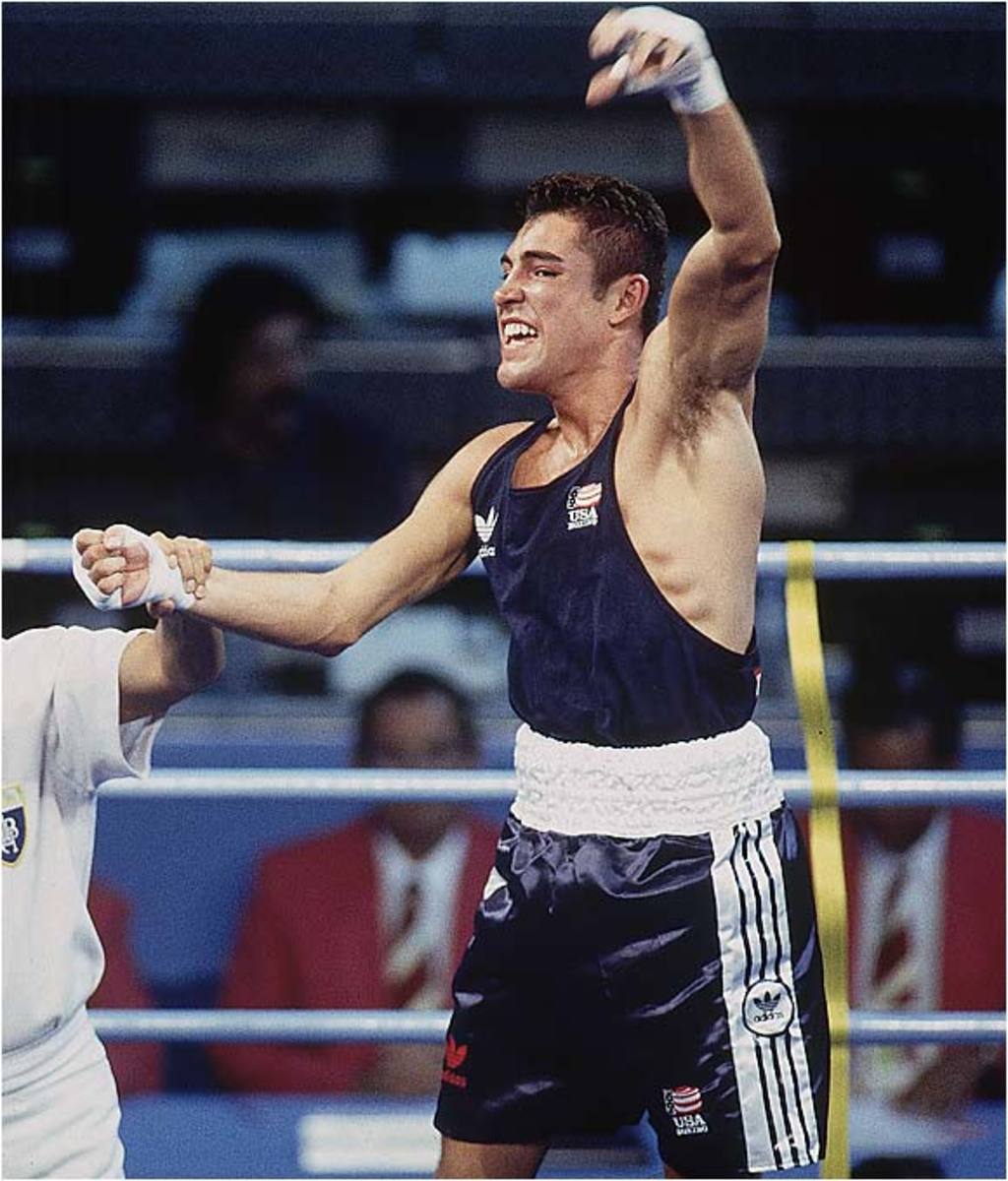
In the 132-pound Olympic final, the 19-year-old De La Hoya punched out a 7-2 victory over Rudolph of Germany, the man who'd beaten him the year before in the world championships. With the win, De La Hoya claimed the U.S.'s only boxing gold medal at the Barcelona Games and fulfilled the promise he'd made two years earlier to his mother, Cecilia, just before she died of breast cancer at age 38.
Nov. 23, 1992
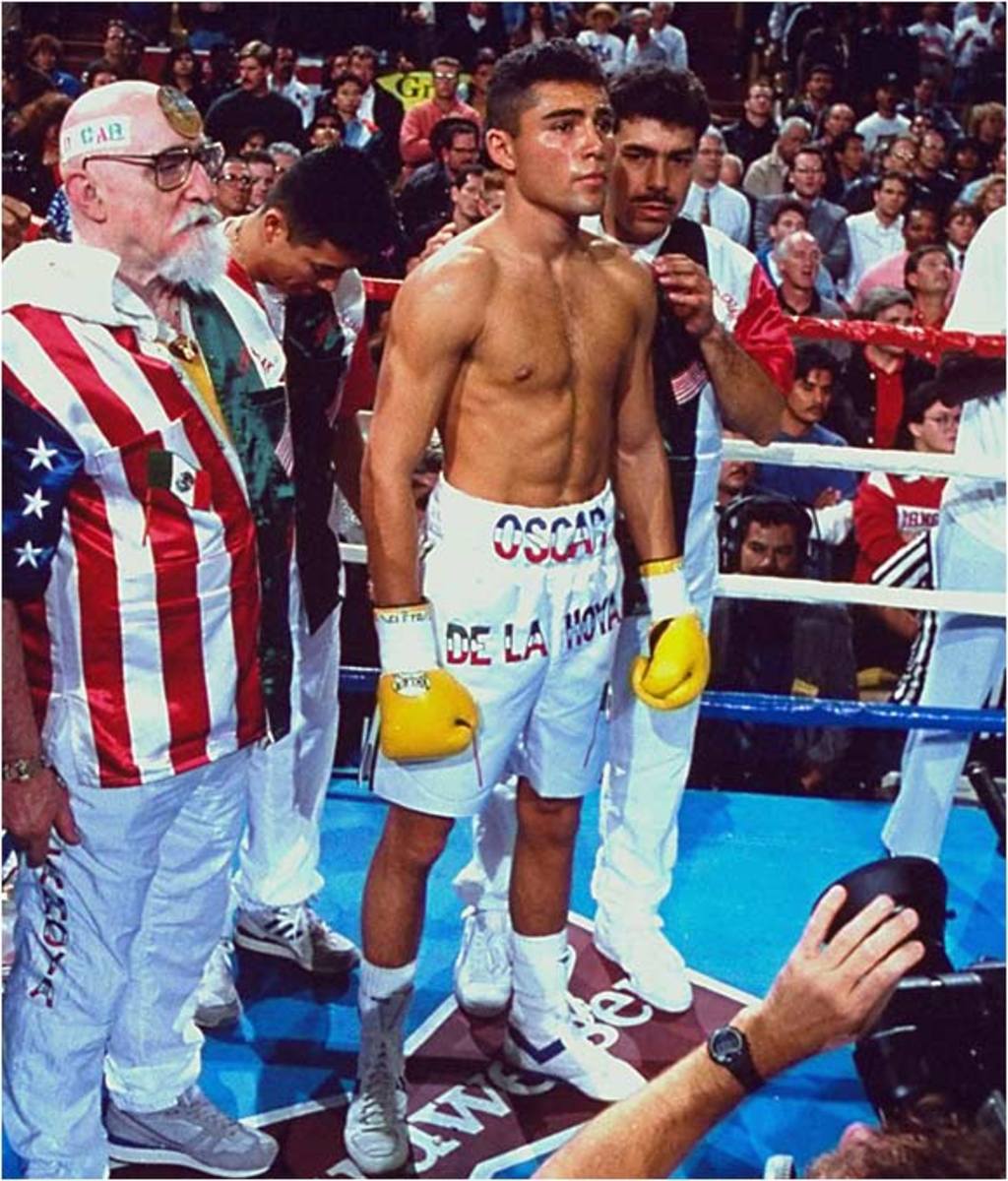
"I feel like I waited for this moment all my life," said De La Hoya shortly after making his pro debut in front of a wildly supportive crowd of 6,185 at the Great Western Forum in Los Angeles. "I tried to make it last." If so, he failed, dispatching the hapless Williams with a very professional left hook to the liver, just 1:42 into the first round.
May 6, 1995
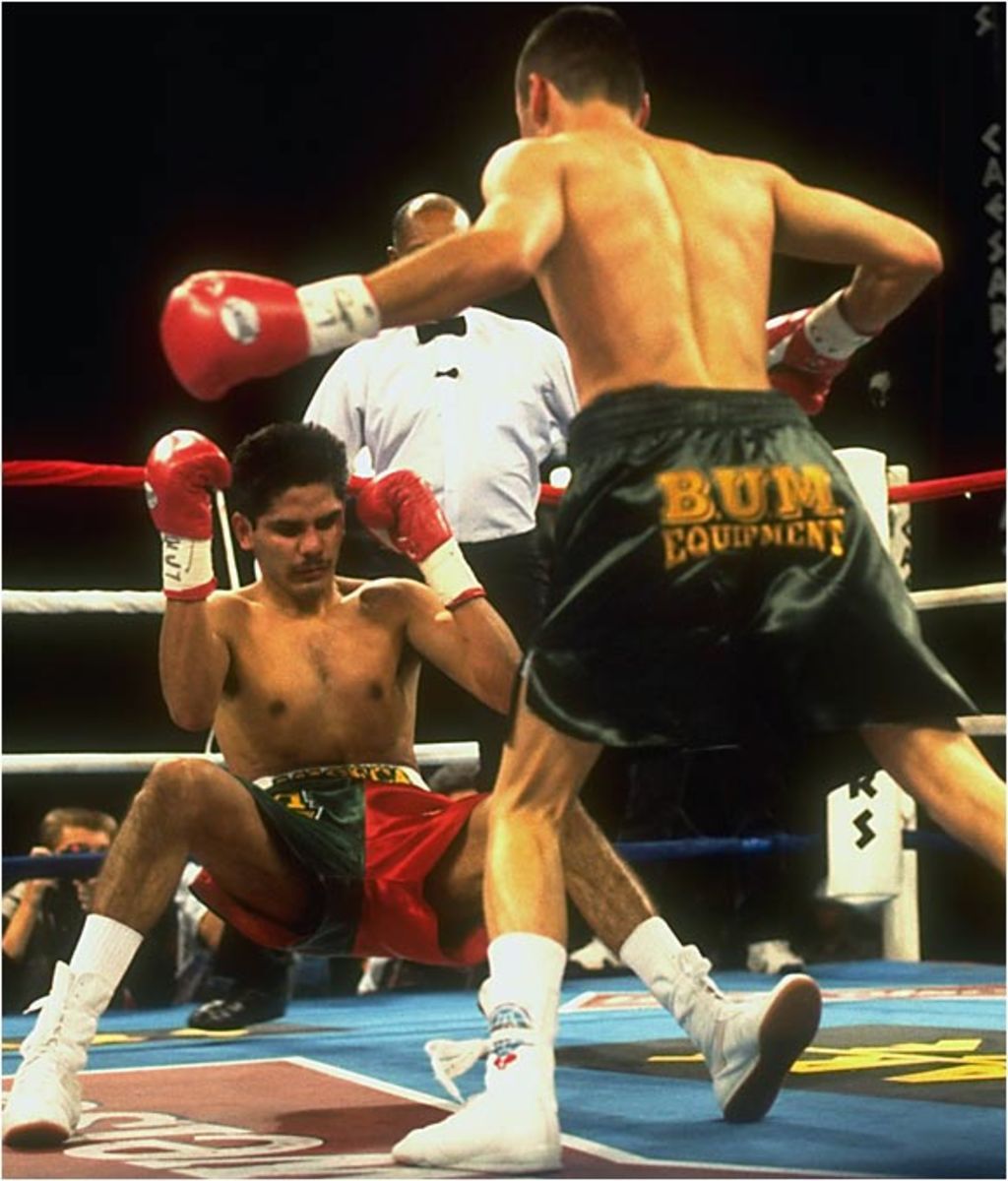
Already the WBO lightweight champion, De La Hoya was gunning for the IBF version in only his 18th pro bout. The Mexican-born Ruelas, touted as a gritty challenger to the glitzy Golden Boy, promised an unrelenting attack. (Trainer Joe Goossen had said his fighter would be on De La Hoya like a "soup sandwich.") De La Hoya dropped Ruelas twice in the second round, then battered him against the ropes until referee Richard Steele stopped the bout.
June 7, 1996
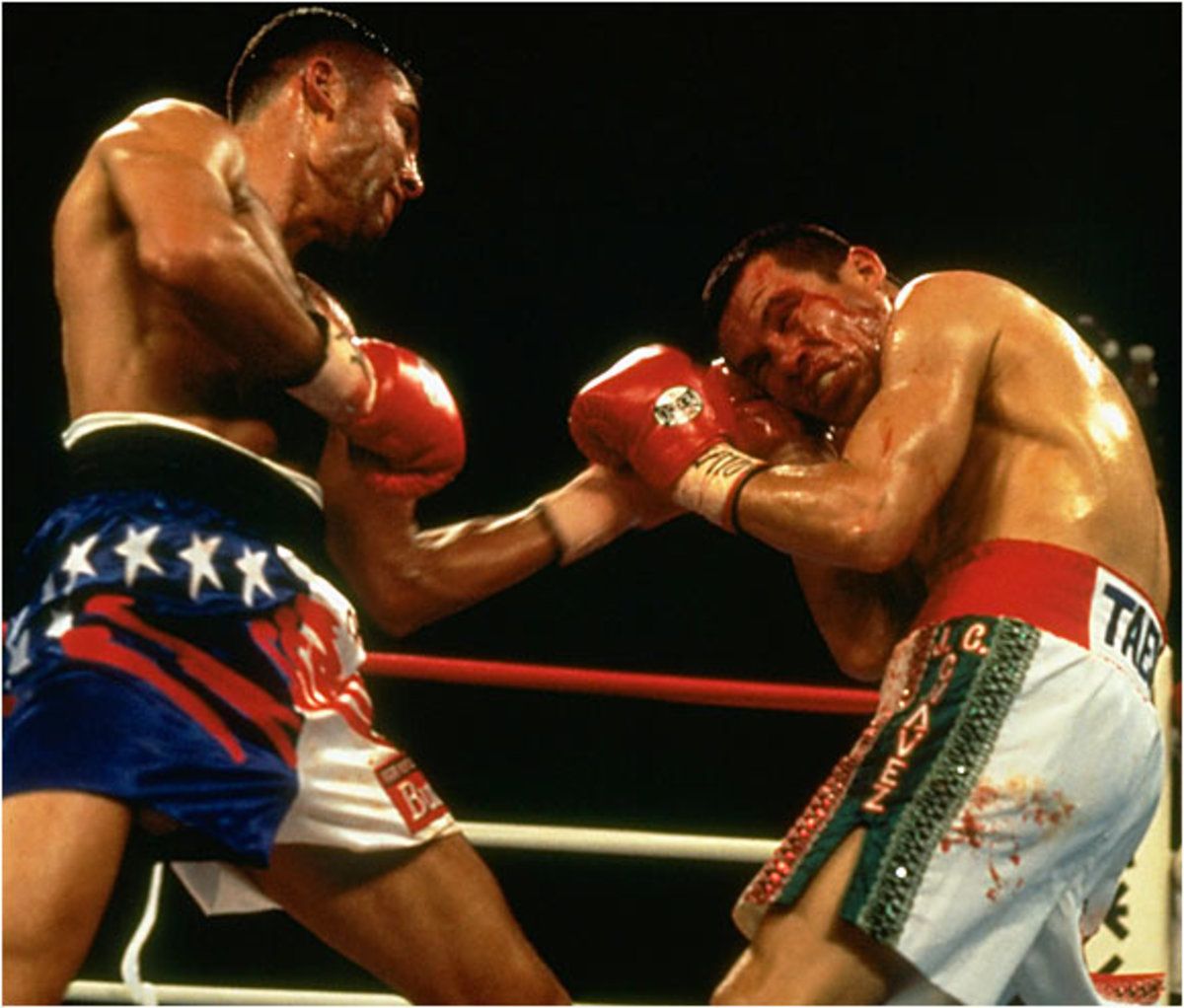
Just 23 and with a record of 22-0, De La Hoya was defending his WBC super lightweight title against his boyhood hero Chavez, who at 33 was a Mexican legend, a multiple world champ and veteran of 99 fights. Unfazed by the pro-Chavez crowd at Caesars Palace in Las Vegas, the kid sliced the old lion to ribbons in four cruel, bloody rounds. Said a humble De La Hoya afterward, "I need many more fights to learn, many more years to become a complete champion."
April 12, 1997
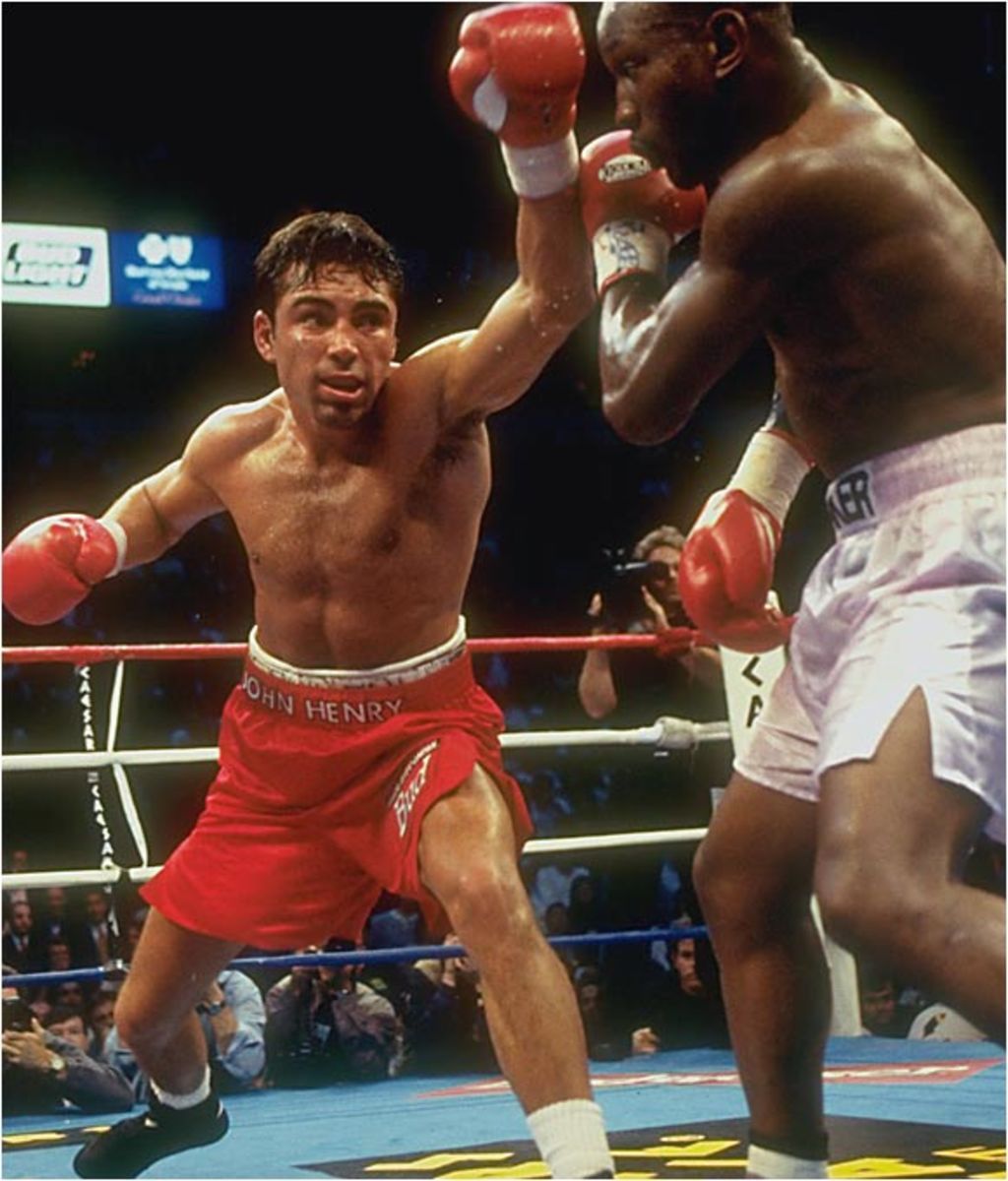
"His style is the most difficult in boxing," said De La Hoya, in reference to the southpaw wizardry of Whitaker, 33, the WBC welterweight champ and, pound for pound, the best boxer in the world. In a cat-and-mouse fight that was probably closer than the judges' scorecards had it, De La Hoya -- in his first outing at 147 pounds -- emerged with a 12-round decision and a serious dose of experience.
Sept. 13, 1997
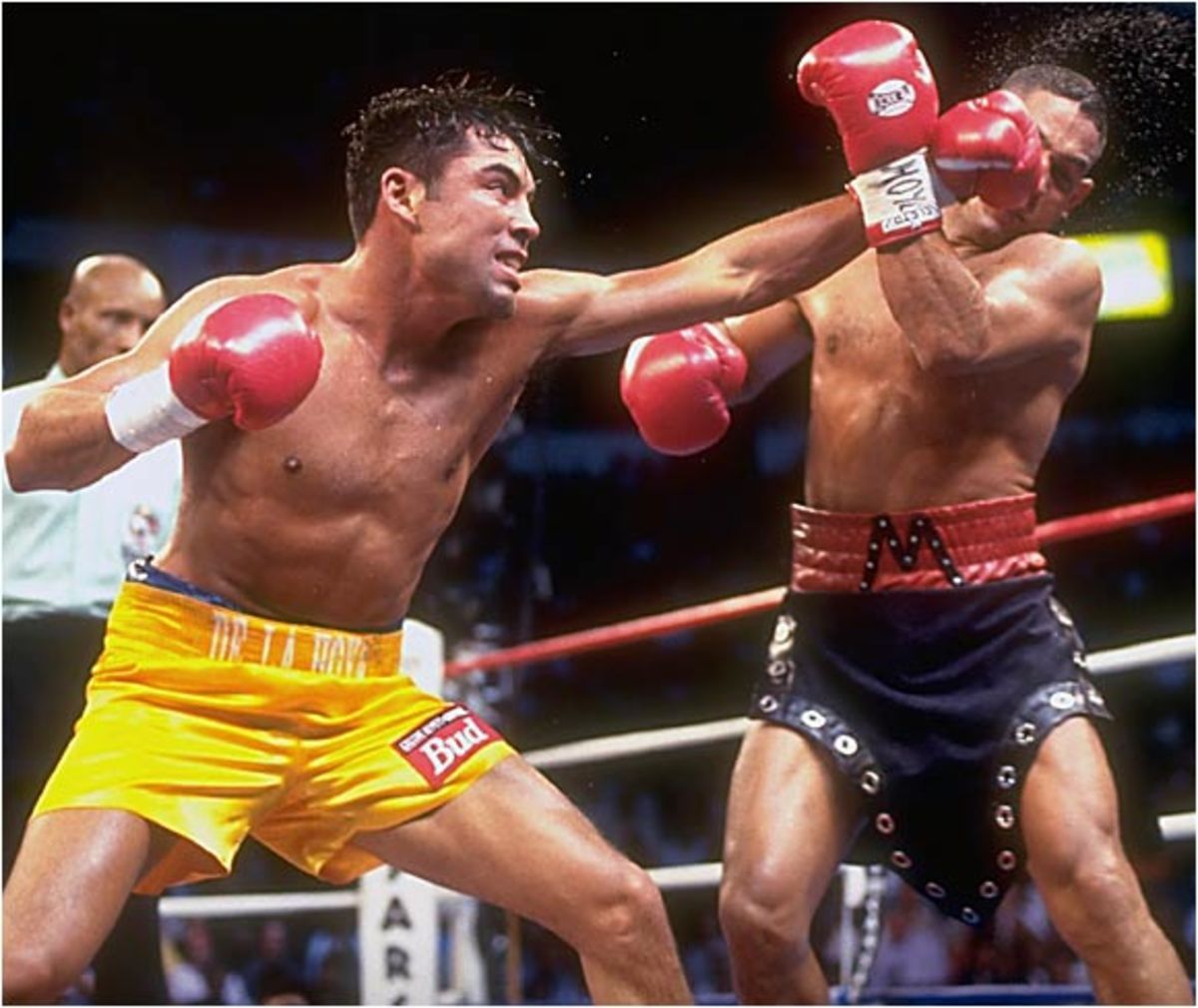
Camacho entered the ring in a black-leather getup complete with visored helmet. He probably should have kept the headgear on, as the self-styled Macho Man was, at 35, past his prime and -- though ever the showman -- no match for the 24-year-old Golden Boy. De La Hoya pounded the elusive Camacho and, though he decked him in the ninth round, had to settle for a lopsided decision. "He took some shots," said De La Hoya. "I don't know how he stood up to them."
Feb. 13, 1999
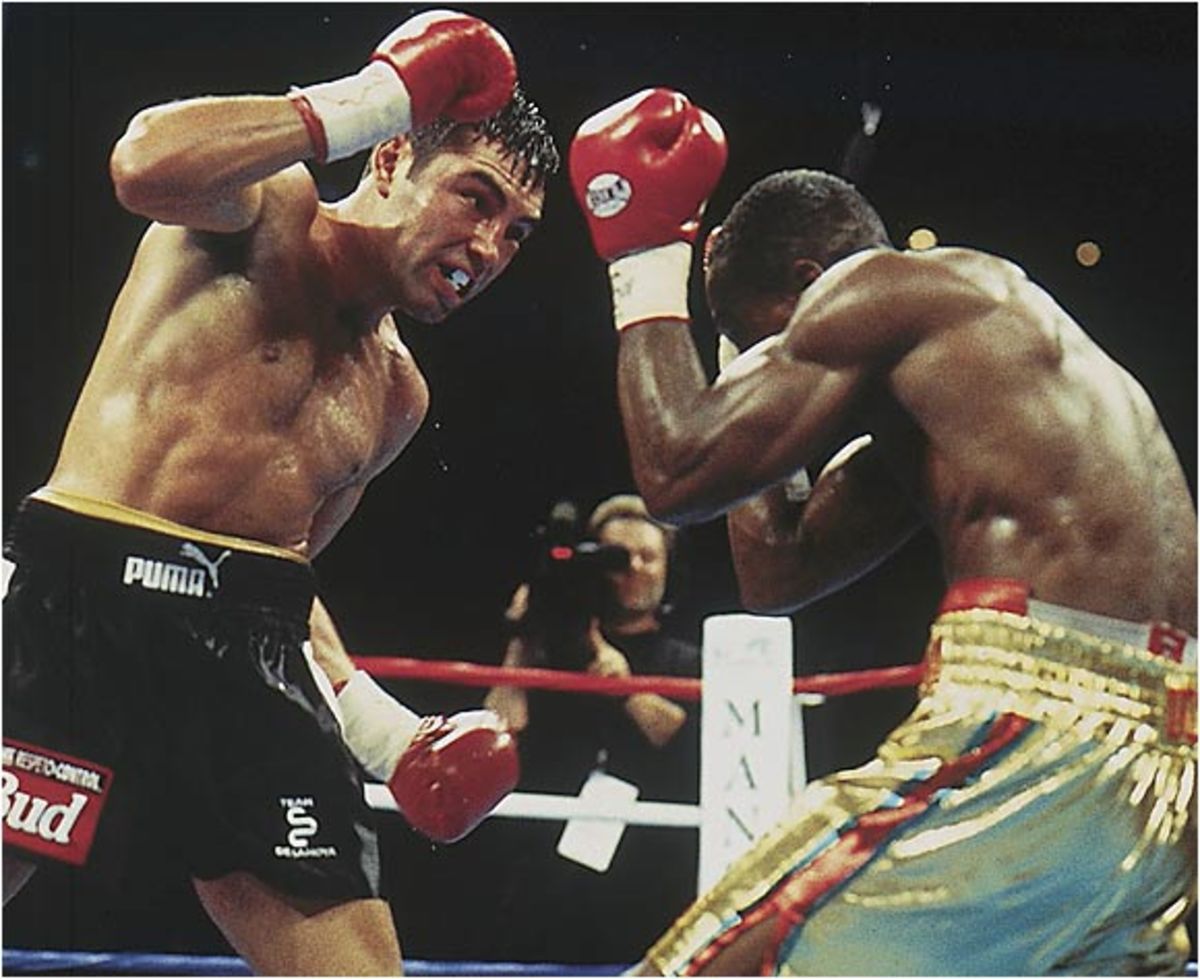
A five-time world champ who had earned more than $75 million in the ring, De La Hoya had yet to be truly tested as a pro. The tough Quartey, nicknamed Bazooka, remedied that -- dropping De La Hoya in the sixth and spearing him with jabs throughout. With the fight on the line in the final round, the Golden Boy proved his mettle, knocking Quartey down and battering him until the closing bell to win a split decision.
Sept. 18, 1999
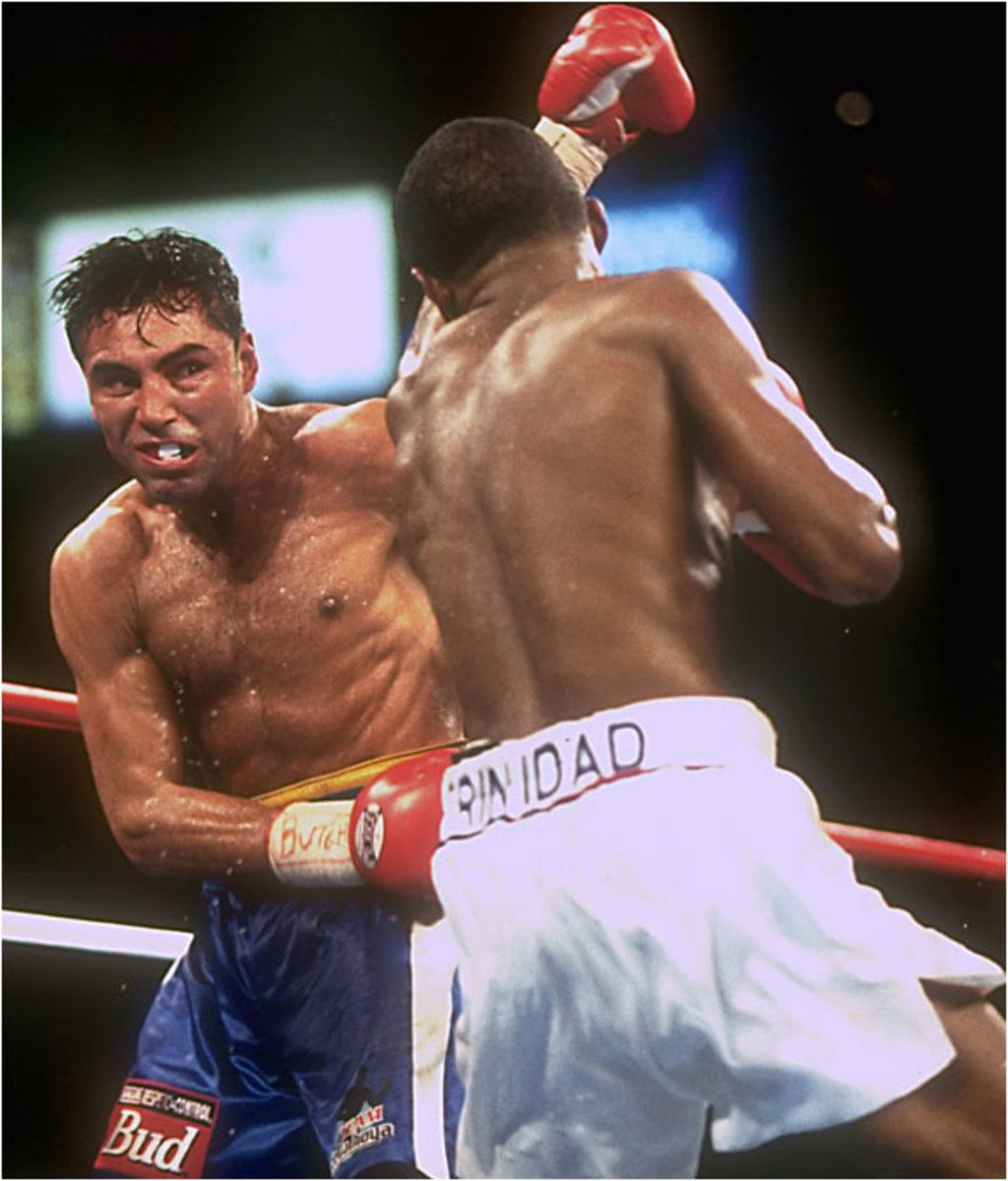
Forget the Odd Couple jokes. Oscar and Felix was a match fight fans had been dreaming about. This showdown between two undefeated welterweight champions featured the straight-ahead power of Puerto Rican national hero Trinidad (whose record of 35-0-0 included 30 KOs) against the mobility and boxing skill of De La Hoya. For most of the bout, Oscar put on a dazzling display, circling, jabbing and completely neutralizing Trinidad's attack. But in the closing rounds, believing he "had it won," De La Hoya went on the defensive and coasted to the final bell. It cost him, as the judges gave Trinidad a majority decision.
Sept. 14, 2002
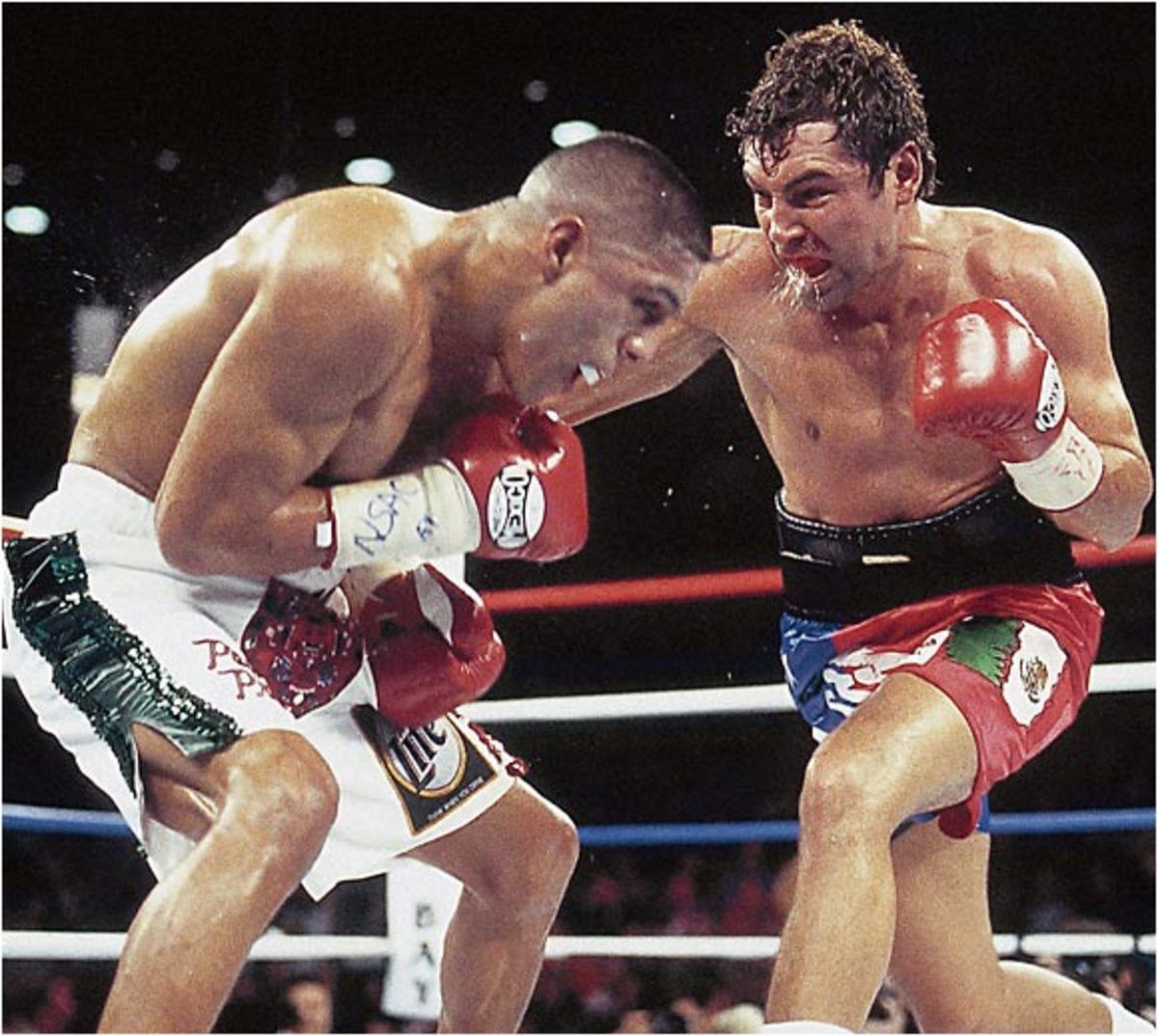
Since losing to Trinidad, De La Hoya had fought only four times, winning a couple more belts but also dropping another close decision, to Sugar Shane Mosley in 2000. Yet facing Vargas -- another product of Southern California's Mexican-American culture, who had called out the Golden Boy, questioning his machismo and street cred -- seemed to energize De La Hoya. Far from playing it safe this time, he beat the rugged Vargas at his own game, rocking him and bloodying him throughout and finally stopping him in the 11th.
Sept. 18, 2004
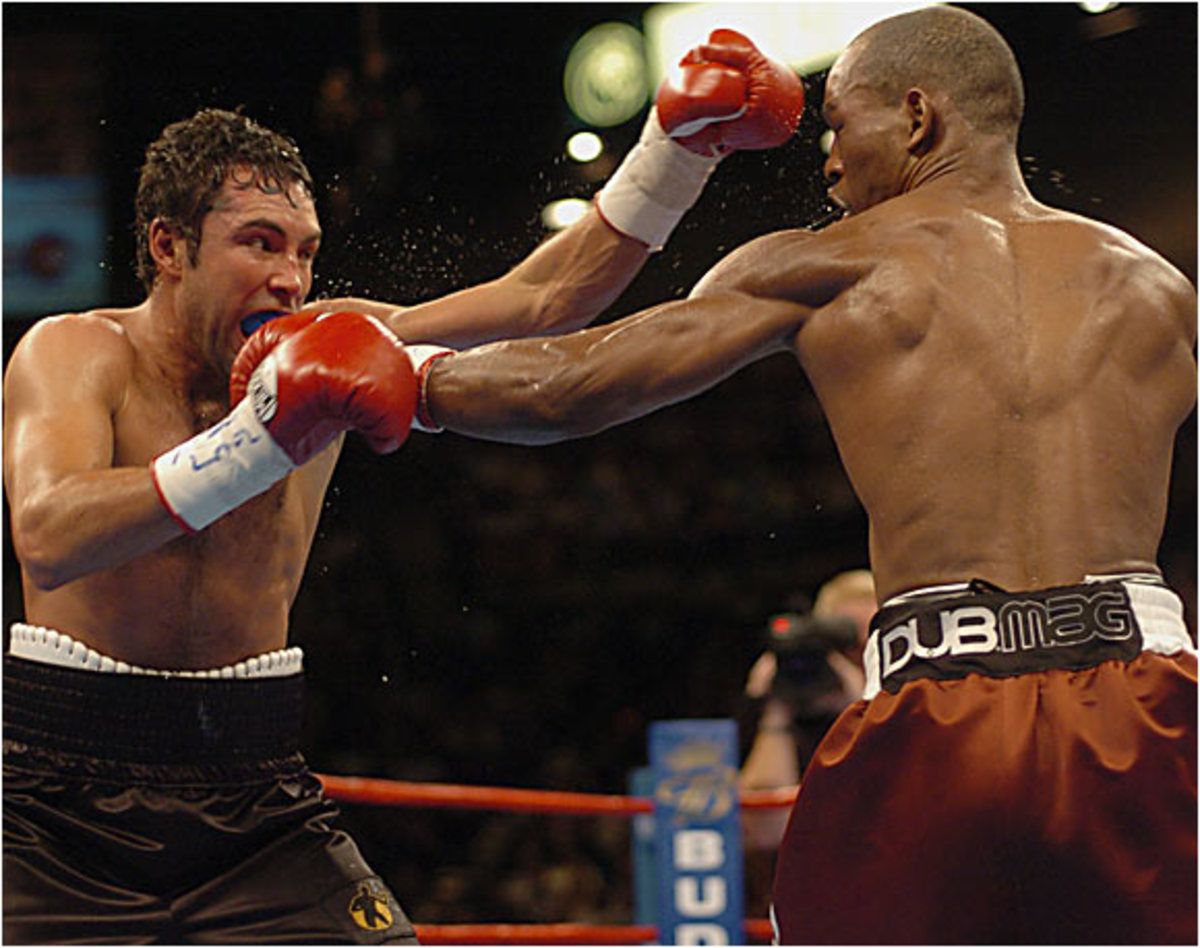
Call Hopkins the anti-Oscar -- launched not by Olympic success but by a youthful stretch in Pennsylvania's Graterford Prison, driven not by crossover celebrity hype but by a stubborn insistence on doing it his way. Hopkins, at nearly 40, was making the 19th defense of his middleweight title (an earlier one had resulted in a 12th-round TKO of Felix Trinidad). In the end he was simply too big and too strong for De La Hoya, finishing him in the ninth round with a vicious left hook to the body. "You want to get up," said a distraught De La Hoya afterward. "You just can't."
 Add us as a preferred source on Google