%20%20--%3E%0A%3Csvg%20version%3D%221.1%22%20id%3D%22Layer_1%22%20xmlns%3D%22http%3A%2F%2Fwww.w3.org%2F2000%2Fsvg%22%20xmlns%3Axlink%3D%22http%3A%2F%2Fwww.w3.org%2F1999%2Fxlink%22%20x%3D%220px%22%20y%3D%220px%22%0A%09%20width%3D%2239px%22%20height%3D%2240px%22%20viewBox%3D%220%200%2039%2040%22%20enable-background%3D%22new%200%200%2039%2040%22%20xml%3Aspace%3D%22preserve%22%3E%0A%3Cpath%20fill%3D%22%23FFFFFF%22%20d%3D%22M38.5%2C7H28.2v26h10.3V7z%22%2F%3E%0A%3Cpath%20fill-rule%3D%22evenodd%22%20clip-rule%3D%22evenodd%22%20fill%3D%22%23FFFFFF%22%20d%3D%22M26.1%2C25.5c0%2C5.8-4.1%2C7.5-12.9%2C7.5C3.9%2C33%2C0%2C31.2%2C0%2C25.2v-1.1h11.6%0A%09v2.4c0%2C0.7%2C0.1%2C1.4%2C1.2%2C1.4c1%2C0%2C1.2-0.4%2C1.2-1.3v-0.9c0-1.6-0.9-1.6-3.5-2.2C2.2%2C21.7%2C0%2C19.7%2C0%2C15.3v-0.9C0%2C9.3%2C5.5%2C7%2C12.9%2C7%0A%09c10.2%2C0%2C12.8%2C2.6%2C12.8%2C7.4v1.8h-11v-2.9c0-0.6-0.4-1.1-1.2-1.1c-0.6%2C0-1.2%2C0.4-1.2%2C1.1v0.9c0%2C1.5%2C0.9%2C2%2C3.3%2C2.5%0A%09c8%2C1.6%2C10.5%2C3.3%2C10.5%2C7.5V25.5z%22%2F%3E%0A%3C%2Fsvg%3E%0A)
Still in His Prime—or Stuck in the Past?
In 2015, I made my first trip to Tuscaloosa, Ala., where a young Deontay Wilder was preparing for his first crack at a heavyweight title. Over several days I watched him train, dined with him over chicken and waffles and dug into a remarkable life story. Boxing wasn’t a childhood passion, Wilder told me back then. It was a means to an end, a way to earn money to help his daughter Naieya, who was born with spina bifida, a rare back condition. It’s what brought him to Jay Deas’s gym, where Deas molded him from an athletic ex-football player into an explosive heavyweight prospect. What came after—the Olympic bronze medal, the flawless pro start—wasn’t just a surprise to others. It was a surprise to him.
As unorthodox as Wilder’s start was, his finish has looked more conventional. Wilder has lost four of his last six fights, mixing in a pair of low-level wins (Robert Helenius, Tyrell Herndon) with one-sided losses to Tyson Fury (twice), Joseph Parker and Zhilei Zhang, with three of them coming by knockout. At 40, the ex-heavyweight champion who made 10 successful title defenses has looked like a shadow of his former self.
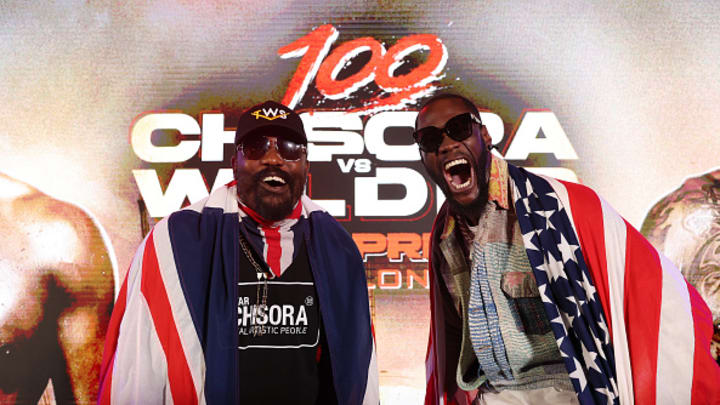
Yet on Saturday, Wilder will return, taking on Derek Chisora in London’s O2 Arena. Chisora, 42, is equally chronologically challenged, though unlike Wilder, Chisora will enter the ring riding a three-fight winning streak. Promotional efforts have focused on a long-anticipated fight coming to fruition, along with both fighters preparing for their 50th professional fights. “One hundred fights between us brother,” Wilder said in a preview video. Said Chisora, “Mad, though. All those rounds, all those punches, all that damage.”
Chisora has declared this to be his final fight, though many U.K. observers are skeptical. Wilder’s future is more uncertain. Even as the losses have piled up Wilder has rarely hinted at retirement. He has shuffled through trainers, from the Deas/Mark Breland combination to Malik Scott to Don House, who will work Wilder’s corner on Saturday. He has told reporters that he needs Chisora more than Chisora needs him. Why? Said Wilder, “I still got plans for moving forward, doing things.” Even if he loses, Wilder said, he has no plans to hang up his gloves.
Listen to enough Wilder interviews and you will sometimes feel like he’s describing an alternate reality.
“I’m still in my prime,” Wilder told Cigar Talk recently, citing the late start to his boxing career.
He has been honest—brutally honest—about some of the problems in his personal life, which he says include being robbed by his brother and a well-publicized split from his former fiancé. Those issues, Wilder said, caused him to lose confidence, which mattered more in recent losses than any erosion of skill.
The tape, though, says otherwise. The last two fights with Fury were brutal. He was knocked down five times in 18 rounds, the final one a skull-crushing right hand that sent him crashing face first to the canvas. Since then, Wilder has appeared gun shy. He was wiped out in a 12-round decision defeat to Parker and stopped in five rounds by Zhang. That shotgun right hand that led him to wins over Bermane Stiverne and Luis Ortiz, the weapon that put Fury on the deck several times has been nowhere to be found.
In between, Wilder’s behavior has been erratic. He fired Breland after the first loss to Fury after Breland threw in the towel in the seventh round, later accusing Breland of spiking his water. He has said the weight of the 40 pounds of armor he wore during his ring walk sapped the strength from his legs. He has repeatedly accused Fury of tampering with his gloves, saying “I will go to my grave believing in what I believe in.” He has suggested he is working on a documentary that will prove his claims, which Fury has strenuously denied.
Wilder’s reasons for pressing on with his career are unclear. Is it money? Wilder has made tens of millions in his pro career—maybe more—which has included two fights in Saudi Arabia. Is it legacy? A win on Saturday would move Wilder closer to a fight against Oleksandr Usyk, the unified heavyweight champion who has wiped out nearly every heavyweight of this era but Wilder. Is it that he knows nothing else? For any fighter, the hardest thing to do is walk away.
On Saturday, we’ll learn more. The Chisora fight won’t be pretty. Neither fighter has a large gas tank. Chisora has promised to be in Wilder’s chest all night, winging punches everywhere. Wilder believes his right hand will catch Chisora, who has been stopped four times. The longer this fight goes, though, the messier it will get.
“The fight is really black-and-white,” Scott said. “If Deontay still has the equalizer, if he’s able to hit Chisora with it, we’ll see Chisora out. If he can’t, it will be a long night for Deontay. This is a serious fight.”
Wilder seems to agree. “His style matches mine,” said Wilder, “and mine matches his.” He says his mind is right, the result of working with therapists and a sports psychologist. He’s friendly with Chisora but insists that when the bell rings, “that will switch off.” There will only be two enemies in the ring, Wilder said. He said he wants Chisora to come to kill him “because I need that.” He sounds like the old Wilder. On Saturday, he will try to fight like him.
 Add us as a preferred source on Google
Chris Mannix is a senior writer at Sports Illustrated covering the NBA and boxing beats. He joined the SI staff in 2003 following his graduation from Boston College. Mannix is the host of SI’s “Open Floor” podcast and serves as a ringside analyst and reporter for DAZN Boxing. He is also a frequent contributor to NBC Sports Boston as an NBA analyst. A nominee for National Sportswriter of the Year in 2022, Mannix has won writing awards from the Boxing Writers Association of America and the Pro Basketball Writers Association, and is a longtime member of both organizations.
Follow sichrismannix