%20%20--%3E%0A%3Csvg%20version%3D%221.1%22%20id%3D%22Layer_1%22%20xmlns%3D%22http%3A%2F%2Fwww.w3.org%2F2000%2Fsvg%22%20xmlns%3Axlink%3D%22http%3A%2F%2Fwww.w3.org%2F1999%2Fxlink%22%20x%3D%220px%22%20y%3D%220px%22%0A%09%20width%3D%2239px%22%20height%3D%2240px%22%20viewBox%3D%220%200%2039%2040%22%20enable-background%3D%22new%200%200%2039%2040%22%20xml%3Aspace%3D%22preserve%22%3E%0A%3Cpath%20fill%3D%22%23FFFFFF%22%20d%3D%22M38.5%2C7H28.2v26h10.3V7z%22%2F%3E%0A%3Cpath%20fill-rule%3D%22evenodd%22%20clip-rule%3D%22evenodd%22%20fill%3D%22%23FFFFFF%22%20d%3D%22M26.1%2C25.5c0%2C5.8-4.1%2C7.5-12.9%2C7.5C3.9%2C33%2C0%2C31.2%2C0%2C25.2v-1.1h11.6%0A%09v2.4c0%2C0.7%2C0.1%2C1.4%2C1.2%2C1.4c1%2C0%2C1.2-0.4%2C1.2-1.3v-0.9c0-1.6-0.9-1.6-3.5-2.2C2.2%2C21.7%2C0%2C19.7%2C0%2C15.3v-0.9C0%2C9.3%2C5.5%2C7%2C12.9%2C7%0A%09c10.2%2C0%2C12.8%2C2.6%2C12.8%2C7.4v1.8h-11v-2.9c0-0.6-0.4-1.1-1.2-1.1c-0.6%2C0-1.2%2C0.4-1.2%2C1.1v0.9c0%2C1.5%2C0.9%2C2%2C3.3%2C2.5%0A%09c8%2C1.6%2C10.5%2C3.3%2C10.5%2C7.5V25.5z%22%2F%3E%0A%3C%2Fsvg%3E%0A)
Dana White’s UFC-Style Zuffa Boxing Is Officially Underway
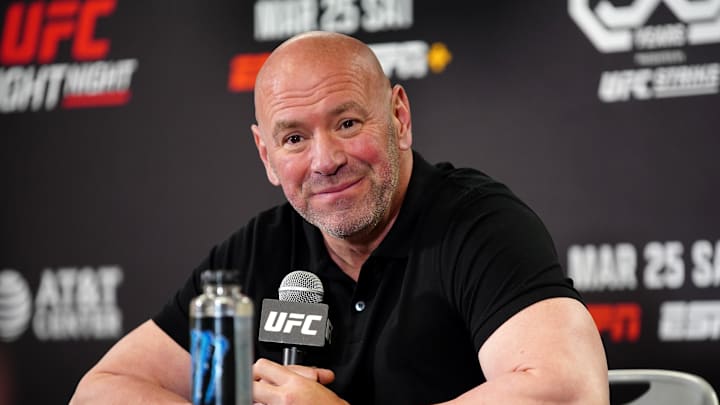
LAS VEGAS — On Friday, Zuffa Boxing will formally launch with what amounts to a whimper. A fight card headlined by Callum Walsh vs. Carlos Ocampo isn’t a bad one. Walsh is a solid prospect while Ocampo is a veteran with a glossy record. It’s just a familiar one. Walsh is a heavy favorite (5 to 1, per DraftKings) while any result other than Ocampo getting flattened would be surprising.
But it’s not about how you start, Zuffa officials say.
It’s how you finish.
Zuffa’s entry is the most anticipated new promotion in years. Fronted by Dana White, bankrolled by Saudi Arabia and operated by Nick Khan, Zuffa is a formidable presence. Paramount+, the streaming service with 79 million subscribers, is on board as a broadcaster, with plenty of cross promotion expected at UFC and WWE events.
Zuffa’s entry into the space has been calculated. The company spent 2025 pushing legislation through Congress that will allow it to operate like UFC. The bill is controversial: Zuffa says it will increase medical insurance coverage and bump fighter minimums nationwide. Critics say it will allow Zuffa to override financial protections in place to ensure fighters know how much money is in the pot (the bill passed the House Committee on Education and Workforce on Wednesday). It has signed scores of midlevel fighters to fill out its roster. This week it added Jai Opetaia, a cruiserweight titleholder.
Zuffa’s development will be slow, says Khan. “We’re a startup,” Khan told Sports Illustrated. Indeed, Zuffa’s early schedule is light on star power. Former 140-pound champion Jose Valenzuela, junior middleweight Serhii Bohachuk and heavyweight Efe Ajagba are reportedly among the fighters who will be featured in upcoming shows.
“We are going to work our behinds off to gain the trust of the audience, the fighters who work with us, and to further the trust that Paramount has put into us,” says Khan, the president of WWE. “So what you’re going to see is a group of executives at Zuffa who know we're the underdog, who like being the underdog and who are going to try to exceed anyone's expectation.”
Behind the scenes, though, Zuffa isn’t operating as an underdog. Opetaia is arguably boxing’s top cruiserweight, albeit one without a strong following. Zuffa officials have also met with representatives for unified champion Oleksandr Usyk. Recently, Zuffa has aggressively pursued 115-pound champion Jesse “Bam” Rodriguez.
“We’re talking to everybody that we think are the most talented people in the world or have the potential to be the most talented people,” said White. “I want to sign anybody we think can potentially be the best in world or is the best in the world and we want to put on the best fights that we can possibly do.”
At UFC, White turned a failing company into a powerhouse. Last fall, Paramount cut a seven-year, $7.7 billion deal with UFC to make the network its exclusive home. In mixed martial arts, the company is bigger than the fighters. It’s the same with WWE. Tickets move before anyone knows who is on the show.
Zuffa has a similar vision. The current boxing model is broken, says Khan. U.S. networks have largely abandoned the sport. Boxing, which once competed with the NFL and NBA for eyeballs, has been bumped to the fringes.
“What Dana and we have to do on the operational side is put on a product that’s compelling that people want to watch,” says Khan. “It’s been too much, too long with, ‘Fighter A+ against Fighter C+, the one-sided fight. Let’s get this fighter to 30–0, and let’s try to do a one-off pay-per-view.’ ”
“Whether we succeed or not, that’s going to be for the public to determine. If you have a good product and a little bit of luck on your side, you might just get good viewership numbers.”
The goal, Khan says, is to create boxing events that look more like UFC and WWE. Fight cards filled with competitive, 50–50 fights. High-level main events. At WWE, fans are seated well before the show goes on air. Khan hopes to create that kind of atmosphere in boxing.
There will be challenges. UFC operates as a de facto monopoly. WWE is the dominant player in its space. Boxing is fractured. Talent is spread out. In UFC’s early days, White was able to either acquire other promotions or wipe them out. Same with WWE, which famously bought its top competition (World Championship Wrestling) in 2001.
Establishing a similar market share in boxing will be more difficult. Matchroom Boxing is a powerful company with a deep-pocketed broadcaster, DAZN, backing them (Disclaimer: I call fights for DAZN). Golden Boy, Oscar De La Hoya’s company, has a similar relationship. Other promoters like Top Rank, Queensbury and Boxxer also compete for talent.
Managers have expressed some uneasiness about directing top talent to Zuffa, which has expressed plans to take a UFC approach and push young fighters into tough fights quickly. “If I have a guy who has a couple of losses, who isn’t generating much interest, definitely, I’d push him to [Zuffa],” one prominent manager told SI. “But if I have a young kid, good skills, sells tickets, no. I’m steering him somewhere else.”
Already, Zuffa’s messaging has been mixed. White has vowed to operate outside of the sanctioning body system. In a video promoting the first card, White can be seen carrying a Zuffa belt to a ring. But when Zuffa signed Opetaia, who holds an IBF title, it promised to allow him to pursue title unifications. It has made similar promises to other fighters, sources familiar with the negotiations told SI.
“All these guys came from somewhere and they had plans and they had dreams when they were kids and first put on a pair of gloves,” said White. “We’re gonna do everything in our power to make sure that these guys can do what they wanted to do.”
Financially, TKO, the parent company of Zuffa, assumes “minimal risk,” TKO president and chief operating officer Mark Shapiro told investors on an earnings call last summer. TKO receives around $10 million to manage and operate the business, said Shapiro. “That’s all margin for us,” Shapiro said. “TKO has no funding obligation.”
Saudi Arabia is providing the funding, led by Turki Alalshikh, the chair of the Saudi General Entertainment Authority, and Sela, the Public Investment Fund’s subsidiary. Alalshikh is the most powerful figure in boxing. He owns Ring Magazine and has financed more than a dozen high-profile shows. In an interview with SI last year, Alalshikh described White as a “bulldozer” and expressed confidence this joint venture will be successful.
But Zuffa isn’t the only company Alalshikh is working with. Next week, Alalshikh is financing a card headlined by Shakur Stevenson and Teofimo Lopez. That show will be promoted by Matchroom and stream on DAZN. Next month, Sela will co-promote another DAZN-streamed event headlined by Ryan Garcia and Mario Barrios.
Khan doesn’t see an issue with Alalshikh working with other promoters. “I don’t see Turki as playing both sides in any way shape or form,” says Khan. “Turki is a great partner.” Khan has deep ties to boxing. He has represented Freddie Roach and managed Manny Pacquiao and James Toney. As an agent, Khan cut lucrative television deals for Top Rank with ESPN. One promoter told SI, “Nick is the reason this can succeed.”
Khan knows there will be bumps early. “You got to build and then you take it to a next level,” he says. But he adds that the commitment is there to build Zuffa into a promotional power, remaking boxing in the process. As for signing fighters, Khan says “time will tell” if Zuffa can outmaneuver the established promoters for top talent.
Says Khan, “If you want to be active, if you want to showcase your great skillset on a platform with significant relevance, if you want a promoter in Dana and Zuffa who doesn’t simply package the fight and then get in the ring with you and celebrate after, if you want someone who actually gets out there and gets the message out there about you and the event, then Zuffa is the right home for you as a fighter.”
 Add us as a preferred source on Google
Chris Mannix is a senior writer at Sports Illustrated covering the NBA and boxing beats. He joined the SI staff in 2003 following his graduation from Boston College. Mannix is the host of SI’s “Open Floor” podcast and serves as a ringside analyst and reporter for DAZN Boxing. He is also a frequent contributor to NBC Sports Boston as an NBA analyst. A nominee for National Sportswriter of the Year in 2022, Mannix has won writing awards from the Boxing Writers Association of America and the Pro Basketball Writers Association, and is a longtime member of both organizations.
Follow sichrismannix