%20%20--%3E%0A%3Csvg%20version%3D%221.1%22%20id%3D%22Layer_1%22%20xmlns%3D%22http%3A%2F%2Fwww.w3.org%2F2000%2Fsvg%22%20xmlns%3Axlink%3D%22http%3A%2F%2Fwww.w3.org%2F1999%2Fxlink%22%20x%3D%220px%22%20y%3D%220px%22%0A%09%20width%3D%2239px%22%20height%3D%2240px%22%20viewBox%3D%220%200%2039%2040%22%20enable-background%3D%22new%200%200%2039%2040%22%20xml%3Aspace%3D%22preserve%22%3E%0A%3Cpath%20fill%3D%22%23FFFFFF%22%20d%3D%22M38.5%2C7H28.2v26h10.3V7z%22%2F%3E%0A%3Cpath%20fill-rule%3D%22evenodd%22%20clip-rule%3D%22evenodd%22%20fill%3D%22%23FFFFFF%22%20d%3D%22M26.1%2C25.5c0%2C5.8-4.1%2C7.5-12.9%2C7.5C3.9%2C33%2C0%2C31.2%2C0%2C25.2v-1.1h11.6%0A%09v2.4c0%2C0.7%2C0.1%2C1.4%2C1.2%2C1.4c1%2C0%2C1.2-0.4%2C1.2-1.3v-0.9c0-1.6-0.9-1.6-3.5-2.2C2.2%2C21.7%2C0%2C19.7%2C0%2C15.3v-0.9C0%2C9.3%2C5.5%2C7%2C12.9%2C7%0A%09c10.2%2C0%2C12.8%2C2.6%2C12.8%2C7.4v1.8h-11v-2.9c0-0.6-0.4-1.1-1.2-1.1c-0.6%2C0-1.2%2C0.4-1.2%2C1.1v0.9c0%2C1.5%2C0.9%2C2%2C3.3%2C2.5%0A%09c8%2C1.6%2C10.5%2C3.3%2C10.5%2C7.5V25.5z%22%2F%3E%0A%3C%2Fsvg%3E%0A)
Georgia Tech Fires Coach Damon Stoudamire: A Look at the Program’s Gradual Slide
In this story:
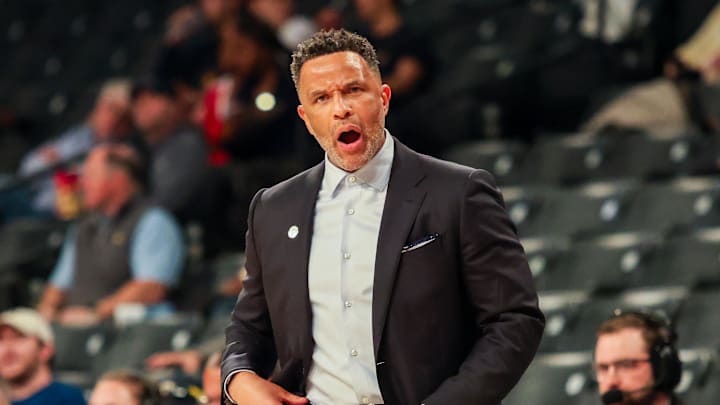
Just three seasons into coach Damon Stoudamire’s tenure, Georgia Tech is moving on.
The Yellow Jackets are firing Stoudamire after an 11–20 campaign in 2026, according to a Sunday morning report from Jeff Borzello and Pete Thamel of ESPN.
Stoudamire, 52, took over the Georgia Tech job before the 2024 season after a stint as a Celtics assistant. He brought five years of college head coaching experience to Atlanta, having led Pacific to a 71–77 record from 2017 to ’21.
Under his stewardship, the Yellow Jackets endured an up-and-down ’24 campaign. Georgia Tech lost to Massachusetts-Lowell and beat No. 7 Duke in an 18-day span, and later downed a top-five North Carolina team at home. Notre Dame then knocked the Yellow Jackets out in their first game of the ACC tournament.
Georgia Tech improved to .500 in ’25 and reached the NIT, where it lost by 17 to Jacksonville State at home in the first round. However, a dip in ’26 spelled the end for Stoudamire. The Yellow Jackets lost 12 straight to close the season, last winning at NC State on Jan. 17.
Stoudamire was an All-American guard at Arizona in 1995, and was the NBA’s Rookie of the Year for the Raptors a year after that.
Whoever takes over for him will have a tall task: restoring to glory a program that was among the nation’s best a generation ago.
How did it all go so wrong for Georgia Tech?
In 2004, Georgia Tech played for the national title, surprising many. The Yellow Jackets, coached by Paul Hewitt, had lost nine games in the regular season. They had four future NBA players on their roster, but that wasn’t readily apparent. Peaking at the right time, Georgia Tech took care of business and let others in its region do the dirty work (UAB upset No. 1 Kentucky, Nevada crushed No. 2 Gonzaga).
UConn bested the Yellow Jackets 82–73 to win the national title, but Georgia Tech could look back fondly at its sixth Top 25 finish in the last 20 years. Since then, it’s finished in the Top 25 just once. What happened?
On the surface level, this is what happened: Hewitt’s 9–7 ACC campaign in ’04 turned out to be the only winning conference season of his tenure. The Yellow Jackets fired him after he went from 23–13 in 2010 to 13–18 in 2011, hiring Brian Gregory away from Dayton to facilitate their move into a new arena. Gregory produced a solitary NIT trip in five years and lost his job, and is now the general manager of the Suns.
Next for Georgia Tech came Josh Pastner, a Capital-C Character who led the Yellow Jackets to modest success—including a shock ACC tournament title in 2021. Much of his tenure, though, served to underline how much the program’s standards had declined since the days of Hewitt—let alone program icon Bobby Cremins, the architect of “Lethal Weapon 3.”
These coaching misses combined to eat away what had once made Georgia Tech a feared middle power in college hoops. The ACC’s slight decline in basketball stature hasn’t helped, either. But there may be a third, overlooked cause of the Yellow Jackets’ decline.
Put simply: at the least opportune possible moment for Georgia Tech, the Hawks started to draw.
In ’04, the year the Yellow Jackets played for the national title, Atlanta was dead last in the NBA in attendance. The Hawks averaged 13,798 fans per game that year—a little over two-thirds of their arena’s capacity at the time. As time passed, Atlanta began to improve, and its attendance began to rise. In ’10, the Hawks drew 16,545 fans per game to rank 18th in the league. in 2015, that number rose to over 17,000 as Atlanta set a franchise record for wins.
Meanwhile, in ’11, Georgia Tech blamed its dismissal of Hewitt on declining attendance. The Yellow Jackets, indeed, drew over 9,000 fans per game in 2005 and just 4,347 fans per game 20 years later. Between the Hawks and the WNBA’s Dream, the casual Atlanta-based basketball fans now has no shortage of options for spending their dollars throughout the year.
The next Georgia Tech head coach’s task, then, is twofold. They have to coax the team back onto a winning track, and they have to convince fans in Midtown and beyond that a proud program is still worth caring about and showing up for.
More College Basketball on Sports Illustrated
Listen to SI’s college sports podcast, Others Receiving Votes, below or on Apple and Spotify. Watch the show on SI’s YouTube channel.
 Add us as a preferred source on Google
Patrick Andres is a staff writer on the Breaking and Trending News team at Sports Illustrated. He joined SI in December 2022, having worked for The Blade, Athlon Sports, Fear the Sword and Diamond Digest. Andres has covered everything from zero-attendance Big Ten basketball to a seven-overtime college football game. He is a graduate of Northwestern University's Medill School of Journalism with a double major in history .
Follow PAndres2001