%20%20--%3E%0A%3Csvg%20version%3D%221.1%22%20id%3D%22Layer_1%22%20xmlns%3D%22http%3A%2F%2Fwww.w3.org%2F2000%2Fsvg%22%20xmlns%3Axlink%3D%22http%3A%2F%2Fwww.w3.org%2F1999%2Fxlink%22%20x%3D%220px%22%20y%3D%220px%22%0A%09%20width%3D%2239px%22%20height%3D%2240px%22%20viewBox%3D%220%200%2039%2040%22%20enable-background%3D%22new%200%200%2039%2040%22%20xml%3Aspace%3D%22preserve%22%3E%0A%3Cpath%20fill%3D%22%23FFFFFF%22%20d%3D%22M38.5%2C7H28.2v26h10.3V7z%22%2F%3E%0A%3Cpath%20fill-rule%3D%22evenodd%22%20clip-rule%3D%22evenodd%22%20fill%3D%22%23FFFFFF%22%20d%3D%22M26.1%2C25.5c0%2C5.8-4.1%2C7.5-12.9%2C7.5C3.9%2C33%2C0%2C31.2%2C0%2C25.2v-1.1h11.6%0A%09v2.4c0%2C0.7%2C0.1%2C1.4%2C1.2%2C1.4c1%2C0%2C1.2-0.4%2C1.2-1.3v-0.9c0-1.6-0.9-1.6-3.5-2.2C2.2%2C21.7%2C0%2C19.7%2C0%2C15.3v-0.9C0%2C9.3%2C5.5%2C7%2C12.9%2C7%0A%09c10.2%2C0%2C12.8%2C2.6%2C12.8%2C7.4v1.8h-11v-2.9c0-0.6-0.4-1.1-1.2-1.1c-0.6%2C0-1.2%2C0.4-1.2%2C1.1v0.9c0%2C1.5%2C0.9%2C2%2C3.3%2C2.5%0A%09c8%2C1.6%2C10.5%2C3.3%2C10.5%2C7.5V25.5z%22%2F%3E%0A%3C%2Fsvg%3E%0A)
How the NCAA Aims to Tackle the Surge of Online Abuse Targeting College Athletes
INDIANAPOLIS — In a span of 6.3 seconds Sunday, Cayden Boozer’s freshman college basketball season crashed. In the minutes, hours and days that followed, the Duke guard was dragged through online hell.
An unwise, heat-of-the-moment pass was deflected, which led to a UConn possession, which led to Braylon Mullins’s stunning, 35-foot shot. One man’s heroic moment became another man’s calamity, as the sharp turn of events sent UConn to the Final Four and eliminated the Blue Devils. Afterward in the Duke locker room, Boozer forthrightly answered every media question, exhibiting a level of mature accountability beyond his 18 years.
While he was gracefully navigating the aftermath of his worst athletic moment, Boozer’s social media accounts were filling up with sewage.
The son of former Duke and NBA star Carlos Boozer had made an impressive March ascension from bench player to impactful starter as the less accomplished sidekick to his All-American twin brother, Cameron. That was washed away in a single bad play and a flood of derogatory comments. A relatively tame sampling:
“F---ing quit, you need to retire.”
“Knew I should’ve took the under on yo goofy looking ass today bum ass.”
“Twin all you had to do was hold the f---ing ball.”
“What’s your Venmo bro? Need my $431 you lost today.”
One commenter repeated 40 times: “You’re the laughing stock of your family.”
Email and text requests for comment from Duke on the abuse heaped upon Boozer were not returned Thursday.
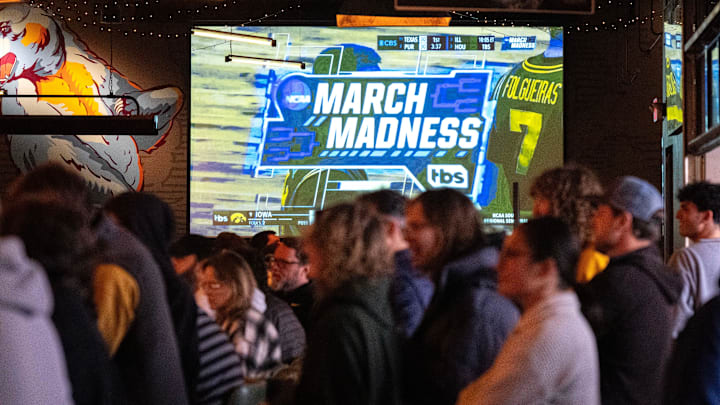
Boozer is the latest flashpoint in a dynamic that has existed for years, but actually appears to be escalating: targeting college athletes for performance-related abuse, much of it due to gambling losses. The NCAA uses a British-based firm, Signify, to monitor online abuse of athletes, and its early data on this year’s men’s and women’s tournaments has shown an uptick in incidents, which correlates to an uptick in TV audience size.
“The banner headline is that, obviously, tournaments are having record viewing figures … and that has led to spikes [in threats],” Jonathan Sebire of Signify tells Sports Illustrated. “The overall numbers at this stage of the tournaments has gone up, is larger than it was in previous years.
“The volumes have risen more in the men’s tournament than the women’s tournament. In previous years, actually the women’s tournament has sometimes seen more abuse, more triggers going back to Angel Reese and Caitlin Clark. But this year it’s the men who are picking up the predominant volume of abuse.”
That assessment came last week, before the regional semifinals and finals. When the stakes escalated and Boozer had his unfortunate moment, the numbers jumped again. Per Signify data, 2,500 abusive messages for college basketball players were detected between March 24 to 31, including what it termed “higher-profile moments” that generated more than 300 abusive messages directed toward individual athletes and their families.
This comes in the wake of an NCAA survey published in March that found almost half of Division I men’s basketball players experience online, verbal or physical abuse by fans for betting losses as gamblers wager billions of dollars on the NCAA tournaments. Then there are non-bettors who feel empowered to say anything they want online.
“Perhaps not surprising, but outside of general abuse in the women’s tournament, the top two categories at the moment are sexist or sexualized abuse and racism,” Sebire says. “That’s something that we’ve seen before. And in the men’s tournament, outside of general abuse, the top categories are racism, but actually also ableism, which is where people are mocking people either for mental or physical perceived incapacity. And so we’ve seen a massive rise in that kind of language being used and directed at players.”
Charlie Baker was announced as president of the NCAA in December 2022. He took over the job on March 1, 2023, and used the time in between to begin talking to athletes about the college experience.
“It’s the first thing I heard about before I even took the job,” Baker tells SI. “This is the first thing they brought up. They showed me the s--- on their phone, which is horrible.”
Horrified and galvanized, Baker has made addressing online athlete abuse a priority during his tenure. The NCAA enacted its “Draw The Line” campaign in 2024, and last month released a public service announcement video in conjunction with the campaign.
A recent NCAA survey of Division I athletes across a broad swath of sports revealed that more than half believe that sports betting contributes to unfair public scrutiny of athletes (52%) and that it undermines the fairness of sports (55%). Most athletes (65%) believe that when fans target athletes in relation to betting, the spirit of competition is compromised, and 62% believe that betting-related abuse weakens trust between fans and athletes.
“People wisely or unwisely might put a lot of money on games and things of that nature,” Arizona forward Tobe Awaka says. “At the end of the day, it’s something that you can’t really control. You have to sort of try and detach emotionally from it. Understand that it really has nothing to do with you and just focus on helping your team win and playing the best brand of basketball that you can. If winning helps somebody in their spread and things like that, then great for them. But if it doesn’t, I don’t necessarily owe them anything in that regard.”
Awaka says he’s “gotten some pretty out-of-hand stuff” from fans after games. “But I think you just kind of have to be a little stoic about it and just kind of move on. Sometimes I just kind of laugh and put my phone away.”
The NCAA, and Signify, would actually prefer that affected athletes didn’t shrug off and internalize the worst of it. They’d like to hear about it and pursue legal remedies when necessary. As part of that process, they have requested access to direct messages on social media from some targeted players in the most severe cases.
“We need them to cooperate to actually make it work,” Baker says.
Among the areas of greatest concern are individual prop bets—particularly the unders—which Baker has been lobbying gambling companies to discontinue. Those wagers, along with partial-game bets against the spread, are the most problematic from an integrity standpoint. The sprawling federal and NCAA investigations of corrupt wagering in college basketball uncovered dozens of cases of alleged performance manipulation, game-fixing and point-shaving.
Gambling is pervasive on college campuses. Players have information. They also can be more susceptible to compromising performances at mid-major or low-major schools that aren’t winning and don’t have significant NIL resources. Those were the inviting targets for gamblers identified by the feds.
But the most common gambling concerns are the least complicated—someone makes a bet on a team or a player and loses, then lashes out. The current NIL landscape elevates the profile of prominent athletes, which can be lucrative, but it also increases the size of the target on their backs when things don’t go well. If athletes are pitching products on their social media accounts and trying to increase their followings, it also makes them easier to find and abuse.
“I’d say that the only thing we can do about it is control our mindset,” says Arizona guard Anthony Dell’Orso. “How much social media you want to see, how much stuff you want to check. If that’s what I can control, I can limit myself from seeing the nonsense.”
The increasingly broad availability of wagering across different sports and different levels means the abuse can trickle down to athletes who previously had little or no public profile. Take, for instance, the FCS football championship game in early January between Illinois State and Montana State. It was a thrilling competition that featured a stirring rally by the underdog Redbirds to force overtime. The Bobcats won in overtime by a single point, 35–34.
That game on Jan. 6, and the semifinals on Dec. 20 to 21, 2025, generated 101 social media posts verified by Signify as abusive.
Two plays separated Illinois State from a national championship: a blocked field goal at the end of regulation and a blocked extra point in OT—something that had been a problem for the Redbirds throughout the season. The kicker was Michael Cosentino, who had come off the bench for his first action of the season in the FCS semifinals to make three field goals and three extra points in an upset of Villanova.
When the potential game-winning field goal was blocked, the previously obscure Cosentino was targeted for ableism abuse online. Cosentino declined comment to SI.
If it can happen to an FCS kicker, imagine the volume of vitriol that was directed at a Duke guard who made a crucial bad play that helped decide who won the East Regional and advanced to the Final Four. Cayden Boozer handled a horrible moment with far more dignity than hundreds of online attackers.
More March Madness From Sports Illustrated
Listen to SI’s college sports podcast, Others Receiving Votes, below or on Apple and Spotify. Watch the show on the SI College YouTube channel.
 Add us as a preferred source on Google
Pat Forde is a senior writer for Sports Illustrated who covers college football and college basketball as well as the Olympics and horse racing. He cohosts the Others Receiving Votes podcast for SI and is a regular contributor to the Tony Kornheiser Show podcast. He previously worked for Yahoo Sports, ESPN and The (Louisville) Courier-Journal. Forde has won 28 Associated Press Sports Editors writing contest awards, has been published three times in the Best American Sports Writing book series, and was nominated for the 1990 Pulitzer Prize. A past president of the U.S. Basketball Writers Association and member of the Football Writers Association of America, he lives in Louisville with his wife. They have three children, all of whom were collegiate swimmers.
Follow ByPatForde