%20%20--%3E%0A%3Csvg%20version%3D%221.1%22%20id%3D%22Layer_1%22%20xmlns%3D%22http%3A%2F%2Fwww.w3.org%2F2000%2Fsvg%22%20xmlns%3Axlink%3D%22http%3A%2F%2Fwww.w3.org%2F1999%2Fxlink%22%20x%3D%220px%22%20y%3D%220px%22%0A%09%20width%3D%2239px%22%20height%3D%2240px%22%20viewBox%3D%220%200%2039%2040%22%20enable-background%3D%22new%200%200%2039%2040%22%20xml%3Aspace%3D%22preserve%22%3E%0A%3Cpath%20fill%3D%22%23FFFFFF%22%20d%3D%22M38.5%2C7H28.2v26h10.3V7z%22%2F%3E%0A%3Cpath%20fill-rule%3D%22evenodd%22%20clip-rule%3D%22evenodd%22%20fill%3D%22%23FFFFFF%22%20d%3D%22M26.1%2C25.5c0%2C5.8-4.1%2C7.5-12.9%2C7.5C3.9%2C33%2C0%2C31.2%2C0%2C25.2v-1.1h11.6%0A%09v2.4c0%2C0.7%2C0.1%2C1.4%2C1.2%2C1.4c1%2C0%2C1.2-0.4%2C1.2-1.3v-0.9c0-1.6-0.9-1.6-3.5-2.2C2.2%2C21.7%2C0%2C19.7%2C0%2C15.3v-0.9C0%2C9.3%2C5.5%2C7%2C12.9%2C7%0A%09c10.2%2C0%2C12.8%2C2.6%2C12.8%2C7.4v1.8h-11v-2.9c0-0.6-0.4-1.1-1.2-1.1c-0.6%2C0-1.2%2C0.4-1.2%2C1.1v0.9c0%2C1.5%2C0.9%2C2%2C3.3%2C2.5%0A%09c8%2C1.6%2C10.5%2C3.3%2C10.5%2C7.5V25.5z%22%2F%3E%0A%3C%2Fsvg%3E%0A)
Top College Hoops Coach Flags Matchup Concern After Players Era Festival Unveils New Tournament Format
In this story:
Thursday was Expansion Day in the college basketball world, with both NCAA tournaments and the polarizing Players Era Festival announcing they would grow in 2027.
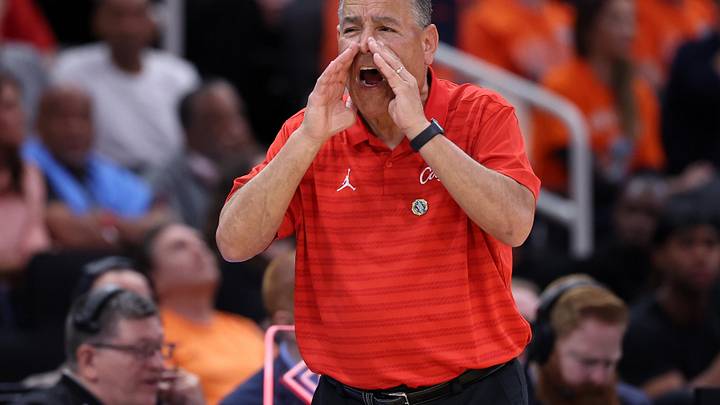
The Big Dance, naturally, gobbled up all the headlines. However, Houston coach Kelvin Sampson pointed out an intriguing, and potentially frustrating wrinkle that the Players Era Festival could throw into the men’s season.
First, some background: the Players Era Festival is a regular-season tournament hosted in Las Vegas. Last year, it was already the biggest tournament of its kind at 18 teams, and in the coming season the field will expand to 24. The teams involved will be grouped into an eight-team bracket and a 16-team bracket, the former of which will tip off on Nov. 16 and the latter of which will begin Nov. 23 (the Monday before Thanksgiving).
Here’s what Sampson—whose Cougars are slated for the eight-team bracket—had to say about the proceedings.
Houston’s Kelvin Sampson expressed a fear of oversaturation
Sampson expressed concern about how many times the Cougars could play individual teams under the new format. For instance, Houston could see either Kansas or West Virginia once in the Festival, twice in the regular season, once in the Big 12 tournament, and (if we’re really stretching it) once in the NCAA tournament.
“I don’t think that’s healthy,” Sampson told Joseph Duarte of the Houston Chronicle Thursday afternoon. “But we’re not in the Players Era tournament to be pleased. We’re in the Players Era tournament to create revenue for NIL.”
It is quite rare for two teams to play four times in one season, but it has happened
A couple of examples, in fact, are rather famous.
Famous example No. 1: 2000. In the regular season, Michigan State swept Wisconsin in a home-and-home, beating the Badgers 61–44 and 59–54 in an eight-day span. The Spartans then traveled to Chicago and defeated Wisconsin in the then-new Big Ten tournament, 55–46. The Badgers, a No. 8 seed, heated up in the NCAA tournament only to run into... Michigan State in the Final Four in Indianapolis. The Spartans smothered Wisconsin 53–41 to complete the sweep.
A year later, Duke and Maryland played four times in a series resembling a literary tetralogy. The Blue Devils won the first game 98–96 in overtime after trailing by 10 with a minute remaining. The Terrapins won the second game, only for Duke forward Nate James—who played his high school ball in Maryland—to win the third game on a tip-in with just over a second left. The Blue Devils and Terrapins met again in the Final Four, with Duke turning a 22-point deficit into a 95–84 victory.
But why stop at four games? As this Reddit thread mentions, Boston University and Holy Cross played each other six times in the pandemic-shortened 2021 season (the two schools are a little under an hour apart by car). Perhaps appropriately, the Terriers and Crusaders split their six matchups, with both teams winning twice on the road and once at home in the season series.
If familiarity breeds contempt, the Jayhawks and Mountaineers have the chance to be co-public enemies number one in the Space City this season.
More College Basketball from Sports Illustrated
 Add us as a preferred source on Google
Patrick Andres is a staff writer on the Breaking and Trending News team at Sports Illustrated. He joined SI in December 2022, having worked for The Blade, Athlon Sports, Fear the Sword and Diamond Digest. Andres has covered everything from zero-attendance Big Ten basketball to a seven-overtime college football game. He is a graduate of Northwestern University's Medill School of Journalism with a double major in history .
Follow PAndres2001