%20%20--%3E%0A%3Csvg%20version%3D%221.1%22%20id%3D%22Layer_1%22%20xmlns%3D%22http%3A%2F%2Fwww.w3.org%2F2000%2Fsvg%22%20xmlns%3Axlink%3D%22http%3A%2F%2Fwww.w3.org%2F1999%2Fxlink%22%20x%3D%220px%22%20y%3D%220px%22%0A%09%20width%3D%2239px%22%20height%3D%2240px%22%20viewBox%3D%220%200%2039%2040%22%20enable-background%3D%22new%200%200%2039%2040%22%20xml%3Aspace%3D%22preserve%22%3E%0A%3Cpath%20fill%3D%22%23FFFFFF%22%20d%3D%22M38.5%2C7H28.2v26h10.3V7z%22%2F%3E%0A%3Cpath%20fill-rule%3D%22evenodd%22%20clip-rule%3D%22evenodd%22%20fill%3D%22%23FFFFFF%22%20d%3D%22M26.1%2C25.5c0%2C5.8-4.1%2C7.5-12.9%2C7.5C3.9%2C33%2C0%2C31.2%2C0%2C25.2v-1.1h11.6%0A%09v2.4c0%2C0.7%2C0.1%2C1.4%2C1.2%2C1.4c1%2C0%2C1.2-0.4%2C1.2-1.3v-0.9c0-1.6-0.9-1.6-3.5-2.2C2.2%2C21.7%2C0%2C19.7%2C0%2C15.3v-0.9C0%2C9.3%2C5.5%2C7%2C12.9%2C7%0A%09c10.2%2C0%2C12.8%2C2.6%2C12.8%2C7.4v1.8h-11v-2.9c0-0.6-0.4-1.1-1.2-1.1c-0.6%2C0-1.2%2C0.4-1.2%2C1.1v0.9c0%2C1.5%2C0.9%2C2%2C3.3%2C2.5%0A%09c8%2C1.6%2C10.5%2C3.3%2C10.5%2C7.5V25.5z%22%2F%3E%0A%3C%2Fsvg%3E%0A)
Men’s College Basketball’s Awful Bubble Is a Case for Fewer Teams, Not More
In this story:
CHARLOTTE — The most overused word in the English language every March is bubble.
There’s the NCAA tournament bubble, a nebulous exercise to describe shifting programs into and out of the Big Dance based on recent results. There are bubble teams, spending the month stressing their fan bases with every clanked three-point attempt and each mind-numbing turnover. There’s living on the right side of the bubble and playing your way to the other side of it that forces long conversations with boosters for athletic directors across the country. Usage of the word by bracketologists, both amateur and professional, swells faster than you’ll find in any toddler’s actual bath.
It’s not often the bubble itself is tasked with sending messages, but it sure is this season in college basketball. It’s shouting it, in fact, even louder than some Pitt band members can sing Goo Goo Dolls songs at the top of their lungs here at the ACC tournament.
The bubble stinks this year. Calling it mediocre would be kind—awful would be a more apt descriptor. If there’s anything you should take away from that fact, it’s that the tournament should be contracting. Certainly not expanding like some in NCAA leadership want.
The chief proponent of more bubble, not less of it, is NCAA president Charlie Baker. A former hoops player and someone who spends much of this month crisscrossing the country, he’s been beating the drum on a move to 72 or 76 teams louder than Christopher Walken playing an instrument in an SNL skit.
The case he often makes is that tournament expansion will make edge cases like Indiana State in 2024 or other deserving teams have a better shot at experiencing the euphoria of March Madness without the nervousness that often accompanies Selection Sunday. He’s stumped hard for the move, which actually rests in the hands of the selection committee when they discuss the idea in person next month.
If Baker was hoping to have more examples for why the dance floor needs to enlarge though, college basketball has resoundingly told him to forget about it. Nobody has made a better case that we need fewer teams in the tournament more than those living on the edge right now.
At conference tournaments this week, bubbles have been popping so fast and furiously that there may not be much for the committee to actually do beyond bracketing teams that have actually proven they’re slightly more than decent. They certainly don’t have any hard choices to make in terms of who’s in and who’s out in 2026 that will lead to the usual outcry.
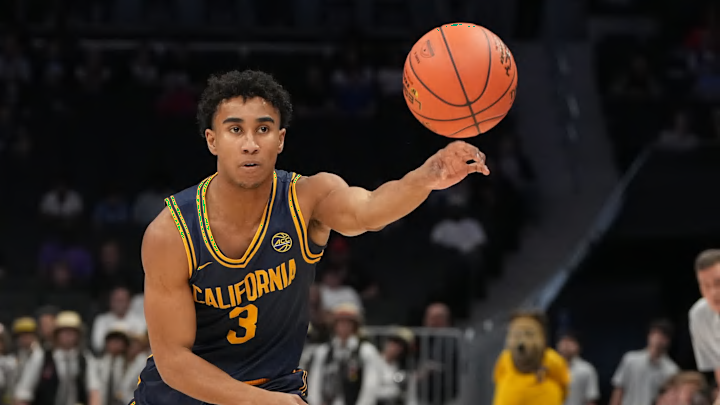
On Wednesday at the Spectrum Center, several ACC bubble teams sent up white flags of tournament contention. California trailed by as many 22 points with eight minutes to play before making its eventual 95–89 loss to Florida State look far more respectable than it was in reality.
“When it’s all said and done, we have to be better,” said Golden Bears coach Mark Madsen. “I feel like our team has done special things this year. This is a team that has strong Quad 1 wins, at home, on the road, at a neutral site. We’ve swept teams in our conference, our résumé is strong and the will in the fight is all there.”
The will might be, but both the eye test and overall résumé says they also took far too many bad losses for it to matter.
Luckily, misery loves company and this bubble has plenty of it.
Earlier in the day, SMU ensured its Selection Sunday will be extremely sweaty, having arrived in town on a four-game losing streak before adding a 62–58 loss to Louisville (without star Mikel Brown Jr.) to the pile. Texas, which seemingly had turned the corner and was ticketed to the main draw without having to go to Dayton a few weeks ago, is on a similar late slide and lost 76–66 to a below-.500 Mississippi squad in the SEC tournament. Cincinnati collapsed down the stretch in the Big 12 tournament to lose to Central Florida, while Indiana continued to no-show in big moments by falling to Northwestern in Chicago.
Fellow bubble candidate Virginia Tech could have taken advantage Tuesday, but lost a dispiriting overtime game to Wake Forest. Of all the teams in a similar position, only Auburn survived and advanced in its conference tourney Wednesday.
And yet some powers want to move the goalposts, or rather the hoop stanchions, further out so that all of the above would be safely in the tournament thanks to an expanded field?
Even the teams are saying, No, thank you. Only true basketball sickos will pine for a Cal vs. Texas matchup that carries the NCAA tournament branding. The rest of America is much better off with a few days of free time between Selection Sunday and the Thursday tip-off of the first round.
NCAA leadership has gone down this route before in trying to add more teams to the field. In 2010 when they first struck their landmark broadcast deal with CBS and Turner, the original plan was to have a 96-team affair. Pushback, and perhaps some sanity, later reined things into the current format of 68.
Hopefully part of that history can repeat itself. Instead of tournament growth, the bubble this season is proof that shrinkage to 64 is the best course of action.
More College Basketball from Sports Illustrated
Listen to SI’s college sports podcast, Others Receiving Votes, below or on Apple and Spotify. Watch the show on SI’s YouTube channel.
 Add us as a preferred source on Google
Bryan Fischer is a staff writer at Sports Illustrated covering college sports. He joined the SI staff in October 2024 after spending nearly two decades at outlets such as FOX Sports, NBC Sports and CBS Sports. A member of the Football Writers Association of America’s All-America Selection Committee and a Heisman Trophy voter, Fischer has received awards for investigative journalism from the Associated Press Sports Editors and FWAA. He has a bachelor’s in communication from USC.
Follow bryandfischer