%20%20--%3E%0A%3Csvg%20version%3D%221.1%22%20id%3D%22Layer_1%22%20xmlns%3D%22http%3A%2F%2Fwww.w3.org%2F2000%2Fsvg%22%20xmlns%3Axlink%3D%22http%3A%2F%2Fwww.w3.org%2F1999%2Fxlink%22%20x%3D%220px%22%20y%3D%220px%22%0A%09%20width%3D%2239px%22%20height%3D%2240px%22%20viewBox%3D%220%200%2039%2040%22%20enable-background%3D%22new%200%200%2039%2040%22%20xml%3Aspace%3D%22preserve%22%3E%0A%3Cpath%20fill%3D%22%23FFFFFF%22%20d%3D%22M38.5%2C7H28.2v26h10.3V7z%22%2F%3E%0A%3Cpath%20fill-rule%3D%22evenodd%22%20clip-rule%3D%22evenodd%22%20fill%3D%22%23FFFFFF%22%20d%3D%22M26.1%2C25.5c0%2C5.8-4.1%2C7.5-12.9%2C7.5C3.9%2C33%2C0%2C31.2%2C0%2C25.2v-1.1h11.6%0A%09v2.4c0%2C0.7%2C0.1%2C1.4%2C1.2%2C1.4c1%2C0%2C1.2-0.4%2C1.2-1.3v-0.9c0-1.6-0.9-1.6-3.5-2.2C2.2%2C21.7%2C0%2C19.7%2C0%2C15.3v-0.9C0%2C9.3%2C5.5%2C7%2C12.9%2C7%0A%09c10.2%2C0%2C12.8%2C2.6%2C12.8%2C7.4v1.8h-11v-2.9c0-0.6-0.4-1.1-1.2-1.1c-0.6%2C0-1.2%2C0.4-1.2%2C1.1v0.9c0%2C1.5%2C0.9%2C2%2C3.3%2C2.5%0A%09c8%2C1.6%2C10.5%2C3.3%2C10.5%2C7.5V25.5z%22%2F%3E%0A%3C%2Fsvg%3E%0A)
Brendan Sorsby’s Case Challenges NCAA Gambling Rules Texas Tech Once Backed
In this story:
Last November, Texas Tech was among the schools that voted to rescind new, more permissive gambling legislation that would have allowed athletes to wager on professional sports, sources familiar with the process tell Sports Illustrated. Tech was among the two-thirds of NCAA Division I that moved to withdraw the rule before it went into effect, so the association’s ban on pro sports betting remained in effect.
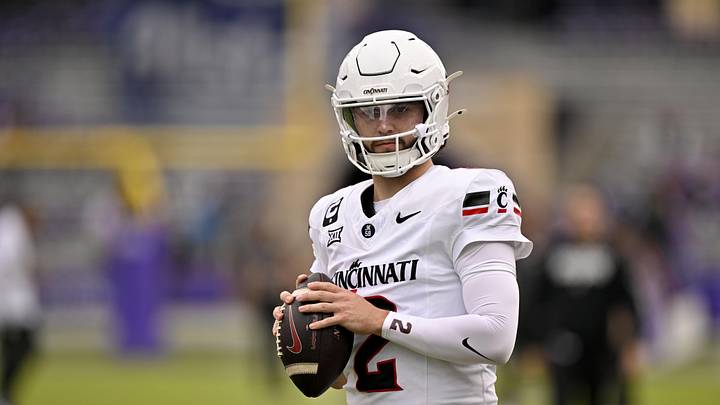
Six months later, there seems to be a different stance regarding NCAA wagering rules in Lubbock. Texas Tech wants a star transfer quarterback with a history of impermissible wagering to be able to play in the fall. On Monday, Brendan Sorsby did what comes naturally these days when an athlete’s eligibility is in jeopardy—he sued the NCAA, backed by an attorney team of veteran NCAA nemeses Jeffrey Kessler and Scott Tompsett.
According to the hometown lawsuit requesting injunctive relief in Lubbock District Court, Sorsby is “currently ineligible to play for Texas Tech due to prior violations of the NCAA’s sports gambling rules.” That’s more information than the NCAA has divulged in the still-ongoing eligibility case, but NCAA rules are clear that an athlete betting on his or her own team is facing permanent ineligibility. Sorsby has admitted to doing so.
Per his own lawsuit, which says Sorsby has a “clinical diagnosed” gambling disorder and has voluntarily sought treatment in a residential facility, the quarterback bet on Indiana while he was a redshirt freshman for the Hoosiers in 2022.
“Mr. Sorsby placed small bets—typically between $5 and $50—on the Indiana football team to win or for teammates to exceed expectations. He was not traveling with the team, and not privy to game plans; betting was his way of feeling connected to a team he could only watch from the sidelines. For clarity, he never bet on a game he played in or had a reasonable chance of playing in [he wasn’t playing in games at the time], and he never made any bets in a manner that could impact the outcome of any game or undermine the integrity of any game.”
The argument: At least he wasn’t point-shaving or game-fixing, so let the kid play. That’s how far Kessler and Tompsett are asking the court to unilaterally lower the NCAA’s agreed-upon bar.
The suit says Sorsby stopped betting on his own team when he became the backup QB at Indiana, and that he hasn’t wagered again on a team he was a member of in two seasons with the Hoosiers and two more at Cincinnati. He transferred to Texas Tech in January.
But that doesn’t mean Sorsby quit gambling.
Quoting from the lawsuit: “Mr. Sorsby … was addicted to sports gambling, and he continued to place bets on other sports as his gambling escalated into a compulsion he could not control. He placed thousands of bets—often on events he did not even regularly follow, like games in the Turkish basketball league and Romanian soccer matches. None of his bets involved teams he played on or players he held any non-public information about.”
Here’s what the suit doesn’t say: That Sorsby stopped betting on college football, or other sports teams at the schools he attended. Those are bright red eligibility lines—ones that are pounded into the heads of college athletes at every turn—and it seems reasonable to assume he crossed it. He assuredly also wagered more than the $800 threshold that could trigger permanent ineligibility.
(Considering the level of infractions, Sorsby’s offer noted in the lawsuit of a two-game suspension—against Abilene Christian and Oregon State, before a Big 12 conference opener against Houston—probably was not terribly convincing. In terms of a plea deal, that ain’t it.)
Sorsby’s lawsuit skips most of the details about his college sports wagering in favor of assailing the NCAA. The suit alleges that the association is failing Sorsby with a “stalled” investigative process and disregarding his mental health. An affidavit from the quarterback, included with the lawsuit, says he needs to practice football:
“If I cannot practice with the team, it will be severely detrimental to my mental health and my development as an athlete. Without access to coaching, teammates and on-field repetitions, I cannot develop the chemistry and skills necessary to start at quarterback in the 2026 season—and each additional day away compounds that harm. These developmental opportunities cannot be replaced or replicated.”
Maybe, for a recovering addict who was willing to throw away everything in pursuit of gambling action, summer workouts and skill development shouldn’t be the priorities?
Reading the lawsuit leaves an unmistakable feeling that this college football season is what truly matters here. For Sorsby, who is slated to make millions of dollars as one of the highest-priced transfers in the sport. And for Texas Tech, which has gone all-in on player compensation to become a national contender, making the College Football Playoff last season after a huge transfer portal haul. Just find the local judge willing to be the latest to jab a stick in the NCAA’s eye and get the kid on the practice field.
As college football has escalated its own stakes—through conference realignment, massive coaching salaries, reckless buyouts and skyrocketing player compensation—this is perhaps a foreseeable next step. Academics stopped mattering at a lot of places a while ago, downsized from priority to rarely discussed inconvenience. Next up: NCAA gambling rules may be clear but they should be disregarded where multimillion-dollar quarterbacks are involved. Because football is just too damned important.
Here’s the thing: If Sorsby is deemed permanently ineligible—like other college athletes have been under the same rules—it’s not the end of his football life. He can enter the NFL supplemental draft by the June 22 deadline and would likely be selected. He’d also probably take a pay cut over what Texas Tech was willing to give him this season, but it would start him on a professional career.
While empathy is proper for someone struggling with an addiction, consequences often come with addictive behavior. Losing a year of college football for clearly defined, major violations of NCAA rules is the consequence in this case. It doesn’t mean Sorsby can’t make something out of his football life, perhaps something great. It just means doing it somewhere other than Texas Tech this fall—unless a local judge intervenes.
The school itself voted six months ago to maintain the rules Sorsby violated. Asking for those rules to now be tossed out because the Red Raiders’ star quarterback is on the wrong side of them is a pretty blatant pivot in favor of self-interest.
More College Football From Sports Illustrated
Listen to SI’s college sports podcast, Others Receiving Votes, below or on Apple and Spotify. Watch the show on SI’s College YouTube channel.
 Add us as a preferred source on Google
Pat Forde is a senior writer for Sports Illustrated who covers college football and college basketball as well as the Olympics and horse racing. He cohosts the Others Receiving Votes podcast for SI and is a regular contributor to the Tony Kornheiser Show podcast. He previously worked for Yahoo Sports, ESPN and The (Louisville) Courier-Journal. Forde has won 28 Associated Press Sports Editors writing contest awards, has been published three times in the Best American Sports Writing book series, and was nominated for the 1990 Pulitzer Prize. A past president of the U.S. Basketball Writers Association and member of the Football Writers Association of America, he lives in Louisville with his wife. They have three children, all of whom were collegiate swimmers.
Follow ByPatForde