%20%20--%3E%0A%3Csvg%20version%3D%221.1%22%20id%3D%22Layer_1%22%20xmlns%3D%22http%3A%2F%2Fwww.w3.org%2F2000%2Fsvg%22%20xmlns%3Axlink%3D%22http%3A%2F%2Fwww.w3.org%2F1999%2Fxlink%22%20x%3D%220px%22%20y%3D%220px%22%0A%09%20width%3D%2239px%22%20height%3D%2240px%22%20viewBox%3D%220%200%2039%2040%22%20enable-background%3D%22new%200%200%2039%2040%22%20xml%3Aspace%3D%22preserve%22%3E%0A%3Cpath%20fill%3D%22%23FFFFFF%22%20d%3D%22M38.5%2C7H28.2v26h10.3V7z%22%2F%3E%0A%3Cpath%20fill-rule%3D%22evenodd%22%20clip-rule%3D%22evenodd%22%20fill%3D%22%23FFFFFF%22%20d%3D%22M26.1%2C25.5c0%2C5.8-4.1%2C7.5-12.9%2C7.5C3.9%2C33%2C0%2C31.2%2C0%2C25.2v-1.1h11.6%0A%09v2.4c0%2C0.7%2C0.1%2C1.4%2C1.2%2C1.4c1%2C0%2C1.2-0.4%2C1.2-1.3v-0.9c0-1.6-0.9-1.6-3.5-2.2C2.2%2C21.7%2C0%2C19.7%2C0%2C15.3v-0.9C0%2C9.3%2C5.5%2C7%2C12.9%2C7%0A%09c10.2%2C0%2C12.8%2C2.6%2C12.8%2C7.4v1.8h-11v-2.9c0-0.6-0.4-1.1-1.2-1.1c-0.6%2C0-1.2%2C0.4-1.2%2C1.1v0.9c0%2C1.5%2C0.9%2C2%2C3.3%2C2.5%0A%09c8%2C1.6%2C10.5%2C3.3%2C10.5%2C7.5V25.5z%22%2F%3E%0A%3C%2Fsvg%3E%0A)
The NCAA Lost a Nine-Figure Court Case Over an Ex-SMU Football Player’s Head Injuries
In this story:
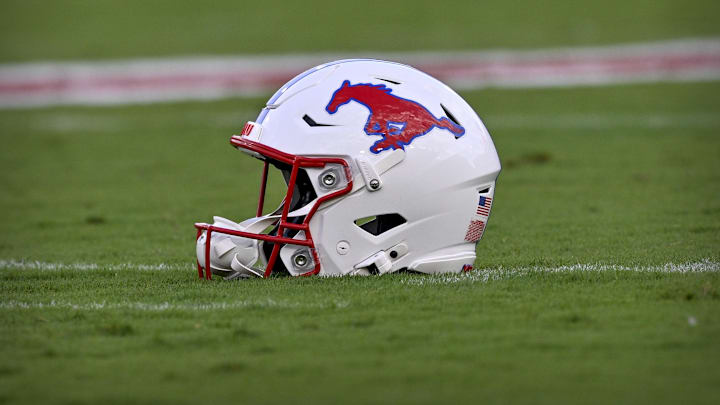
J.T. Davis played football for SMU in the mid-1950s, was diagnosed with Alzheimer’s disease in 2001, died in 2016, and was posthumously diagnosed with chronic traumatic encephalopathy (CTE) in 2017.
Recently, his family used those facts to win a landmark judgment against the NCAA.
A Dallas jury awarded $140 million in damages to the Davis family on April 27, agreeing with their 2020 contention that the NCAA’s negligence “[was] a proximate cause of John Thomas Davis’ Alzheimer’s disease and chronic traumatic encephalopathy.” Of the damages, $30 million were compensatory and $110 million were punitive (Texas generally caps punitive damages at $750,000).
On Monday, Mike Florio of Pro Football Talk published an NCAA statement on the verdict.
“The NCAA expresses its deepest sympathies to the Davis family, but we respectfully disagree with the jury’s verdict,” the organization said. “The evidence that was presented was largely based on the knowledge and science as it exists today, rather than what was known by the parties in the 1950s when Mr. Davis played college football.”
Davis’s lawyers reached back to the early days of concussion science to make their case
Davis, a native of Paris, Texas, suited up for the Mustangs as a lineman from 1955 to ’59. Anyone with even a passing knowledge of college football knows how brutal that era was, as the breakneck violence of football’s early days began to blend with the speed of modernity.
What Davis’s attorneys at the Houston-based firm Shrader and Associates argued at trial was that the risk of head injuries was known to the NCAA even then. In their initial complaint, they wrote: “In 1933, the NCAA’s medical handbook for schools and colleges recommended that players with concussions should receive rest and constant supervision and not be permitted to play or practice until symptom-free for 48 hours.”
That allegation would make the oft-mythologized “good ol’ days” of college football look less like a glamorous ideal, and more like the repeated, legally murky ignorance of the slowly growing field of concussion science.
For the NCAA, a long string of court losses continues—and a thorny issue returns to the headlines

The NCAA has spent much of the 2020s losing and settling court cases, most pertaining to eligibility, name, image and likeness rights, player compensation, the transfer portal, or some combination of those four.
A court loss over CTE is novel, and brings back to the headlines an issue that has faded a bit over the year. In the 2010s, advances in concussion science made football’s true dangers front-page news, forcing the game to tweak rules and prompting then-President Barack Obama to say he wouldn’t let a hypothetical son play professional football.
The 2020s have proven a more culturally conservative decade, however, and football participation has ticked back upward since the COVID-19 pandemic; the growth of flag football has also provided a safer alternative. How future generations of parents will balance the game’s cocktail of risks and rewards remains to be seen, but the players of yesteryear now have precedent for litigating health-related grievances with college football and its administrators.
More College Football From Sports Illustrated
Listen to SI’s college sports podcast, Others Receiving Votes, below or on Apple and Spotify. Watch the show on SI’s College YouTube channel.
 Add us as a preferred source on Google
Patrick Andres is a staff writer on the Breaking and Trending News team at Sports Illustrated. He joined SI in December 2022, having worked for The Blade, Athlon Sports, Fear the Sword and Diamond Digest. Andres has covered everything from zero-attendance Big Ten basketball to a seven-overtime college football game. He is a graduate of Northwestern University's Medill School of Journalism with a double major in history .
Follow PAndres2001