%20%20--%3E%0A%3Csvg%20version%3D%221.1%22%20id%3D%22Layer_1%22%20xmlns%3D%22http%3A%2F%2Fwww.w3.org%2F2000%2Fsvg%22%20xmlns%3Axlink%3D%22http%3A%2F%2Fwww.w3.org%2F1999%2Fxlink%22%20x%3D%220px%22%20y%3D%220px%22%0A%09%20width%3D%2239px%22%20height%3D%2240px%22%20viewBox%3D%220%200%2039%2040%22%20enable-background%3D%22new%200%200%2039%2040%22%20xml%3Aspace%3D%22preserve%22%3E%0A%3Cpath%20fill%3D%22%23FFFFFF%22%20d%3D%22M38.5%2C7H28.2v26h10.3V7z%22%2F%3E%0A%3Cpath%20fill-rule%3D%22evenodd%22%20clip-rule%3D%22evenodd%22%20fill%3D%22%23FFFFFF%22%20d%3D%22M26.1%2C25.5c0%2C5.8-4.1%2C7.5-12.9%2C7.5C3.9%2C33%2C0%2C31.2%2C0%2C25.2v-1.1h11.6%0A%09v2.4c0%2C0.7%2C0.1%2C1.4%2C1.2%2C1.4c1%2C0%2C1.2-0.4%2C1.2-1.3v-0.9c0-1.6-0.9-1.6-3.5-2.2C2.2%2C21.7%2C0%2C19.7%2C0%2C15.3v-0.9C0%2C9.3%2C5.5%2C7%2C12.9%2C7%0A%09c10.2%2C0%2C12.8%2C2.6%2C12.8%2C7.4v1.8h-11v-2.9c0-0.6-0.4-1.1-1.2-1.1c-0.6%2C0-1.2%2C0.4-1.2%2C1.1v0.9c0%2C1.5%2C0.9%2C2%2C3.3%2C2.5%0A%09c8%2C1.6%2C10.5%2C3.3%2C10.5%2C7.5V25.5z%22%2F%3E%0A%3C%2Fsvg%3E%0A)
College Football Offseason Primer: Everything That Could Change Before 2026 Kickoff
Even though the college football offseason is a few weeks old, the conclusion of the Super Bowl on Sunday indicates that all things pigskin are on hiatus for the next six months.
That doesn’t mean, however, that there’s not plenty for the sport to monitor, decide or figure out, with 2026 looking like a particularly busy year for plotting the direction of the collegiate model for coaches, administrators and even the players.
What should you keep an eye out for? Here are some of the top storylines to track that should be a frequent topic of conversation from now until kickoff in Week Zero.
The calendar discussion
If there’s one thing that will be firmly embedded in the ongoing narrative of this offseason, it’s every party with a pulse in college football weighing in on the future of the calendar. There has been increased talk over a permanent move to Week Zero as the official start to the season for next year and plenty of discussion from coaches over how they can get back to receiving two bye weeks after the calendar forces most teams back to having just one with the way dates align. There’s also the matter of when the transfer portal takes place, if there’s any movement over returning to two windows, and when exactly the high school signing period should wind up being. It will also be a constant refrain of anger from most upon seeing the two-week layoff between the College Football Playoff semifinals and the title game scheduled for its latest date ever.
College Football Playoff future format
Speaking of the CFP, that will be another constant topic of debate among the commissioners who can still tweak things for 2027–28 and will spend several meetings in fancy hotels every other month hashing out just that. There was widespread support for a slight bump up to 16 teams, but the Big Ten stood firm on insisting on a 24-team format, thus resulting in the status quo at 12 for the upcoming campaign. Will there be enough pressure on coaches, athletic directors and commissioner Tony Petitti to change their mind and acquiesce to adding four more teams to the field? That will be worth following from now until an early December deadline.
The ongoing Big Ten–SEC cold war
Speaking of the Big Ten, their ongoing cold war with their rival Power 2 conference continues to heat up with even more ammunition after three straight national titles. There’s not only a growing confidence from those in the northern league over the superiority of their brand of football but an increasing willingness to speak up loudly about it. We’ve seen this conflict flare up numerous times in the fall, and you can expect the back and forth with the SEC to keep going during this offseason.
The bowl system
Now that the CFP has more or less been finalized for the 2026 season, conferences can start to assemble new bowl tie-ins after most agreements expired. We’ve already seen some bowls go out of business—-the L.A. Bowl just recently joined the Bahamas Bowl on the outs—and there will be plenty of new changes that will come about thanks to programs changing conferences. How will it all shake out? Expect a flurry of activity this spring and early summer.
Player eligibility
Billable hours remain the only thing that’s undefeated in college athletics, and we should be in store for plenty of them over the coming months. Obviously the college basketball ranks are pioneering in this respect with cases such as Charles Bediako challenging key eligibility rules and the case of Amari Bailey is being looked at closely, too. Ole Miss’s fortunes will be heavily impacted by what ultimately becomes of quarterback Trinidad Chambliss’s attempt at securing another year, and it wouldn’t exactly be shocking if somebody goes undrafted in April and fights to return to college football and a lucrative NIL deal.
Conference realignment
The hamster wheel of realignment doesn’t stop, it just speeds up and slows down depending on various factors. This year we’ll have several notable changes, including the rebuilt Pac-12 finally bringing in Boise State and Utah State, while the Mountain West limps along in a reconfigured form led by UNLV. Louisiana Tech will jump up to the Sun Belt from CUSA and there figures to be plenty more conversions about future moves being held behind doors this year.
CSC rules enforcement
Coaches, ADs and presidents have banged the table for better rules enforcement and it sure seems like it’s put-up-or-shut-up territory for the College Sports Commission to actually start laying down the law. The CSC has already sent out several letters of inquiry and staffed up, but it won’t mean much if the chatter doesn’t result in something more than a wrist slap for those trying to go around the revenue-sharing cap to pay players.
The Indiana effect
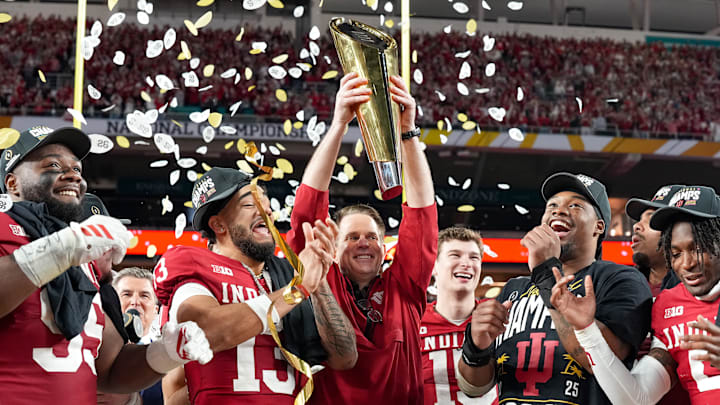
All hail the Hoosier overlords and how much Curt Cignetti has broken the sport by taking the historically worst program and turned it into an undefeated champion. It will be fascinating to see what kind of impact that CFP run has moving forward—both Indiana trying to prove it was no fluke and for many other teams anxiously saying why can’t they be next as a result. It’s never happened where people are chatting about how they can bring a bit of that magic from Bloomington, Ind., to their own campus but that will definitely hang over every team this year.
New names, new places
A historic coaching carousel has brought about a slew of notable changes which figure to reshape how we view a number of programs. You can start at LSU where expectations are super high for Lane Kiffin’s debut campaign and even more intrigue at Michigan after Kyle Whittingham has traded red for big blue. Jon Sumrall is already ingratiating himself to Florida fans as part of a massive turnover in the SEC ranks and it will be fascinating to track the early progress of James Franklin at Virginia Tech, Tosh Lupoi at California, Charles Huff at Memphis, Bob Chesney at UCLA and dozens of others trying to win right away in new spots.
Loaded 2026 class of players
Make no bones about it, this looks like one of the most talented classes of college football players taking the field together at one time and if you don’t believe that, just track how many NFL teams will be trading draft picks for future assets. While the quarterbacks (Arch Manning, Dante Moore, Julian Sayin and others) get all the press, it’s a banner year for talent at every position. That includes wide receiver Jeremiah Smith, returning All-American tailback Ahmad Hardy and future All-Pro defensive backs Leonard Moore. The combination of NIL and revenue sharing is keeping more good players in school for longer and that’s readily apparent in the number of stars back for next year. How will they all get better? That’s something to track over the long offseason that should feature plenty discussion over these players.
More College Football from Sports Illustrated
Listen to SI’s college sports podcast, Others Receiving Votes, below or on Apple and Spotify. Watch the show on SI’s YouTube channel.
 Add us as a preferred source on Google
Bryan Fischer is a staff writer at Sports Illustrated covering college sports. He joined the SI staff in October 2024 after spending nearly two decades at outlets such as FOX Sports, NBC Sports and CBS Sports. A member of the Football Writers Association of America’s All-America Selection Committee and a Heisman Trophy voter, Fischer has received awards for investigative journalism from the Associated Press Sports Editors and FWAA. He has a bachelor’s in communication from USC.
Follow bryandfischer