%20%20--%3E%0A%3Csvg%20version%3D%221.1%22%20id%3D%22Layer_1%22%20xmlns%3D%22http%3A%2F%2Fwww.w3.org%2F2000%2Fsvg%22%20xmlns%3Axlink%3D%22http%3A%2F%2Fwww.w3.org%2F1999%2Fxlink%22%20x%3D%220px%22%20y%3D%220px%22%0A%09%20width%3D%2239px%22%20height%3D%2240px%22%20viewBox%3D%220%200%2039%2040%22%20enable-background%3D%22new%200%200%2039%2040%22%20xml%3Aspace%3D%22preserve%22%3E%0A%3Cpath%20fill%3D%22%23FFFFFF%22%20d%3D%22M38.5%2C7H28.2v26h10.3V7z%22%2F%3E%0A%3Cpath%20fill-rule%3D%22evenodd%22%20clip-rule%3D%22evenodd%22%20fill%3D%22%23FFFFFF%22%20d%3D%22M26.1%2C25.5c0%2C5.8-4.1%2C7.5-12.9%2C7.5C3.9%2C33%2C0%2C31.2%2C0%2C25.2v-1.1h11.6%0A%09v2.4c0%2C0.7%2C0.1%2C1.4%2C1.2%2C1.4c1%2C0%2C1.2-0.4%2C1.2-1.3v-0.9c0-1.6-0.9-1.6-3.5-2.2C2.2%2C21.7%2C0%2C19.7%2C0%2C15.3v-0.9C0%2C9.3%2C5.5%2C7%2C12.9%2C7%0A%09c10.2%2C0%2C12.8%2C2.6%2C12.8%2C7.4v1.8h-11v-2.9c0-0.6-0.4-1.1-1.2-1.1c-0.6%2C0-1.2%2C0.4-1.2%2C1.1v0.9c0%2C1.5%2C0.9%2C2%2C3.3%2C2.5%0A%09c8%2C1.6%2C10.5%2C3.3%2C10.5%2C7.5V25.5z%22%2F%3E%0A%3C%2Fsvg%3E%0A)
Twelve Biggest Lessons From the 2025 College Football Season Beyond the Playoff
The College Football Playoff debate has been settled, the bracket has been filled and the sport’s postseason has been sorted.
While much of the next six weeks will be spent intensely focused on what transpires in the chase for the national championship, that’s doing a slight disservice to what we witnessed for the past few months.
Stop and think about it. Remember those gigantic upsets, head-turning plays that changed the course of the season and wild turnovers that you still can’t believe were made (both offensively and defensively).
So before everything becomes even more about the first round to the title game, it’s time to look back at the key takeaways that don’t specifically involve the CFP.
1. Conference championship games are not going anywhere
In the weeks leading up to championship weekend, there were two big news stories circulating over the games’ future. The first was linked to potential CFP expansion taking conference championships away altogether and another to a report from Puck that NBC was entertaining selling its lone Big Ten title broadcast to a potential streamer.
After this past week, though, they’re not going anywhere.
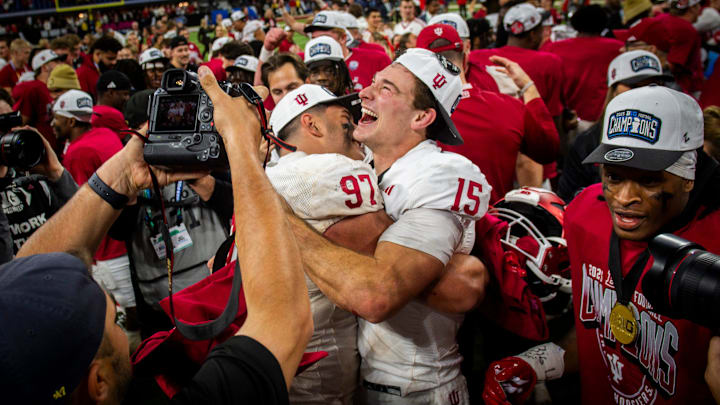
They meant plenty to the likes of Indiana, which finally made the short drive north to hold up the hardware. They were meaningful to teams like James Madison and Kennesaw State (both notching their first in FBS, the former clinching a CFP bid). More important to the SEC and Big Ten—entities that control the sport’s postseason future—they didn’t get dinged for playing in them.
What’s more, the title games were pretty thrilling on a whole. The Owls capped off a remarkable turnaround with a drive for the ages to seize the Conference USA crown. The playoff talk overshadowed it a bit but how momentous it was for noted football powerhouse Duke to finally win the ACC on the gridiron for the first time in the color television era. Boise State fans, as cold as they were Friday night, surely enjoyed capping off their dominance of the Mountain West with one more league title for the trophy case by topping a regional rival they once again treated like a younger brother.
Big money. Big fun. Big content. That’s a triumvirate that should leave conference championships on the schedule for several more years to come.
2. Bowl games really are exhibitions and more teams have the excuse to opt out now
For those of a certain age, Notre Dame turning down a bowl game isn’t completely from left field. But for the Fighting Irish to do so this season was downright shocking and sadly what looks to be the start of a budding trend.
They weren’t alone either. Kansas State hit eject on the postseason. Iowa State did, too.
The thinking from all three schools is understandable: What’s the point, especially if you’re changing coaches as in the case of the Cyclones and Wildcats?
It also stinks to high heaven. What happened to the coaches whining about those 15 extra practices? What happened to the fun matchups in unique places? What happened, it should be underscored, to more football?
This is a sport built on scarcity and some teams saying enough is enough after just 12 times between the lines is not the message you expected to be sent in 2025. That simply reconfirms that the bowl system we became used to is fully a set of exhibition games now. We probably knew that already, but whatever hope of being able to fondly name off bowl sponsors in good fun probably died off for good on Selection Sunday.
Sadly, the worst part is that now that such a precedent has been set, we’re only going to get much more of it. Throwing more 5–7 teams in the mix just won’t make the bowl season the same.
3. This was the hardest Heisman vote in years
The Heisman Trophy made a change this year to the voting process, opening it only an hour after kickoff of the SEC title game and shortening the window to get your votes in before the typical deadline on Monday evening.
This was a much needed change that many had been calling for over the years and helps the often disparate electorate really focus on who they want to vote for.
And as a voter for nearly two decades, this season was one of the hardest votes to cast in recent memory. Last year was difficult because of the quality of candidates, this year was very much about the quantity of excellent players worthy of a vote.
Hopefully that means we’ll see five (or more) finalists in New York to help do a bit of justice to some of the wonderful seasons all of the big names had.
4. Unequal schedules in megaconferences will be an issue every year
Let’s face it, megaconferences absolutely stink when it comes to figuring out who is actually great in a conference and who is merely the product of schedule luck. The ACC may wind up as the poster child for its jam-packed standings, but it is far from alone in the calendar being the driving force in competitive equity instead of the team on the field alone.
It’s a shame we had to wait until December to truly unveil if Texas A&M is as good as it has looked for much of the season with a soft slate in the SEC just as it took only the first and last games of 2025 for Ohio State to be truly tested. Some conferences moving to nine games in league play will help some but somebody is always going to avoid somebody else.
We’ve grown used to parsing out the schedule and looking for flaws or openings for teams for years in the NFL preseason and that seems like it has trickled down to college football too without even noticing. Moving forward, who teams play may be the determining factor over a program’s floor and ceiling even more than how they play.
5. Preseason prognostications will be even more random moving forward
If you were to peruse the use of the preseason polls from August, you’ll probably find a common theme among those teams that, for lack of a better term, flopped this season: a star quarterback who showed flashes last season or a team returning a lot of starters.
Neither seemed to be the great indicator of a playoff contender or conference heavyweight like it once was and we’d all be wise to remember that.
6. Coaches’ complaining about the calendar could force the commissioners to change it
If I had a nickel for every time a coach complained about the football calendar, I may well have enough to buy a Ferrari.
The coaches are their own issue on this front as they were the ones who pushed hard to create the early signing period and for additional tweaks because of a minor issue they run into.
Now it seems such griping is reaching a point where the coaches’ complaints should give the commissioners and administrators running the enterprise carte blanche to change it how they see fit. There’s no need for an early signing period right in the thick of hiring season and moving it back would give the general managers actually building these rosters something akin to the NFL model where they have free agency (transfer portal) hit before the draft (signing day). That, among other things, would be better off for everyone.
Between everything that transpired during COVID and guys like Jake Retzlaff showing up in July and still leading a team to the CFP, coaches are more adaptable than they would have you believe. That’s true when it comes to the calendar, too.
7. Josh Heupel did a great rebuilding job at Tennessee
The most puzzling storyline might be Vols fans throwing a fit over the slight backslide on Rocky Top to eight wins—as if that somehow isn’t good enough now.
Did last year’s playoff run break a certain segment of the fan base’s brains? Do they not recall the number of players who left town, either by the draft or the portal? We spent a good month discussing the drama around Nico Iamaleava’s departure and winning eight games while pushing the eventual SEC champs to the brink seems like a decent enough year in Knoxville.
Heupel has won double-digit games in two of the last four years and has a chance to reach nine victories in the other two if they win at the end of the month. That’s the kind of run that’s happened only once since Phillip Fulmer stepped down.
Everybody in orange should take a deep breath and relax. It was a good but not great year. That hasn’t been the recent norm for the Vols.
8. There was no shortage of disappointing teams
Five teams in the preseason AP Top 25 made the playoff which seems … good! At least as far as these attempts of discernment go.
Less good, how many of the veteran-laden teams absolutely fell flat on their face. No. 1 Texas salvaged a lost season but was nowhere near what it should have been. Penn State fired its head coach midseason and needed to scrape and claw to make a bowl game. Clemson’s flaws looked magnified even more. The bottom completely fell out from Florida, too.
There’s never a set number of programs who fail to live up to expectations but there was a really long list of them this season.
9. This quarterback draft class disappointed, but it could be historic next year
Last spring, a number of NFL scouts were enviously eyeing this year’s quarterback class. Garrett Nussmeier, Cade Klubnik, LaNorris Sellers, Sam Leavitt and more were all being discussed as potential first-rounders. There was the possibility, months out, that upwards of five could wind up as first-rounders.
Well, that is unlikely to be the case after most of those big names flopped. Penn State’s Drew Allar got hurt along with Nussmeier, and Klubnik never elevated his team. Others seemed lost if they did manage to avoid injuries.
However, this year’s crop of QB disappointments could lead to a historic season next year. Sellers and Leavitt look like they could transfer to better situations, Dante Moore and John Mateer should return for more starts and the entire college football ecosystem has a chance to benefit tremendously from a deep group that even includes the most lauded of the bunch making a leap, too.
10. Arch Manning has a chance to live up to the hype … next year
Manning did not get much help from his offensive line, receivers or running backs in 2025 (a very, “Other than that, how was the play, Mrs. Lincoln?” campaign). He came nowhere near the hype placed on him by both outsiders and those within the 40 Acres.
But he also wasn’t dreadful and showed signs of being someone who actually could take the Longhorns back to the CFP in 2026. Manning threw for 2,942 yards (an even eight per attempt), 24 touchdowns and seven interceptions while completing 61% of his passes.
Go back two years to his predecessor Quinn Ewers, who threw for slightly more yards (8.8 yards per attempt), 22 touchdowns and six picks in 12 games as a sophomore starter while having a much better supporting cast around him. The following year, he significantly improved (31 touchdown passes while playing hurt), led Texas to a thrilling semifinal that was decided late in the fourth quarter and helped elevate the offense more than he pulled it back.
Manning can be on a similar trajectory (with a much higher natural ceiling) under Steve Sarkisian and may be a prime candidate to actually live up to that hype in 2026.
11. There were a number of worthy candidates for Coach of the Year—too many, actually
There are a ton of Coach of the Year awards out there at the conference and national level but this year there felt like an oversized number of options to pick from.
If you need a reminder of that, just look at who got a different job as a result of what they accomplished.
12. It was worth it to spend on a quarterback and in the trenches
There are generally a few through lines in good teams when it comes to finding some roster-building takeaways from this past season.
Naturally, one is spending big on a good quarterback. It’s obvious but incredibly true based on some of the teams playing meaningful games in November and December. It certainly makes all those figures thrown around in the offseason seem relatively reasonable in retrospect, as there’s not an Oklahoma fan or booster around who doesn’t think Mateer was worth every dollar in NIL/revenue sharing after leading the team to a first-round CFP home game. The same is true for Duke, who made a big splash in Darian Mensah and was rewarded with the first conference title in decades. Carson Beck, for all his faults, did what Cam Ward could not in getting Miami to the playoff.
Not every high-priced signal-caller panned out great but the return on investment definitely can pay off handsomely at a position that still has an oversized impact on a program’s fortunes.
The same is true in the trenches. Ohio State, Oregon, Texas Tech and others all fortified their offensive and defensive lines while also relying on talent development from the high school ranks that they kept on campus and out of the portal. There are a few market inefficiencies that savvy general managers have exploited but for the most part, those who ponied up for the big fellas had oversized success this season.
Those that didn’t, probably learned their lesson.
More College Football from Sports Illustrated
Listen to SI’s new college sports podcast, Others Receiving Votes, below or on Apple and Spotify. Watch the show on SI’s YouTube channel.
 Add us as a preferred source on Google
Bryan Fischer is a staff writer at Sports Illustrated covering college sports. He joined the SI staff in October 2024 after spending nearly two decades at outlets such as FOX Sports, NBC Sports and CBS Sports. A member of the Football Writers Association of America’s All-America Selection Committee and a Heisman Trophy voter, Fischer has received awards for investigative journalism from the Associated Press Sports Editors and FWAA. He has a bachelor’s in communication from USC.
Follow bryandfischer