%20%20--%3E%0A%3Csvg%20version%3D%221.1%22%20id%3D%22Layer_1%22%20xmlns%3D%22http%3A%2F%2Fwww.w3.org%2F2000%2Fsvg%22%20xmlns%3Axlink%3D%22http%3A%2F%2Fwww.w3.org%2F1999%2Fxlink%22%20x%3D%220px%22%20y%3D%220px%22%0A%09%20width%3D%2239px%22%20height%3D%2240px%22%20viewBox%3D%220%200%2039%2040%22%20enable-background%3D%22new%200%200%2039%2040%22%20xml%3Aspace%3D%22preserve%22%3E%0A%3Cpath%20fill%3D%22%23FFFFFF%22%20d%3D%22M38.5%2C7H28.2v26h10.3V7z%22%2F%3E%0A%3Cpath%20fill-rule%3D%22evenodd%22%20clip-rule%3D%22evenodd%22%20fill%3D%22%23FFFFFF%22%20d%3D%22M26.1%2C25.5c0%2C5.8-4.1%2C7.5-12.9%2C7.5C3.9%2C33%2C0%2C31.2%2C0%2C25.2v-1.1h11.6%0A%09v2.4c0%2C0.7%2C0.1%2C1.4%2C1.2%2C1.4c1%2C0%2C1.2-0.4%2C1.2-1.3v-0.9c0-1.6-0.9-1.6-3.5-2.2C2.2%2C21.7%2C0%2C19.7%2C0%2C15.3v-0.9C0%2C9.3%2C5.5%2C7%2C12.9%2C7%0A%09c10.2%2C0%2C12.8%2C2.6%2C12.8%2C7.4v1.8h-11v-2.9c0-0.6-0.4-1.1-1.2-1.1c-0.6%2C0-1.2%2C0.4-1.2%2C1.1v0.9c0%2C1.5%2C0.9%2C2%2C3.3%2C2.5%0A%09c8%2C1.6%2C10.5%2C3.3%2C10.5%2C7.5V25.5z%22%2F%3E%0A%3C%2Fsvg%3E%0A)
Q&A: Justin Thomas on a Life-Changing Moment, Sun Protection and Shinnecock Hills
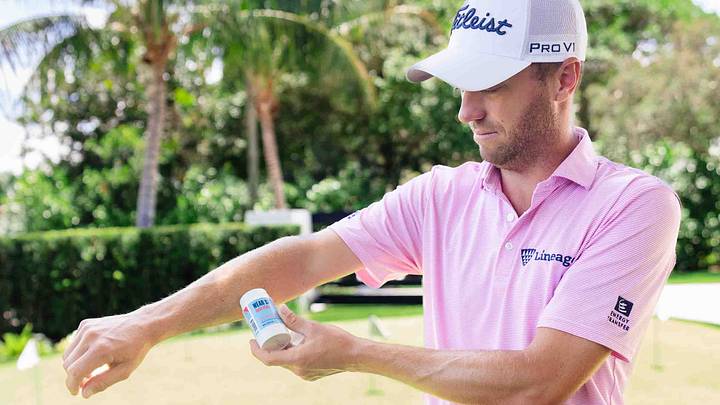
One of the most important things two-time major champion Justin Thomas does on the course comes almost subconsciously, and it has nothing to do with his golf swing or course management.
If you follow Thomas around for 18 holes on a day when the sun is unleashing its strongest UV power, you’ll see him reach into his golf bag to reapply sun protection—his own brand of sun protection, WearSPF.
There’s a story behind that, and he took a few moments by phone with Sports Illustrated this month—Skin Cancer Awareness Month—to share it.
Sports Illustrated: So this all tracks back to a 2019 dermatologist visit. What happened?
Justin Thomas: My parents were pretty good at me being diligent of going, how much I’m outside and in the sun. Naturally, as the middle school or high schooler, I’m certainly not bringing it up to go to the dermatologist, so my parents made me go and I had a couple things taken off here and there—but I still never really understood the severity.
I was in for my yearly checkup and I had a spot on my calf that I just thought kind of looked a little different. They agreed and they ended up taking it off, checking it out and it ended up being early stages of melanoma. It was crazy and a scary, eye-opening visit.
SI: Did you know what that meant at the time? You’re a young athlete.
JT: Not exactly. I knew of melanoma. I’d heard of it. I knew that it was cancer. I’d have been 26, 25 years old? Immediately you go to Google—which is never a good idea—then you’re like holy crap … it’s just a lot. It’s crazy how you know what it could have been. My doctor, he said, “you were probably a couple months away from being a patient in the hospital” and that was the eye-opening—wow, this is a very-serious-and-I’m-very-lucky type of situation when I realized it.
SI: So from that moment on, you changed your routine with how you approached being outside and what you do for a living.
JT: My protocols changed a lot. I had to go to the dermatologist quarterly the next year, then down to three times and biannually and then back to just once a year, for however many years now. But then it’s doing all the little things and just paying attention to it.
Taking care of my skin and then taking care of something as little is putting sunscreen on maybe doesn’t seem that big to a lot of people, but coming from someone who’s told that by the doctor—it’s a pretty big deal, it’s definitely something I take seriously.
SI: Walk me through a routine on a tournament day, where does the sun protection and application play in for you?
JT: I’d say a lot of it will depend on the weather and the little things like the severity of the sun. A lot of people just associate hot weather with the sun, the strength of the sun, and that’s not necessarily the case. You can have a high UV index even when it’s overcast outside or it could be 50 or 60 degrees and the UV index could be higher than places that are 85 and 90. It’s little things on weather apps or you could look it up online.
I’m always gonna put some sunscreen on. I like using the body stick or face stick before I go out and then I’ll put on some spray or depending on if I’m either doing it in the locker room or warming up. Generally when I get out to my bag, I’ll put the spray on after I put the stick on and then, going back to what I was saying, just the severity and need of it. Not just doing it to check a box, do a little bit of homework with it.

SI: Is this something you’re comfortable talking about with people? You play in all these pro-ams, you see a guy, do you talk about it? “Hey, it’s hot today, you wearing sunscreen?”
JT: It is a funny thing … I have a pretty big scar on my leg from where I had the mole taken off from where the melanoma was. And it quite often in pro-ams, when we’re able to wear shorts in the practice rounds, whether it’s somebody trying to make conversation or just seeing it, they’re like, “oh, what happened to your legs? Did you get bit by a dog?” Depending on how the back-and-forth has been with the person the whole day, how bad I want to make him feel. I’m like no, actually I had melanoma and they’re like “oh my god, i’m so sorry.” And I’m like, yeah, but you don’t think it’s so funny anymore, do you? (laughs)
That generally will open up a conversation of wearing sunscreen, how WearSPF started and how our whole mission and idea and hope behind it. It wasn’t just to start a sunscreen brand. We’re wanting to bring awareness to skin cancer, that it can happen at any age and it can be deadly to people depending on when you get it. And with the amount of hours that golfers and a lot of other athletes spend outside, it’s not something to look past.

SI: Next month we will see you is the U.S. Open, where ideally you’re playing late on a Sunday afternoon at Shinnecock Hills. Do you think you would still remember to reapply going to the back nine?
JT: I definitely would. It’s one of those things for me, it’s kind unconscious. I couldn’t even specifically tell you exactly what I do it anymore in terms of reapplying. Without even thinking, I’ll be in the middle of a conversation when I get to my golf bag, I take this little bag I have with my wallet, my watch, my credential, and right next to it is where my sunscreen is. I’ll pull that out and I’ll put the spray on my arms. I’ve done it long enough now, it’s kind of second nature.
SI: There was so much discussion at Aronimink about setups and pin positions, but Shinnecock doesn’t seem to be a place that needs a lot of manipulation. What do you remember about the last Open you played there? (Thomas was T25 in 2018, 12 over and 11 shots back of winner Brooks Koepka.)
JT: It’s a very challenging course. It’s very tough but right in front of you, they don’t need to do very much in terms of making it difficult—it is difficult. I remember Saturday afternoon the course got away from the USGA and there were some pretty aggressive pin positions in terms of balls that wouldn’t stay around the hole and were rolling off the greens. But it got windier and firmer and faster than they thought, and being where it is, it can get very hot, very dry, very windy quickly. It can be a very challenging test.
SI: Is that what you prefer? Figuring some guys won’t be able to handle it mentally?
JT: The thing about Aronimink, there’s nothing about it that was unfair. I understand why people were upset, you couldn’t separate yourself. It was hard to make birdies. But it was also blowing 25 mph. It’s pretty hard to make birdies in that anywhere. But there were no situations where balls were rolling off greens, you didn’t have putts and chips that were going a foot or two from the hole and then completely rolling off the green. It was hard to get the ball close to the hole.
That’s the big difference of a setup being hard and a setup being unfair, and none of us want a Mickey Mouse-kind of setup where it’s just teetering on the edge of playable or not. Challenging is what we all want, especially for a U.S. Open.
More Golf from Sports Illustrated
 Add us as a preferred source on Google
John Schwarb was a senior editor for Sports Illustrated covering golf. Prior to joining SI in March 2022, he worked for ESPN.com, PGATour.com, Tampa Bay Times and Indianapolis Motor Speedway. He is the author of The Little 500: The Story of the World’s Greatest College Weekend. A member of the Golf Writers Association of America, Schwarb has a bachelor’s in journalism from Indiana University.
Follow johnschwarb