%20%20--%3E%0A%3Csvg%20version%3D%221.1%22%20id%3D%22Layer_1%22%20xmlns%3D%22http%3A%2F%2Fwww.w3.org%2F2000%2Fsvg%22%20xmlns%3Axlink%3D%22http%3A%2F%2Fwww.w3.org%2F1999%2Fxlink%22%20x%3D%220px%22%20y%3D%220px%22%0A%09%20width%3D%2239px%22%20height%3D%2240px%22%20viewBox%3D%220%200%2039%2040%22%20enable-background%3D%22new%200%200%2039%2040%22%20xml%3Aspace%3D%22preserve%22%3E%0A%3Cpath%20fill%3D%22%23FFFFFF%22%20d%3D%22M38.5%2C7H28.2v26h10.3V7z%22%2F%3E%0A%3Cpath%20fill-rule%3D%22evenodd%22%20clip-rule%3D%22evenodd%22%20fill%3D%22%23FFFFFF%22%20d%3D%22M26.1%2C25.5c0%2C5.8-4.1%2C7.5-12.9%2C7.5C3.9%2C33%2C0%2C31.2%2C0%2C25.2v-1.1h11.6%0A%09v2.4c0%2C0.7%2C0.1%2C1.4%2C1.2%2C1.4c1%2C0%2C1.2-0.4%2C1.2-1.3v-0.9c0-1.6-0.9-1.6-3.5-2.2C2.2%2C21.7%2C0%2C19.7%2C0%2C15.3v-0.9C0%2C9.3%2C5.5%2C7%2C12.9%2C7%0A%09c10.2%2C0%2C12.8%2C2.6%2C12.8%2C7.4v1.8h-11v-2.9c0-0.6-0.4-1.1-1.2-1.1c-0.6%2C0-1.2%2C0.4-1.2%2C1.1v0.9c0%2C1.5%2C0.9%2C2%2C3.3%2C2.5%0A%09c8%2C1.6%2C10.5%2C3.3%2C10.5%2C7.5V25.5z%22%2F%3E%0A%3C%2Fsvg%3E%0A)
The Shot Scope LM1 Launch Monitor Packs a Punch at a Shocking Price Point
Paul Liberatore is the founder of Golfers Authority, which reviews the world's best golf products and gear.
I have spent years hitting balls in front of every launch monitor you can think of, from $20,000 Trackman setups to cheap tech that probably belongs in a junk drawer. So, naturally, when the Shot Scope LM1 dropped to just $200, which packs Doppler radar and a built-in color screen, my initial reaction was skeptical. There's no way something at that price point actually works, right? Then I spent a few weeks beating the thing up at the range, taking it out on the course and running it side by side against monitors that cost much more. Turns out, I couldn't have been more wrong on almost every count. Here’s why I’m excited to share this product with you.
Jump To:
- Doppler radar at a stunning price
- The color screen changes everything (and I wasn’t expecting that)
- Shot Scope’s ecosystem is the hidden power move
- There are a few things you aren’t getting
- Should you buy the Shot Scope LM1?
Doppler radar at a stunning price

When I first pulled the LM1 out of its carry case, I immediately started looking for the catch. Most golfers have been conditioned to believe that anything under $500 in the launch monitor space is a glorified toy, and usually that skepticism is well-founded. I've tested budget devices that were off by 20 yards on carry distance numbers, so unreliable they'd actually make your game worse.
But here's where the LM1 genuinely surprised me. Shot Scope didn’t cut corners on the core technology. It uses Doppler radar, the same fundamental technology that powers Trackman and FlightScope, the devices trusted by tour professionals worldwide. Now, I’m not saying the LM1 is as precise as a $20,000 Trackman. But the radar directly measures ball and clubhead speed, not guessing based on accelerometer data or camera estimates. That distinction matters more than most golfers realize.
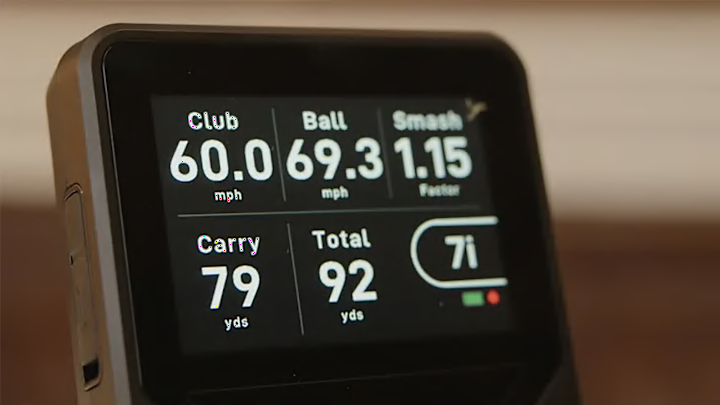
The LM1 tracks five metrics: ball speed, clubhead speed, smash factor, carry distance and total distance. So if your goal is reliable distances and a simple way to track strike quality, LM1 gives you what matters without drowning you in nerdy data.
The color screen changes everything (and I wasn’t expecting that)

This is where the LM1 really surprised me. Most budget launch monitors turn practice into a process: pull out your phone, open an app, pair it, mess with settings and burn five minutes before hitting a ball.
The LM1 is the opposite. You set it 55 inches behind the ball, hit power and you’re tracking shots in about 25 seconds. No app. No pairing.
It also stores up to 1,000 shots. You can select your club on the unit with the side buttons, and there’s basically no calibration; you just set it down and hit. Sync later if you want, but you don’t have to.
And it’s built for real range life: small enough to live in your golf bag, 5+ hours of battery, USB‑C charging, and it’s water-resistant for light rain. Not waterproof, don’t drop it in a pond, but it’ll handle a drizzly session.
Shot Scope’s ecosystem is the hidden power move

This is the part of the LM1 story that most reviewers gloss over, but it’s actually the feature that separates this device from every other $200 launch monitor on the market. If you already own a Shot Scope GPS watch (or you’re considering one), the LM1 converts from a solid budget launch monitor into something powerful.
Here’s how it works in practice: You play a round with your Shot Scope watch, which tracks every shot you hit on the course. After the round, you open the Shot Scope app and review your strokes gained analysis. Let’s say the data shows you’re losing half a stroke per round with your mid-irons compared to a 15-handicap benchmark. That’s your signal. You head to the range with the LM1, pull out your 7-iron and hit 50 balls. The LM1 shows that your carry distance varies by 15 yards, with some shots going 155 and some going 170. Now you have a specific problem to work on.
You focus on strike quality, watching your smash factor climb as you find the center of the face more consistently. The following week, you play another round with your Shot Scope watch and you can actually measure whether that practice session translated to on-course improvement. Did you gain back that half a stroke?
That closed-loop feedback system identifies a weakness when playing on the course, practices it with measurable data, and then verifies the improvement is something no other $200 device can offer.
There are a few things you aren’t getting

Every product review that doesn’t clearly spell out the trade-offs is doing you a disservice. The LM1 is $200 for a reason, and you deserve to know exactly what Shot Scope cut to hit that price point.
The biggest omission is spin data. The LM1 does not measure backspin or sidespin period. For a lot of golfers, that won’t matter at all. But if you’re a single-digit handicapper who needs to know whether your wedge is spinning at 8,000 or 10,000 RPM to refine your approach game, this device won’t help you.
The second trade-off is simulation capability. If you’ve been dreaming about building a garage simulator and playing Pebble Beach in January, the LM1 won’t get you there. It has no simulation integration. This is strictly a practice and data tool.
Shot Scope is candid about this; they’re not pretending the LM1 is something it isn’t. No spin, no sim, no launch angle, no club path, no attack angle. Five metrics, and that’s it. The question you need to ask yourself is: Do I actually need those additional metrics, or do I just want them because they sound impressive? For most golfers shooting between 85 and 105, the answer is that five solid, accurate metrics will do more for your game than 14 metrics you don't fully understand.
Should you buy the Shot Scope LM1?
After all my testing, I keep coming back to something I believe deeply: the best launch monitor isn’t the one with the most data points, it’s the one you’ll actually pull out of your bag and use. I’ve watched too many golfers (myself included) buy expensive tech that ends up gathering dust because the friction of setting it up outweighs the motivation to practice.
The LM1 eliminated that friction entirely for me.
I doubt there’s a better value in the market right now. At $200 with no subscription, the LM1 costs less than three golf lessons. And unlike those lessons, it shows up every single time you go to the range, ready in 25 seconds, asking nothing of you except to hit the ball and pay attention to the numbers. That’s the kind of tool that quietly, steadily makes you a better golfer.
More Golf from Sports Illustrated
 Add us as a preferred source on Google
As the founder of Golfers Authority, Paul has spent the last 7+ years writing about the best golf products and instruction from the top golf instructors in the world. When he's not practicing law or creating golf content on YouTube, he can be found on the Behind the Golf Brand podcast talking with the leaders of the golf industry.
Follow AuthorityGolfer