%20%20--%3E%0A%3Csvg%20version%3D%221.1%22%20id%3D%22Layer_1%22%20xmlns%3D%22http%3A%2F%2Fwww.w3.org%2F2000%2Fsvg%22%20xmlns%3Axlink%3D%22http%3A%2F%2Fwww.w3.org%2F1999%2Fxlink%22%20x%3D%220px%22%20y%3D%220px%22%0A%09%20width%3D%2239px%22%20height%3D%2240px%22%20viewBox%3D%220%200%2039%2040%22%20enable-background%3D%22new%200%200%2039%2040%22%20xml%3Aspace%3D%22preserve%22%3E%0A%3Cpath%20fill%3D%22%23FFFFFF%22%20d%3D%22M38.5%2C7H28.2v26h10.3V7z%22%2F%3E%0A%3Cpath%20fill-rule%3D%22evenodd%22%20clip-rule%3D%22evenodd%22%20fill%3D%22%23FFFFFF%22%20d%3D%22M26.1%2C25.5c0%2C5.8-4.1%2C7.5-12.9%2C7.5C3.9%2C33%2C0%2C31.2%2C0%2C25.2v-1.1h11.6%0A%09v2.4c0%2C0.7%2C0.1%2C1.4%2C1.2%2C1.4c1%2C0%2C1.2-0.4%2C1.2-1.3v-0.9c0-1.6-0.9-1.6-3.5-2.2C2.2%2C21.7%2C0%2C19.7%2C0%2C15.3v-0.9C0%2C9.3%2C5.5%2C7%2C12.9%2C7%0A%09c10.2%2C0%2C12.8%2C2.6%2C12.8%2C7.4v1.8h-11v-2.9c0-0.6-0.4-1.1-1.2-1.1c-0.6%2C0-1.2%2C0.4-1.2%2C1.1v0.9c0%2C1.5%2C0.9%2C2%2C3.3%2C2.5%0A%09c8%2C1.6%2C10.5%2C3.3%2C10.5%2C7.5V25.5z%22%2F%3E%0A%3C%2Fsvg%3E%0A)
Ping i525 Irons Fix What You Can't See
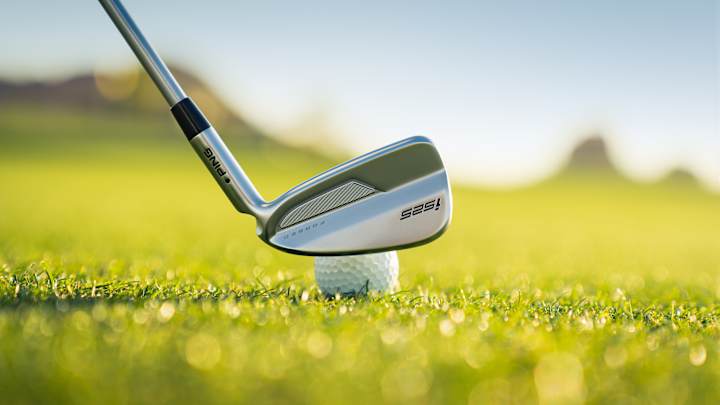
Ping i525 Irons
Clubs: 3-iron through 9-iron, PW, AW
Lies: 10 color-coded lie angles
Stock shafts: Project X IO (5.5, 6.0, 6.5), Ping AWT 2.0 (R, S, X), Ping Alta CB Slate (SR, R, S), Ping Alta Distanza Black 40 and UST Recoil 760 ES SMAC (A), 780 (R, S).
Optional stock shafts: Dynamic Gold (S300, X100), Dynamic Gold 105 (R300, S300), Dynamic Gold 120 (S300, X100), KBS Tour (R, S, X), Nippon Pro Modus Tour 105 (R, S, X), Elevate 95 (R, S)
Available: March 24
Price: $205 per club with stock steel shaft; $220 per club with stock graphite shaft
Ping’s new i525 irons have already found their way into a handful of bags of its staffers on the PGA Tour and in doing so, the company solved the previous model’s biggest problem.
When Ping introduced the i500 in 2018, it was the company’s first offering in the player’s distance category. The i500 had a compact shape and featured a hollow body with a thin face, designed to create more distance from the face flexing at impact.
Cameron Champ, one of the handful of longest players on the PGA Tour and a Ping staffer, carried an i500 3-iron and 4-iron. Tony Finau, who is long off the tee, also carried an i500 long iron.
No one doubted the performance, but because there was nothing but air in the hollow area, the sound was off-putting to a number of players to whom that kind of iron would appeal. And sound equals feel.
Champ immediately transitioned into the i525 long irons. “They have a little bit more defined look, which I like,” Champ told PGATour.com at the Farmers Insurance Open. “And they sound better, too. The sound is one thing. Definitely maybe a little bit softer on the face, which I like. You can feel it easier. But for me, for the ball flight that I want, it comes out perfectly.”
Champ said he’s using the 3-iron – which the Ping staff bent to 2-iron loft – as a driving iron and he can carry it upwards of 275 yards in the air. As a result, Champ has decided for the most part not to carry a 3-wood in his bag.
The i525’s improved sound and feel are produced by injecting polymer behind the face but only a small, precise amount in the same location on each clubhead. The effect was the sound that the company wanted while still allowing enough flex in the face, which creates extra distance.
The forged face is made of variable thickness maraging steel, which is, essentially metalwood construction. The thin face, combined with a deep undercut in the stainless-steel body, creates more consistent distance without the hot spots that can occur with a hollow-body iron.
The i525 has tungsten weighting in both the toe and the shaft tip to raise the moment of inertia (MOI) and increase forgiveness.
Cosmetically, the i525 is slightly smaller than the i500 with a thinner top line, which is bound to have more appeal to the target audience. Ping says the i525 will be offered in its standard lofts, as well as its “power spec lofts” and “retro spec lofts.” The i500’s pitching wedge loft was 45 degrees, with 44 degrees in the power spec and 47 degrees in the retro spec. The standard i500 7-iron was 30.5 degrees with 29 degrees in power spec and 32.5 degrees in retro spec.
 Add us as a preferred source on Google
Purkey has been writing about all things golf for more than 30 years, working at the highest level at publications such as Golf Magazine and Global Golf Post. He is an avid golfer, with a handicap too low for his ability. Purkey lives in Charlotte, N.C.