%20%20--%3E%0A%3Csvg%20version%3D%221.1%22%20id%3D%22Layer_1%22%20xmlns%3D%22http%3A%2F%2Fwww.w3.org%2F2000%2Fsvg%22%20xmlns%3Axlink%3D%22http%3A%2F%2Fwww.w3.org%2F1999%2Fxlink%22%20x%3D%220px%22%20y%3D%220px%22%0A%09%20width%3D%2239px%22%20height%3D%2240px%22%20viewBox%3D%220%200%2039%2040%22%20enable-background%3D%22new%200%200%2039%2040%22%20xml%3Aspace%3D%22preserve%22%3E%0A%3Cpath%20fill%3D%22%23FFFFFF%22%20d%3D%22M38.5%2C7H28.2v26h10.3V7z%22%2F%3E%0A%3Cpath%20fill-rule%3D%22evenodd%22%20clip-rule%3D%22evenodd%22%20fill%3D%22%23FFFFFF%22%20d%3D%22M26.1%2C25.5c0%2C5.8-4.1%2C7.5-12.9%2C7.5C3.9%2C33%2C0%2C31.2%2C0%2C25.2v-1.1h11.6%0A%09v2.4c0%2C0.7%2C0.1%2C1.4%2C1.2%2C1.4c1%2C0%2C1.2-0.4%2C1.2-1.3v-0.9c0-1.6-0.9-1.6-3.5-2.2C2.2%2C21.7%2C0%2C19.7%2C0%2C15.3v-0.9C0%2C9.3%2C5.5%2C7%2C12.9%2C7%0A%09c10.2%2C0%2C12.8%2C2.6%2C12.8%2C7.4v1.8h-11v-2.9c0-0.6-0.4-1.1-1.2-1.1c-0.6%2C0-1.2%2C0.4-1.2%2C1.1v0.9c0%2C1.5%2C0.9%2C2%2C3.3%2C2.5%0A%09c8%2C1.6%2C10.5%2C3.3%2C10.5%2C7.5V25.5z%22%2F%3E%0A%3C%2Fsvg%3E%0A)
The Tour Championship Offers a Massive Purse, But Some Players Try Not to Think About It
ATLANTA – It is difficult not to focus on the money when . . . well. .. for the past two years, the professional game has seen much of the conversation revolve around the money.
Guaranteed money. More money for the stars. Events with no cuts… which means more money. The LIV Golf league guarantees and subsequent weekly tournament riches. Signature events and their elevated purses.
And the FedEx Cup.
Let's face it, while the idea of crowning a season-long champion on the PGA Tour is the main intention, the staggering amount of money that goes to the winner can’t be ignored. And you can trace a lot of big-money talk to the FedEx Cup, because the kind of bonus money being offered had never been seen previously.
What started in 2007 as a $10 million bonus to the winner and eventually grew to $15 million is now $18 million this week and going even higher next year. The total FedEx Cup bonus structure sees $75 million paid out now, with $1,000,000 going to 10th place and $500,000 going to 30th.
There is bonus money paid all the way through the 150th position on the final points list, with those finishing outside of the top 30 seeing it deferred into a retirement account.
This week at East Lake Country Club, where Viktor Hovland and Collin Morikawa are tied for the 36-hole lead, two shots ahead of Scottie Scheffler, there’s a huge difference between finishing first and second – $11.5 million, to be exact.
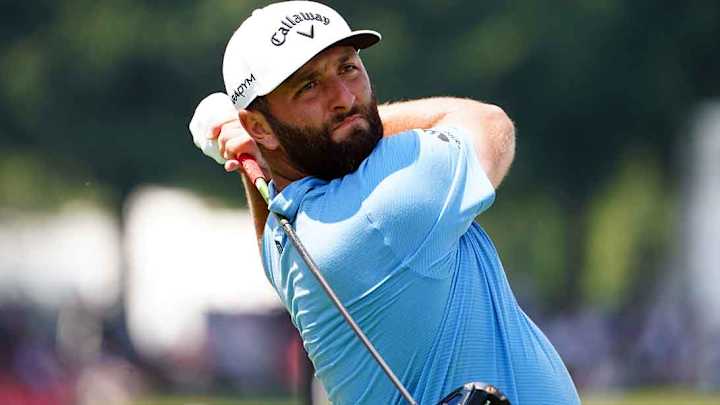
Jon Rahm, the reigning Masters champion, expressed his annoyance over money-talk at the Tour Championship. Even though, let’s face it, the tournament is about a lot of money.
“It’s one of the things that frustrates me about watching the broadcast,’’ Rahm said after shooting 65 to land in a tie for fifth, four shots back of the leaders. “Like, we’re not thinking if we miss a putt how much it’s going to cost us money-wise. No chance. Like none whatsoever. You’re trying to finish as high as possible. You’re trying to win a tournament. It’s one of my pet peeves when they make this tournament all about money because I think it takes away from it.’’
Perhaps it does. It’s quite possible that the general public is a bit tired of hearing about immense paydays in professional sports. Rahm is right when he says it’s not going to change anything for him, that he wants to win. He’s also made more than $50 million in career earnings on the PGA Tour at age 28.
That figure doesn’t include his FedEx bonus money, his DP World Tour earnings or his endorsements.
LIV Golf pays $25 million per tournament, with $4 million going to the winner. The overall points leader gets an $18 million bonus. With individual and team bonuses last year, Dustin Johnson made more than $35 million.
Still, from Rahm's current spot on the leaderboard to the top is a difference of approximately $15 million. That’s got to get your attention.
It’s all about perspective. When Rory McIlroy turned pro, he was just 18 years old. He did not come from a wealthy family. And in those early days, it was difficult not to be impressed by the money.
McIlroy has told the story before about how blown away he was at first with a big payday.
“The British Masters was my first tournament as a pro,’’ McIlroy said. I finished 42nd and won like 17,000 pounds (about $21,300 today). Then the next week I went to the Dunhill (Links Championship in Scotland), finished third and won 230,000 pounds (about $290,000 now.) I’m 18 at the time. I didn’t really know about taxes. And then I played in Madrid the next week, finished fourth, won another 50 grand or whatever.
“And then I got home, and I went to get money out of the ATM, 18 years old, I have a debit card, put it in the ATM and it says would you like to check your balance? I check my balance and I was like, wow. I went straight to the jewelry store and bought myself a watch.’’
McIlroy, who is in seventh place, six shots back of Hovland, has won the FedEx Cup three times – with $10 million, $15 million and $18 million bonuses. Those are just fractions of his worldwide golf income.
But thinking about the money is never going to help them make it. The problem is, as a young player, earning money is important to get established. As these players turn into stars, the money is far less on their mind, hence the ability to block that part of the pressure away.
There was considerable conjecture several weeks ago when J.T. Poston got to the 72nd hole of the 3M Open three strokes behind leader Lee Hodges. Poston attempted a risky shot over water to the par-5 hole that found the penalty area.
Poston then found more trouble as his fourth shot came up short of the green, he chipped on and then three-putted for a triple-bogey 8. He would have earned $850,000 for finishing second by himself. Instead he got $590,200, a difference of nearly $260,000.
“Not out here to finish second,’’ Poston said on social media. “Would make that decision 10 times out of 10 under circumstances.’’
That’s a noble attitude, one that most players employ. But Poston missed the Tour Championship by nine spots, finishing 39th. It cost him 92 FedEx Cup points at the 3M Championship, not enough to make up the difference in getting to Atlanta, but perhaps an amount that might have made the last few weeks different for him.
Rahm maintains that thinking about the difference in money gets in the way of winning.
“When you win a green jacket (the Masters), I can tell you right now that any major champion this year might not remember how much money they made,’’ Rahm said. “And that's the beauty about this game and I think that's kind of how it should be. Obviously I'm saying that being in an extremely privileged position financially. At that point, from first to second, you're making a ton of money, so it's more about winning than the prize itself.
“If you want to be a great player, you're going to have to go for the win instead of thinking about your bank account. Again, when I turned pro, I was already in a privileged situation because of what I had done as an amateur. So some brands took a chance on me and money wasn't an issue.’’
Fair enough.
But just in case… next year’s FedEx Cup payout to the winner is expected to be $25 million.
 Add us as a preferred source on Google
Bob Harig was a senior writer covering golf for Sports Illustrated. He has more than 25 years experience on the beat, including 15 at ESPN. Harig is a regular guest on Sirius XM PGA Tour Radio and has written two books, “DRIVE: The Lasting Legacy of Tiger Woods” and “Tiger and Phil: Golf’s Most Fascinating Rivalry.” He graduated from Indiana University where he earned an Evans Scholarship, named in honor of the great amateur golfer Charles (Chick) Evans Jr. Harig, a former president of the Golf Writers Association of America, lives in Clearwater, Fla.
Follow bobharig