%20%20--%3E%0A%3Csvg%20version%3D%221.1%22%20id%3D%22Layer_1%22%20xmlns%3D%22http%3A%2F%2Fwww.w3.org%2F2000%2Fsvg%22%20xmlns%3Axlink%3D%22http%3A%2F%2Fwww.w3.org%2F1999%2Fxlink%22%20x%3D%220px%22%20y%3D%220px%22%0A%09%20width%3D%2239px%22%20height%3D%2240px%22%20viewBox%3D%220%200%2039%2040%22%20enable-background%3D%22new%200%200%2039%2040%22%20xml%3Aspace%3D%22preserve%22%3E%0A%3Cpath%20fill%3D%22%23FFFFFF%22%20d%3D%22M38.5%2C7H28.2v26h10.3V7z%22%2F%3E%0A%3Cpath%20fill-rule%3D%22evenodd%22%20clip-rule%3D%22evenodd%22%20fill%3D%22%23FFFFFF%22%20d%3D%22M26.1%2C25.5c0%2C5.8-4.1%2C7.5-12.9%2C7.5C3.9%2C33%2C0%2C31.2%2C0%2C25.2v-1.1h11.6%0A%09v2.4c0%2C0.7%2C0.1%2C1.4%2C1.2%2C1.4c1%2C0%2C1.2-0.4%2C1.2-1.3v-0.9c0-1.6-0.9-1.6-3.5-2.2C2.2%2C21.7%2C0%2C19.7%2C0%2C15.3v-0.9C0%2C9.3%2C5.5%2C7%2C12.9%2C7%0A%09c10.2%2C0%2C12.8%2C2.6%2C12.8%2C7.4v1.8h-11v-2.9c0-0.6-0.4-1.1-1.2-1.1c-0.6%2C0-1.2%2C0.4-1.2%2C1.1v0.9c0%2C1.5%2C0.9%2C2%2C3.3%2C2.5%0A%09c8%2C1.6%2C10.5%2C3.3%2C10.5%2C7.5V25.5z%22%2F%3E%0A%3C%2Fsvg%3E%0A)
At This PGA Championship, the Real Winner Is Aronimink
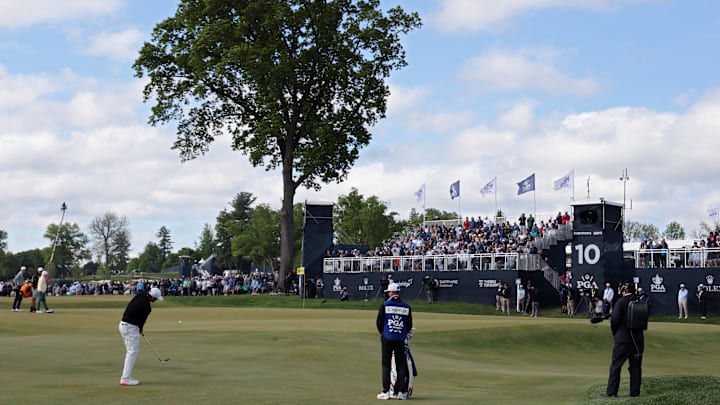
NEWTOWN SQUARE, Pa. — Donald Ross, the legendary course architect who designed Aronimink Golf Club, died in 1948, which is unfortunate news for all the golfers here who want to kill him.
This PGA Championship has been cold, hard, and unforgiving. It has also been a revelation. For years, traditionalists have worried—justifiably—that modern equipment is making classic courses obsolete. But here is Aronimink, playing just 349 yards longer than it did for the 1962 PGA Championship, yielding similar scores.
Aronimink has been an enormous challenge, but an honest one. Yes, Scottie Scheffler said Friday that “Most of the pins today were, I mean, kind of absurd.” But forget his choice of the word “absurd” and listen to the world’s best player:
“Definitely, I wouldn't say there’s anything unfair out there,” Scheffler said.
Justin Thomas said as difficult as Aronimink is playing, “I can’t really think of any that I hit how I wanted that went to bad places.”
The leaderboard is so scrunched up that I’m starting to wonder about the logistics of a 47-player playoff. But after two rounds, we can crown a winner:
Gil Hanse.
Hanse is the architect who redesigned Aronimink a decade ago to align more with Ross’s original vision. In doing so, Hanse had to create a course that was tough enough to host major championships but still playable for members. Hanse did something similar at Oakland Hills, the course in suburban Detroit that Ben Hogan famously called a “monster.”
How Gil Hanse creates courses that equally suit amateurs and pros
At both courses, Hanse removed trees that made life miserable for amateurs but were only a minor nuisance for pros. But perhaps the most important component of both redesigns is exactly what players were talking about here Friday: Pin positions. Each green has tucked-away options for pros and flatter, more accessible spots for amateurs. Combine that with the yardage difference between member tees and pro tees, add thicker rough for the pros, and Hanse effectively creates two courses on one 18-hole layout.
The start of Scheffler’s second round was a testament to Hanse’s work. Scheffler kept missing fairways, which forced him to hit second shots out of thick rough to difficult pins. Thick rough penalizes players in two ways. Golfers cannot be sure what kind of contact they will make, which affects their distance control; and they cannot spin the ball like they can from the fairway, which makes it hard to stop the ball on greens.
There is another, subtle bit of brilliance to Hanse’s work: By removing all those trees, and making Aronimink a little less daunting for amateurs, Hanse actually made the course more difficult for pros on days like Friday. Trees provide protection from the wind. If the first 200 yards of a hole are lined with trees, amateurs will end up behind a lot of them, but pros will find more fairways.

Hanse did not solve golf’s technology problem. That is a thorny and complicated issue, though the upcoming golf-ball rollback should help. But Aronimink has provided hope for future U.S. Opens scheduled for Oakland Hills and Merion (another Hanse renovation), among others.
“You're going to hit some good shots that aren't quite good enough,” Scheffler said, “and you get punished pretty severely for it.”
The PGA of America did not resort to gimmicks this week. We have not seen putts from 10 feet travel nine feet and six inches and then roll back to the putter. Aronimink has done what major-championship venues are supposed to do: Force golfers to make a lot of smart choices and commit to them.
The typical PGA Tour round is built on assumptions: Hit the shot you usually hit in this situation. Aronimink has replaced those assumptions with decisions.
“You have to hit the right shots, or the shots that kind of are being asked,” Thomas said. “Just because you have a wedge in your hand doesn't necessarily mean that you're trying to make birdie.”
The golfer who emerges from that 47-player playoff will have really earned the Wanamaker Trophy—even if he is too drained to lift it.
More Golf from Sports Illustrated
 Add us as a preferred source on Google
Michael Rosenberg was a senior writer for Sports Illustrated, covering any and all sports. He writes columns, profiles and feature stories and has covered almost every major sporting event. He joined SI in 2012 after working at the Detroit Free Press for 13 years, eight of them as a columnist. Rosenberg is the author of “War As They Knew It: Woody Hayes, Bo Schembechler and America in a Time of Unrest.” Several of his stories also have been published in collections of the year’s best sportswriting. He is married with three children.
Follow rosenberg_mike