%20%20--%3E%0A%3Csvg%20version%3D%221.1%22%20id%3D%22Layer_1%22%20xmlns%3D%22http%3A%2F%2Fwww.w3.org%2F2000%2Fsvg%22%20xmlns%3Axlink%3D%22http%3A%2F%2Fwww.w3.org%2F1999%2Fxlink%22%20x%3D%220px%22%20y%3D%220px%22%0A%09%20width%3D%2239px%22%20height%3D%2240px%22%20viewBox%3D%220%200%2039%2040%22%20enable-background%3D%22new%200%200%2039%2040%22%20xml%3Aspace%3D%22preserve%22%3E%0A%3Cpath%20fill%3D%22%23FFFFFF%22%20d%3D%22M38.5%2C7H28.2v26h10.3V7z%22%2F%3E%0A%3Cpath%20fill-rule%3D%22evenodd%22%20clip-rule%3D%22evenodd%22%20fill%3D%22%23FFFFFF%22%20d%3D%22M26.1%2C25.5c0%2C5.8-4.1%2C7.5-12.9%2C7.5C3.9%2C33%2C0%2C31.2%2C0%2C25.2v-1.1h11.6%0A%09v2.4c0%2C0.7%2C0.1%2C1.4%2C1.2%2C1.4c1%2C0%2C1.2-0.4%2C1.2-1.3v-0.9c0-1.6-0.9-1.6-3.5-2.2C2.2%2C21.7%2C0%2C19.7%2C0%2C15.3v-0.9C0%2C9.3%2C5.5%2C7%2C12.9%2C7%0A%09c10.2%2C0%2C12.8%2C2.6%2C12.8%2C7.4v1.8h-11v-2.9c0-0.6-0.4-1.1-1.2-1.1c-0.6%2C0-1.2%2C0.4-1.2%2C1.1v0.9c0%2C1.5%2C0.9%2C2%2C3.3%2C2.5%0A%09c8%2C1.6%2C10.5%2C3.3%2C10.5%2C7.5V25.5z%22%2F%3E%0A%3C%2Fsvg%3E%0A)
These Sunglasses Are Game-Changers, Not Just Sun Blockers
Phoenix has the Valley of the Sun. Pittsburgh, where I live, has the Three Rivers and a thousand clouds.
That’s why the joke was actually on me when the bag-drop guy at We-Ko-Pa Golf Club, my favorite Phoenix-area stop, directed us toward the range and told us to have fun. “How are we supposed to have fun when it’s this bright?” I asked on a typical cloudless morning. “I’m from Pittsburgh, I’m used to cloud cover. This is blinding! Play should definitely be canceled.”
He laughed. The stats back me up. Phoenix has 300-plus days of some sunshine. Pittsburgh has 196 according to a TV report about solar power and how it’s not practical in the Steel City.
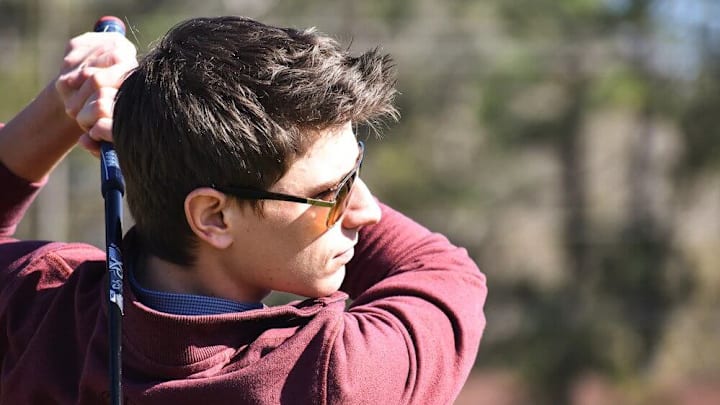
I came to Arizona prepared, however. The most important item in my golf bag during this trip was a pair of sunglasses. I used to buy cheap ones so I wouldn’t be annoyed when I lost them or broke them but I discovered PeakVision a few years ago and haven’t looked back. They’re more than just sunglasses, they’re somehow vision-improvement sunglasses, too.
The exact science behind how it works is still unclear to me. I just know that when I let anyone else try them on, their first response is always the same: “Wow!”
PeakVision owner Dave Feaser explained to me that most sunglasses are polarized, a process that reduces glare by reflecting it back from the lens. But polarization flattens the image and, therefore limits depth perception. That’s not what golfers want. So PeakVision glasses aren’t polarized. Instead, they use a proprietary lens that has the same clarity as crown glass, the gold standard for clarity. The lens was designed by J. Paul Moore, an optical scientist.
“Most sports glasses have a big curve to them,” Feaser said. “Anybody wearing them gets visual distortion because of the curved polycarbonate in the lense. So what Moore did was invent a material that eliminates distortion anywhere you look through the lens. You literally get great peripheral vision if you glance off to one side with no distortion.”
The effect behind the science
The practical effect of all that science is that the lens clarity almost feels like magnification to the wearer. It’s a remarkable effect. The top 20% of the PeakVision lens is a neutral gray while the bottom 60% is a high-definition shade of amber.
“The bottom 60% gives you three times the visual information when you’re looking at the green,” Feaser said. “They’re one pair of glasses you don’t take off to putt. Most golfers put their sunglasses on the backs of their hats or up on their heads. Our glasses give you a real ‘a-ha moment’ when you put them on out on the course. The lens really brings out anything that’s white, green or yellow and just makes it pop. Our proprietary lens is a one-of-a-kind thing that nobody else has.”
Feaser got into the sunglasses business because of his father, who worked for H.J. Heinz in Pittsburgh, retired and moved to Myrtle Beach, S.C. Dad started selling sunglasses to beachwear stores for something to do, bought out a local manufacturer and built his own business. David, meanwhile, learned the operation. The company is still based in the Myrtle Beach area.
Feaser has plenty of testimonials from new users who like his product. I am among the converts. His favorite story is a friend from New York who turned down Feaser, saying she just doesn’t wear glasses. He pleaded with her to just try them one time. She relented and after a day on the golf course, sent him a text at 9 o’clock that night. It read: “You’re not going to believe this, Dave, but I’m sitting here watching a movie and I just realized I still have my PeakVision glasses on.” That is an example of the surprising clarity the glasses provide.
Feaser also heard from a golfer who got struck in the eye by a ball as he walked off a green but the lens didn’t shatter, protecting his eye, and another case where a golfer picked up a lit cigar from the edge of the green where he left it and accidentally stuck the hot end into his eye but fortunately the lens stopped that mistake, too. The cigar guy swore no adult beverages contributed to that near accident, either.
A visit to the website, PeakVision.com, shows a whole list of sport-specific glasses available. The first thing you do is pick your sport, such as golf, then choose from a variety of designs, starting at $129. “It’s a matter of the style of sports glasses that you want; we also do a whole lifestyle line for ladies, too,” Feaser said. “We have different styles, the same lens works in multiple different sports.”
As a longtime user, I can confirm that once you’ve used this brand it is hard to switch to anything else. Which is nice because that eliminated the clutter in the drawer where I keep my sunglasses. Well, there’s still clutter, it’s just not sunglasses clutter.
“You used to hear the government’s ad council warning you about UV [ultraviolet] rays and you don’t hear that anymore but the sun is still there every day beating the heck out of your eyes,” Feaser said, “Some people don’t realize it. The UV protection value is huge to me. So we have front-facing UV protection and we have anti-reflective filters on the back of our lenses to block light that comes in from behind. When you buy cheaper glasses, they normally don’t have that kind of stuff.”
PeakVision has been one of Myrtle Beach’s World Amateur Handicap tournament sponsors in the past and it was there that one of the new PeakVision users told Feaser, “It’s like seeing the whole golf course in HD [high definition].”
High-definition? Yeah, that’s exactly what I mean when I used the more complex, highly scientific terminology, “Wow.”
More Golf from Sports Illustrated
 Add us as a preferred source on Google
Van Sickle has covered golf since 1980, following the tours to 125 men’s major championships, 14 Ryder Cups and one sweet roundtrip flight on the late Concorde. He is likely the only active golf writer who covered Tiger Woods during his first pro victory, in Las Vegas in 1996, and his 81st, in Augusta. Van Sickle’s work appeared, in order, in The Milwaukee Journal, Golf World magazine, Sports Illustrated (20 years) and Golf.com. He is a former president of the Golf Writers Association of America. His knees are shot, but he used to be a half-decent player. He competed in two national championships (U.S. Senior Amateur, most recently in 2014); made it to U.S. Open sectional qualifying once and narrowly missed the Open by a scant 17 shots (mostly due to poor officiating); won 10 club championships; and made seven holes-in-one (though none lately). Van Sickle’s golf equipment stories usually are based on personal field-testing, not press-release rewrites. His nickname is Van Cynical. Yeah, he earned it.
Follow GaryVanSickle