%20%20--%3E%0A%3Csvg%20version%3D%221.1%22%20id%3D%22Layer_1%22%20xmlns%3D%22http%3A%2F%2Fwww.w3.org%2F2000%2Fsvg%22%20xmlns%3Axlink%3D%22http%3A%2F%2Fwww.w3.org%2F1999%2Fxlink%22%20x%3D%220px%22%20y%3D%220px%22%0A%09%20width%3D%2239px%22%20height%3D%2240px%22%20viewBox%3D%220%200%2039%2040%22%20enable-background%3D%22new%200%200%2039%2040%22%20xml%3Aspace%3D%22preserve%22%3E%0A%3Cpath%20fill%3D%22%23FFFFFF%22%20d%3D%22M38.5%2C7H28.2v26h10.3V7z%22%2F%3E%0A%3Cpath%20fill-rule%3D%22evenodd%22%20clip-rule%3D%22evenodd%22%20fill%3D%22%23FFFFFF%22%20d%3D%22M26.1%2C25.5c0%2C5.8-4.1%2C7.5-12.9%2C7.5C3.9%2C33%2C0%2C31.2%2C0%2C25.2v-1.1h11.6%0A%09v2.4c0%2C0.7%2C0.1%2C1.4%2C1.2%2C1.4c1%2C0%2C1.2-0.4%2C1.2-1.3v-0.9c0-1.6-0.9-1.6-3.5-2.2C2.2%2C21.7%2C0%2C19.7%2C0%2C15.3v-0.9C0%2C9.3%2C5.5%2C7%2C12.9%2C7%0A%09c10.2%2C0%2C12.8%2C2.6%2C12.8%2C7.4v1.8h-11v-2.9c0-0.6-0.4-1.1-1.2-1.1c-0.6%2C0-1.2%2C0.4-1.2%2C1.1v0.9c0%2C1.5%2C0.9%2C2%2C3.3%2C2.5%0A%09c8%2C1.6%2C10.5%2C3.3%2C10.5%2C7.5V25.5z%22%2F%3E%0A%3C%2Fsvg%3E%0A)
An Affordable Donald Ross Gem in the Sunshine State, Dazzles Anew
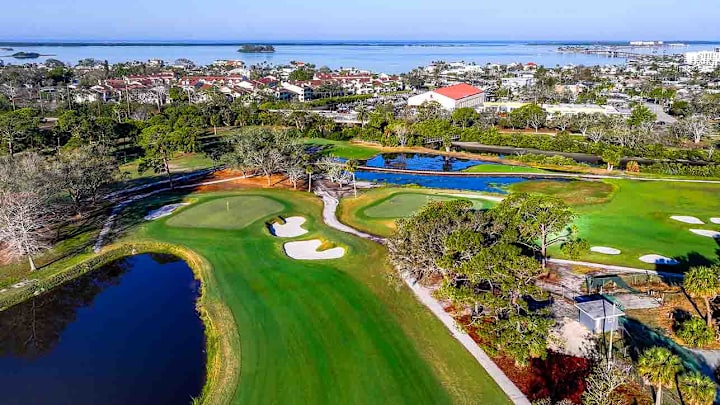
During the recent PGA Merchandise Show in Orlando, the golf industry’s grand annual shindig, a fair bit of chatter revolved around Dunedin Golf Club, a municipally-owned course 93 miles away. Admittedly, there’s a reference or two to Dunedin every year; after all, the club was home to the PGA of America from 1945 through 1962 and hosted the very first PGA Show in 1954. This year, however, folks were talking about the Donald Ross-designed golf course, not the club. Following a $6 million restoration by architect Kris Spence, Dunedin is rocking a beat it hasn’t enjoyed since New Year’s Day, 1927 when the course opened for play.
Debuting as Dunedin Isles Country Club, Dunedin was an expression of Donald Ross in peak form. Oakland Hills (South), Inverness and Oak Hill (East) were already on his resume, yet he called Dunedin Isles his “masterpiece.” Certainly, architects were prone to tossing out that term when there was real estate to sell, but in truth, Dunedin earned that praise.
Gene Sarazen, who had captured the U.S. Open and PGA Championship in 1922, was a frequent visitor in the late 1920s. The Depression took its toll on Dunedin—as it did on nearly every course in the U.S. Maintenance slipped, design features were lost. The City of Dunedin took ownership of the course in 1939.
The development changed again in 1945, when the PGA of America relocated to Dunedin and changed the course name to PGA National. Tournament golf’s biggest stars left famous footprints here in 1946, when Ben Hogan and Sam Snead teamed to down Byron Nelson and Harold “Jug” McSpaden 4 and 2 in an exhibition that benefitted the rehabilitation of PGA members who were injured in World War II.

From 1945 through 1962, Dunedin played host to the Senior PGA Championship, the oldest major for players aged 50 and over. Sarazen returned to his old stomping grounds to capture that title in 1954 and 1958. Those halcyon days came to end in 1963. Without space to expand, the PGA of America relocated to Palm Beach Gardens. A long winter set in for Dunedin.
In subsequent decades, Dunedin lost its mojo. Even with tweaks from respected architects Dick Wilson (1960) and Arthur Hills (1974), the course’s Ross features faded and the city either couldn’t afford to maintain it to a high standard, or else chose not to prioritize doing so. Green complexes shrunk by 30 to 50%. Rarely over the past 30 years has Dunedin been mentioned as a must-play, or worth playing at all, even after earning a designation in 2014 on the National Register of Historic Places. Just because it was old didn’t make it great. Enter Kris Spence.
With more than 25 years in the business, Spence has seen more than his share of classic courses, from both the design and the build perspectives. He is perhaps the ultimate Donald Ross restoration specialist for Ross’s southeastern courses. Among his successful Ross rehab projects are Roaring Gap and Sedgefield in North Carolina, the latter which hosts the PGA Tour’s Wyndham Championship; Memphis Country Club in Tennessee; and Sara Bay in Florida.
Dunedin entered the picture in the spring of 2021 when Spence was asked by the club for his thoughts and recommendations on improving the layout. What he found were 75 original bunkers gone, tree growth choking width and overly shading turfed areas that required more sunlight and an inefficient irrigation system. And although the greens had shrunk dramatically, he delivered the good news: the original green surfaces and fill pads were intact, buried under 12 to 18 inches of added material. After the Donald Ross Society kicked in a Foundation Grant, Spence and the club had the funds to proceed.
The restoration concluded in early 2025 and Ross aficionados are practically giddy. The routing, strategy and bunkering are back in place and are joined by a typically remarkable Ross set of greens.

“They’re as good as any out there, with great variety,” said Spence. “There are some subtle greens on some of the longer holes, and some with a lot more movement, tilt and complexity to them on some of the shorter holes. It’s what we’re used to seeing out of Ross when he was really on point. In hindsight, it was a blessing that they just buried the greens. It was sort of an archeological dig to go down and find the surface of the old greens and peel off the newer material like we’re peeling off the rind of an orange—to reveal that original green. Once we did, we could see the original greens that had been buried for 75 years.
“Players are going to experience the greens and bunkers how he envisioned it. There’s some difficulty and depth to it all, and the bunkers are very challenging. That’s the unique thing about Ross: He brought the style of golf to this country which he grew up experiencing in Scotland. There are lots of different shots golfers won’t experience on other courses. The little bump and runs on the ground and the low approaches into the greens you experience in Scotland, you can now experience at Dunedin.”
If the city of Dunedin sounds familiar to sports fans, it’s undoubtedly due to the defending American League champs, the Toronto Blue Jays. The Jays have made TD Ballpark in Dunedin their Grapefruit League spring training home since 1977. The Blue Jays led Major League Baseball in hitting and batting average in 2025. Still, the biggest hit in Dunedin these days is its namesake golf course. With its Donald Ross features restored and afternoon rates of $80-$105, Dunedin Golf Club is once again a masterpiece—for design and value.

More Golf on Sports Illustrated
 Add us as a preferred source on Google
Joe Passov, a.k.a. “Travelin’ Joe,” has been writing about golf since 1991, with a specialty in travel, history and golf course architecture. In 2019, the American Society of Golf Course Architects honored Passov with the Donald Ross Award, for contributions to golf and to golf course design. He lives in Cave Creek, Ariz., with his wife Betsy, whose favorite courses are Cypress Point, Whistling Straits and Ballybunion.