%20%20--%3E%0A%3Csvg%20version%3D%221.1%22%20id%3D%22Layer_1%22%20xmlns%3D%22http%3A%2F%2Fwww.w3.org%2F2000%2Fsvg%22%20xmlns%3Axlink%3D%22http%3A%2F%2Fwww.w3.org%2F1999%2Fxlink%22%20x%3D%220px%22%20y%3D%220px%22%0A%09%20width%3D%2239px%22%20height%3D%2240px%22%20viewBox%3D%220%200%2039%2040%22%20enable-background%3D%22new%200%200%2039%2040%22%20xml%3Aspace%3D%22preserve%22%3E%0A%3Cpath%20fill%3D%22%23FFFFFF%22%20d%3D%22M38.5%2C7H28.2v26h10.3V7z%22%2F%3E%0A%3Cpath%20fill-rule%3D%22evenodd%22%20clip-rule%3D%22evenodd%22%20fill%3D%22%23FFFFFF%22%20d%3D%22M26.1%2C25.5c0%2C5.8-4.1%2C7.5-12.9%2C7.5C3.9%2C33%2C0%2C31.2%2C0%2C25.2v-1.1h11.6%0A%09v2.4c0%2C0.7%2C0.1%2C1.4%2C1.2%2C1.4c1%2C0%2C1.2-0.4%2C1.2-1.3v-0.9c0-1.6-0.9-1.6-3.5-2.2C2.2%2C21.7%2C0%2C19.7%2C0%2C15.3v-0.9C0%2C9.3%2C5.5%2C7%2C12.9%2C7%0A%09c10.2%2C0%2C12.8%2C2.6%2C12.8%2C7.4v1.8h-11v-2.9c0-0.6-0.4-1.1-1.2-1.1c-0.6%2C0-1.2%2C0.4-1.2%2C1.1v0.9c0%2C1.5%2C0.9%2C2%2C3.3%2C2.5%0A%09c8%2C1.6%2C10.5%2C3.3%2C10.5%2C7.5V25.5z%22%2F%3E%0A%3C%2Fsvg%3E%0A)
PGA West, Jewel of the California Desert, Has Never Looked Better
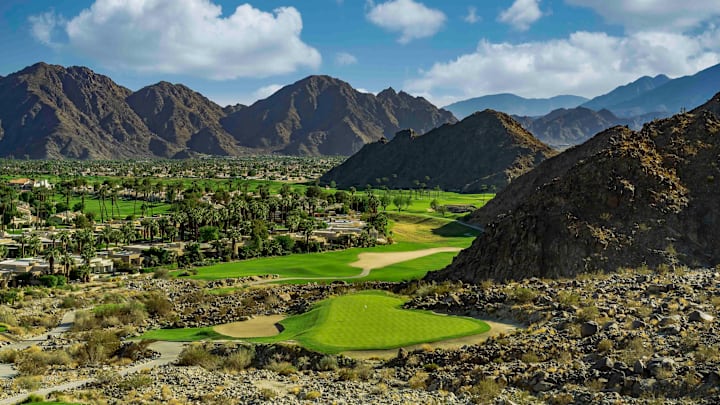
With winter settled in across most of the country, the television is an escape with the annual American Express tournament on the PGA Tour. Sunny days, bright green fairways … and perhaps envy as deep as a Pete Dye bunker.
But if it’s time to be less envious and more ambitious, there has never been a better time for a vacation to Palm Springs, Calif., and the host of the longtime Tour stop.
Prime season in the desert is here, and PGA West is in peak form with renovated courses, clubhouse enhancements and a state-of-the-art new Performance Lab.
“And we’re continuing to get better,” PGA West executive director Ben Dobbs suggests. “This is by far the best this has looked.”
Count this Midwesterner as one who was delighted to escape the winter cold to find out.
Perfect first impressions
Airports aren’t always worth mentioning, but the vacation vibes are immediate upon arrival to Palm Springs International. Flights to PSP unload on the tarmac, allowing for an instant greeting with the sun, and then you walk to the gate, through the concourse and outside again through a courtyard to get to baggage claim. It’s hard not to smile, especially if you’re carrying your jacket from home.

Pick up the rental car and drive to La Quinta Resort & Club off Eisenhower Dr., the official hotel partner of PGA West. Designed in Spanish Colonial Revival style, the 100-year-old property at the base of the Santa Rosa mountains is the epitome of elegant relaxation, whether you’re cooling off in one of the 40 on-site pools or taking in a resort-casual dinner in the evening at Adobe Grill—where the guacamole is made tableside and the strip-steak fajitas aren’t to be missed.
The resort was busy all weekend with multiple weddings, and two guests from one of them were in my foursome the next morning as golf kicked off on the Pete Dye Mountain course.

The Pete Dye clubhouse is minutes from the resort and home to two courses open to the public, the Pete Dye Dunes and Mountain. (Nine courses in all comprise PGA West, five are part of the resort and can be booked with packages at La Quinta.)
While the Pete Dye Stadium is the most famous PGA West course, deciding the American Express winner every year and creating viral moments for pros and amateurs alike late on its back nine (more on that later), the Mountain may be the sleeper of the bunch and an absolute stunner on its routed-along-the-rocks back nine.

“It’s one that people would be sorry to miss,” says Bryan Lebedevitch, the director of instruction at the PGA West Golf Academy.
When COVID-19 shut down the country, PGA West took the opportunity to renovate its courses, starting with the Nicklaus Tournament course (the other PGA West course in the American Express rotation; La Quinta Country Club is the third). TifEagle Bermuda was installed, a hearty year-round grass able to withstand everyday play while retaining speed and playability. The Dunes and Mountain courses were next, with greens expanded to their original sizes from decades prior, TifEagle Bermuda installed and irrigation systems updated.
I made a couple of new friends and lunched at the Bunker Bar inside the clubhouse, which also got an extensive renovation in 2023. The Bunker Bar has a deep menu and golf simulators, where you might see folks getting swings in before a round or at halftime of that evening’s football game when they hadn’t been on a golf course at all.
“It’s a strategy to have people come to your clubhouse that don’t have four hours to go to a golf course, but want to have some wings and a beer and hit balls for an hour and do something that’s not going to take all day,” Dobbs says.
Turning the vacation into a “Skillcation”
Golf lessons and golf trips should never be mixed, or so I thought. Lessons before trips, sure, but once on vacation you’ve got what you got with your game. It’s no time for a retooling and then playing bucket-list courses with new swing thoughts.
Not anymore. If you have a chance for state-of-the-art instruction away from home you’d be crazy not to take advantage, and PGA West delivers that with its new Performance Lab, located in the Pete Dye Stadium’s clubhouse.
A corner of the building that was once used for everything from real estate sales to a snack bar is reimagined as a world-class instruction center with all the technology and open to the public, where every facet of one’s game can be analyzed and improved.

One can get down to business just inside the door on the Zen Putting Stage, where Quintic putting software measures everything in a putting stroke and what the ball is doing off of it. Who knew there was so much data to be broken down from a 10-footer?
“Putting had been the least tech-heavy here … to go from pretty much just teaching outside to having a lab is unbelievable,” says Lebedevitch, a top-100 teacher who is starting his 28th season at PGA West.

Around the corner from the putting area are two simulator rooms, which at first glance look like most others—until you notice Trackman launch boxes on the ceiling and each wall, a movable floor and someone’s swing on a monitor in 3-D. It can be a lot to take in, but that’s where Lebedevitch and his staff shine.
A quick tour for me turned into well over an hour on the putting green and in the hitting bay, where a years-long iron flaw was diagnosed and treated (“cured” is perhaps too strong a word, because golf is golf).
Yes, I then took some swing thoughts into the rest of the weekend, but that’s not taboo on a golf vacation anymore.
“In fact, there’s a new term—‘Skillcation,’” Dobbs told me. “You're going on vacation, but you are honing your skill. You're learning more about it.
“It’s ‘hey, let's go out to PGA West. Let's play, but then let's also get instruction. Let's do a golf academy clinic. Let's get in the Performance Lab. It’s way more part of people's vacations than it was years ago.”
Into the Stadium
What’s the ideal Palm Springs golf vacation? There are more than 100 courses in the valley and PGA West claims nine of them, with five open to the public. Summers are of course steamy, November to April is ideal. In addition to the PGA Tour week, there’s the Indian Wells tennis tournament in March and the Coachella Valley Music & Arts Festival in April.
The golf junkie certainly can play 36 holes a day (a bit more challenging with shorter daylight hours in winter), but relaxation and exploration are stiff competition for that second round in a day. The verdict here? Morning rounds and an afternoon or two of instruction over your long weekend, no grinding over up-and-downs at 4 p.m.
And when you’re scheduling the rounds, the Pete Dye Stadium course should be last. Everything else in the trip builds up to the round where the pros play.

Once PGA West renovated its other courses post-COVID, it was time to tackle the Stadium. Architect Tim Liddy, a longtime Dye lieutenant, restored the course to its 1987 roots. Bunkers returned to Dye’s original specs (and some moved to better challenge the pros), greens that had naturally raised after years of aerification were lowered—most notably at the “Alcatraz” island par-3 17th, bringing the jagged rocks back into play.
The course isn’t as difficult as 40 years ago; missing a fairway once meant finding bushes and now all the surrounds are grass. But with mounds and water and Dye’s propensity for distraction, the Stadium is more than enough for the 10-handicap tourist.

I may have let a few choice words fly at the par-5 16th when after a good drive and a sensible layup, I pulled a short iron into the cavernous left bunker that has launched a thousand videos, none of them pretty. The pros are hard-pressed to get out of the 18-foot pit on the first try, imagine how it is for amateurs. Or just pull up YouTube.
There’s no let-up at the Alcatraz 17th (like Dye’s other famous 17th in Florida, anything on land is great), then the Coliseum 18th demands accuracy the entire way with water left from fairway to green and bunkers protecting right.
The finishing stretch at the Stadium is no one’s idea of relaxation. Fortunately, the rest of town is the oasis.
More Golf from Sports Illustrated
 Add us as a preferred source on Google
John Schwarb was a senior editor for Sports Illustrated covering golf. Prior to joining SI in March 2022, he worked for ESPN.com, PGATour.com, Tampa Bay Times and Indianapolis Motor Speedway. He is the author of The Little 500: The Story of the World’s Greatest College Weekend. A member of the Golf Writers Association of America, Schwarb has a bachelor’s in journalism from Indiana University.
Follow johnschwarb