%20%20--%3E%0A%3Csvg%20version%3D%221.1%22%20id%3D%22Layer_1%22%20xmlns%3D%22http%3A%2F%2Fwww.w3.org%2F2000%2Fsvg%22%20xmlns%3Axlink%3D%22http%3A%2F%2Fwww.w3.org%2F1999%2Fxlink%22%20x%3D%220px%22%20y%3D%220px%22%0A%09%20width%3D%2239px%22%20height%3D%2240px%22%20viewBox%3D%220%200%2039%2040%22%20enable-background%3D%22new%200%200%2039%2040%22%20xml%3Aspace%3D%22preserve%22%3E%0A%3Cpath%20fill%3D%22%23FFFFFF%22%20d%3D%22M38.5%2C7H28.2v26h10.3V7z%22%2F%3E%0A%3Cpath%20fill-rule%3D%22evenodd%22%20clip-rule%3D%22evenodd%22%20fill%3D%22%23FFFFFF%22%20d%3D%22M26.1%2C25.5c0%2C5.8-4.1%2C7.5-12.9%2C7.5C3.9%2C33%2C0%2C31.2%2C0%2C25.2v-1.1h11.6%0A%09v2.4c0%2C0.7%2C0.1%2C1.4%2C1.2%2C1.4c1%2C0%2C1.2-0.4%2C1.2-1.3v-0.9c0-1.6-0.9-1.6-3.5-2.2C2.2%2C21.7%2C0%2C19.7%2C0%2C15.3v-0.9C0%2C9.3%2C5.5%2C7%2C12.9%2C7%0A%09c10.2%2C0%2C12.8%2C2.6%2C12.8%2C7.4v1.8h-11v-2.9c0-0.6-0.4-1.1-1.2-1.1c-0.6%2C0-1.2%2C0.4-1.2%2C1.1v0.9c0%2C1.5%2C0.9%2C2%2C3.3%2C2.5%0A%09c8%2C1.6%2C10.5%2C3.3%2C10.5%2C7.5V25.5z%22%2F%3E%0A%3C%2Fsvg%3E%0A)
Kentucky Derby 2026: Answering Every Stupid Question You Might Have About Horse Racing
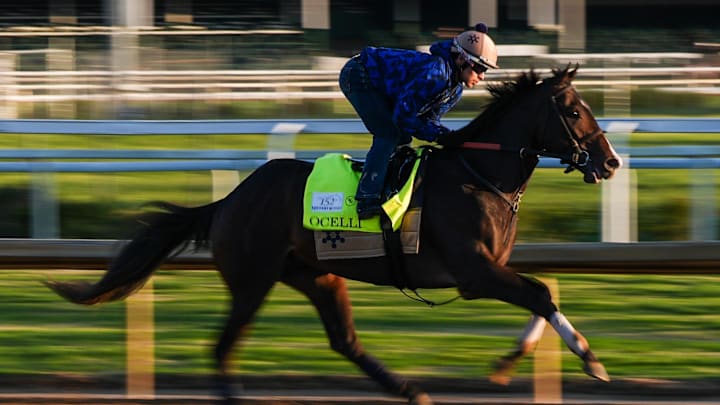
First time watching horse racing? Join the party.
The 2026 Kentucky Derby is set to take place on Saturday at Churchill Downs in Louisville, Kentucky. If that’s all you know about the race so far, don’t worry. We’re here. This guide was especially tailored for you.
The Kentucky Derby goes by several names, per our research: “The Run for the Roses” (alluding to the fact that the winner gets draped in a garland of over 400 red roses), “America’s Greatest Race” or our personal favorite, “The Most Exciting Two Minutes in Sports.” Founded in 1875 by Colonel Meriwether Lewis Clark Jr. (the grandson of explorer William Clark), the Kentucky Derby was created to emulate European-style premier horse races (like the Epsom Derby in England). Clark’s uncles, John and Henry Churchill, provided the land for the now-legendary track, hence the name “Churchill Downs.”
The prestigious American horse race is held annually on the first Saturday in May, making it the longest continuously held sporting event in the nation—this year marks the 152nd Kentucky Derby. It serves as the first and most-watched leg of the American Triple Crown, followed by the Preakness Stakes and the Belmont Stakes.
For decades, the Kentucky Derby has attracted casual and avid spectators alike for its longstanding tradition, iconic pageantry and, of course, the plethora of high-stakes betting opportunities.
Here’s everything to know about one of the most historic and culturally important events of the sporting calendar as we answer every and any stupid question that first-time viewers of the race might have.
What’s the format of the Kentucky Derby?
Every year, 20 three-year-old thoroughbreds compete for horse racing’s biggest prize. The horses line up at a 65-foot starting gate that stretches across the width of the track, and each horse has his or her individual stall. These stalls are also called posts or post positions. The horses then race around the track for a distance of 1 1/4 miles (or 10 furlongs, to use Derby math). The fastest horse wins, and the entire race usually takes around two minutes.
Why do Kentucky Derby horses have to be three years old, in particular? It's apparently the perfect age for horse racing when it comes to physical maturity and competition. They’re not juveniles, but they’re not fully mature either, giving them an ideal balance of raw speed and stamina to complete the race. It also ensures a fair playing field as all horses will be roughly in the same developmental stage.
How do horses qualify for the Kentucky Derby?
The Kentucky Derby is considered the most prestigious and distinguished of all horse races, so naturally contestants will have to go through a pretty tough qualifying process to earn a spot in the starting gate.
Let’s break it down.
The Derby prep races begin in September and run through mid-April and take place across the country and internationally. Races are split into two parts—the Prep Season and Championship Series—and feature a tiered point system. Horses can earn points by finishing in the top-five of each race, with some races carrying more weight than others (Championship Series races, which take place in the final stretch in March and April, dole out the most points). The top 18 horses with the most points punch their ticket to the Kentucky Derby. This is the “American Road” method to qualify, consisting of only horses in the U.S. circuit.
There are, additionally, two international paths to the Kentucky Derby: the Japan Road, and the European/Middle East Road. Horses who win their international series on these two roads also get an invite to the Derby.

Have any horses died in the Kentucky Derby?
Yes. Horse racing is a cruel sport. In recent history, 12 horses died within a month of the 2023 Kentucky Derby, including two on Derby day, sparking widespread scrutiny and investigations into horse safety. The most common cause of death was irrecoverable training and race day injuries which led to the horse being euthanized.
The most tragic death may have come in the 2008 Kentucky Derby, when thoroughbred Eight Belles placed second in the race but broke bones in both of her front legs after crossing the finish line. She was subsequently euthanized on the track.
Isn't it cruel to use whips on horses?
Yes it is. But for the animal-lovers out there, modern whips are designed to be more padded and cushioned and meant to create a loud noise to spur the horse rather than induce pain or cause long-term injury.
“Today’s whips are designed not to inflict pain but to make a ‘popping’ sound on impact with the rump (the large body of muscles that powers the horse’s hind legs). If you stand near the finish of a race, you can hear these ‘pops’ as jockeys encourage their mounts to give every effort,” per one horse racing blog.
One journalist bravely put that to the test. Still, whips can hurt. Under current Kentucky Derby rules, jockeys are only allowed to strike their horse six times during the race. Jockey Junior Alvarado was fined $62,000 after it was determined that he whipped his horse, 2025 Kentucky Derby winner Sovereignty, eight times, though he wasn’t disqualified.
Why is the mint julep the signature drink of the Kentucky Derby?
Other than just being a good boozy drink, the mint julep cemented itself in Kentucky Derby tradition in the 1930s around the tail end of the Prohibition era, when Churchill Downs started serving it in souvenir julep cups. It has ties to one of the state’s premier industries—bourbon—and has since become the perfect signature cocktail for Kentucky’s most buzz-worthy horse racing event.
Why do people dress so fancy for the Kentucky Derby?
The Derby’s founder Meriwether Lewis Clark Jr. first encouraged spectators to attend in "full morning dress," a.k.a the most posh attire possible, modeling the event after British horse racing and its strict dress code. The festive event was always meant to be a high society affair where ladies and gents decked out in elegant, stylish and fashion-forward attire. These days, florals and pastels have become ubiquitous at the Derby—groundbreaking for spring, we know.

Why are the hats so big?
Fair question.
In 1952, the Kentucky Derby was broadcast by CBS for the first time. As a result, the event’s fashion became even more extravagant and over-the-top as spectators hoped to make themselves visible on national television. That’s where the big hats come in. Since the farcically large headwear is easy to spot even in a crowd, it became the perfect accessory for people trying to make an instant impression at the Derby. And over time, the tradition stuck.
What exactly do you win in the Kentucky Derby?
A lot of money, and bragging rights. The winner takes home $3.1 million, a handcrafted gold trophy and a garland of more than 400 red roses.
What’s with all the roses?
The rose became the official flower of the event in 1884, as decreed by the Derby’s founder. As for the distinguished garland, a Louisville florist named Grace Walker was commissioned to create a special memento for the 1932 race. She decided to stitch hundreds of red roses onto a green satin cloth and draped it over that year’s victor, Burgoo King, during the post-race ceremony, thus beginning the now-iconic tradition.
What are some useful horse racing terms to know?
Bit: a metal bar that sits in a horse’s mouth and is attached to the reings; it helps the jockey steer and maintain control of the horse
Blinkers: a piece of racing equipment that limits a horse’s vision to prevent distractions
Bomb: a longshot horse with very high odds who wins the race, rewarding bettors with a high payout
Chalk: the favorite horse in a race
Dam: a horse’s mother
Fast surface: a dry and firm track
Furlong: an eighth of a mile
Groom: the person who takes care of a horse every day
Handle: the amount of money wagered at a track
Horseplayer: someone who loves to bet on races, also known as a handicapper
Irons: another name for stirrups
Jockey: the horse rider
Maiden: a horse who has never won
Mudder: a horse who races well on a muddy track
Oaks: the sister race to the Kentucky Derby; the Kentucky Oaks takes place the Friday before the Derby
Post position: a horse’s position in the starting gate, numbered from the inside rail
Scratch: a horse who is declared out of a race; this can happen up until the starting gate opens
Silks: the distinctive jerseys that jockeys wear during a race
Sire: a horse’s father
Sloppy surface: wet and muddy track
Tack: the equipment a horse wears for racing and training, including saddles and bridles
Walkover: a tradition in which a horse’s owners, trainers and jockeys walk the horse from the Churchill Downs barn area to the saddling paddock; this usually takes place 40-60 minutes before the race
Washy/washed out: a term to describe a horse who is nervous and sweating profusely
You can find a full list of horse racing terms here.
More from Sports Illustrated
 Add us as a preferred source on Google
Kristen Wong is a staff writer on the Breaking and Trending News team at Sports Illustrated. She has been a sports journalist since 2020 and has a bachelor’s in English and linguistics from Columbia University. Before joining SI in November 2023, Wong covered four NFL teams as an associate editor with the FanSided NFL network and worked as a staff writer for the brand’s flagship site. She is a lifelong Liverpool fan who enjoys solving crossword puzzles and hanging out at her neighborhood dive bar in NYC.
Follow kriscwong