%20%20--%3E%0A%3Csvg%20version%3D%221.1%22%20id%3D%22Layer_1%22%20xmlns%3D%22http%3A%2F%2Fwww.w3.org%2F2000%2Fsvg%22%20xmlns%3Axlink%3D%22http%3A%2F%2Fwww.w3.org%2F1999%2Fxlink%22%20x%3D%220px%22%20y%3D%220px%22%0A%09%20width%3D%2239px%22%20height%3D%2240px%22%20viewBox%3D%220%200%2039%2040%22%20enable-background%3D%22new%200%200%2039%2040%22%20xml%3Aspace%3D%22preserve%22%3E%0A%3Cpath%20fill%3D%22%23FFFFFF%22%20d%3D%22M38.5%2C7H28.2v26h10.3V7z%22%2F%3E%0A%3Cpath%20fill-rule%3D%22evenodd%22%20clip-rule%3D%22evenodd%22%20fill%3D%22%23FFFFFF%22%20d%3D%22M26.1%2C25.5c0%2C5.8-4.1%2C7.5-12.9%2C7.5C3.9%2C33%2C0%2C31.2%2C0%2C25.2v-1.1h11.6%0A%09v2.4c0%2C0.7%2C0.1%2C1.4%2C1.2%2C1.4c1%2C0%2C1.2-0.4%2C1.2-1.3v-0.9c0-1.6-0.9-1.6-3.5-2.2C2.2%2C21.7%2C0%2C19.7%2C0%2C15.3v-0.9C0%2C9.3%2C5.5%2C7%2C12.9%2C7%0A%09c10.2%2C0%2C12.8%2C2.6%2C12.8%2C7.4v1.8h-11v-2.9c0-0.6-0.4-1.1-1.2-1.1c-0.6%2C0-1.2%2C0.4-1.2%2C1.1v0.9c0%2C1.5%2C0.9%2C2%2C3.3%2C2.5%0A%09c8%2C1.6%2C10.5%2C3.3%2C10.5%2C7.5V25.5z%22%2F%3E%0A%3C%2Fsvg%3E%0A)
Luis Robert Trade Grades: Mets Take Worthwhile Risk on High-Upside White Sox CF
In this story:
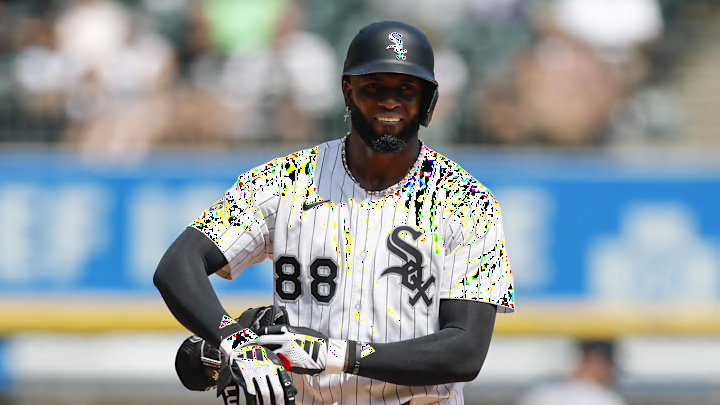
The New York Mets continued an offseason overhaul on Tuesday night, as the club traded infielder Luisangel Acuña and pitcher Truman Pauley to the White Sox in exchange for outfielder Luis Robert Jr.
In addition to the two prospects the Mets are sending to Chicago, New York will be paying Robert’s $20 million in 2026, as well as a $20 million club option for 2027, according to multiple reports.
In acquiring Robert, the Mets are expensively addressing a center field void that was in need of an upgrade, while the White Sox are finally cutting bait on a once-promising All-Star.
That said, let’s whip out the grade book and take a closer look at how both teams fared in the deal.
Mets: A-
The Mets have seemingly been attempting to solve its center field puzzle since the 2024 campaign, as the club has trotted out defense-first options in Harrison Bader (2024) and Tyrone Taylor (2025). But that approach bottomed out when Taylor, who showed some pop earlier in his career, struggled to the tune of a .598 OPS in 341 plate appearances in 2025. Center field was such a black hole for the Mets lineup that the club sent three prospects to Baltimore in a trade deadline deal for speedy outfielder Cedric Mullins, who promptly slumped to a .565 OPS in the Big Apple.
Clearly, the Mets couldn’t run it back by starting Taylor, a solid reserve outfielder who agreed to a one-year deal with New York in November. And after missing out on top free agent Kyle Tucker, New York took a gamble on Robert, an oft-injured but talented player who was an All-Star for the White Sox as recently as 2023.
Yes, Robert has struggled—he posted an OPS+ of 85 in 210 games combined the last two seasons, meaning he was 15% worse than an average big-league hitter. Yes, he’s dealt with his fair share of injuries—he missed 36% of his games from 2021 to 2023 due to injuries and has been plagued by hamstring, knee and groin injuries the past couple of years.
But Robert is gifted. The talent that once made him one of baseball’s top prospects is still there, as he once again passed both a metric test—seven outs above average in center field—and the eye test as a defender even in a down year. Speed was still the name of the game for Robert, who rated in the 90th percentile in sprint speed and 18th in MLB in bat speed (75.6 mph).
Should Robert stay healthy—admittedly a big ask given his history—there’s a chance he flourishes away from the struggling White Sox and delivers an All-Star campaign for the Mets. Plus, the Mets aren’t parting with much of value in taking a flier on Robert.
Acuña, once a top-10 prospect, saw his lane to playing time evaporate with the acquisitions of Marcus Semien and Bo Bichette. Pauley has pitched just 4 ⅓ innings for the Mets’ Single-A affiliate. And the Mets, who boast baseball’s second-biggest payroll funded by billionaire owner Steve Cohen, can afford to pay all of Robert’s salary.
This is a low-risk, high-reward bet for the Mets.
White Sox: B-
The White Sox once thought so highly of Robert that they signed him to a six-year, $50 million deal in January of 2020 before he had even played a game in the major leagues. And while Robert showed flashes of his supreme talent—winning a Gold Glove as a rookie, making his first All-Star team in 2023—he was too often inconsistent and unavailable in a White Sox uniform.
Robert has had to deal with a spate of lower-body injuries and incessant trade rumors all while playing for a club that has lost 100 games in three straight seasons, including a record-121 defeats in 2024. It’s possible that Robert was never going to realize his full potential languishing in Chicago—and the White Sox couldn’t afford to pay him $20 million a season while they waited to see it materialize.
Kudos to the low-budget White Sox for finding a big fish in the Mets that can take on all of Robert’s salary. In theory, Acuña, who would have been riding the pine for the Mets, could thrive with avenues to the lineup (infield and outfield) aplenty in Chicago. His numbers in the Venezuelan Winter League, a .282/.397/.542 slash line with eight home runs and 12 stolen bases in 39 games, suggest he could become a good building block for the White Sox.
Pauley is unproven even by minor league standards, but his ability to miss bats in college—132 strikeouts in 114 ⅓ innings—and four-pitch mix gives the White Sox something to work with.
Chicago did well in offloading Robert’s bloated contract and adding youth to MLB’s youngest roster, but there’s a chance the club watches as their former player rediscovers his All-Star form in Queens.
More MLB on Sports Illustrated
 Add us as a preferred source on Google
Tim Capurso is a staff writer for Sports Illustrated, primarily covering MLB, college football and college basketball. Before joining SI in November 2023, Capurso worked at RotoBaller and ClutchPoints and is a graduate of Assumption University. When he's not working, he can be found at the gym, reading a book or enjoying a good hike. A resident of New York, Capurso openly wonders if the Giants will ever be a winning football team again.
Follow TimCapurso