
This Is What Has Doomed the Nationals During Their Disastrous Losing Stretch
In this story:
Returning home couldn't have come at a better time for the Washington Nationals.
That wasn't usually said throughout the season, as this offense normally was explosive away from their own ballpark. But after getting thrashed by two division rivals in back-to-back four-game road series, the Nationals have returned to the nation's capital with a 56-61 record that almost assuredly ends their playoff hopes.
But rewind back to July 27, and there was a chance this young Washington squad was going to shock the world and earn a wild card spot. They entered the day one game above .500 with an energized clubhouse and a front office that was leaning towards adding pieces instead of trading them away.
So what happened that brought things crashing down for the Nationals? These brutal offensive numbers tell the story.
Nationals Were Horrendous With Runners in Scoring Position

Against the Toronto Blue Jays, Atlanta Braves and Philadelphia Phillies these past 11 games, Washington was abysmal with runners in scoring position.
They combined to go 16-for-98. The only time they had more than two hits with a runner on second or third base during this stretch was against the Phillies in Wednesday's 11th inning affair. The Nationals left a staggering 89 men on base across this 11-game span, and that resulted in only 39 total runs being scored across those three sets, which equated to just 3.5 runs per game.
That was the story of this 2-9 stretch that saw Washington lose seven games in a row at one point. While the pitching staff didn't help them out by any means -- 59 runs allowed for 5.4 per contest -- that has been the case throughout the season, so that wasn't anything out of the ordinary.
What was uncommon, however, was just how poorly this lineup performed. Even with this brutal spell factored in, the Nationals have still scored the third-most runs when runners are in scoring position (438). So seeing them come up dry in those situations over and over again during the past 11 games was surprising. That can't be blamed on the trades that were made, either. Curtis Mead was dealt on July 29 after this stretch had gotten underway. Luis Garcia Jr. wasn't traded until Aug. 2, which was over halfway into this period. And James Wood didn't get placed on the injured list until Aug. 4.
Nationals Offense Finally Starting to Come Back Down to Earth

What it does show is that regression might have finally found this offense.
Throughout the year, when Washington was putting up gaudy offensive numbers, everyone was waiting for the other shoe to drop where they started struggling at the plate. They put it off for a long time, with Wood and Abrams powering things while Garcia, Mead and others stepped up whenever it was necessary.
But the preseason projections for this group were low for a reason. And that's because they are lacking established talent. With Mead and Garcia gone, and with Wood on the injured list, the margin for error is much smaller than it was earlier in the year. So when facing three top-20 pitching staffs during this 11-game stretch, things came crashing down.
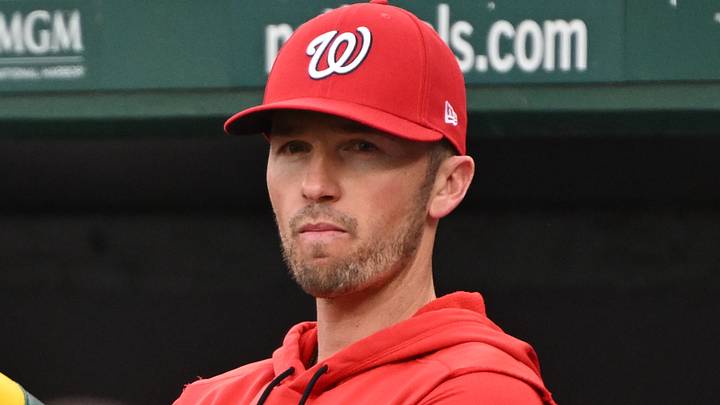
Now, despite there being not a ton to play for when it comes to making the playoffs, it will be up to first-year MLB manager Blake Butera to keep his young guys motivated so they can get things fixed. Because if he can't, then results like what took place over the past week-and-a-half will continue.
 Add us as a preferred source on Google
Brad Wakai graduated from Penn State University with a degree in Journalism. While an undergrad, he worked at the student radio station covering different Penn State athletic programs like football, basketball, volleyball, soccer and other sports. Brad became the Lead Contributor for Nittany Lions Wire of Gannett Media where he continued to cover Penn State athletics. Currently, Brad is the Publisher for Washington Nationals On SI and covers multiple teams across the On SI network. He is the host of the sports podcast I Said What I Said, where he and his co-host discuss topics across the NFL, College Football, the NBA and other sports. You can follow him on Twitter: @bwakai