%20%20--%3E%0A%3Csvg%20version%3D%221.1%22%20id%3D%22Layer_1%22%20xmlns%3D%22http%3A%2F%2Fwww.w3.org%2F2000%2Fsvg%22%20xmlns%3Axlink%3D%22http%3A%2F%2Fwww.w3.org%2F1999%2Fxlink%22%20x%3D%220px%22%20y%3D%220px%22%0A%09%20width%3D%2239px%22%20height%3D%2240px%22%20viewBox%3D%220%200%2039%2040%22%20enable-background%3D%22new%200%200%2039%2040%22%20xml%3Aspace%3D%22preserve%22%3E%0A%3Cpath%20fill%3D%22%23FFFFFF%22%20d%3D%22M38.5%2C7H28.2v26h10.3V7z%22%2F%3E%0A%3Cpath%20fill-rule%3D%22evenodd%22%20clip-rule%3D%22evenodd%22%20fill%3D%22%23FFFFFF%22%20d%3D%22M26.1%2C25.5c0%2C5.8-4.1%2C7.5-12.9%2C7.5C3.9%2C33%2C0%2C31.2%2C0%2C25.2v-1.1h11.6%0A%09v2.4c0%2C0.7%2C0.1%2C1.4%2C1.2%2C1.4c1%2C0%2C1.2-0.4%2C1.2-1.3v-0.9c0-1.6-0.9-1.6-3.5-2.2C2.2%2C21.7%2C0%2C19.7%2C0%2C15.3v-0.9C0%2C9.3%2C5.5%2C7%2C12.9%2C7%0A%09c10.2%2C0%2C12.8%2C2.6%2C12.8%2C7.4v1.8h-11v-2.9c0-0.6-0.4-1.1-1.2-1.1c-0.6%2C0-1.2%2C0.4-1.2%2C1.1v0.9c0%2C1.5%2C0.9%2C2%2C3.3%2C2.5%0A%09c8%2C1.6%2C10.5%2C3.3%2C10.5%2C7.5V25.5z%22%2F%3E%0A%3C%2Fsvg%3E%0A)
Cody Bellinger’s Yankees Contract Has a Lockout-Proof Provision
In this story:
From the man who brought you the player opt-out comes the newest innovation in baseball contract language: the lockout-proof deal!
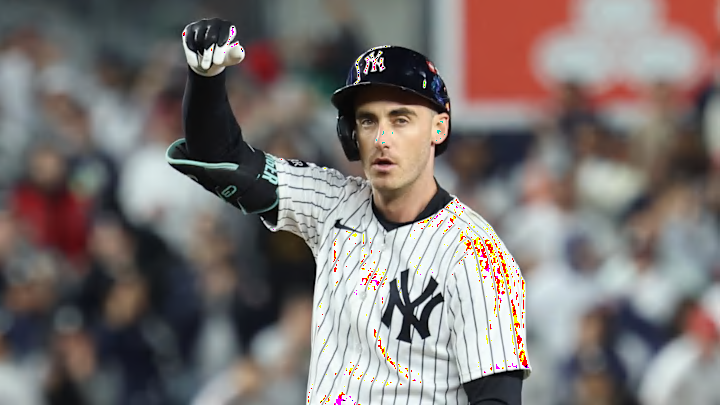
When the Yankees and Cody Bellinger (or, more accurately, his agent, Scott Boras) came to terms on the center fielder’s five-year, $162.5 million pact late last month, they identified a potential concern: Bellinger wanted the chance to nullify the remainder of the deal and retest the market after the second and third seasons—but it wasn’t immediately obvious when those would be.
If the calendar continues functioning as normal, that would mean he could opt out after 2027 or ’28. However, if, as just about everyone in the industry expects, the league and the union fail to come to an agreement on a new collective-bargaining agreement before the current one expires in December, that all gets a bit more complicated. If the sides can’t strike a deal, the owners will almost certainly lock out the players, as they did four years ago, the last time this happened. Then it’s an open question as to whether they can agree to terms in time to play a season at all. “We have what I call kind of a glass of labor fluidity,” says Boras.
Hence the language of Bellinger’s contract. Instead of offering him the chance to opt out after 2027 and ’28, the way every other contract is written, his offers him the chance to opt out after “the second and third Championship played.”
Unlike the player opt-out, which first appeared in 2000 in Boras client Alex Rodriguez’s 10-year, $252 million contract with the Rangers, the lockout-proof clause appears to benefit the team more than the player. And indeed, conversations with a few people involved do not make it entirely clear who—Boras or someone on the Yankees side—proposed it. But the idea is this: Using traditional language, if Bellinger plays great in ’26 and the sport loses ’27, Bellinger will exercise the opt-out and New York will have signed a two-year deal but enjoyed only one season of his production. (You could argue that if it’s important to Bellinger, who, at 30 has a reputation for both excellence and inconsistency, to show the market two good years of performance, he too is hurt in that scenario.) So tying the opt-out to championships played rather than calendar years ensures that the partnership will last a minimum of two seasons. (And don’t worry, Bellinger got some lockout protection too, in the form of a $20 million signing bonus, payable up front.)
As of now, this is thought to be the only contract containing such language, probably because it’s such a specific case: It only makes sense for a player with a multiyear deal that includes at least one opt-out, but not opt-outs in every year of the deal. It’s unlikely that we will see another one this winter, as the players remaining on the market will probably not meet all the criteria.
But we could see more of them next winter in the days before the CBA expires, as some players and executives try to lock in deals under the terms of the old agreement. And then who knows what will come next? There may be no 2027 season, but there will eventually be a new CBA—and with it new rules to work around.
More MLB on Sports Illustrated
 Add us as a preferred source on Google
Stephanie Apstein was a senior writer covering baseball and Olympic sports for Sports Illustrated, where she started as an intern in 2011 and has since covered a dozen World Series and three Olympics. She has twice won top honors from the Associated Press Sports Editors, and her work has been included in the Best American Sports Writing book series. She graduated from Trinity College with a bachelor’s in French and Italian, and has a master’s in journalism from Columbia University.
Follow stephapstein