%20%20--%3E%0A%3Csvg%20version%3D%221.1%22%20id%3D%22Layer_1%22%20xmlns%3D%22http%3A%2F%2Fwww.w3.org%2F2000%2Fsvg%22%20xmlns%3Axlink%3D%22http%3A%2F%2Fwww.w3.org%2F1999%2Fxlink%22%20x%3D%220px%22%20y%3D%220px%22%0A%09%20width%3D%2239px%22%20height%3D%2240px%22%20viewBox%3D%220%200%2039%2040%22%20enable-background%3D%22new%200%200%2039%2040%22%20xml%3Aspace%3D%22preserve%22%3E%0A%3Cpath%20fill%3D%22%23FFFFFF%22%20d%3D%22M38.5%2C7H28.2v26h10.3V7z%22%2F%3E%0A%3Cpath%20fill-rule%3D%22evenodd%22%20clip-rule%3D%22evenodd%22%20fill%3D%22%23FFFFFF%22%20d%3D%22M26.1%2C25.5c0%2C5.8-4.1%2C7.5-12.9%2C7.5C3.9%2C33%2C0%2C31.2%2C0%2C25.2v-1.1h11.6%0A%09v2.4c0%2C0.7%2C0.1%2C1.4%2C1.2%2C1.4c1%2C0%2C1.2-0.4%2C1.2-1.3v-0.9c0-1.6-0.9-1.6-3.5-2.2C2.2%2C21.7%2C0%2C19.7%2C0%2C15.3v-0.9C0%2C9.3%2C5.5%2C7%2C12.9%2C7%0A%09c10.2%2C0%2C12.8%2C2.6%2C12.8%2C7.4v1.8h-11v-2.9c0-0.6-0.4-1.1-1.2-1.1c-0.6%2C0-1.2%2C0.4-1.2%2C1.1v0.9c0%2C1.5%2C0.9%2C2%2C3.3%2C2.5%0A%09c8%2C1.6%2C10.5%2C3.3%2C10.5%2C7.5V25.5z%22%2F%3E%0A%3C%2Fsvg%3E%0A)
Boxing day
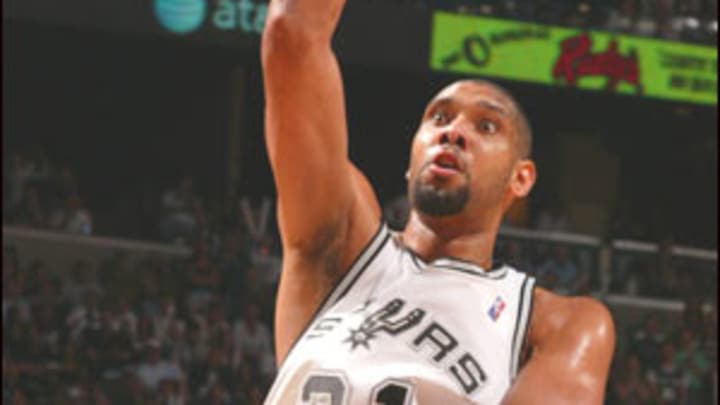
How is this for finishing what they started: 24 points, 13 rebounds and 9 blocks from Tim Duncan; 30 points, six assists and one turnover from Tony Parker; and 33 points, 11 rebounds, six assists and four steals off the bench from Manu Ginobili.
Yet their 4-2 win will be tainted, as many prizefights are, by an administrative ruling that robbed the Suns of Amare Stoudemire and Boris Diaw during their tight Game 5 loss at home that turned control to San Antonio. Stoudemire's return in Game 6 with 38 points, 12 rebounds and four blocks in a dynamic 41-minute performance emphasized the price paid by the Suns, the NBA and its fans because of what Steve Nash accurately referred to as "a stupid rule.''
"Part of me, as a sportsman, wants to say they beat us; and I do say that,'' said Nash emotionally afterwards. "But at the same time, I don't know what would have happened if we'd gone home tied with a full team. I don't know what the outcome would have been if we'd had our guys.
"I can sit up here and complain about it, after the fact; I guess cry about it, after the fact. It's tough to think forever what if this stupid rule didn't get in the way of this series. To come this far and put this much into a season, for us to be without two key guys in Game 5, for nothing that we instigated and for not either one of them having a malicious tone for their offense, will forever haunt us.''
The Suns held close for the opening 2 1/2 quarters Friday, though a couple of key indicators were working against them. At halftime the Spurs' trio of stars -- Duncan (15), Parker (21) and Ginobili (13) -- had scored all but four of San Antonio's points en route to a 53-51 lead. Whereas the Suns' Nash, Stoudemire and Shawn Marion were altogether a disappointing 9-of-24 for 24 points in that time.
There was a sense of inevitability to the night, it could be changed only by sensational acts of leadership from the Suns' All-Stars. After an exceptional defensive series, Marion came up with just 11 points in this game; and while Nash finished with 18 points to go with his 14 assists, he was just 1 for 4 from the field through three quarters before exploding in a 6-for-6 fourth period during the Suns' frenetic attempt to recover from a 20-point deficit.
The Spurs controlled the way the series was played -- and ultimately exploited the Game 5 suspensions -- by persistently getting back on defense, with Bruce Bowen providing Nash no room to shake free. "Bruce had the toughest job on the team without a doubt,'' said Spurs coach Gregg Popovich. The Suns were like a run-and-shoot team forced to run the ball off tackle.
Anytime Phoenix was able to break open for an easy basket in transition, or when Nash looked like he might find his rhythm after hitting an awkward three, Popovich would show respect for the Suns' explosive potential by immediately calling timeout. The aspects of this series not affected by the suspensions were defined by the tempo and rhythm that the Spurs had enforced upon the Suns, and Popovich was inordinately protective of it.
It was after watching the Suns inbound through Nash for a balletic runner in transition to Stoudemire that Popovich called his most important timeout. Coming out of it with a 63-61 lead, the Spurs ran a play culminating in a three by Bowen, and Ginobili followed with a three of his own. As Suns coach Mike D'Antoni jumped up to call time, Ginobili -- who had started the series in such a rut -- threw a shadow-boxing uppercut that brought San Antonio's 18,797 to their feet. It was suddenly 69-61 to the Spurs' advantage with 4:56 left in the third, and when Ginobili gestured for more noise, the fans gave it to him.
With 2:45 left in the third and Nash and Stoudemire benched for a rest, the Suns went small and the Spurs moved the ball to the open man like they were drilling on their practice court. Jacque Vaughn, Bowen and Ginobili culminated the plays by knocking down jumpers as the lead swelled to 92-72 with nine minutes to go. After dominating the physical battle, the Spurs demonstrated their skills.
"We had guys moving the ball, trusting each other,'' said Duncan. "We hit the open guy, made the right pass and we would make the plays no matter who it was. It wasn't about me or Tony or Manu -- we moved the ball around no matter who was open and allowed him to knock down the open shot.''
The Suns had one more run in them. Nash returned after an extended rest trailing by 16 with 10:25 left in his season, and he and Stoudemire went a combined 12 of 14 from the floor for 30 points in the quarter. But Ginobili and Michael Finley responded at their end to prevent the Suns from getting closer than five (106-101) with 34 seconds remaining.
 Add us as a preferred source on Google
Senior Writer, Sports Illustrated Sports Illustrated Senior Writer Ian Thomsen, who joined the magazine in 1998, is one of SI's top basketball scribes. Along with writing columns and features for SI, Thomsen is a frequent contributor to SI.com. Before joining SI, Thomsen spent six years in Europe as the sports columnist for the International Herald Tribune, the world's largest international English-language daily. While at the paper Thomsen wrote about an array of sports for a global audience, including the major world and European soccer tournaments, the 1995 Rugby World Cup, Olympic Games, Ryder Cups, Grand Slam tennis events, Grand Prix auto races and, very rarely, cricket. Thomsen, who graduated from Northwestern with a journalism degree in 1983, was a feature writer for The National Sports Daily during its short, expensive run of 1990-91. His first job was with The Boston Globe, where he covered Doug Flutie's Boston College Eagles and all three of the Celtics-Lakers NBA Finals of the 1980s. Thomsen was a feature writer at SI before taking on the NBA beat fulltime in 2000. With Luis Fernando Llosa and Melissa Segura, Thomsen covered the 2001 scandal of overaged Little League pitcher Danny Almonte and wrote the first SI cover story on Kobe Bryant in 1998. Thomsen lives with his wife and two children near Boston.