%20%20--%3E%0A%3Csvg%20version%3D%221.1%22%20id%3D%22Layer_1%22%20xmlns%3D%22http%3A%2F%2Fwww.w3.org%2F2000%2Fsvg%22%20xmlns%3Axlink%3D%22http%3A%2F%2Fwww.w3.org%2F1999%2Fxlink%22%20x%3D%220px%22%20y%3D%220px%22%0A%09%20width%3D%2239px%22%20height%3D%2240px%22%20viewBox%3D%220%200%2039%2040%22%20enable-background%3D%22new%200%200%2039%2040%22%20xml%3Aspace%3D%22preserve%22%3E%0A%3Cpath%20fill%3D%22%23FFFFFF%22%20d%3D%22M38.5%2C7H28.2v26h10.3V7z%22%2F%3E%0A%3Cpath%20fill-rule%3D%22evenodd%22%20clip-rule%3D%22evenodd%22%20fill%3D%22%23FFFFFF%22%20d%3D%22M26.1%2C25.5c0%2C5.8-4.1%2C7.5-12.9%2C7.5C3.9%2C33%2C0%2C31.2%2C0%2C25.2v-1.1h11.6%0A%09v2.4c0%2C0.7%2C0.1%2C1.4%2C1.2%2C1.4c1%2C0%2C1.2-0.4%2C1.2-1.3v-0.9c0-1.6-0.9-1.6-3.5-2.2C2.2%2C21.7%2C0%2C19.7%2C0%2C15.3v-0.9C0%2C9.3%2C5.5%2C7%2C12.9%2C7%0A%09c10.2%2C0%2C12.8%2C2.6%2C12.8%2C7.4v1.8h-11v-2.9c0-0.6-0.4-1.1-1.2-1.1c-0.6%2C0-1.2%2C0.4-1.2%2C1.1v0.9c0%2C1.5%2C0.9%2C2%2C3.3%2C2.5%0A%09c8%2C1.6%2C10.5%2C3.3%2C10.5%2C7.5V25.5z%22%2F%3E%0A%3C%2Fsvg%3E%0A)
Awful injustice

Some things in sport, as some things in life, never really get changed, even when they are indefensible. We say: life is unfair and move on. Sports, though, are supposed to be altogether fair. Ah, the level playing field! But, alas, that's only so when referees are around.
Still, every now and then, it's worth bringing up some glaring inequity, even if it's pointless to do so. So now, when college basketball is in full swing and college football is at its climax, with bowls jammed with high-paying customers, with television revenue pouring in. Not to mention all the money that hotels and airlines and restaurants and souvenir salesmen and announcers and sportswriters and coaches and athletic directors are raking in. Yes, now is a good time to lament anew that, my gracious, isn't it interesting that the only people not making money are the people actually playing the games.
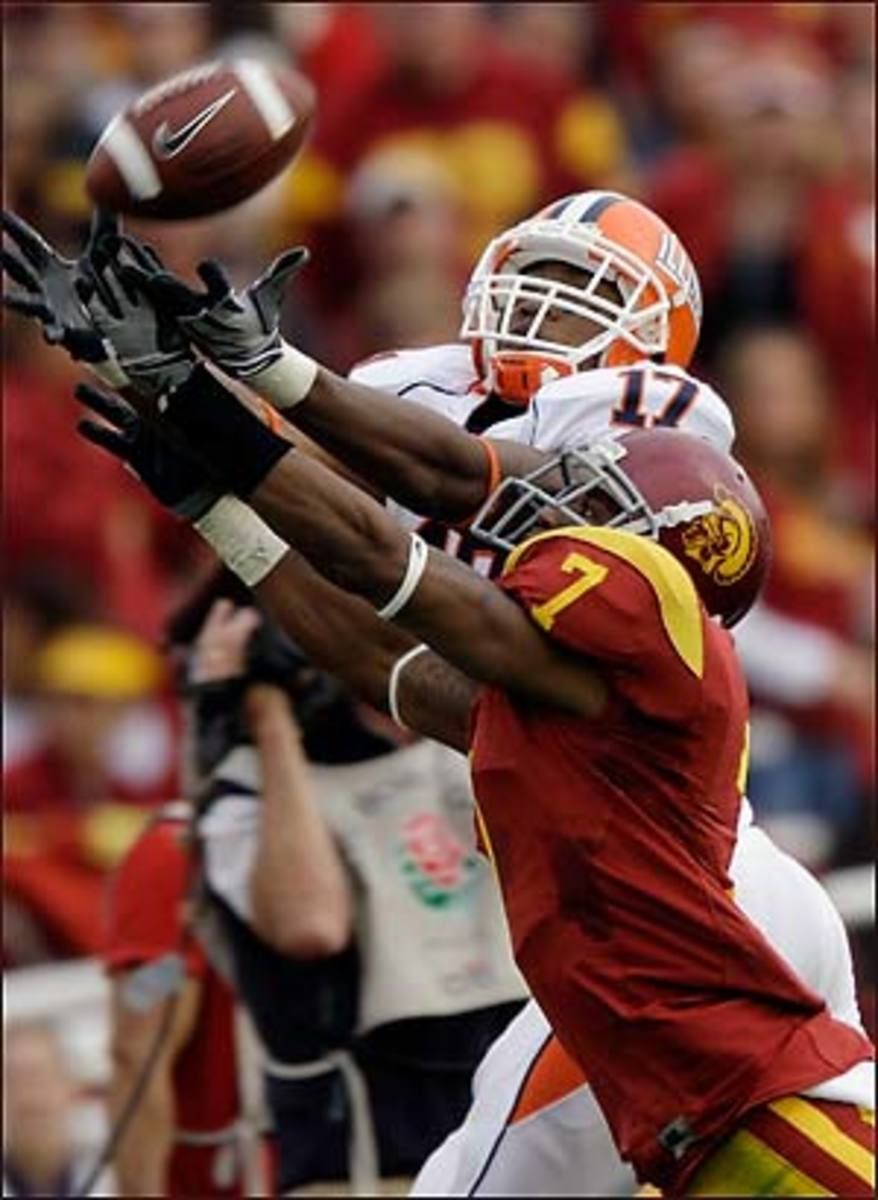
It is perfectly unconscionable that big-time college football and basketball players go unpaid. They are employees, and deserve to be paid based on the National Labor Relations Act.
First, a little history is in order. When college football become a popular sensation more than a hundred years ago, the concept of amateurism was in full sway. Okay. All Olympic athletes, for example, had to live by what was always called "the amateur ideal." But all that has changed. The most popular Olympic sports have all gone pro. Today, in all the world, amongst big-ticket spectator sports, virtually the only athletes who are not paid are our college football and basketball players -- whose numbers, ironically, include so many poor African-Americans.
That this should be so in the United States, bastion of both freedom and capitalism, makes it even worse. That this should remain the case when college sports charge Broadway ticket prices and pay their coaches literally millions of dollars, makes it even more shameful.
Moreover, colleges always emphasize that football and basketball make so much money that they pay for the entire athletic program. To me, this only adds to the cynicism. Not only do poor black kids get no remuneration for their work, they are expected to carry all these other coaches and players and teams on their backs with their unpaid labor. Basically, a scholarship boils down to a device to keep the players on the premises where they can perform their services for free. Okay, they get a lot of perks. They live well. They're the equivalent of what we used to call "kept women."
Besides, why is it only athletes who must perform for the so-called love of the game? Nobody cares if college kids who are actors or musicians or writers or dancers can make a buck using their talent. Why is an athlete any different?
But, at the end of the day, it isn't an economic issue so much as a moral one. It's absolutely evil that only here in the United States do we allow this unscrupulous nineteenth-century arrangement to continue to exist -- and nobody anymore hardly even bothers to bring up this awful injustice.
 Add us as a preferred source on Google
Frank Deford is among the most versatile of American writers. His work has appeared in virtually every medium, including print, where he has written eloquently for Sports Illustrated since 1962. Deford is currently the magazine's Senior Contributing Writer and contributes a weekly column to SI.com. Deford can be heard as a commentator each week on Morning Edition. On television he is a regular correspondent on the HBO show Real Sports With Bryant Gumbel. He is the author of 15 books, and his latest,The Enitled, a novel about celebrity, sex and baseball, was published in 2007 to exceptional reviews. He and Red Smith are the only writers with multiple features in The Best American Sports Writing of the Century. Editor David Halberstam selected Deford's 1981 Sports Illustrated profile on Bobby Knight (The Rabbit Hunter) and his 1985 SI profile of boxer Billy Conn (The Boxer and the Blonde) for that prestigious anthology. For Deford the comparison is meaningful. "Red Smith was the finest columnist, and I mean not just sports columnist," Deford told Powell's Books in 2007. "I've always said that Red is like Vermeer, with those tiny, priceless pieces. Five hundred words, perfectly chosen, crafted. Best literary columnist, in any newspaper, that I've ever seen." Deford was elected to the National Association of Sportscasters and Sportswriters Hall of Fame. Six times at Sports Illustrated Deford was voted by his peers as U.S. Sportswriter of The Year. The American Journalism Review has likewise cited him as the nation's finest sportswriter, and twice he was voted Magazine Writer of The Year by the Washington Journalism Review. Deford has also been presented with the National Magazine Award for profiles; a Christopher Award; and journalism honor awards from the University of Missouri and Northeastern University; and he has received many honorary degrees. The Sporting News has described Deford as "the most influential sports voice among members of the print media," and the magazine GQ has called him, simply, "The world's greatest sportswriter." In broadcast, Deford has won a Cable Ace award, an Emmy and a George Foster Peabody Award for his television work. In 2005 ESPN presented a television biography of Deford's life and work, You Write Better Than You Play. Deford has spoken at well over a hundred colleges, as well as at forums, conventions and on cruise ships around the world. He served as the editor-in-chief of The National Sports Daily in its brief but celebrated existence. Deford also wrote Sports Illustrated's first Point After column, in 1986. Two of Deford's books, the novel, Everybody's All-American, and Alex: The Life Of A Child, his memoir about his daughter who died of cystic fibrosis, have been made into movies. Two of his original screenplays have also been filmed. For 16 years Deford served as national chairman of the Cystic Fibrosis Foundation, and he remains chairman emeritus. He resides in Westport, CT, with his wife, Carol. They have two grown children – a son, Christian, and a daughter, Scarlet. A native of Baltimore, Deford is a graduate of Princeton University, where he has taught American Studies.