%20%20--%3E%0A%3Csvg%20version%3D%221.1%22%20id%3D%22Layer_1%22%20xmlns%3D%22http%3A%2F%2Fwww.w3.org%2F2000%2Fsvg%22%20xmlns%3Axlink%3D%22http%3A%2F%2Fwww.w3.org%2F1999%2Fxlink%22%20x%3D%220px%22%20y%3D%220px%22%0A%09%20width%3D%2239px%22%20height%3D%2240px%22%20viewBox%3D%220%200%2039%2040%22%20enable-background%3D%22new%200%200%2039%2040%22%20xml%3Aspace%3D%22preserve%22%3E%0A%3Cpath%20fill%3D%22%23FFFFFF%22%20d%3D%22M38.5%2C7H28.2v26h10.3V7z%22%2F%3E%0A%3Cpath%20fill-rule%3D%22evenodd%22%20clip-rule%3D%22evenodd%22%20fill%3D%22%23FFFFFF%22%20d%3D%22M26.1%2C25.5c0%2C5.8-4.1%2C7.5-12.9%2C7.5C3.9%2C33%2C0%2C31.2%2C0%2C25.2v-1.1h11.6%0A%09v2.4c0%2C0.7%2C0.1%2C1.4%2C1.2%2C1.4c1%2C0%2C1.2-0.4%2C1.2-1.3v-0.9c0-1.6-0.9-1.6-3.5-2.2C2.2%2C21.7%2C0%2C19.7%2C0%2C15.3v-0.9C0%2C9.3%2C5.5%2C7%2C12.9%2C7%0A%09c10.2%2C0%2C12.8%2C2.6%2C12.8%2C7.4v1.8h-11v-2.9c0-0.6-0.4-1.1-1.2-1.1c-0.6%2C0-1.2%2C0.4-1.2%2C1.1v0.9c0%2C1.5%2C0.9%2C2%2C3.3%2C2.5%0A%09c8%2C1.6%2C10.5%2C3.3%2C10.5%2C7.5V25.5z%22%2F%3E%0A%3C%2Fsvg%3E%0A)
Loss of C spells end for Marleau, Gomez goes French, more

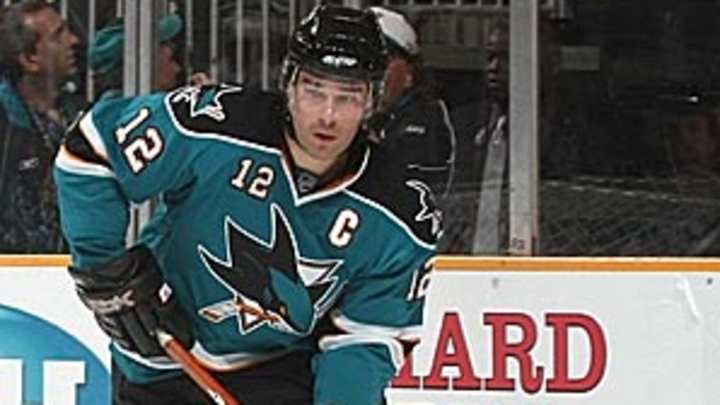
Woodridge, Ill. -- A year ago, new San Jose Sharks coach Todd McLellan was adamant about keeping Patrick Marleau as his captain. During a lengthy phone conversation prior to the start of training camp, On the Fly trotted out the argument that it would be the perfect time to shift Marleau from the prestigious but potentially onerous role -- a fresh start, reduced responsibilities that would allow him to focus on the ice etc. But McLellan, who had ties to the center/left winger from Saskatchewan, would hear nothing of it.
Just months after Marleau bunny-hopped out of the way of a Mike Modano shot, instead of attempting to block it during a Sharks-Dallas playoff game, the coach was not merely optimistic but thoroughly convinced that Marleau had the requisite leadership skills to take a talented team to a Stanley Cup.
After the Presidents' Trophy winners' crushing first-round loss to Anaheim last spring, McLellan had a change of heart. He has unceremoniously stripped Marleau of the C. The Sharks have not yet named a replacement, but the potential candidates include: veteran defenseman Rob Blake if McLellan wants a one-year fix; center Joe Thornton, if McLellan wants to truly make this Thornton's team; all-star defenseman Dan Boyle; or, if the coach wants a captain who can grow into the role and hold it for a decade, 25-year-old winger Joe Pavelski.
Marleau's demotion -- think of a guy getting his stripes ripped off in one of those old war movies -- effectively ends his time in San Jose. Theoretically he can stick around -- Modano did in Dallas when he ceded the C to Brenden Morrow, and Vincent Lecavalier actually matured after losing the C in Tampa Bay -- but Sharks general manager Doug Wilson knows he has to change the mix on his team. If he were trying to trade Marleau before, now Wilson must get rid of the player who scored a career-high 38 goals last season.
"Pat is great," a somber Pavelski said Tuesday. "This isn't going to take anything away from the kind of character (player) he is. He is probably going to have to come out stronger after something like this. Or (he'll have to go) elsewhere . . . When something like that happens, it's not just Patty. This could be a wakeup call to the team. I feel just as bad for him because I could have done more."
On the subject of captains, Scott Gomez starts lessons with a French tutor on Friday. The connection between the language of Voltaire and a letter? Gomez, whose albatross of a seven-year, $51.5 million contract was taken off the New York Rangers' hands, now is with the captain-less if not quite rudderless Montreal Canadiens.
The former Habs captain, Saku Koivu, was cuffed about in the French-language media for not knowing French. (English and Finnish were not deemed sufficient in the province. This was a perpetual thorn in the side of the classy Koivu, who now has a one-year deal in Anaheim.) Gomez is not the captain type -- he says he hasn't worn a C since youth hockey in Alaska -- but then there are no obvious choices in Montreal.
After the departure of 10 unrestricted free agents, including Alex Kovalev and captain timber such as Mike Komisarek, defenseman Andrei Markov remains the best player, but he is hardly the fulcrum of the dressing room. There are no French-speaking players on the team with enough portfolio on the ice to get the letter, and newcomer Brian Gionta, an American, is an unknown there.
Meanwhile Toronto GM Brian Burke is in no hurry to pin a C on any of his Maple Leafs. Given the history of stalwarts who played for the franchise -- the most recent captain was Mats Sundin -- Burke says he doesn't want to promote a player who has not yet earned the honor.
Chris Chelios, here at the USA Olympic hockey orientation camp in a subsidiary role best described as the Prod of the Yankees, says he plans to play somewhere at the start of the season -- maybe even, gulp, Russia.
The 47-year-old said he had an offer from former Red Wings assistant coach Barry Smith, now in the second year of a two-year deal as head coach with St. Petersburg of the KHL. Another message from an undisclosed Russian team is on Chelios' answering machine at home.
Chelios in Russia -- gee, start the Doomsday Clock.
The defenseman wouldn't stay for an entire season even if he did make the journey, but obviously he would like something closer to home. (In any case, his family will remain in Detroit.) But while no NHL team seems interested in his services, Chelios says he has heard from the Chicago Wolves of the AHL. If no playing job emerges in next several months, he has an invitation from coach Ron Wilson to take on a heavier workload with Team USA leading to the Olympics.
After the Stanley Cup final, Sidney Crosby's tardiness in joining the handshake line rankled the Red Wings to that point that Kris Draper grabbed an SI reporter and told him to make sure he mentioned in the magazine that Crosby had stiffed Detroit Red Wings captain Nicklas Lidstrom, who grew fed up and left the ice. Two months later, the feeling among the Red Wings has not altered measurably. Defenseman Brian Rafalski, who is as cool as Draper is fiery, shrugged his shoulders and said, "Last year we didn't make them wait."
Crosby is losing zero sleep over this, but Pittsburgh Penguins teammate Brooks Orpik said, "If you know Sid, how much he knows and respects the history of the game, you know he didn't mean anything. He didn't leave the ice. He was just celebrating, that's all."
Detroit signed Todd Bertuzzi for a second go-around, a move redolent with meaning for a franchise that has lost Marian Hossa, Jiri Hudler, Mikael Samuelsson and Tomas Kopecky this summer. Toxic Todd scored two goals in eight playoff games in 2007 after Red Wings GM Ken Holland made a trade with Florida at the deadline to secure more playoff toughness. Holland's one-year investment in Bertuzzi Redux is a curious reminder that despite the notion of team toughness that has been the foundation of the organization's success, even the NHL's best GM tosses and turns some nights wondering if Euro-heavy Detroit has all the gumption it needs.

Along with the pages of Sports Illustrated, you'll find senior writer Michael Farber in the Hockey Hall of Fame. Farber joined the staff of Sports Illustrated in January 1994 and now stands as one of the magazine's top journalists, covering primarily ice hockey and Olympic sports. He is also a regular contributor to SI.com. In 2003 Farber was honored with the Elmer Ferguson Award from the Hockey Hall of Fame for distinguished hockey writing. "Michael Farber represents the best in our business," said the New York Post's Larry Brooks, past president of the Professional Hockey Writers' Association. "He is a witty and stylish writer, who has the ability to tell a story with charm and intelligence." Farber says his Feb. 2, 1998 piece on the use and abuse of Sudafed among NHL players was his most memorable story for SI. He also cites a feature on the personal problems of Kevin Stevens, Life of the Party. His most memorable sports moment as a journalist came in 1988 when Canadian Ben Johnson set his controversial world record by running the 100 meters in 9.79 seconds at the Summer Olympic Games, in Seoul. Before coming to Sports Illustrated, Farber spent 15 years as an award-winning sports columnist and writer for the Montreal Gazette, three years at the Bergen Record, and one year at the Sun Bulletin in Binghamton, NY. He has won many honors for his writing, including the "outstanding sports writing award" in 2007 from Sports Media Canada, and the Prix Jacques-Beauchamp (Quebec sportswriter of the year) in 1993. While at the Gazette, he won a National Newspaper award in 1982 and 1990. Sometimes Life Gets in the Way, a compendium of his best Gazette columns, was published during his time in newspapers. Farber says hockey is his favorite sport to cover. "The most down-to-earth athletes play the most demanding game," he says. Away from Sports Illustrated, Farber is a commentator for CJAD-AM in Montreal and a panelist on TSN's The Reporters (the Canadian equivalent of ESPN's The Sports Reporters in the United States, except more dignified). Farber is also one of the 18 members on the Hockey Hall of Fame selection committee. Born and raised in New Jersey, Farber is a 1973 graduate of Rutgers University where he was Phi Beta Kappa. He now resides in Montreal with his wife, Danielle Tétrault, son Jérémy and daughter Gabrielle.