%20%20--%3E%0A%3Csvg%20version%3D%221.1%22%20id%3D%22Layer_1%22%20xmlns%3D%22http%3A%2F%2Fwww.w3.org%2F2000%2Fsvg%22%20xmlns%3Axlink%3D%22http%3A%2F%2Fwww.w3.org%2F1999%2Fxlink%22%20x%3D%220px%22%20y%3D%220px%22%0A%09%20width%3D%2239px%22%20height%3D%2240px%22%20viewBox%3D%220%200%2039%2040%22%20enable-background%3D%22new%200%200%2039%2040%22%20xml%3Aspace%3D%22preserve%22%3E%0A%3Cpath%20fill%3D%22%23FFFFFF%22%20d%3D%22M38.5%2C7H28.2v26h10.3V7z%22%2F%3E%0A%3Cpath%20fill-rule%3D%22evenodd%22%20clip-rule%3D%22evenodd%22%20fill%3D%22%23FFFFFF%22%20d%3D%22M26.1%2C25.5c0%2C5.8-4.1%2C7.5-12.9%2C7.5C3.9%2C33%2C0%2C31.2%2C0%2C25.2v-1.1h11.6%0A%09v2.4c0%2C0.7%2C0.1%2C1.4%2C1.2%2C1.4c1%2C0%2C1.2-0.4%2C1.2-1.3v-0.9c0-1.6-0.9-1.6-3.5-2.2C2.2%2C21.7%2C0%2C19.7%2C0%2C15.3v-0.9C0%2C9.3%2C5.5%2C7%2C12.9%2C7%0A%09c10.2%2C0%2C12.8%2C2.6%2C12.8%2C7.4v1.8h-11v-2.9c0-0.6-0.4-1.1-1.2-1.1c-0.6%2C0-1.2%2C0.4-1.2%2C1.1v0.9c0%2C1.5%2C0.9%2C2%2C3.3%2C2.5%0A%09c8%2C1.6%2C10.5%2C3.3%2C10.5%2C7.5V25.5z%22%2F%3E%0A%3C%2Fsvg%3E%0A)
Early NFL games ruin August bliss

Of all the months of the year, during all my years, the month that's changed the most is August. Don't you think so? Once upon a time, August was just sort of a valuable nowhere time that got us safely, leisurely from the peak heat of the summer, in July, into the autumn of September, when everything would begin again.
Nothing much happened in August. There're no songs about August, no August-April romances. It's one of the few months without any sort of holiday, not even a Valentines or an Arbor Day. The President invariably would vacation in August, and so Congress would close up shop and we'd be blissfully news-less. In some countries, particularly France, everybody would go on vacation in August. There were only re-runs on television, so you didn't even have to watch anything.
If life is a game, August was a time-out.
The only major August sports event is the PGA golf tournament, which was held last week in Minnesota. August was always the perfect time for the PGA, which is sort of a redundant Grand Slam, a Class B U.S. Open.
So August was a nice respite. We needed August. Well, maybe not all thirty-one days. I think you could have given one day of August to September and two to little February, but generally, August served a purpose by being nothing much at all.
Then things changed. First, everybody started going back to school before Labor Day. In August. Who'd ever heard of such a thing? Then everybody started saying "24/7." That put the pressure on August to stop being so lazy and catch up with all the other 24s and all the sevens. August just wasn't pulling its load. So they started television series in August. Mad Men has already begun again. Now you have to pay attention and remember what's happened. Not only that, but high schools and colleges started playing football in August.
Baseball is better suited for August. It's not so energetic and full bore. Besides, not only is football so downright aggressive, but there's a seasonal symbolism to football. Football means business. People always rhapsodize about how the beginning of baseball best symbolizes the spring of life, la-de-da. But football's symbolism is more substantive, because spring comes at different times in different parts of America, but buckling down after the summer comes all at once, all over. That's what football says: back to work, people. Back to school. No more lollygagging. Back to 24/7.
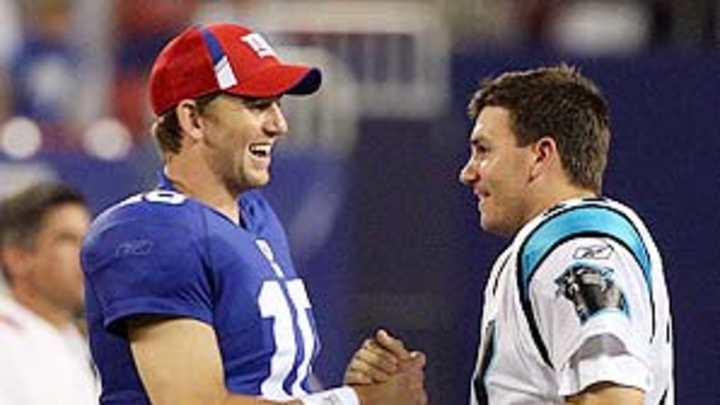
Now the NFL, watching August being carved up like Yugoslavia, is contemplating getting its share, too -- increase its schedule from 16 games to 18. That'll be the final straw: when the NFL storms into August. Then the August we knew and needed will be gone forever. August will just be a suburb of September, and, gee, I think we'll all be the poorer for it.

Frank Deford is among the most versatile of American writers. His work has appeared in virtually every medium, including print, where he has written eloquently for Sports Illustrated since 1962. Deford is currently the magazine's Senior Contributing Writer and contributes a weekly column to SI.com. Deford can be heard as a commentator each week on Morning Edition. On television he is a regular correspondent on the HBO show Real Sports With Bryant Gumbel. He is the author of 15 books, and his latest,The Enitled, a novel about celebrity, sex and baseball, was published in 2007 to exceptional reviews. He and Red Smith are the only writers with multiple features in The Best American Sports Writing of the Century. Editor David Halberstam selected Deford's 1981 Sports Illustrated profile on Bobby Knight (The Rabbit Hunter) and his 1985 SI profile of boxer Billy Conn (The Boxer and the Blonde) for that prestigious anthology. For Deford the comparison is meaningful. "Red Smith was the finest columnist, and I mean not just sports columnist," Deford told Powell's Books in 2007. "I've always said that Red is like Vermeer, with those tiny, priceless pieces. Five hundred words, perfectly chosen, crafted. Best literary columnist, in any newspaper, that I've ever seen." Deford was elected to the National Association of Sportscasters and Sportswriters Hall of Fame. Six times at Sports Illustrated Deford was voted by his peers as U.S. Sportswriter of The Year. The American Journalism Review has likewise cited him as the nation's finest sportswriter, and twice he was voted Magazine Writer of The Year by the Washington Journalism Review. Deford has also been presented with the National Magazine Award for profiles; a Christopher Award; and journalism honor awards from the University of Missouri and Northeastern University; and he has received many honorary degrees. The Sporting News has described Deford as "the most influential sports voice among members of the print media," and the magazine GQ has called him, simply, "The world's greatest sportswriter." In broadcast, Deford has won a Cable Ace award, an Emmy and a George Foster Peabody Award for his television work. In 2005 ESPN presented a television biography of Deford's life and work, You Write Better Than You Play. Deford has spoken at well over a hundred colleges, as well as at forums, conventions and on cruise ships around the world. He served as the editor-in-chief of The National Sports Daily in its brief but celebrated existence. Deford also wrote Sports Illustrated's first Point After column, in 1986. Two of Deford's books, the novel, Everybody's All-American, and Alex: The Life Of A Child, his memoir about his daughter who died of cystic fibrosis, have been made into movies. Two of his original screenplays have also been filmed. For 16 years Deford served as national chairman of the Cystic Fibrosis Foundation, and he remains chairman emeritus. He resides in Westport, CT, with his wife, Carol. They have two grown children – a son, Christian, and a daughter, Scarlet. A native of Baltimore, Deford is a graduate of Princeton University, where he has taught American Studies.