%20%20--%3E%0A%3Csvg%20version%3D%221.1%22%20id%3D%22Layer_1%22%20xmlns%3D%22http%3A%2F%2Fwww.w3.org%2F2000%2Fsvg%22%20xmlns%3Axlink%3D%22http%3A%2F%2Fwww.w3.org%2F1999%2Fxlink%22%20x%3D%220px%22%20y%3D%220px%22%0A%09%20width%3D%2239px%22%20height%3D%2240px%22%20viewBox%3D%220%200%2039%2040%22%20enable-background%3D%22new%200%200%2039%2040%22%20xml%3Aspace%3D%22preserve%22%3E%0A%3Cpath%20fill%3D%22%23FFFFFF%22%20d%3D%22M38.5%2C7H28.2v26h10.3V7z%22%2F%3E%0A%3Cpath%20fill-rule%3D%22evenodd%22%20clip-rule%3D%22evenodd%22%20fill%3D%22%23FFFFFF%22%20d%3D%22M26.1%2C25.5c0%2C5.8-4.1%2C7.5-12.9%2C7.5C3.9%2C33%2C0%2C31.2%2C0%2C25.2v-1.1h11.6%0A%09v2.4c0%2C0.7%2C0.1%2C1.4%2C1.2%2C1.4c1%2C0%2C1.2-0.4%2C1.2-1.3v-0.9c0-1.6-0.9-1.6-3.5-2.2C2.2%2C21.7%2C0%2C19.7%2C0%2C15.3v-0.9C0%2C9.3%2C5.5%2C7%2C12.9%2C7%0A%09c10.2%2C0%2C12.8%2C2.6%2C12.8%2C7.4v1.8h-11v-2.9c0-0.6-0.4-1.1-1.2-1.1c-0.6%2C0-1.2%2C0.4-1.2%2C1.1v0.9c0%2C1.5%2C0.9%2C2%2C3.3%2C2.5%0A%09c8%2C1.6%2C10.5%2C3.3%2C10.5%2C7.5V25.5z%22%2F%3E%0A%3C%2Fsvg%3E%0A)
For good of game, NFL needs to change outdated television policy

I've been rather bemused that this consternation about our country turning into a socialist redoubt has come at the start of the football season, for there's probably no more successful socialistic enterprise in the whole world than the National Football League.
Indeed, the NFL's descent into dreaded socialism began more than 70 years ago, when the league instituted a player draft to equalize its society, to remove, shall we say, odious class distinctions.
But the hallmark of NFL collectivism is that franchises share equally in television money -- what is now more than $20 billion in guaranteed rights fees. Largely because of that form of socialized medicine, every team has a healthy chance to win. Meanwhile, in baseball, where TV revenue is terribly unbalanced, and some rich teams even have their own networks, a small-market team like Pittsburgh, champion of the NFL, has endured 17 straight losing baseball seasons, and must sell its best players to the fat cats just to stay afloat. Compare that to last year's un-victorious Detroit Lions, where incompetence was universally accepted as a result of idiotic management, not free market poverty.
But wouldn't you know it? A pesky capitalist has found his way into the NFL owners' consortium. Jerry Jones, who bought the Cowboys for $140 million and has seen his purchase appreciate more than a thousand percent, believes it may be time to revisit the league's socialistic sharing policies and stop subsidizing the weak sisters.
Uh-oh. There goes the commune!
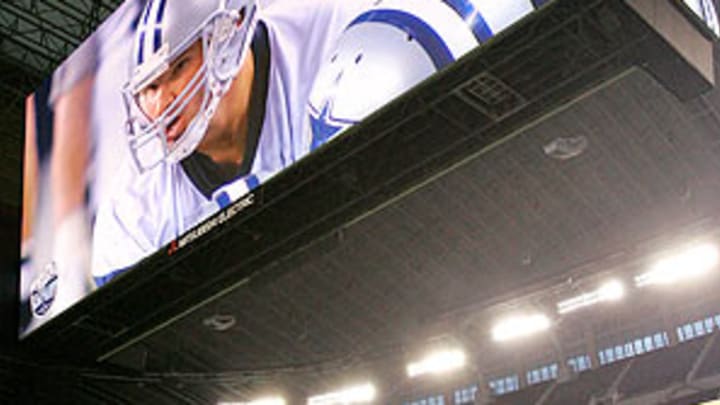
Jones has also just built his Cowboys a new billion-dollar stadium, but what I find so revealing are those monstrous video screens that soar over the Dallas gridiron. Jerry Jones is a pretty smart cookie, and I'm sure he realizes that, ironically, television, which was so crucial to the league's success, has now become more of a rival.
Because football televises so well, today's spectators are conditioned to need good TV even when they're incidentally watching the game live. With those large flat HD screens fans have in their family rooms, why pay to go out to a game -- especially in bad weather -- when you can see it so perfectly, comfortably at home?
The NFL better change its outdated TV policy, which has it that if a home team doesn't sell out, the game cannot be televised locally. That liturgy goes back into antiquity, when only a few sports events were televised. But today, the tube is saturated with football, and so it's dog in the manger for the NFL to deny the product that it makes $20 billion off of to fans, just because not quite enough of them want to spend outrageous prices to sit in bad seats.
In the world today, when everything else is on television, it would be better business for any NFL team to give up a few thousand admissions, so that hundreds of thousands of its fans could watch the game at home. In fact, if I were an NFL franchise with empty seats, it would be worth it for me to buy up those vacant chairs, so that happy fans could watch the product. Penny wise and pound foolish not to. And after all, it's only proper socialism to let the masses in on a good thing.

Frank Deford is among the most versatile of American writers. His work has appeared in virtually every medium, including print, where he has written eloquently for Sports Illustrated since 1962. Deford is currently the magazine's Senior Contributing Writer and contributes a weekly column to SI.com. Deford can be heard as a commentator each week on Morning Edition. On television he is a regular correspondent on the HBO show Real Sports With Bryant Gumbel. He is the author of 15 books, and his latest,The Enitled, a novel about celebrity, sex and baseball, was published in 2007 to exceptional reviews. He and Red Smith are the only writers with multiple features in The Best American Sports Writing of the Century. Editor David Halberstam selected Deford's 1981 Sports Illustrated profile on Bobby Knight (The Rabbit Hunter) and his 1985 SI profile of boxer Billy Conn (The Boxer and the Blonde) for that prestigious anthology. For Deford the comparison is meaningful. "Red Smith was the finest columnist, and I mean not just sports columnist," Deford told Powell's Books in 2007. "I've always said that Red is like Vermeer, with those tiny, priceless pieces. Five hundred words, perfectly chosen, crafted. Best literary columnist, in any newspaper, that I've ever seen." Deford was elected to the National Association of Sportscasters and Sportswriters Hall of Fame. Six times at Sports Illustrated Deford was voted by his peers as U.S. Sportswriter of The Year. The American Journalism Review has likewise cited him as the nation's finest sportswriter, and twice he was voted Magazine Writer of The Year by the Washington Journalism Review. Deford has also been presented with the National Magazine Award for profiles; a Christopher Award; and journalism honor awards from the University of Missouri and Northeastern University; and he has received many honorary degrees. The Sporting News has described Deford as "the most influential sports voice among members of the print media," and the magazine GQ has called him, simply, "The world's greatest sportswriter." In broadcast, Deford has won a Cable Ace award, an Emmy and a George Foster Peabody Award for his television work. In 2005 ESPN presented a television biography of Deford's life and work, You Write Better Than You Play. Deford has spoken at well over a hundred colleges, as well as at forums, conventions and on cruise ships around the world. He served as the editor-in-chief of The National Sports Daily in its brief but celebrated existence. Deford also wrote Sports Illustrated's first Point After column, in 1986. Two of Deford's books, the novel, Everybody's All-American, and Alex: The Life Of A Child, his memoir about his daughter who died of cystic fibrosis, have been made into movies. Two of his original screenplays have also been filmed. For 16 years Deford served as national chairman of the Cystic Fibrosis Foundation, and he remains chairman emeritus. He resides in Westport, CT, with his wife, Carol. They have two grown children – a son, Christian, and a daughter, Scarlet. A native of Baltimore, Deford is a graduate of Princeton University, where he has taught American Studies.