%20%20--%3E%0A%3Csvg%20version%3D%221.1%22%20id%3D%22Layer_1%22%20xmlns%3D%22http%3A%2F%2Fwww.w3.org%2F2000%2Fsvg%22%20xmlns%3Axlink%3D%22http%3A%2F%2Fwww.w3.org%2F1999%2Fxlink%22%20x%3D%220px%22%20y%3D%220px%22%0A%09%20width%3D%2239px%22%20height%3D%2240px%22%20viewBox%3D%220%200%2039%2040%22%20enable-background%3D%22new%200%200%2039%2040%22%20xml%3Aspace%3D%22preserve%22%3E%0A%3Cpath%20fill%3D%22%23FFFFFF%22%20d%3D%22M38.5%2C7H28.2v26h10.3V7z%22%2F%3E%0A%3Cpath%20fill-rule%3D%22evenodd%22%20clip-rule%3D%22evenodd%22%20fill%3D%22%23FFFFFF%22%20d%3D%22M26.1%2C25.5c0%2C5.8-4.1%2C7.5-12.9%2C7.5C3.9%2C33%2C0%2C31.2%2C0%2C25.2v-1.1h11.6%0A%09v2.4c0%2C0.7%2C0.1%2C1.4%2C1.2%2C1.4c1%2C0%2C1.2-0.4%2C1.2-1.3v-0.9c0-1.6-0.9-1.6-3.5-2.2C2.2%2C21.7%2C0%2C19.7%2C0%2C15.3v-0.9C0%2C9.3%2C5.5%2C7%2C12.9%2C7%0A%09c10.2%2C0%2C12.8%2C2.6%2C12.8%2C7.4v1.8h-11v-2.9c0-0.6-0.4-1.1-1.2-1.1c-0.6%2C0-1.2%2C0.4-1.2%2C1.1v0.9c0%2C1.5%2C0.9%2C2%2C3.3%2C2.5%0A%09c8%2C1.6%2C10.5%2C3.3%2C10.5%2C7.5V25.5z%22%2F%3E%0A%3C%2Fsvg%3E%0A)
Reliving my sports memories in a subterranean paradise
Many of the spurned ticket holders who got screwed by the NFL on Sunday complained of having to watch the Super Bowl "in the basement" of Cowboys Stadium. Those seatless schlubs could not sit, but I for one will not stand. I will not stand for sports fans impugning basements.
Like some resilient Brazilian flower, I did most of my growing without sunlight, not on the rain-forest floor but in a suburban basement, playing foosball, table hockey, Nerf hoop, Hot Wheels, Mattel football, Intellivision baseball and a hundred other toy imitations of actual sports.
Our ping-pong games -- in which the basement walls were in play -- married tennis and indoor soccer. We called this hybrid the National Indoor Ping Pong League, whose acronym -- NIPPL -- was hilarious and oddly alluring to a group of 12-year-old boys.
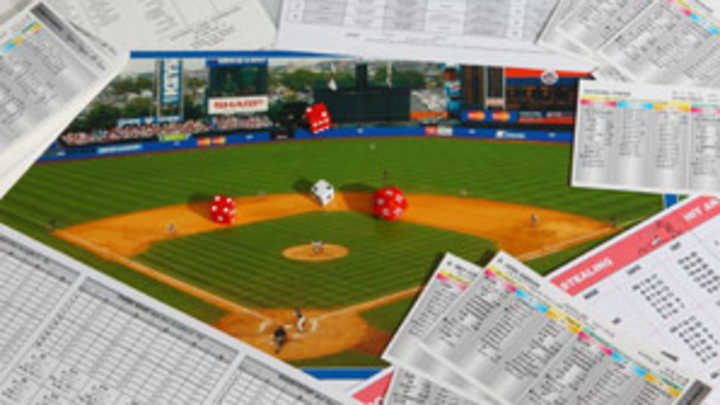
This week marks the 50th birthday of Strat-o-Matic baseball, the card-and-dice game that allowed me to replay the entire 1980 Kansas City Royals season. Under my steady managerial hand, George Brett hit .402, the Royals won the World Series and I kept meticulous score of all 170 games, hole-punching every evocative scorecard -- imaginary details recorded in the margins -- before filing each away in a single volume, a three-ring circus in a three-ring binder.
I'd rather not calculate how much time I spent underground pretending to be someone else -- usually an athlete, the windowless basement demanding a vivid imagination, not just of me but of my brothers and sister, every one of us a cinder-block Cinderella.
The gray cement floor looked like freshly Zambonied ice. We got a small hockey goal and lay down a crease with masking tape and placed our four-year-old brother in front of it. He wore a papier-mache mask, star-spangled like Bruins goalie Gilles Gilbert's, as we wrist-rifled tennis balls at him. The object of our game was the opposite of real hockey: We were trying to hit the goalie.
The custom makers of vintage goalie masks at hockeymasks.com note on their website that the great NHL goalie masks of old were also made underground: "Mask fitting was a chummy informal ritual that took place in the dingy basements of the old master mask makers."
Something about the damp, or the fluorescent lighting, or the access to my father's mad-scientist workbench -- presumably all three -- made our dingy basement a hothouse of creativity.
As my little brother grew, he wore, for protection, a baseball glove and a blocker made from wood paneling duct-taped to the back of a hockey glove. He learned to rough up the crease in his stocking feet. When he was drafted, out of high school, by the New York Rangers, my other brothers and I reminded him that our basement's mini Montreal Forum -- our Three-um -- got him there.
The basement stairs overlooked the hockey rink and served, simultaneously, as skybox, penalty box and press box. I was as happy to write about the games as to play them, especially when my oldest brother -- eventually to accept a hockey scholarship at Providence -- "dropped the gloves" and used one or more of our faces as a speedbag.
Other times we put on the gloves. We had one pair of boxing gloves that we split up for one-handed bouts, and woe unto the brother who got the left-handed one. These contests came with their own nicknames -- "Hell in the Cellar," "Debasement in Da Basement" -- that seldom overstated their epic nature.
Sitting ringside for these fights were the mustachioed faces we cut from Goal magazine and Scotch-taped to the wood-paneled walls. Those toothless hockey gods bore silent witness to a concrete crucible of competition unlike any I have seen since.
Board games ended, invariably, with someone flipping the Sorry! board into the air, like Lou Piniella flipping the cold-cut spread in a baseball clubhouse. I beat my brother Tom at Mattel's handheld football game once and he punched a hole in the wall of our bedroom, his arm disappearing up to his shoulder. We covered the hole with a Farrah poster and never spoke of it again.
But most of our athletic dramas played out not in the bedroom or backyard or driveway -- and certainly not on the playground, school gym or city park -- but in a room both sublime and subterranean.
Where I grew up, the basement was the refuge to which you hastened during a tornado warning and a horror chamber to which I hated to retreat at night, flailing for the pull-chain under the single bare bulb. My mother found a snake on the basement floor one day and covered it with a bucket, which she then duct-taped to the floor, so that my Dad came home from work six hours later to face the challenge of removing an enraged and highly claustrophobic snake from the house. Beyond that, and occasionally fetching a Special Export from the fridge down there, my parents stayed out of the basement.
The basement was a place for the kids to pretend, from the French tendere, "to stretch," to pull the brain like taffy.
It still is. Strat-o-Matic is turning 50 and the swimsuit from the Farrah poster is in the Smithsonian and my own kids, dressed like fireman and princess -- the boy, usually -- end their board games with table-pounding fury. The basement is not just the foundation of their house. It's the foundation of their futures, a place to imagine the lives that stretch before them. As in pre-tendere: Stretch before.
That's what I love best about the basement. It offers no visible means of escape, so that the only way out is up.
 Add us as a preferred source on Google
Special Contributor, Sports Illustrated Steve Rushin was born in Elmhurst, Ill. on September 22, 1966 and raised in Bloomington, Minn. After graduating from Bloomington Kennedy High School in 1984 and Marquette University in 1988, Rushin joined the staff of Sports Illustrated. He is a Special Contributor to the magazine, for which he writes columns and features. In 25 years at SI, he has filed stories from Greenland, India, Indonesia, Antarctica, the Arctic Circle and other farflung locales, as well as the usual locales to which sportswriters are routinely posted. His first novel, The Pint Man, was published by Doubleday in 2010. The Los Angeles Times called the book "Engaging, clever and often wipe-your-eyes funny." His next book, a work of nonfiction, The 34-Ton Bat, will be published by Little, Brown in 2013. Rushin gave the commencement address at Marquette in 2007 and was awarded an honorary Doctor of Letters for "his unique gift of documenting the human condition through his writing." In 2006 he was named the National Sportswriter of the Year by the National Sportswriters and Sportscasters Association. A collection of his sports and travel writing—The Caddie Was a Reindeer—was published by Grove Atlantic in 2005 and was a semifinalist for the Thurber Prize for American Humor. The Denver Post suggested, "If you don't end up dropping The Caddie Was a Reindeerduring fits of uncontrollable merriment, it is likely you need immediate medical attention." A four-time finalist for the National Magazine Award, Rushin has had his work anthologized in The Best American Sports Writing, The Best American Travel Writing and The Best American Magazine Writing collections. His essays have appeared in Time magazine andThe New York Times. He also writes a weekly column for SI.com. His first book, Road Swing, published in 1998, was named one of the "Best Books of the Year" by Publishers Weekly and one of the "Top 100 Sports Books of All Time" by SI. He and his wife, Rebecca Lobo, have four children and live in Connecticut.