%20%20--%3E%0A%3Csvg%20version%3D%221.1%22%20id%3D%22Layer_1%22%20xmlns%3D%22http%3A%2F%2Fwww.w3.org%2F2000%2Fsvg%22%20xmlns%3Axlink%3D%22http%3A%2F%2Fwww.w3.org%2F1999%2Fxlink%22%20x%3D%220px%22%20y%3D%220px%22%0A%09%20width%3D%2239px%22%20height%3D%2240px%22%20viewBox%3D%220%200%2039%2040%22%20enable-background%3D%22new%200%200%2039%2040%22%20xml%3Aspace%3D%22preserve%22%3E%0A%3Cpath%20fill%3D%22%23FFFFFF%22%20d%3D%22M38.5%2C7H28.2v26h10.3V7z%22%2F%3E%0A%3Cpath%20fill-rule%3D%22evenodd%22%20clip-rule%3D%22evenodd%22%20fill%3D%22%23FFFFFF%22%20d%3D%22M26.1%2C25.5c0%2C5.8-4.1%2C7.5-12.9%2C7.5C3.9%2C33%2C0%2C31.2%2C0%2C25.2v-1.1h11.6%0A%09v2.4c0%2C0.7%2C0.1%2C1.4%2C1.2%2C1.4c1%2C0%2C1.2-0.4%2C1.2-1.3v-0.9c0-1.6-0.9-1.6-3.5-2.2C2.2%2C21.7%2C0%2C19.7%2C0%2C15.3v-0.9C0%2C9.3%2C5.5%2C7%2C12.9%2C7%0A%09c10.2%2C0%2C12.8%2C2.6%2C12.8%2C7.4v1.8h-11v-2.9c0-0.6-0.4-1.1-1.2-1.1c-0.6%2C0-1.2%2C0.4-1.2%2C1.1v0.9c0%2C1.5%2C0.9%2C2%2C3.3%2C2.5%0A%09c8%2C1.6%2C10.5%2C3.3%2C10.5%2C7.5V25.5z%22%2F%3E%0A%3C%2Fsvg%3E%0A)
Looking back at the worst tragedies in the history of sports

This week is, simply, the anniversary of the saddest day in American sport. Fifty years ago, on the morning after Valentines Day, a Sabena 707 plunged into a field near Brussels. Eighteen U.S. figure skaters were killed -- the elite of a nation's whole sport wiped out, along with coaches and officials. Proudly, they were flying to the world championships.
There have, in fact, been several horrendous airplane accidents that have decimated sports teams through the years --although, mercifully, none lately, so that the disaster plans employed by professional leagues have never had to be applied. Still, virtually whole college teams have been lost to crashes: the Marshall University football squad in 1970, Evansville basketball in '77.
Almost all of Zambia's national soccer team was killed in 1993. Fourteen members of the U.S. amateur boxing squad perished when their plane went down in Poland in 1980, but most famously of all, if not for the crash, but for the ensuing ordeal, is the tale of the survivors of the Uruguayan rugby team whose plane plowed into the Andes in 1972, who then ate the frozen corpses of their teammates ---- forever remembered in the book, Alive.
Because soccer is so much more emotionally woven into so many people's consciousness, the crash, on May 4th, 1949 of the Turin team on a hilltop just outside the city, sent out even more tragic ripples than the American skaters' crash. Il Grande Turino was by far the finest team in the world then, a glorious juggernaut. In a way, it was even seen as symbolic of Europe's rise from the rubble of war. And then they were gone, all twenty-two, all of the champions, all of Turino's heart, all of soccer's soul.
The closest the U.S. ever came to losing a professional team was in January of 1960, the winter just before the skaters were killed. The Lakers, playing then in Minneapolis, chartered a DC-3 to take them back home from a game in St. Louis. In mid-flight the electrical Because soccer is so much more emotionally woven into so many people's consciousness, the crash, on May 4th, 1949 of the Turin team on a hilltop just outside the city, sent out even more tragic ripples than the American skaters' crash. Il Grande Turino was by far the finest team in the world then, a glorious juggernaut. In a way, it was even seen as symbolic of Europe's rise from the rubble of war. And then they were gone, all twenty-two, all of the champions, all of Turino's heart, all of soccer's soul.
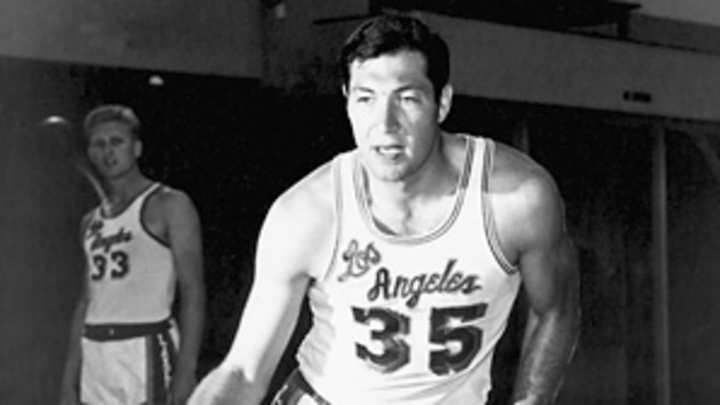
The closest the U.S. ever came to losing a professional team was in January of 1960, the winter just before the skaters were killed. The Lakers, playing then in Minneapolis, chartered a DC-3 to take them back home from a game in St. Louis. In mid-flight the electrical electrical system went kaput. Essentially, only the propellers still worked. I knew a lot of guys on that flight. In the cold and the dark, Elgin Baylor just stretched out on the aisle floor, listening as the pilots desperately took the plane down and finally spotted a corn field. The first pass was too steep. They were running out of fuel.
Slick Leonard turned to Hot Rod Hundley. "Well, Rod, if we don't make it, baby, at least we got to smell the roses."
Then the pilot made an absolutely perfect landing in the field. No one suffered a scratch. One of our greatest franchises survived. But it was the next February 15th, when all of our best skaters were lost, a nation's sport annihilated. That it came back, that Peggy Fleming would win the Olympic goal only seven years later, can never salve the wounds of America's worst sports tragedy, when the very best took off on Valentines, flying to a championship they never reached.

Frank Deford is among the most versatile of American writers. His work has appeared in virtually every medium, including print, where he has written eloquently for Sports Illustrated since 1962. Deford is currently the magazine's Senior Contributing Writer and contributes a weekly column to SI.com. Deford can be heard as a commentator each week on Morning Edition. On television he is a regular correspondent on the HBO show Real Sports With Bryant Gumbel. He is the author of 15 books, and his latest,The Enitled, a novel about celebrity, sex and baseball, was published in 2007 to exceptional reviews. He and Red Smith are the only writers with multiple features in The Best American Sports Writing of the Century. Editor David Halberstam selected Deford's 1981 Sports Illustrated profile on Bobby Knight (The Rabbit Hunter) and his 1985 SI profile of boxer Billy Conn (The Boxer and the Blonde) for that prestigious anthology. For Deford the comparison is meaningful. "Red Smith was the finest columnist, and I mean not just sports columnist," Deford told Powell's Books in 2007. "I've always said that Red is like Vermeer, with those tiny, priceless pieces. Five hundred words, perfectly chosen, crafted. Best literary columnist, in any newspaper, that I've ever seen." Deford was elected to the National Association of Sportscasters and Sportswriters Hall of Fame. Six times at Sports Illustrated Deford was voted by his peers as U.S. Sportswriter of The Year. The American Journalism Review has likewise cited him as the nation's finest sportswriter, and twice he was voted Magazine Writer of The Year by the Washington Journalism Review. Deford has also been presented with the National Magazine Award for profiles; a Christopher Award; and journalism honor awards from the University of Missouri and Northeastern University; and he has received many honorary degrees. The Sporting News has described Deford as "the most influential sports voice among members of the print media," and the magazine GQ has called him, simply, "The world's greatest sportswriter." In broadcast, Deford has won a Cable Ace award, an Emmy and a George Foster Peabody Award for his television work. In 2005 ESPN presented a television biography of Deford's life and work, You Write Better Than You Play. Deford has spoken at well over a hundred colleges, as well as at forums, conventions and on cruise ships around the world. He served as the editor-in-chief of The National Sports Daily in its brief but celebrated existence. Deford also wrote Sports Illustrated's first Point After column, in 1986. Two of Deford's books, the novel, Everybody's All-American, and Alex: The Life Of A Child, his memoir about his daughter who died of cystic fibrosis, have been made into movies. Two of his original screenplays have also been filmed. For 16 years Deford served as national chairman of the Cystic Fibrosis Foundation, and he remains chairman emeritus. He resides in Westport, CT, with his wife, Carol. They have two grown children – a son, Christian, and a daughter, Scarlet. A native of Baltimore, Deford is a graduate of Princeton University, where he has taught American Studies.