%20%20--%3E%0A%3Csvg%20version%3D%221.1%22%20id%3D%22Layer_1%22%20xmlns%3D%22http%3A%2F%2Fwww.w3.org%2F2000%2Fsvg%22%20xmlns%3Axlink%3D%22http%3A%2F%2Fwww.w3.org%2F1999%2Fxlink%22%20x%3D%220px%22%20y%3D%220px%22%0A%09%20width%3D%2239px%22%20height%3D%2240px%22%20viewBox%3D%220%200%2039%2040%22%20enable-background%3D%22new%200%200%2039%2040%22%20xml%3Aspace%3D%22preserve%22%3E%0A%3Cpath%20fill%3D%22%23FFFFFF%22%20d%3D%22M38.5%2C7H28.2v26h10.3V7z%22%2F%3E%0A%3Cpath%20fill-rule%3D%22evenodd%22%20clip-rule%3D%22evenodd%22%20fill%3D%22%23FFFFFF%22%20d%3D%22M26.1%2C25.5c0%2C5.8-4.1%2C7.5-12.9%2C7.5C3.9%2C33%2C0%2C31.2%2C0%2C25.2v-1.1h11.6%0A%09v2.4c0%2C0.7%2C0.1%2C1.4%2C1.2%2C1.4c1%2C0%2C1.2-0.4%2C1.2-1.3v-0.9c0-1.6-0.9-1.6-3.5-2.2C2.2%2C21.7%2C0%2C19.7%2C0%2C15.3v-0.9C0%2C9.3%2C5.5%2C7%2C12.9%2C7%0A%09c10.2%2C0%2C12.8%2C2.6%2C12.8%2C7.4v1.8h-11v-2.9c0-0.6-0.4-1.1-1.2-1.1c-0.6%2C0-1.2%2C0.4-1.2%2C1.1v0.9c0%2C1.5%2C0.9%2C2%2C3.3%2C2.5%0A%09c8%2C1.6%2C10.5%2C3.3%2C10.5%2C7.5V25.5z%22%2F%3E%0A%3C%2Fsvg%3E%0A)
Athletes In Business

Athletes In Business
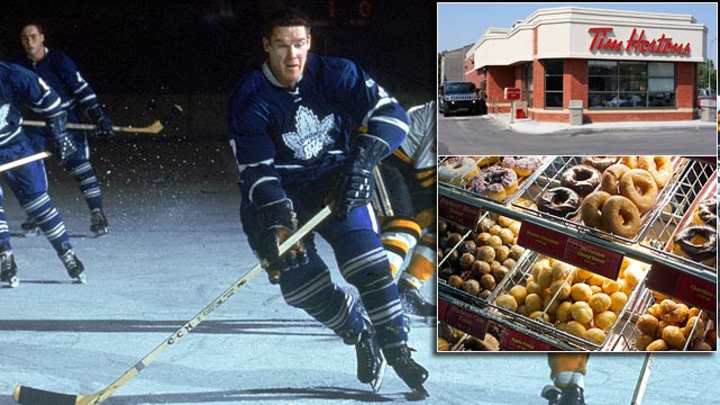
Tim Horton
Labeled by Gordie Howe as "hockey's strongest man," Horton spent 22 seasons in the NHL as a defenseman for the Toronto Maple Leafs, New York Rangers, Pittsburgh Penguins and Buffalo Sabres. While playing for the Leafs in 1964, he opened the Tim Horton Donut Shop in Ontario. By 1967 it was a million dollar brand, thanks to its combination of cheap donuts and Horton's immense popularity in Canada. The seven-time All-Star was killed in a car crash in 1974, but his business grew ever more successful under the stewardship of his partner, Ron Joyce. Today there are over 2,700 Tim Hortons outlets across Canada and in the US. Horton was posthumously inducted into the Hockey Hall of Fame in 1977.
George Foreman
Though he was just the promoter of the George Foreman Grill created by Russell Hobbs Inc., the former champ became the face and soul of the franchise. He accepted the endorsement offer in 1995 after he'd won his second heavyweight title, at age 45, and began emphasizing that the health benefits of eating grilled food had helped him get into championship shape.
Venus Williams
The world champion tennis star is also the CEO of Vstarr Interiors, an internationally successful interior design firm. Along with sister Serena, Venus is also a part-owner of the NFL's Miami Dolphins -- the first African-American females to buy a stake in a pro football team.
Tony Hawk
Easily the most famous skateboarder in the world, Hawk is likely better known in the sports business world for his work off the ramp. He teamed up with Activision to create the ultra successful "Tony Hawk Pro Skater" video game series, a game that has had 15 spinoffs and is the No.1 rated action-sports video franchise of all time. Hawk is also the creator and owner of Birdhouse, one of the biggest skateboarding companies in the world.
Hakeem Olajuwon
The dominant Houston Rockets center of the 90's found another area in which to tower over his competition: real estate. Olajuwon got into the business while he was still playing and his 25-plus transactions since then have totaled more than $100 million. Only buying and selling land and eschewing the use of credit, he has become nearly as well-known in Houston for his real estate work as he was for his Hall-of-Fame hoops career.
Dave Bing
The Detroit Pistons guard, a Hall of Famer, started dreaming of business ideas while he was still in the NBA. In 1980, two years after his retirement, he created Bing Steel, a tiny manufacturing company in Detroit. Bing convinced General Motors to work with him and within five years the company was making millions. Bing Steel grew to become the tenth largest African-American-owned industrial company in America, and has since evolved into Bing Group, a massive conglomerate that has racked up hundreds of millions of dollars in sales. Bing was also elected mayor of Detroit in 2009.
Michael Jordan
Many argue that this iconic NBA star revolutionized the business of sports endorsements. As his stardom on the court soared, Jordan became world famous as the front man for Gatorade, Coca-Cola and Nike as well as dozens of other major brands. Nike famously developed a popular sneaker called "Air Jordan" that has since spawned a company that sells shoes and other basketball apparel. According to Forbes, Jordan Brand has generated over $1 billion in sales for Nike. Not exactly hard up for cash, Jordan bought the NBA's Charlotte Bobcats for $275 million in February 2010.
Magic Johnson
In 1994, the former Lakers great created a movie theatre chain called Magic Johnson Theatres because he believed that many urban communities were not being well served. Johnson teamed up with Sony Pictures entertainment and Loews Cineplex Entertainment to open theatres across the country, including one in Harlem, NY and one in Los Angeles. Johnson's initial goal wasn't to make money, but to provide a safe place for entertainment in troubled inner-city communities.
Robert Porcher
While many pro athletes and coaches have restaurants attached to their names, few are as immersed in the business as Porcher. The former Lions defensive end, a three-time Pro Bowl selection, is the brains behind three successful Motor City eateries -- Detroit Breakfast House and Grill, Grand City Grill, and The Woodward -- that were opened by Southern Hospitality Restaurant Group, a company he co-owns as Vice President with CEO Frank Taylor. Procher helps choose the music and decor, handles most of the business deals, and even learned to cook thanks to his being in the kitchen so often. His company also teamed up with Aramark Corp. to co-manage food-services for 231 public schools in Detroit.
Vinnie Johnson
"The Microwave" was the high-scoring sixth man on Detroit Pistons' championship teams of 1989 and 1990. After his retirement, Johnson jumped right into the business world by founding Piston Automotive in 1995. This small auto supply company later turned into the Piston Group, a larger, more lucrative enterprise that still operates out of Detroit.
Bubba Baker
Al (Bubba) Baker had a standout 13-year career as a defensive end in the NFL. The league's Defensive Rookie of the Year in 1978 while playing for the Detroit Lions had been an excellent BBQ cook since he was a kid. He showed off his culinary talents by catering his team's airplane flights during his career. Naturally, when he retired he started a BBQ restaurant and became the executive chef at Bubba Q's, a popular St. Louis-style joint in Akron, Ohio, that has won multiple awards.
Jim Bouton
The former Yankees hurler (right), who turned baseball upside down with his 1970 tell-all book Ball Four , created Big League Chew bubblegum with former Class A teammate Rob Nelson (left) in 1977 as a safer alternative to chewing tobacco. Bouton designed a tobacco-type pouch and Nelson cooked up the glycerine-softened gum, which was then shredded. With Bouton providing the seed money and business direction, the gum was developed, promoted and eventually picked up by a novelty company in Illinois. Big League Chew made its national debut in 1980 and sold $18 million worth in its first year. In 2001, Nelson bought out Bouton's share of the business.
