%20%20--%3E%0A%3Csvg%20version%3D%221.1%22%20id%3D%22Layer_1%22%20xmlns%3D%22http%3A%2F%2Fwww.w3.org%2F2000%2Fsvg%22%20xmlns%3Axlink%3D%22http%3A%2F%2Fwww.w3.org%2F1999%2Fxlink%22%20x%3D%220px%22%20y%3D%220px%22%0A%09%20width%3D%2239px%22%20height%3D%2240px%22%20viewBox%3D%220%200%2039%2040%22%20enable-background%3D%22new%200%200%2039%2040%22%20xml%3Aspace%3D%22preserve%22%3E%0A%3Cpath%20fill%3D%22%23FFFFFF%22%20d%3D%22M38.5%2C7H28.2v26h10.3V7z%22%2F%3E%0A%3Cpath%20fill-rule%3D%22evenodd%22%20clip-rule%3D%22evenodd%22%20fill%3D%22%23FFFFFF%22%20d%3D%22M26.1%2C25.5c0%2C5.8-4.1%2C7.5-12.9%2C7.5C3.9%2C33%2C0%2C31.2%2C0%2C25.2v-1.1h11.6%0A%09v2.4c0%2C0.7%2C0.1%2C1.4%2C1.2%2C1.4c1%2C0%2C1.2-0.4%2C1.2-1.3v-0.9c0-1.6-0.9-1.6-3.5-2.2C2.2%2C21.7%2C0%2C19.7%2C0%2C15.3v-0.9C0%2C9.3%2C5.5%2C7%2C12.9%2C7%0A%09c10.2%2C0%2C12.8%2C2.6%2C12.8%2C7.4v1.8h-11v-2.9c0-0.6-0.4-1.1-1.2-1.1c-0.6%2C0-1.2%2C0.4-1.2%2C1.1v0.9c0%2C1.5%2C0.9%2C2%2C3.3%2C2.5%0A%09c8%2C1.6%2C10.5%2C3.3%2C10.5%2C7.5V25.5z%22%2F%3E%0A%3C%2Fsvg%3E%0A)
Twilight of the highlight
CAPE COD, Mass. -- I'm writing to you from the distant past, in an armchair protected by a lace doily, beneath a ceiling fan so low I have to duck it as if I'm exiting a helicopter. The chair is in front of a tube TV with five channels, not one of which is devoted to sports: No ESPN, no NESN, no YES.
"No YES" sounds like an oxymoron, but then -- this week -- so does the phrase "spectator sports." This week, I have not been a spectator for any sports at all, not in this 1970s redoubt of a rented house on Cape Cod, which stands as an unintended tribute to the recently departed Sherwood Schwartz, who wrote the Gilligan's Island theme song: No phone, no lights, no motor cars, not a single luxury. I can't even conjure a sports score on my cell phone, or anything else except the words CALL FAILED.
The only way to get sports highlights here is the way America used to do it, at the back end of the 11 o'clock news. After four minutes of Red Sox coverage, the national results are rushed out like a disclaimer at the end of a Viagra ad.
By local news convention, the sports anchor is careful never to use -- much less ever to repeat -- the verb beat. "Elsewhere," he will say, inhaling deeply after the Sox highlights, "the A's bested the Yankees, the Cubs trumped the Astros, the Twins toppled the Tigers, the Reds battered the Braves, the Phillies pummeled the Padres, the Orioles edged the Angels, the Cardinals outpaced the Pirates, the Marlins subdued the Mets, the Royals routed the Rays, the Giants jumped on the Brewers, the Dodgers drubbed the Nationals and the Rangers routed the Blue Jays." Then, off camera, he hyperventilates into a brown lunch sack.
What little news that breaks through our vacation bubble comes largely by word of mouth. A year ago, nearly to the week, word leaked out of car radios that Yankees owner George Steinbrenner had died. The news rocketed around the beach, borne aloft by Boston accents, not all of them reverential.
This summer, it was the NFL labor dispute. "Did you hear?" said a friend arriving from the outside world. "The lockout's over."
I hadn't heard, though I'm 75 miles from Foxborough as the seagull flies.
No, there's a more pressing lockout here: Me, locked out of the password-protected wi-fi. We obtained the passcode from the homeowners so I could file this dispatch, but with one laptop, in a house shared this week by as many as 17 people, we've forbidden the kids -- 11 of them, at last count -- from going online. To keep the peace, the adults have been exemplars of abstinence, as well. (Although, as I write this, the 2-year-old is yelling at me, "I use Dada's computer now? I use Dada's computer now!?")
We do try to read the papers, grateful -- in our hungry state -- for the day-old bread of day-old scores. But even the papers are scarce here. People still reserve copies of the Sunday New York Times at the general store, and woe unto the tourist who casually picks up a copy reserved by one of the locals: He or she is accosted at checkout as if attempting to shoplift a priceless commodity. Which is what the news is, in its own way.
So why do I find myself -- this week, at least -- not missing the highlights? Could it be that we have too many of them, and that every dunk, every dinger, every diving catch has begun to look the same? Has their instant availability and endless repetition rendered them ordinary? Are we witnessing the twilight of the highlight?
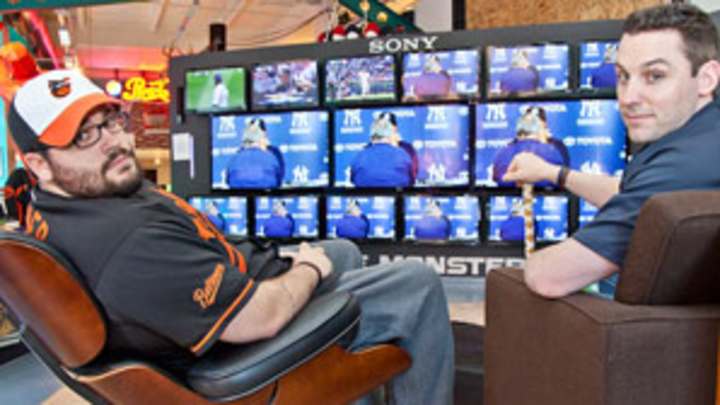
If so, it may yet be possible for the desensitized to resensitize. We can put the toothpaste back in the YouTube. Like a sports version of people who revirginize, I'm starving myself of spectator sports this week. When every game is on TV, and every score is crawling across the bottom of the screen, and every highlight is highlit by a 65-inch flatscreen, an annual cleansing feels like a noble exercise. Better still, it feels like actual exercise.
Without their Disney channel, the kids have undertaken, when it rains, an archaeological expedition, unearthing a VHS tape of Bambi, a cache of ancient board games -- Clue, Payday, Parcheesi -- and 500-piece jigsaw puzzles that have only 487 pieces remaining, so that they look like a hockey player's smile upon completion. Or semi-completion.
When it doesn't rain, every square foot of beach is overrun, much of it literally overrun by people catching footballs, or kicking soccer balls on fields marked out in wet sand at low tide, or just running through the sand like Rocky preparing to fight Clubber Lang, while alternately humming the themes from Rocky and Chariots of Fire.
After a certain age -- 18 for most of us -- nearly all sports become "spectator sports." The phrase becomes a redundancy. Not here though. On Monday, a kid in Chase Utley's Phillies' shirt was hitting fungoes out to sea with a Wiffle bat, the waves returning the ball to the beach as if by a series of relays and cutoff men. Wiffle bats and balls are available at the grocery checkout counters here, where gum and candy bars are offered in a normal supermarket. They're an impulse buy, and it's an impulse shared by almost everyone on a hot July day without premium cable, Xbox or central air: To be outside, with the TV turned off, making our own highlights.
 Add us as a preferred source on Google
Special Contributor, Sports Illustrated Steve Rushin was born in Elmhurst, Ill. on September 22, 1966 and raised in Bloomington, Minn. After graduating from Bloomington Kennedy High School in 1984 and Marquette University in 1988, Rushin joined the staff of Sports Illustrated. He is a Special Contributor to the magazine, for which he writes columns and features. In 25 years at SI, he has filed stories from Greenland, India, Indonesia, Antarctica, the Arctic Circle and other farflung locales, as well as the usual locales to which sportswriters are routinely posted. His first novel, The Pint Man, was published by Doubleday in 2010. The Los Angeles Times called the book "Engaging, clever and often wipe-your-eyes funny." His next book, a work of nonfiction, The 34-Ton Bat, will be published by Little, Brown in 2013. Rushin gave the commencement address at Marquette in 2007 and was awarded an honorary Doctor of Letters for "his unique gift of documenting the human condition through his writing." In 2006 he was named the National Sportswriter of the Year by the National Sportswriters and Sportscasters Association. A collection of his sports and travel writing—The Caddie Was a Reindeer—was published by Grove Atlantic in 2005 and was a semifinalist for the Thurber Prize for American Humor. The Denver Post suggested, "If you don't end up dropping The Caddie Was a Reindeerduring fits of uncontrollable merriment, it is likely you need immediate medical attention." A four-time finalist for the National Magazine Award, Rushin has had his work anthologized in The Best American Sports Writing, The Best American Travel Writing and The Best American Magazine Writing collections. His essays have appeared in Time magazine andThe New York Times. He also writes a weekly column for SI.com. His first book, Road Swing, published in 1998, was named one of the "Best Books of the Year" by Publishers Weekly and one of the "Top 100 Sports Books of All Time" by SI. He and his wife, Rebecca Lobo, have four children and live in Connecticut.