%20%20--%3E%0A%3Csvg%20version%3D%221.1%22%20id%3D%22Layer_1%22%20xmlns%3D%22http%3A%2F%2Fwww.w3.org%2F2000%2Fsvg%22%20xmlns%3Axlink%3D%22http%3A%2F%2Fwww.w3.org%2F1999%2Fxlink%22%20x%3D%220px%22%20y%3D%220px%22%0A%09%20width%3D%2239px%22%20height%3D%2240px%22%20viewBox%3D%220%200%2039%2040%22%20enable-background%3D%22new%200%200%2039%2040%22%20xml%3Aspace%3D%22preserve%22%3E%0A%3Cpath%20fill%3D%22%23FFFFFF%22%20d%3D%22M38.5%2C7H28.2v26h10.3V7z%22%2F%3E%0A%3Cpath%20fill-rule%3D%22evenodd%22%20clip-rule%3D%22evenodd%22%20fill%3D%22%23FFFFFF%22%20d%3D%22M26.1%2C25.5c0%2C5.8-4.1%2C7.5-12.9%2C7.5C3.9%2C33%2C0%2C31.2%2C0%2C25.2v-1.1h11.6%0A%09v2.4c0%2C0.7%2C0.1%2C1.4%2C1.2%2C1.4c1%2C0%2C1.2-0.4%2C1.2-1.3v-0.9c0-1.6-0.9-1.6-3.5-2.2C2.2%2C21.7%2C0%2C19.7%2C0%2C15.3v-0.9C0%2C9.3%2C5.5%2C7%2C12.9%2C7%0A%09c10.2%2C0%2C12.8%2C2.6%2C12.8%2C7.4v1.8h-11v-2.9c0-0.6-0.4-1.1-1.2-1.1c-0.6%2C0-1.2%2C0.4-1.2%2C1.1v0.9c0%2C1.5%2C0.9%2C2%2C3.3%2C2.5%0A%09c8%2C1.6%2C10.5%2C3.3%2C10.5%2C7.5V25.5z%22%2F%3E%0A%3C%2Fsvg%3E%0A)
Too many days hath September

When baseball fell into its current schedule more than a century ago, the National Pastime owned the sporting landscape. There was no professional football, and college football was a regional enterprise in a nation where few folks even had a college alma mater to care about. In a culture still quite agricultural, the schools started later, so in effect, the harvest extended summer. Baseball could pretty much do what it wanted. The 1911 World Series didn't start till mid-October. After all, because of the cooler spring weather and the nice autumn days, the one-hundred-and-fifty-four game schedule didn't begin till mid-April, leisurely, when God made baseball weather.
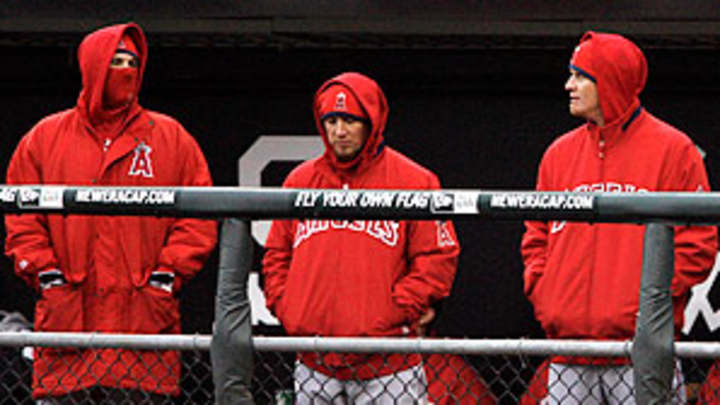
Now, of course, the season is a hundred and sixty-two games, which forces a start, chilly and damp, two weeks earlier and, with playoffs, runs till about Halloween---- a time when only the most involved fans can be weaned away from football fantasy and point spreads. The situation is exacerbated because baseball mandates that a smaller percentage of its teams qualify for the postseason, and since the rich teams can buy success easier than in other sports, the fans in many cities are virtually driven out of baseball, into football's arms. Or, guess what: there're television programs to watch now that weren't around in 1911.
Hello, baseball: the culture has changed. It's time to adapt. Even though most teams have no chance and the kids are back to school and football is starting, baseball is still going to limp along for another month before crowds, as the old saying goes, where "a lot of fans come dressed up as empty seats." Stop it, baseball. Do two contradictory things:
First, end the season on Labor Day. A one-hundred and-forty game season will do just fine. Other sports are not prisoners to old records.
But second, as you reduce the regular season, add teams to the playoffs. There're eight now, and talk of adding two more. No---- double the qualifiers: sixteen playoff teams---- like the NBA and NHL do. Give fans hope. Even more radical, who says all playoff teams have to play protracted head-to-head series? Start off with four-team round-robins, as they do in the soccer World Cup.
Like the dimwits who run college football, the fundamentalists will cry that this diminishes the regular season. OK. So what? Baseball is not an ecclesiastical calendar. It's an entertainment. Do you want to diminish the regular season or diminish the whole sport---- because that's what the current arrangement does? September should be a climactic month for baseball. Instead it's a calculated delaying action until you can play the most important games when it's too cold for baseball, and too late at night for disenchanted baseball fans to watch.

Frank Deford is among the most versatile of American writers. His work has appeared in virtually every medium, including print, where he has written eloquently for Sports Illustrated since 1962. Deford is currently the magazine's Senior Contributing Writer and contributes a weekly column to SI.com. Deford can be heard as a commentator each week on Morning Edition. On television he is a regular correspondent on the HBO show Real Sports With Bryant Gumbel. He is the author of 15 books, and his latest,The Enitled, a novel about celebrity, sex and baseball, was published in 2007 to exceptional reviews. He and Red Smith are the only writers with multiple features in The Best American Sports Writing of the Century. Editor David Halberstam selected Deford's 1981 Sports Illustrated profile on Bobby Knight (The Rabbit Hunter) and his 1985 SI profile of boxer Billy Conn (The Boxer and the Blonde) for that prestigious anthology. For Deford the comparison is meaningful. "Red Smith was the finest columnist, and I mean not just sports columnist," Deford told Powell's Books in 2007. "I've always said that Red is like Vermeer, with those tiny, priceless pieces. Five hundred words, perfectly chosen, crafted. Best literary columnist, in any newspaper, that I've ever seen." Deford was elected to the National Association of Sportscasters and Sportswriters Hall of Fame. Six times at Sports Illustrated Deford was voted by his peers as U.S. Sportswriter of The Year. The American Journalism Review has likewise cited him as the nation's finest sportswriter, and twice he was voted Magazine Writer of The Year by the Washington Journalism Review. Deford has also been presented with the National Magazine Award for profiles; a Christopher Award; and journalism honor awards from the University of Missouri and Northeastern University; and he has received many honorary degrees. The Sporting News has described Deford as "the most influential sports voice among members of the print media," and the magazine GQ has called him, simply, "The world's greatest sportswriter." In broadcast, Deford has won a Cable Ace award, an Emmy and a George Foster Peabody Award for his television work. In 2005 ESPN presented a television biography of Deford's life and work, You Write Better Than You Play. Deford has spoken at well over a hundred colleges, as well as at forums, conventions and on cruise ships around the world. He served as the editor-in-chief of The National Sports Daily in its brief but celebrated existence. Deford also wrote Sports Illustrated's first Point After column, in 1986. Two of Deford's books, the novel, Everybody's All-American, and Alex: The Life Of A Child, his memoir about his daughter who died of cystic fibrosis, have been made into movies. Two of his original screenplays have also been filmed. For 16 years Deford served as national chairman of the Cystic Fibrosis Foundation, and he remains chairman emeritus. He resides in Westport, CT, with his wife, Carol. They have two grown children – a son, Christian, and a daughter, Scarlet. A native of Baltimore, Deford is a graduate of Princeton University, where he has taught American Studies.